

Table of Contents
- Quick Summary
- Introduction
- What Happens During a Stroke?
- What Is an Ischemic Stroke?
- What Is a Hemorrhagic Stroke?
- Ischemic vs Hemorrhagic Stroke: Key Differences
- What Are the Warning Signs of a Stroke?
- FAST Warning Signs of Stroke
- Symptoms of Hemorrhagic Stroke vs Ischemic Stroke: What’s Different?
- Signs of Stroke in One Side of the Body
- Which Is More Dangerous: Ischemic or Hemorrhagic Stroke?
- How Are Ischemic and Hemorrhagic Strokes Treated?
- What To Do If You Suspect a Stroke
- Can Someone Recover Fully From a Stroke?
- Conclusion
- Frequently Asked Questions
Quick Summary
- Ischemic vs hemorrhagic stroke refers to two different mechanisms: a blocked blood vessel versus bleeding caused by a ruptured or leaking blood vessel.
- Ischemic stroke is the more common type, while hemorrhagic stroke is less common but can be particularly severe.
- Both types can cause sudden facial drooping, weakness or numbness, speech problems, vision changes, dizziness, and difficulty walking.
- A sudden, severe headache can occur with hemorrhagic stroke, but symptoms alone cannot reliably tell which type of stroke has occurred.
- Stroke is a medical emergency. Rapid diagnosis and treatment can reduce brain damage and improve outcomes.
- Treatment differs substantially: ischemic stroke may require medication or a procedure to restore blood flow, while hemorrhagic stroke is managed by controlling the bleeding and pressure on the brain, sometimes with surgery.
Introduction
A stroke is a medical emergency in which the brain is deprived of normal blood flow or is damaged by bleeding. Because brain tissue depends on a continuous supply of oxygen and nutrients, delays in treatment can result in permanent brain injury.
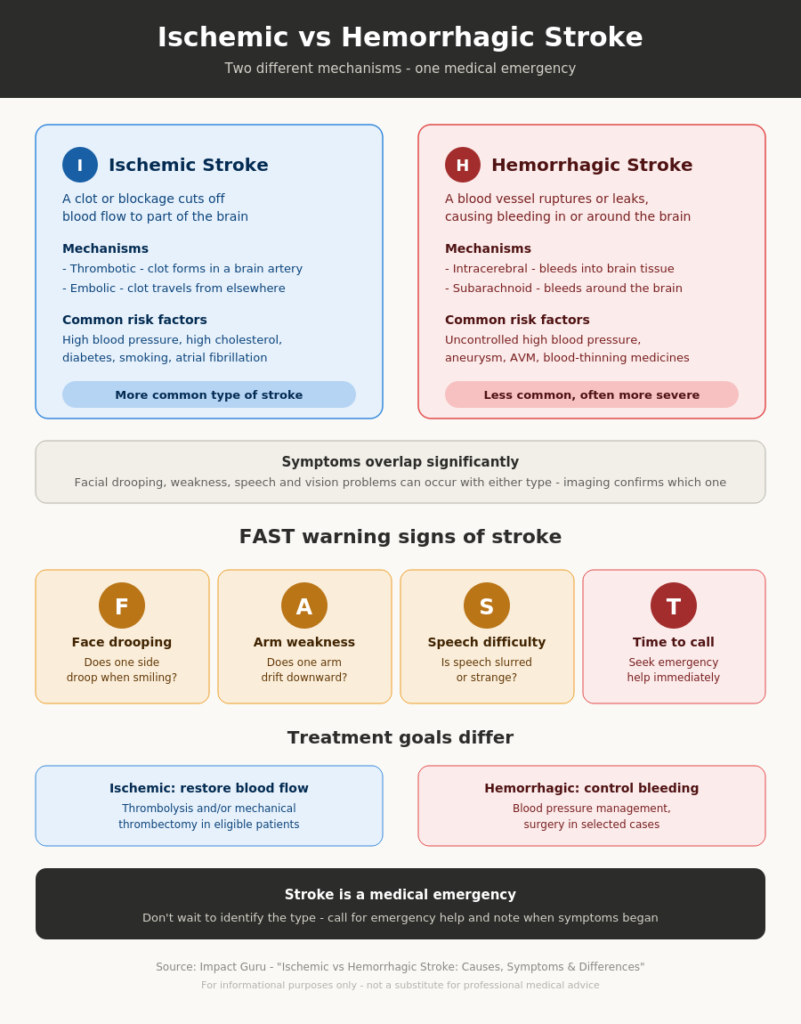
But not all strokes happen for the same reason. An ischemic stroke occurs when a blood vessel supplying the brain becomes blocked, while a hemorrhagic stroke occurs when a blood vessel ruptures or leaks and causes bleeding in or around the brain.
Understanding the difference between ischemic and hemorrhagic stroke is important, but trying to identify the type based on symptoms alone can be dangerous. The two types can cause many of the same warning signs, and brain imaging is needed to determine which type has occurred.
This guide explains the causes, risk factors, symptoms, warning signs, treatment approaches, and key differences between ischemic and hemorrhagic stroke.
What Happens During a Stroke?
A stroke occurs when part of the brain is suddenly deprived of its normal blood supply or is damaged by bleeding.
There are two main types:
- Ischemic stroke: A blood clot or other blockage prevents blood from reaching part of the brain.
- Hemorrhagic stroke: A blood vessel ruptures or leaks, causing blood to accumulate in or around the brain.
Both can damage brain cells and cause neurological problems, but the underlying mechanisms are very different. The World Health Organization identifies ischemic stroke, intracerebral hemorrhage, and subarachnoid hemorrhage among the major forms of stroke.
A transient ischemic attack (TIA) can cause stroke-like symptoms because of a temporary interruption of blood flow, but it is different from a completed stroke and still requires urgent medical evaluation.
Read More : Types of Stroke Rehabilitation: A Complete Guide
What Is an Ischemic Stroke?
An ischemic stroke happens when a blood vessel supplying the brain becomes blocked, reducing or stopping blood flow to the affected area. The blockage is often caused by a blood clot or a buildup of plaque in an artery.
Ischemic strokes can broadly be classified into two mechanisms:
- Thrombotic stroke: A clot forms in an artery supplying the brain, often in an area affected by atherosclerosis.
- Embolic stroke: A clot or other material forms elsewhere, commonly in the heart or a major blood vessel, travels through the bloodstream, and becomes lodged in a brain artery.
Causes and Risk Factors of Ischemic Stroke
Important risk factors for ischemic stroke include:
- High blood pressure
- High cholesterol or elevated LDL cholesterol
- Diabetes
- Smoking or tobacco use
- Atrial fibrillation and certain other heart conditions
- Physical inactivity
- Overweight or obesity
- An unhealthy diet
- Kidney disease
- Previous stroke or TIA
High blood pressure is one of the most important modifiable risk factors for stroke overall. The WHO also identifies tobacco use, unhealthy diet, physical inactivity, high LDL cholesterol, high blood glucose, kidney dysfunction, excess body weight, and harmful alcohol use among important contributors to stroke risk.
What Is a Hemorrhagic Stroke?
A hemorrhagic stroke occurs when a blood vessel in or around the brain ruptures or leaks, allowing blood to accumulate where it should not.
There are two major forms of hemorrhagic bleeding associated with stroke:
- Intracerebral hemorrhage (ICH): Bleeding occurs directly into brain tissue.
- Subarachnoid hemorrhage (SAH): Bleeding occurs in the space between the brain and the thin tissues covering it.
The bleeding can injure brain tissue directly and may increase pressure inside the skull. Intracerebral hemorrhage is a particularly serious form of acute stroke and is associated with substantial early mortality.
Causes of Hemorrhagic Stroke in the Brain
Common causes and risk factors include:
- Long-standing or uncontrolled high blood pressure
- A ruptured brain aneurysm, particularly in subarachnoid hemorrhage
- Arteriovenous malformations (AVMs) and other abnormal blood vessels
- Blood-thinning or antithrombotic medications in some circumstances
- Certain blood vessel disorders
- Head trauma in cases of traumatic intracranial bleeding
Uncontrolled hypertension is a major risk factor for spontaneous intracerebral hemorrhage.
Read More : Traumatic Brain Injury: Types, Severity & Symptoms
Ischemic vs Hemorrhagic Stroke: Key Differences
| Factor | Ischemic Stroke | Hemorrhagic Stroke |
| Underlying cause | Blood vessel becomes blocked | Blood vessel ruptures or leaks |
| What happens to the brain? | Part of the brain loses blood and oxygen supply | Blood accumulates in or around the brain and damages surrounding tissue |
| Common mechanisms | Thrombosis or embolism | Intracerebral or subarachnoid bleeding |
| Common risk factors | High blood pressure, diabetes, high cholesterol, smoking, atrial fibrillation and other vascular risk factors | High blood pressure, aneurysm, AVM, certain medications, and other conditions affecting blood vessels |
| Typical symptoms | Sudden weakness, numbness, speech or vision problems and other neurological symptoms | Similar neurological symptoms; severe headache, vomiting, seizures, or reduced consciousness may occur, particularly with some types of hemorrhage |
| Primary treatment goal | Restore blood flow when appropriate | Control bleeding, pressure, and other complications |
| Possible acute treatments | Thrombolysis and/or mechanical thrombectomy in eligible patients | Blood pressure management, reversal of certain anticoagulant effects when appropriate, neurocritical care and surgery or other procedures in selected cases |
The difference between ischemic and hemorrhagic stroke ultimately comes down to what is happening to the blood vessel: it is blocked in an ischemic stroke and ruptured or leaking in a hemorrhagic stroke.
Because the treatments can be fundamentally different, doctors need brain imaging to distinguish the two before starting certain stroke-specific treatments.
What Are the Warning Signs of a Stroke?
Stroke warning signs usually appear suddenly. They can include:
- Weakness or numbness in the face, arm, or leg, particularly on one side of the body
- Facial drooping
- Slurred speech or difficulty speaking
- Difficulty understanding speech
- Sudden vision problems
- Sudden dizziness, loss of balance, or difficulty walking
- Sudden severe headache with no known cause
- Confusion or, in severe cases, loss of consciousness
The CDC and WHO both emphasize sudden neurological symptoms, particularly one-sided weakness or numbness, speech difficulties, vision changes, balance problems, and severe headache as important signs of stroke.
FAST Warning Signs of Stroke
The FAST warning signs of stroke are a simple way to recognize some of the most common symptoms quickly:
- F – Face drooping: Ask the person to smile. Does one side of the face droop or feel numb?
- A – Arm weakness: Ask the person to raise both arms. Does one arm drift downward or feel weak?
- S – Speech difficulty: Ask the person to repeat a simple sentence. Is their speech slurred, strange, or difficult to understand?
- T – Time to get emergency help: If any of these signs are present, seek emergency medical help immediately.
Some organizations, including the CDC, use the expanded B.E. F.A.S.T. approach, which adds:
- B – Balance: Sudden dizziness or loss of balance
- E – Eyes: Sudden vision changes
If any of these symptoms appear suddenly, don’t wait for them to improve. Note the time the symptoms began and seek emergency medical care immediately.
Read More : 20 Things to Expect After Brain Surgery
Symptoms of Hemorrhagic Stroke vs Ischemic Stroke: What’s Different?
Many symptoms overlap between ischemic and hemorrhagic stroke. Facial drooping, weakness or numbness, speech difficulties, vision problems, and balance issues can occur with either type.
However, symptoms of hemorrhagic stroke may also include a sudden, severe headache, nausea or vomiting, seizures, or a rapid decline in consciousness, particularly when bleeding causes a rapid increase in pressure inside the skull.
A sudden severe headache can be particularly associated with subarachnoid hemorrhage. However, headache is not exclusive to hemorrhagic stroke, and its presence or absence cannot reliably determine the type of stroke.
Similarly, an ischemic stroke does not necessarily occur without a headache.
The only reliable way to distinguish ischemic from hemorrhagic stroke is through medical assessment and brain imaging.
Signs of Stroke in One Side of the Body
One-sided symptoms are among the most recognizable signs of stroke.
A person may suddenly develop:
- Weakness in one arm or leg
- Numbness on one side of the body
- Drooping on one side of the face
- Difficulty controlling movement on one side
- Problems walking or maintaining balance
These symptoms can occur because a stroke affects areas of the brain responsible for movement and sensation. Sudden weakness or numbness, particularly on one side of the body, is a key stroke warning sign.
Which Is More Dangerous: Ischemic or Hemorrhagic Stroke?
Hemorrhagic stroke is generally associated with a higher risk of early death and severe complications, but both ischemic and hemorrhagic strokes can be life-threatening.
However, it is not accurate to assume that every hemorrhagic stroke is more dangerous than every ischemic stroke. The outcome depends on factors such as:
- The location of the stroke
- The amount of brain tissue affected
- The size and location of a hemorrhage
- Whether a major blood vessel is blocked
- The patient’s overall health
- Complications such as brain swelling
- How quickly treatment begins
So, which is more dangerous, ischemic or hemorrhagic stroke? There is no simple answer for an individual patient. Both require immediate medical attention.
Read More : Brain Tumor- Symptoms, Causes, Treatments & More
How Are Ischemic and Hemorrhagic Strokes Treated?
Treatment depends on the type of stroke, the location and severity of the injury, the time since symptoms began, imaging findings, and the patient’s overall medical condition.
Treatment of Ischemic Stroke
The main goal is to restore blood flow to the affected part of the brain as quickly as possible.
For eligible patients with acute ischemic stroke, treatment may include intravenous thrombolysis using alteplase or tenecteplase. The 2026 American Heart Association/American Stroke Association guideline endorses either medication within the standard 4.5-hour thrombolytic treatment window for appropriate patients. Selected patients with an unknown or later time of onset may also qualify based on advanced brain imaging.
Mechanical thrombectomy, a procedure used to remove a clot from a blocked large blood vessel, is another important treatment for eligible patients. The 2026 guideline also expands recommendations for endovascular thrombectomy to additional patient groups.
Treatment decisions must be made by a stroke team after urgent assessment and brain imaging.
Treatment of Hemorrhagic Stroke
Treatment focuses on limiting further bleeding, controlling blood pressure and pressure inside the skull, addressing the underlying cause, and preventing complications.
Depending on the type and severity of the hemorrhage, treatment may involve:
- Care in a specialized stroke or neurocritical care unit
- Blood pressure management
- Reversal of certain anticoagulant effects when appropriate
- Treatment of increased pressure or brain swelling
- Surgery or other procedures to remove blood or repair the source of bleeding in selected patients
For spontaneous intracerebral hemorrhage, the American Heart Association/American Stroke Association emphasizes smooth and sustained blood pressure control and appropriate neurocritical and neurosurgical care.
Because hemorrhagic and ischemic strokes require different treatment strategies, a suspected stroke should never be treated at home based on assumptions about its type.
What To Do If You Suspect a Stroke
If you notice possible stroke symptoms in yourself or someone else:
- Seek emergency medical help immediately.
- Note the exact time the symptoms started, or the last time the person was known to be well.
- Do not wait to see whether the symptoms disappear.
- Use emergency medical transport when available rather than having the person drive themselves.
- Do not give food, water, or medication unless advised by medical professionals. Stroke can affect swallowing and increase the risk of choking or aspiration.
- Tell emergency personnel about any medications the person takes, particularly blood-thinning medicines, if known.
Some stroke treatments are highly time-sensitive, and rapid assessment helps doctors determine whether the patient is eligible for treatments such as thrombolysis or mechanical thrombectomy.
Even if symptoms disappear after a few minutes, urgent medical assessment is important because the episode could have been a transient ischemic attack (TIA), which can signal a significant risk of future stroke.
Read More : Stroke Treatment Cost in India: A City-Wise Guide
Can Someone Recover Fully From a Stroke?
Stroke recovery varies considerably from person to person.
Some people recover most or all of their function, particularly when treatment is provided quickly, and rehabilitation begins at the appropriate stage. Others may have lasting difficulties involving movement, speech, swallowing, vision, memory, cognition, or independence.
Recovery depends on factors including:
- Stroke type
- Size and location of the brain injury
- Severity of the initial stroke
- Speed of treatment
- Complications
- Overall health
- Access to rehabilitation
Rehabilitation is an important part of stroke recovery and may include physical therapy, occupational therapy, speech and language therapy, and other forms of supportive care depending on the person’s needs.
Read More : How to Raise Funds for Stroke Rehabilitation Treatment?

Conclusion
The key difference between ischemic and hemorrhagic stroke is simple: ischemic stroke results from a blockage that cuts off blood flow, while hemorrhagic stroke results from bleeding caused by a ruptured or leaking blood vessel.
The symptoms, however, can overlap significantly. Sudden facial drooping, one-sided weakness or numbness, speech difficulties, vision problems, dizziness, and balance problems should all be treated as potential stroke warning signs. A sudden severe headache may be particularly concerning for some forms of hemorrhagic stroke, but symptoms alone cannot determine the type.
If a stroke is suspected, don’t wait to identify whether it is ischemic or hemorrhagic. Get emergency medical help immediately. Brain imaging can determine the stroke type and help doctors choose the appropriate treatment.
Stroke treatment and recovery can also involve substantial medical, hospital, rehabilitation, and caregiving expenses. For families facing these costs, a crowdfunding donation can be one option for seeking financial support from friends, family, and wider communities. Platforms such as ImpactGuru allow eligible patients and families to raise donations online for medical needs.
Frequently Asked Questions
An ischemic stroke occurs when a blood vessel supplying the brain becomes blocked, while a hemorrhagic stroke occurs when a blood vessel ruptures or leaks and causes bleeding in or around the brain. Because their causes and treatments differ, brain imaging is needed to determine which type has occurred.
Common stroke warning signs include sudden facial drooping, weakness or numbness, especially on one side of the body, speech or language problems, sudden vision changes, dizziness or loss of balance, and sudden severe headache. If these symptoms occur, seek emergency medical help immediately.
Ischemic stroke is more common than hemorrhagic stroke. However, the exact proportion of ischemic and hemorrhagic strokes varies between populations and regions, so a single percentage should not be treated as universal.
Ischemic stroke is usually caused by a blood clot or another blockage that prevents blood from reaching part of the brain. Hemorrhagic stroke occurs when a blood vessel ruptures or leaks. High blood pressure is a major risk factor for both stroke overall and spontaneous intracerebral hemorrhage. Other risk factors include diabetes, high cholesterol, smoking, heart conditions, aneurysms, AVMs, and certain medications or medical conditions.
Symptoms of hemorrhagic stroke can include sudden weakness or numbness, facial drooping, speech difficulties, vision changes, dizziness, and difficulty walking. Some people also experience a sudden severe headache, nausea or vomiting, seizures, or reduced consciousness. However, symptoms overlap with ischemic stroke, so brain imaging is needed to determine the type.
Yes. Some hemorrhagic strokes can be managed without surgery, depending on the location, size, cause, and clinical condition of the patient. Treatment may include blood pressure management, reversal of certain blood-thinning medications when appropriate, monitoring in a specialized unit, and management of brain swelling or pressure. Surgery or another procedure may be recommended for selected patients.
Stroke symptoms often begin suddenly, although the exact presentation can vary. Sudden weakness or numbness, speech difficulty, vision problems, dizziness, loss of balance, or severe headache should be treated as a medical emergency.
Recovery varies depending on the type and severity of the stroke, the area of the brain affected, how quickly treatment is provided, complications, and rehabilitation. Some people recover most or all of their function, while others have long-term disabilities.