What Is Endometrial Cancer?
By: Raj
Published On: July 20, 2022
Cancer tumors can damage the uterus- a hollow, pear-shaped muscular organ where a fetus grows. The endometrium is the uterus lining. When cancer develops in this lining, it is called endometrial cancer. Most of the tumors in the uterus fall under endometrial cancer. Without proper treatment and medication, endometrial cancer can spread to the ovaries, vagina, bladder, rectum, and other distant body organs.
Uterine and endometrial cancer are mainly classified as one- uterine, but they share some different features. The uterus is the organ in women's bodies where a fetus grows. The inner lining (endometrium) or muscle layer (myometrium) can be affected by cancer. Endometrial cancer is one of the most common types of uterine cancer, which is curable with early treatment.
Read Also: How Crowdfunding Can Solve Financial Crisis During Cancer
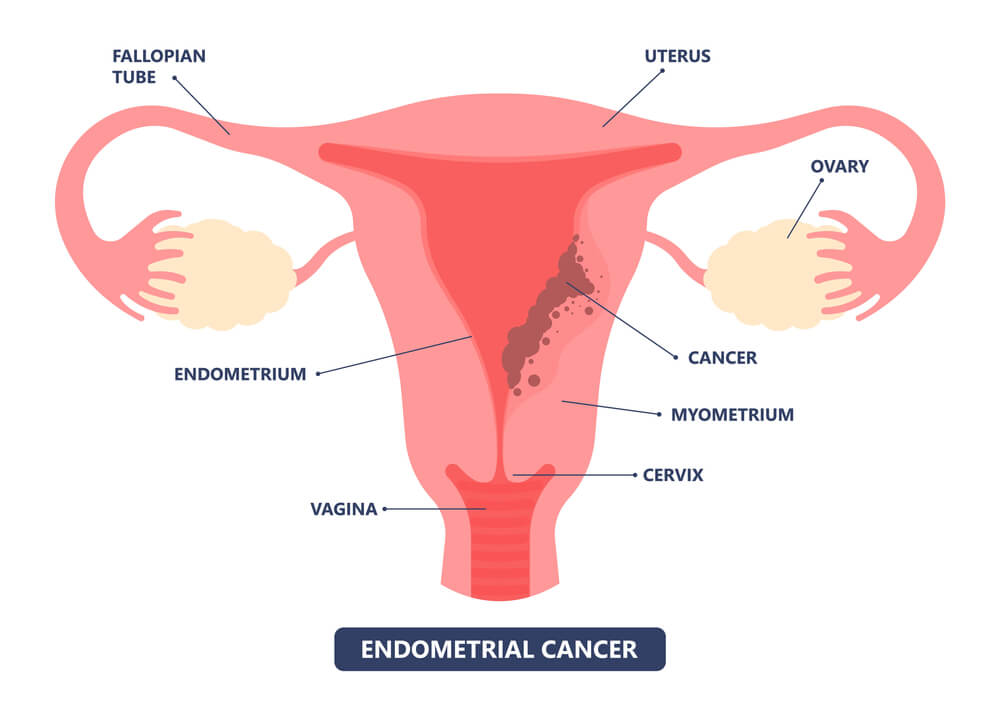
Endometrial cancer develops when endometrial cells in the body go through a malignant transformation and start growing abnormally. Unusual cell growth and rapid multiplication form a mass called a malignant tumor, which leads to endometrial cancer. Cancer affects the healthy body cells by utilizing their nutrients and oxygen to develop, function, and survive.
All tumors are not cancerous. Some may grow only in the uterus instead of spreading to other body parts. They are called benign tumors. Cancerous tumors are malignant as they grow abruptly and may invade nearby organs, lymph nodes, the bloodstream, or distant organs like lungs, bones, etc. Such development is called metastasis. These metastatic tumors are more severe and aggressive than all the other cancers.

What Are The Types Of Endometrial Cancer?
Endometrioid cancer- This type of cancer grows in glandular tissue (adenocarcinoma). Endometrioid cancer starts developing in the endometrium glands. Under a microscope, it looks like a usual uterine lining, but its severity varies from person to person.
Uterine clear cell carcinoma- One of its rarest kinds that accounts for only 5% of the total endometrial cases.
Uterine papillary serous carcinoma- This type starts in the uterus lining, and chances of reoccurrence are quite high even if a doctor spotted it early.
Uterine carcinosarcoma- This rare form of endometrial cancer is aggressive (develops and spreads quickly) and accounts for less than 5% of total endometrial cancer.
Causes Of Endometrial Cancer
Doctors don’t know the exact cause of endometrial cancer. However, some risk factors associated with endometrial cancer can increase your chances of getting it.
Some of the risk factors of endometrial cancer are:
Changes in the female sex hormones
Ovaries produce two groups of female sex hormones- estrogen and progesterone. These female hormones can harm the health of your endometrium. Changes in female hormones result in high estrogen levels; thus, increasing the risk of endometrial cancer.
Women with certain medical history can increase the risk of endometrial cancer, which includes:
Menstruation years- If a woman had more menstrual periods in her life, then she may be exposed more to estrogen. If a woman gets her first period before she was 12 years old or goes through menopause late in life, all these factors can increase the risk of endometrial cancer.
Pregnancy history- The balance of hormones shifts towards progesterone during pregnancy. Progesterone decreases the amount of estrogen in the uterus; thus, increasing the chances of developing endometrial cancer.
Polycystic Ovarian Syndrome (PCOS)- A woman with a history of PCOS has a higher risk of getting endometrial cancer. In PCOS, progesterone levels are deficient and estrogen levels are higher.
Granulosa cell tumors- These types of ovarian tumors produce estrogen. If a woman had any of these tumors, her chances of getting endometrial cancer increase.
Obesity- High body weight increases the risk of endometrial cancer. The reason is that increased body fat changes the balance of female sex hormones.
Older age- With growing age, the risk of endometrial cancer increases mainly after menopause.
Hormone therapy- For breast cancer, you may have consumed tamoxifen as part of hormone therapy, and taking tamoxifen increases the chances of getting endometrial cancer.
Hereditary colon cancer syndrome- Lynch syndrome, which is also called Hereditary Nonpolyposis Colorectal Cancer (HNPCC)- It’s a disease that increases the risk of endometrial cancer and other cancers. Lynch syndrome occurs due to gene mutation passed on from parents to children.
Endometrial hyperplasia- It is a noncancerous condition where the endometrium becomes thick, and in some cases, it goes away. Without proper treatment, endometrial hyperplasia may develop into endometrial cancer. One of the common signs of endometrial cancer is unusual vaginal bleeding.
Diabetes- Women with type 2 diabetes are more likely to get endometrial cancer than women without diabetes.
Endometrial Cancer Symptoms
One of the most common symptoms of endometrial cancer is abnormal vaginal bleeding. According to the American Cancer Society, 90% of women have this symptom.
Frequent symptoms before menopause
If a woman hasn’t gone through menopause, abnormal vaginal bleeding consists of:
Frequent periods that occur every 21 days or early.
Prolonged periods that last longer than 7 days.
Vaginal bleeding before or after sex.
Heavy spotting during periods.
Symptoms after menopause
Spotting or vaginal bleeding that takes place after a year you went through menopause. It is pretty abnormal and requires a diagnosis by your physician.
Some other symptoms that can show up before or after menopause are:
Pain during sex.
Blood or watery vaginal discharge.
Symptoms that may occur during the last stage of endometrial cancer are:



 Information
 Alert
Alert