Surviving Colon Cancer With Immediate Financial Assistance
By: Aman, Zahabiya
Published On: April 12, 2022
Colon cancer is one of the most common cancer tumours across the world. People above the age of 50 are more likely to get colon cancer. However, according to the American Cancer Society, this type of colon cancer has been on the rise among young adults for the past 30-50 years. According to the American Cancer Society, the primary reason for the advent of colon cancer is cited are inactivity, obesity, and smoking.
Keep in mind that statistics do not tell individual stories and cannot predict your specific outcome. It's easy to become preoccupied with prognosis and outcomes, but keep in mind that everyone is unique. Even if you have the same stage of colon cancer as someone else, your experience may differ.
It’s also important to understand new treatments, as clinical trials are continually developing novel treatment options. However, it can take several years to quantify the success and significance of those treatments on life expectancy.
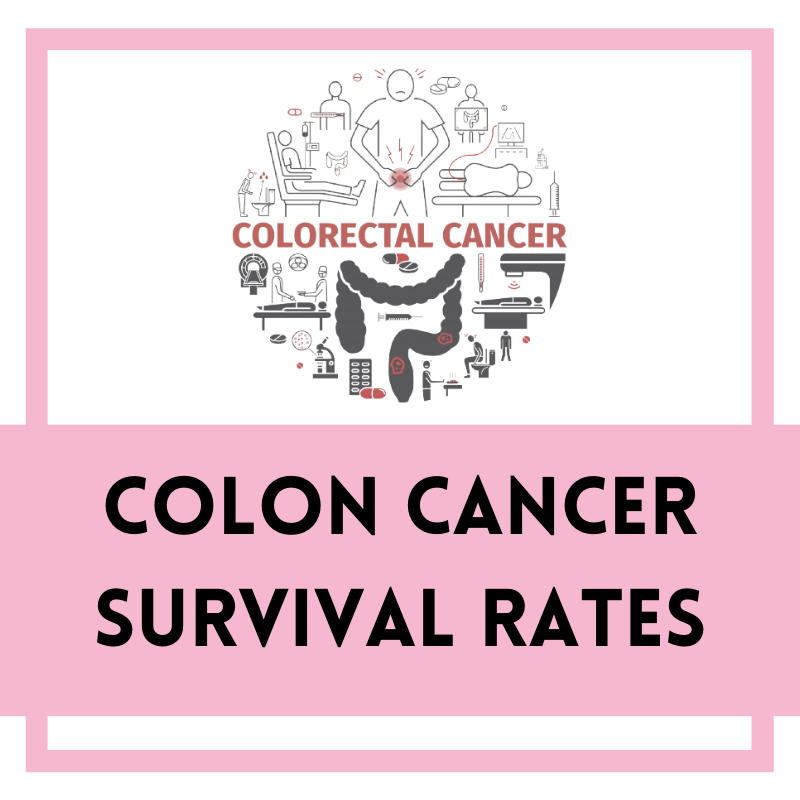
Five-year Relative Survival Rates For Colon Cancer
The five-year survival rate for people with colon cancer was 64.5%, according to data from the 2008 to 2014 Surveillance, Epidemiology, and End Results (SEER) ProgramTrusted Source. Cancer is typically staged using the TNM system developed by the American Joint Committee on Cancer, but the data in SEER categorises cancers into localised, regional, and distant stages.
The five-year relative survival rates for each group are the following:
Localized - 90%
This describes cancer that remains in the part of the body where it started.
Regional - 71%
This describes cancer that has spread to a different part of the body.
Distant -14%
This also describes cancer that has spread to a different part of the body but is typically referred to as “metastatic” cancer.
Colon Cancer Prognosis
Many factors influence one's prognosis if you have been diagnosed with colon cancer. These factors, according to the National Cancer Institute are as follows:
Stage
The stage of colon cancer refers to the extent to which it has spread. According to the American Cancer Society, cancer that has not spread to lymph nodes or distant organs has a better prognosis than cancer that has spread to other parts of the body.
Grade
The cancer grade describes how similar the cancer cells appear to normal cells. The higher the grade, the more abnormal the cells appear. Low-grade cancers have a better prognosis. Cancer that spreads to other parts of the body is referred to as "metastatic" cancer.
Lymph node involvement
The lymphatic system aids in the elimination of waste from the body. Cancer cells can travel from their original site to the lymph nodes in some cases. In general, the more lymph nodes that have cancer cells, the more likely cancer will return.
General well-being
Your overall health influences how you respond to treatment. In many cases, the healthier you are at the time of diagnosis, the better you will be able to deal with treatment and its side effects.
Colon blockage
Colon cancer can cause a blockage in the colon or grow through the colon wall, causing a hole in the bowel. Either of these scenarios can have an impact on one’s outlook.
Presence of carcinoembryonic antigen
Carcinoembryonic antigen (CEA) is a blood protein molecule. When colon cancer is present, CEA levels in the blood can rise. The presence of CEA at the time of diagnosis may have an impact on how well you respond to treatment.

Cancer Survival Rate Primarily Depends On Treatment
1) Early Diagnosis of Colon Cancer
Timely treatment for colon cancer is extremely important. It is important to understand that colon cancer is one of the most treatable kinds of cancer, especially if it is detected at the earliest. One of the methods for the detection of colon cancer is regular screening. And if you fall beyond the age of 45, then regular screening is a must for you. It helps you take immediate steps for treatment post your diagnosis. According to the Mount Sinai Organization, early diagnosis of colon cancer is one of the elements that leads to a complete cure.
Some factors that can help you understand that you are at the risk of developing colon cancer are inactivity, absence of physical activity, obesity, excessive consumption of alcohol and habit of smoking.
2) Unaffordable colon cancer treatment
The cost of treating colon cancer is high. The treatment cost depends on several factors ranging from the stage of the colon cancer, a treatment used for the colon cancer, the duration of treatment, to the healthcare infrastructure for the treatment.
These factors contribute to the overall cost of colon cancer treatment. The unaffordability of the treatment for colon cancer is one of the reasons for such a low survival rate in the country.
3) Crowdfunding for Colon Cancer treatment with ImpactGuru
Treatment for colon cancer will be an expensive undertaking, and savings won’t be enough for you to fund the treatment. If you cannot afford the best treatment at the earliest with the help of your savings, then crowdfunding through an online fundraising platform would be the best option for you.
ImpactGuru is India's leading crowdfunding platform. You can raise funds for a number of causes ranging from medical, educational, cultural and more. Crowdfunding enables you to raise funds from a number of people for various causes.
If you are suffering from colon cancer and need funds for treatment, then you can start a fundraiser easily on ImpactGuru.
To know more, call our ImpactGuru’s fundraising experts here: 180 089 12903


 Information
 Alert
Alert