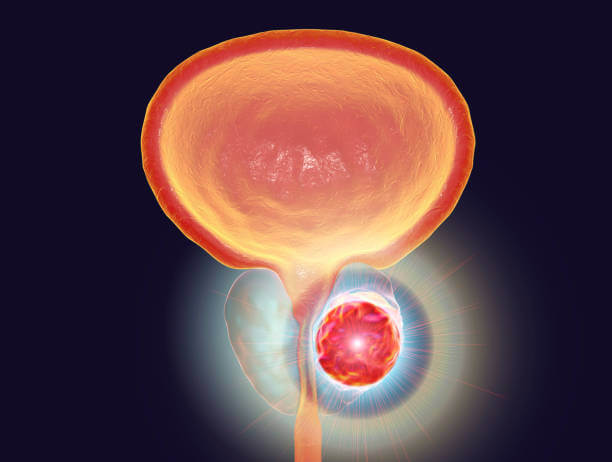
Severity Level of the Five Types of Prostate Cancer
By: Krunal
Published On: July 26, 2022
Prostate cancer is second only to skin cancer among the most common cancers found in males. When diagnosed at an early stage, prostate cancer is highly treatable. There are five main prostate cancer types, which we will study in detail in this article.
The risk of prostate cancer increases with age. Other risk factors include race or ethnicity, family history, obesity, or genetics. According to researchers, African-American men are at a higher risk of developing prostate cancer (they are 70 percent more likely to get the disease than non-Hispanic Caucasians).
Prostatic intraepithelial neoplasia (PIN) is a condition where prostate gland cells look like abnormal cells when examined under a microscope. However, the abnormal cells don’t look like they are growing into other parts of the prostate (like cancer cells would). Your doctor can diagnose prostate cancer by performing a digital rectal exam (DRE), through a prostate-specific antigen (PSA) blood test, a prostate biopsy, or with a Computed Tomography (CT) scan.

Depending on how unusual the patterns of cells look, they are classified as:
Low-grade PIN: The patterns of prostate cells appear almost normal.
High-grade PIN: The patterns of prostate cells look abnormal.
If the cells are classified as low-grade PIN, the chances of you getting prostate cancer are minimal. On the other hand, high-grade PIN is considered to be a possible precursor to prostate cancer. If a high-grade PIN is found in your prostate biopsy, there is a greater chance that you might develop prostate cancer in the future.
Also read: Cancer Treatment Costs In India
Prostate cancer types and stages
Now, let’s study and understand the five types of prostate cancer.
Adenocarcinoma of the prostate
Of the various types of prostate cancer, adenocarcinoma of the prostate is by far the most common, accounting for up to 99 percent of all cases.
Adenocarcinomas can affect almost every part of the body. In the prostate, adenocarcinoma is also called glandular prostate cancer.
Symptoms of adenocarcinoma of the prostate may include:
a frequent urge to urinate
pain while urinating and ejaculating
blood in the semen
Subtypes of adenocarcinoma of the prostate
Acinar adenocarcinoma (conventional adenocarcinoma): This subtype accounts for virtually all prostatic adenocarcinoma cases. Acinar cells line the prostate’s fluid-secreting glands. The cancer starts growing in the periphery of the prostate, near the rectum, and may be diagnosed during a digital rectal exam. In this type, the PSA level increases.

Prostatic ductal adenocarcinoma (PDA): This subtype is a rarer but more aggressive type of prostate cancer (adenocarcinoma). It develops in the cells lining the tubes and ducts of the prostate gland. Prostatic ductal adenocarcinoma usually develops alongside acinar adenocarcinoma. This type of cancer doesn’t necessarily increase PSA levels, making it harder to detect.
Also read: Introduction To Bladder Cancer And Its Types
Other types of prostate cancer
There are many other prostate cancer types, but they are incredibly rare and difficult to find given the overwhelming diagnosis of adenocarcinoma of the prostate. Some of these prostate cancer types include:
Transitional cell carcinoma or urothelial cancer: This type of prostate cancer may either start in the urethra or bladder and spread to the prostate, or, in very rare cases, from prostate to bladder.
Neuroendocrine tumors or carcinoids: This type of prostate cancer doesn’t produce PSA. The tumors appear in the nerve and gland cells that make and release hormones into the bloodstream.
Small cell carcinoma: This is the most aggressive type of neuroendocrine cancer in the prostate that develops in small round cells of the neuroendocrine system.
Squamous cell carcinoma: It’s a very rare, fast-growing type of prostate cancer that starts in the flat cells covering the prostate glands.
Prostate sarcoma (soft-tissue prostate cancer): This type of prostate cancer develops outside the prostate glands and in the soft tissue—the muscles and nerves—of the prostate.
Prostate Cancer Stages
For staging prostate cancer, pathologists use a Gleason score, which grades the extent and arrangement of the cell mutations. For example, a Gleason score of 6—the lowest possible—indicates a low-grade tumor, while scores of 9 or 10 indicate a high-grade tumor or the most aggressive form of cancer.

Prostate cancer stages life expectancy
Survival rates or life expectancy can give you an estimate of what percentage of people suffering from the same type and same stage of cancer are still alive (usually 5 or 10 years) after they were diagnosed. For example, if the 5-year relative survival rate for a specific stage of prostate cancer is 90%, it means that people suffering from that stage of cancer are, on average, about 90% as likely to survive for at least 5 years after being diagnosed.
As per the SEER (Surveillance, Epidemiology, and End Results) database, maintained by the National Cancer Institute (NCI), the prostate cancer survival rates for different stages between 2011 and 2017 are given below.


 Information
 Alert
Alert