
How To Deal With Prostate Cancer After Diagnosis?
By: Raj
Published On: August 22, 2022
Prostate cancer develops when prostate cells start growing abnormally. The prostate is situated below the bladder, a part of the male reproductive system. It produces a fluid that is a part of the semen. The urethra is a tube that carries urine and semen out of the body.
In younger men, the prostate is the size of a walnut but changes and grows in size with old age. Prostate tumors are malignant (cancerous) that can expand to nearby cells and harm them. They can also metastasize (spread) to distant body organs.
Prostate tumors often develop slowly and can be cured if diagnosed early. An early prostate cancer diagnosis means cancer has not metastasized outside the prostate. The survival rate for prostate cancer is quite low in older men. One of the most common types of prostate cancer is adenocarcinoma which comprises 95% of all prostate tumors. But, different types of rare prostate cancerous tumors can also occur in men.
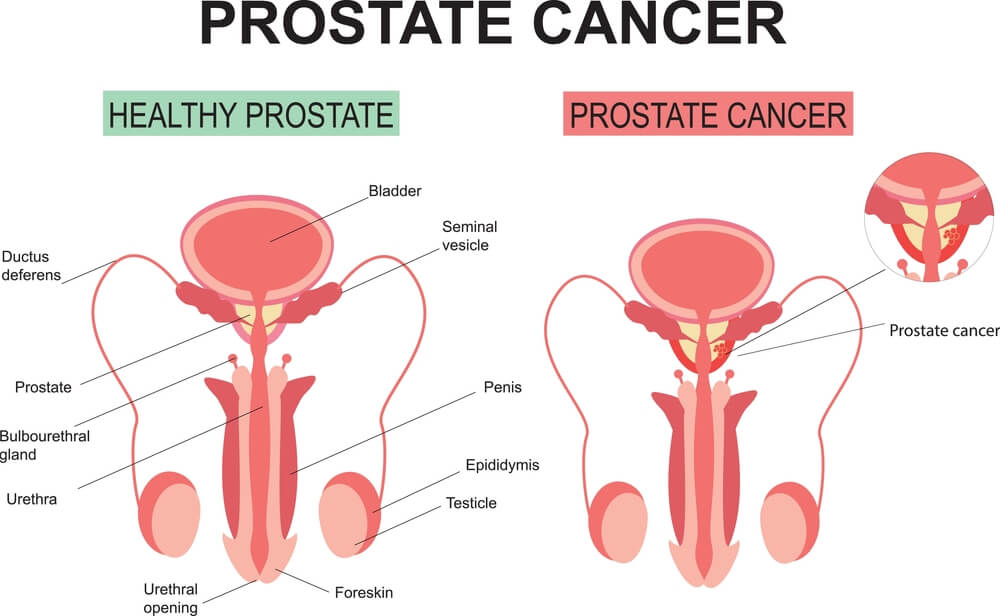
Image source- shutterstock.com
Avoid Future Prostate Cancer Diagnosis By Understanding Its Risk Factors
Some conditions can increase the risk of prostate cancer, but there are some cases where a person develops prostate cancer with no risk involved. The risk of prostate cancer increases with age, with most prostate cancer cases being diagnosed in men at the age of 60. Some of the factors that can increase the risk of prostate cancer are as follows:
Family history of prostate cancer
The risk of developing prostate cancer increases in a person with a family history of prostate cancer. However, the risk is higher if any of your first-degree relatives have prostate cancer. First-degree relatives are your brother, father or son. The relative’s age at the time of prostate cancer diagnosis influences prostate cancer risk. If your relative age is below 65, the risk of developing prostate cancer is greater.
Obesity
Being overweight is one of the risk factors that is linked to prostate cancer. The risk of getting prostate cancer is greater if a person has high body fat with:
High-level BMI (body mass index)
Larger waist of 94 cm or 34 inches
High waist to hip ratio that is more than 1
Inherited gene mutations
Only a few cases of prostate cancer are associated with gene mutations. HOXB13 and BRCA2 are the most common gene mutations linked to prostate cancer.
Low level of selenium or vitamin E
Men with a low blood level of vitamin E and selenium can increase the risk of prostate cancer. But diet and supplements full of vitamin E can reduce the risk of prostate cancer.
A diet containing a high level of dairy products and calcium
Cheese, milk and yogurt are some dairy products that can increase men’s prostate cancer risk.
Exposure to hazardous chemicals
Exposure to pesticides used in the agriculture industry and cadmium metal in the smelting industry can increase the risk of developing prostate cancer in men. Also, chemicals used in a rubber factory are associated with a higher risk for prostate cancer.
Prostate inflammation (Prostatitis)
Chronic prostatitis can increase prostate cancer risk and develop aggressive and fast-growing prostate cancer in men.
Smoking
Tobacco smoking can increase the risk of developing prostate cancer in men.
High level of androgen
One type of androgen is testosterone which develops naturally in the body. Androgens (male sex hormones) manage the functions and development of the male reproductive system, including the prostate. A high level of androgen is linked to an increased risk for prostate cancer.
Read Also: Why Should I Choose ImpactGuru For Medical Crowdfunding?

Image source- shutterstock.com
Understand Prostate Cancer Symptoms For Early Diagnosis
Frequent urination at night
Dysuria (Painful urination)
Hematospermia (Blood in semen or urine)
Leg numbness
Chest pain, lower back pain and hip pain
Erectile dysfunction or painful ejaculation
Fecal incontinence ( Not able to control bowel movement)
Weak flow of urine

Image source- shutterstock.com
How Is Prostate Cancer Detected?
Diagnosis is recommended to find the root cause of any health problem. A prostate cancer diagnosis is a process where your family doctor asks about symptoms you face and suggests some tests to diagnose prostate cancer or any health issues. The prostate cancer diagnosis process can take some time and make you worried, but it is important to understand that other health problems can cause similar symptoms as prostate cancer. Some of the tests that your doctor may suggest to diagnose prostate cancer are:
Physical examination or health history
Your doctor may prescribe a physical examination to examine any symptoms of prostate cancer. Health history includes the list of all health problems faced by you in the past. Your doctor may ask several questions to find your health history. Some of them are:
Prostate cancer risks factors
Signs and Symptoms of prostate cancer
Digital Rectal Exam (DRE)
DRE is a physical examination test where the doctor inserts a gloved finger in the rectum to find any abnormal areas or lumps of different sizes and shapes.
Tumor marker test
Tumor markers are the protein produced by both healthy and cancerous cells. It is a type of substance that is found in the body tissue, urine and blood. Tumor markers are also known as biomarkers. An unusual tumor marker level could mean a person may have prostate cancer. PSA test is one of the tumor marker tests that help to find whether you have prostate cancer and biopsy should be taken or not.


 Information
 Alert
Alert