Identifying the Underlying Causes & Risks of Prostate Cancer
By: Krunal
Published On: July 19, 2022
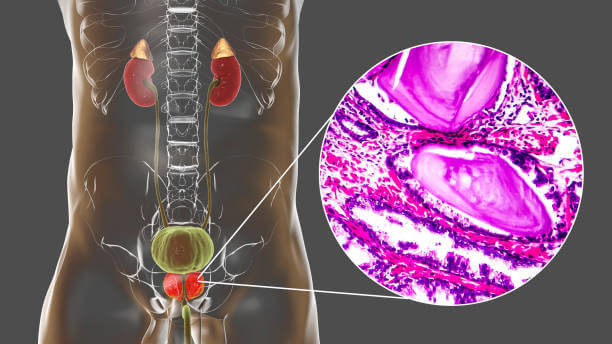
Prostate cancer is cancer that occurs in the prostate and mainly affects older men. Six out of ten prostate cancer cases are diagnosed in men over 65, but less than 1% in men who are 50 or younger. Though uncommon, prostate cancer can also be seen in men in their 30s and 40s.
There are five different types of prostate cancer, with adenocarcinoma of the prostate accounting for up to 99 percent of all cases. Fortunately, for each type, prostate cancer treatment and medications are available.
What Causes Prostate Cancer?
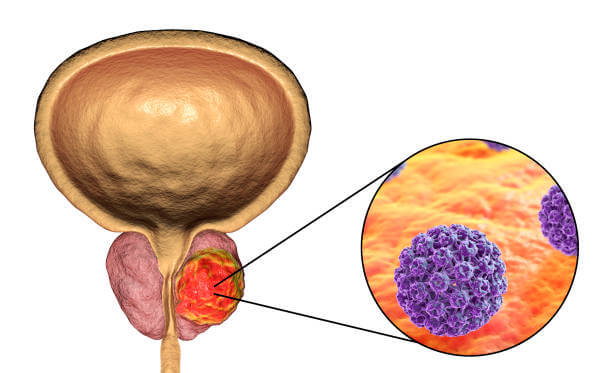
This is a question that has bemused doctors and researchers for centuries. Despite the extensive studies and research, they still haven’t been able to determine the exact cause or reason for prostate cancer. On a case-by-case basis, doctors cannot say with certainty what causes prostate cancer, but they generally agree that diet contributes to the risk.
Men who consume large amounts of fat—particularly red meat and other sources of animal fat cooked at high heat—are more prone to develop advanced prostate cancer. The disease is much more common in countries where meat and dairy products are dietary staples than in countries where the diet consists of rice, soybean products, and vegetables such as broccoli, cauliflower, cabbage, etc.
Battery manufacturers, rubber workers, welders, and workers who are frequently exposed to the metal cadmium seem to be abnormally vulnerable to prostate cancer.
The following things are also associated with an increased risk of advanced prostate cancer: height, high body mass index (BMI), low physical activity, smoking, and high calcium and linoleic acid intake.
Also read: Leukemia: A Fatal And Difficult To Diagnose Blood Cancer
What Are the Five Warning Signs of Prostate Cancer?
While the symptoms are not clearly visible in early stages of prostate cancer, there are a few signs that may tell you that something is wrong in your prostate.
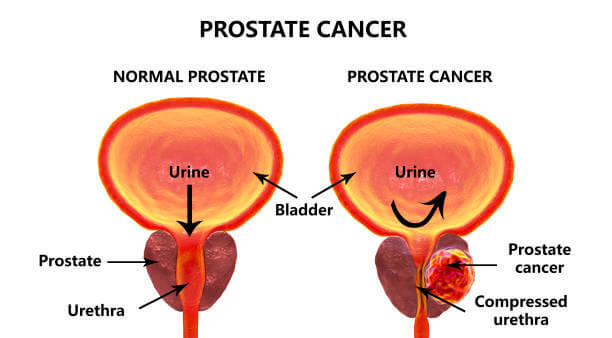
The five potential warning signs of prostate cancer are given below:
A painful or burning sensation during urination or ejaculation
Frequent urge to urinate, especially during night
Difficulty starting or stopping urination
Sudden erectile dysfunction
Blood in urine or semen
DNA Mutations: Another Reason for Prostate Cancer
Doctors also believe that prostate cancer is caused by changes in the DNA of a normal prostate cell. DNA is the chemical in our cells that contains instructions and controls how our cells function. Some genes control our cell growth, when they divide into new cells, and die:
Specific genes that help cells grow, divide, and stay alive are called oncogenes.
Tumor suppressor genes are those that normally keep cell growth in check, repair mistakes in DNA, or cause cells to die at the right time.
Prostate cancer can be caused by DNA mutations (or other types of changes) that keep oncogenes alive, or that kill tumor suppressor genes. These types of changes in genes can lead to cells growing out of control.
DNA changes can either be inherited (from a parent) or acquired (during a person’s lifetime).
Inherited gene mutations
Some gene mutations can be passed from one generation to another (inherited) and are found in all cells in the body. Inherited gene changes are assumed to play a role in about 10% of prostate cancer cases. Cancer caused by inherited genes is called hereditary cancer. Several inherited gene mutations have been linked to hereditary prostate cancer, including:
BRCA1 and BRCA2
CHEK2, ATM, PALB2, and RAD51D
DNA mismatch repair genes, such as MSH2, MSH6, MLH1, and PMS2
RNASEL (formerly HPC1)
HOXB13
Also read: Causes And Risk-Factor Associated With Bladder Cancer
Acquired gene mutations
Some genes mutate during a person’s lifetime. In such cases, the mutation is not passed on to the next generation. These changes are only found in cells that come from the original mutated cell and are called acquired mutations. Most of the gene mutations related to prostate cancer seem to develop during a man’s lifetime rather than having been inherited.
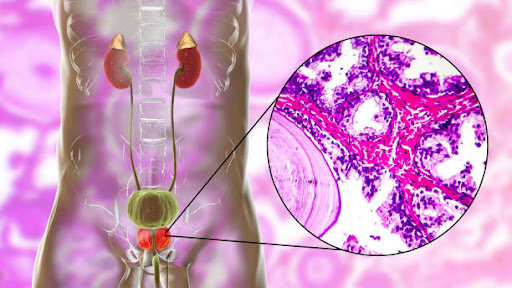
A cell must copy its DNA every time it prepares to divide itself into two new cells. This process isn’t robust, and sometimes due to errors, it leaves defective DNA in the new cell. It’s not clear how often these DNA changes might be categorized as random events, and how often they are influenced by other factors (such as diet, hormone levels, etc.). The more rapidly prostate cells grow and divide, the more are the chances for mutations to occur. Therefore, anything that stimulates this process may increase the risk of prostate cancer.
For example, androgens (male hormones), such as testosterone, boost prostate cell growth. Having higher levels of testosterone might contribute to prostate cancer risk in some men.
Researchers have found that men with high levels of another hormone—insulin-like growth factor-1 (IGF-1)—are more likely to get prostate cancer.
Some studies have found that an enlarged prostate might be linked to prostate cancer. One theory is that prostate gland enlargement might lead to cell DNA damage, which could contribute to a normal cell becoming a cancerous cell. However, more research is needed in this area.
Prostate Cancer Risk Factors
A few factors that can be attributed as reasons for causing prostate cancer


 Information
 Alert
Alert