

Table of Contents
Quick Summary
- What to expect after brain surgery, from physical and emotional changes to recovery milestones and ongoing care
- Recovery may take weeks to months, depending on the type of surgery, the underlying condition, and the patient’s overall health.
- Common side effects can include headaches, fatigue, numbness, swelling, and temporary changes in movement or mood.
- Nutrition, rehabilitation, caregiver support, and a safe home environment can support recovery after discharge.
- Follow-up care can add to treatment expenses, and medical crowdfunding may help families manage costs.
Introduction
Brain surgery may end in the operating room, but recovery begins the moment the patient wakes up. For patients and families, the days that follow can bring exhaustion, headaches, confusion, mood changes, mobility problems, or concerns about whether recovery is progressing normally. Some symptoms improve within days, while others may take weeks or months to settle. The recovery experience also depends heavily on the type of surgery, the area of the brain involved, the underlying condition, and the person’s overall health. Knowing what to expect after brain surgery can help patients and caregivers prepare for the physical, emotional, and practical challenges ahead. This guide explains 20 common aspects of recovery, along with warning signs that require medical attention.
Read More : Brain Tumor- Symptoms, Causes, Treatments & More
Read More : Migraine Treatment
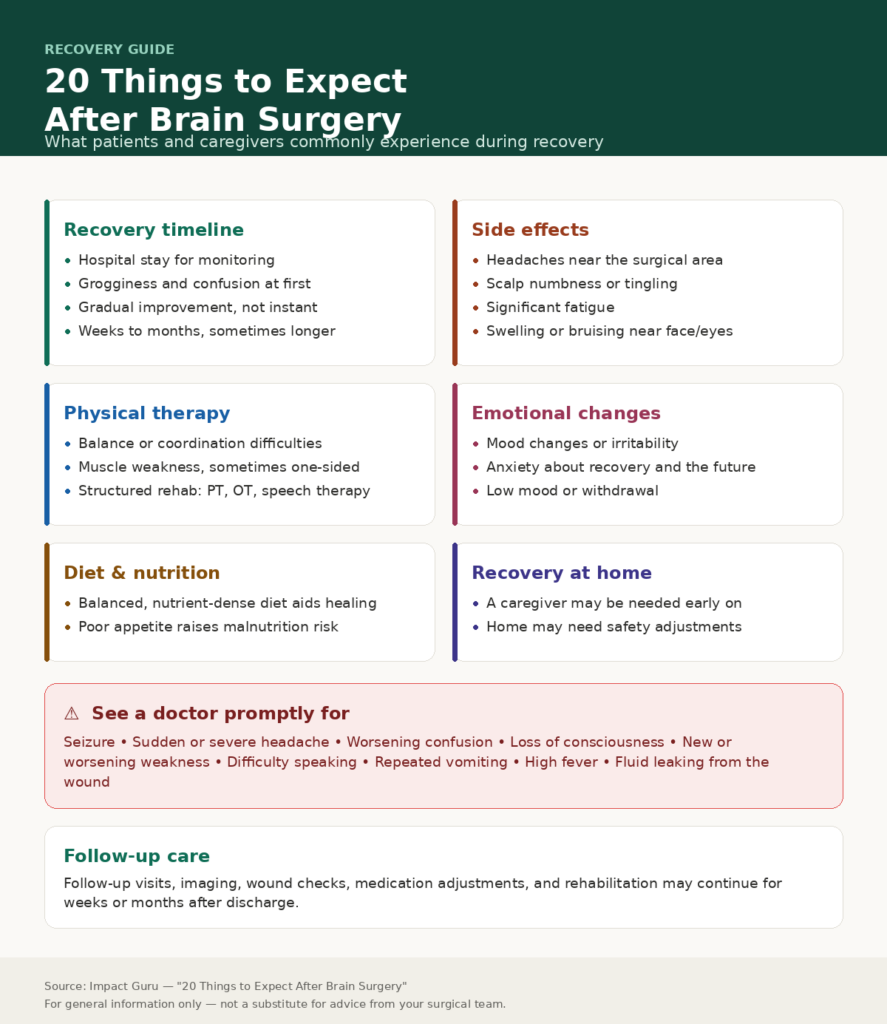
20 Things to Expect After Brain Surgery
Recovery Timeline After Brain Surgery
1. A hospital stay for monitoring
After brain surgery, patients usually remain in the hospital so the healthcare team can monitor vital signs, neurological function, the surgical site, and possible complications. The length of the stay varies depending on the procedure and the patient’s condition.
2. Grogginess and confusion after surgery
Initially, after brain surgery, you would expect confusion and sleepiness due to anesthesia, pain medicines, fatigue, and the body’s response to surgery. These symptoms often improve as the effects of anesthesia wear off, but the care team should be informed about any worsening or unexpected changes.
3. Gradual improvement rather than instant recovery
Recovery is rarely immediate. Energy, movement, speech, concentration, and other abilities may improve gradually. Some days may feel better than others, and temporary setbacks do not necessarily mean recovery has stopped.
4. Recovery can take weeks to months, or longer
How long does brain surgery recovery take? There is no single timeline. Recovery depends on the type of surgery, the underlying condition, the area of the brain involved, complications, and overall health. Some people resume many activities within weeks, while others may need rehabilitation for several months or longer.
Side Effects After Brain Surgery
5. Headaches or discomfort around the surgical area
Headaches and soreness can occur after surgery as the tissues around the incision heal. The surgical team may prescribe pain medicines or recommend other measures to manage discomfort.
6. Scalp numbness or tingling
Nerves around the incision can be affected during surgery, resulting in numbness, tingling, or altered sensation around the scalp. These sensations may gradually improve as healing progresses.
7. Significant fatigue
Feeling unusually tired is common during recovery. Even simple activities may require more energy than expected. Rest periods and a gradual return to normal activity can help patients manage fatigue while following their doctor’s advice.
8. Swelling or bruising around the face or eyes
Some patients may develop swelling or bruising around the surgical area, including the forehead or eyes, depending on the type and location of surgery. It generally improves as healing progresses, but increasing or severe swelling should be reported to the healthcare team.
Physical Therapy After Brain Surgery
9. Balance or coordination difficulties
Some patients may experience problems with balance, walking, coordination, or fine motor movements after surgery. The extent of these changes depends on the brain region involved and the underlying condition.
10. Muscle weakness
Weakness, including weakness on one side of the body, can occur when areas involved in movement are affected. Recovery varies, and rehabilitation may help patients regain strength and independence.
11. A structured rehabilitation plan
Physical therapy after brain surgery may be recommended to improve strength, balance, coordination, and mobility. Some patients may also need occupational or speech therapy depending on their symptoms and recovery needs.
Read More : How to Raise Funds for Stroke Rehabilitation Treatment?
Emotional Changes After Brain Surgery
12. Mood changes or irritability
Patients may experience irritability, frustration, tearfulness, or other mood changes during recovery. These changes can be influenced by the surgery, medications, fatigue, pain, and the emotional stress of illness.
13. Anxiety about recovery and the future
Uncertainty about health, independence, work, or daily activities can cause anxiety. Patients and caregivers may find it helpful to discuss these concerns with the healthcare team rather than dealing with them alone.
14. Low mood or withdrawal
Some patients may experience persistent sadness, loss of interest, or withdrawal during recovery. These symptoms should not automatically be dismissed as a normal part of healing. If they continue or interfere with daily life, discuss them with a healthcare professional.
Diet and Nutrition After Brain Surgery
15. A balanced, nutrient-dense diet can support recovery
Adequate protein, calories, fluids, vitamins, and minerals help support tissue repair and overall recovery. A doctor or dietitian may recommend specific dietary adjustments depending on the patient’s condition and ability to eat.
16. Reduced food intake can increase the risk of malnutrition
Poor appetite, nausea, fatigue, or difficulty swallowing may make it difficult to meet nutritional needs after surgery. If inadequate intake continues, malnutrition can develop and interfere with overall recovery. Severe forms of protein-energy malnutrition, such as marasmus, require medical attention and nutritional support. Patients who struggle to eat or drink should inform their healthcare team.
Brain Surgery Recovery Tips at Home
17. A caregiver may be needed during the early recovery period
Depending on the patient’s condition, help may be needed with medicines, meals, mobility, appointments, and everyday activities after discharge. The level of support required varies from person to person.
18. The home may need to be adapted for safety
Removing loose rugs and other trip hazards, keeping frequently used items within easy reach, improving lighting, and adding appropriate support near bathrooms or stairs can help reduce the risk of falls. Patients should follow their healthcare team’s advice about activity restrictions.
When to See a Doctor After Brain Surgery
19. Certain warning signs require prompt medical attention
Patients and caregivers should know the warning signs provided by the surgical team. Depending on the procedure, symptoms requiring urgent medical assessment may include a seizure, sudden or severe headache, worsening confusion, loss of consciousness, new or worsening weakness, difficulty speaking, repeated vomiting, high fever, or fluid leaking from the surgical wound. Follow the surgeon’s specific discharge instructions because warning signs can vary between procedures.
Follow-Up Care After Brain Surgery
20. Follow-up appointments and scans may continue after discharge
Recovery does not necessarily end when a patient leaves the hospital. Follow-up visits, neurological assessments, imaging, wound checks, medication adjustments, and rehabilitation may be needed for weeks, months, or longer, depending on the surgery and underlying condition. Keeping these appointments helps the healthcare team monitor recovery and identify complications early.
Read More : Best Neurosurgery Hospitals in Mumbai (2026)
Read More : Neurosurgery Cost In India
Cost of Brain Surgery in India and How to Raise Funds for Treatment
Brain surgery can involve more than the cost of the operation itself. Hospitalisation, intensive care when required, diagnostic tests, medicines, follow-up imaging, rehabilitation, physiotherapy, occupational or speech therapy, and other supportive care can add to the overall expense.
The cost of brain surgery in India varies significantly depending on the type of procedure, hospital, surgeon, underlying condition, length of hospital stay, and whether complications occur. Patients requiring prolonged rehabilitation or ongoing treatment may also face expenses after discharge.
For families with limited insurance coverage or savings, these costs can become difficult to manage alongside everyday household expenses. If you need a donation for medical treatment or are exploring how to raise funds for medical treatment, medical crowdfunding can provide another way to seek financial support.
Through medical crowdfunding, families can create a fundraising campaign, explain the patient’s medical needs, and share the campaign with friends, relatives, and wider communities. Platforms such as ImpactGuru help individuals raise funds for eligible medical treatments and related expenses.

Read More : Brain Aneurysm Surgery Cost in India: Clipping vs Coiling
Conclusion
Recovery after brain surgery rarely follows a perfectly straight path. Physical symptoms, emotional changes, rehabilitation needs, nutritional challenges, and ongoing medical appointments can all become part of the journey. Knowing what to expect after brain surgery can help patients and caregivers recognise common recovery experiences while staying alert to signs that need medical attention. The financial burden can also be significant, particularly when treatment extends beyond the initial hospital stay. If your family needs donations for medical treatment, medical crowdfunding through ImpactGuru can help you seek financial support from your community. With the right medical care, rehabilitation, nutrition, and support, patients can take recovery one step at a time.
Frequently Asked Questions
Brain surgery recovery can take several weeks to several months, and some patients may need longer. Recovery depends on the type and complexity of surgery, the area of the brain involved, the underlying condition, the patient’s overall health, and whether complications occur. Your neurosurgeon can provide a more personalised recovery timeline.
Common side effects after brain surgery may include headaches, fatigue, nausea, dizziness, swelling or bruising, numbness around the incision, and temporary problems with balance, concentration, memory, movement, or speech. Side effects vary depending on the procedure and the part of the brain involved.
Yes. Significant fatigue can occur during recovery after brain surgery. Healing, medications, disrupted sleep, and the underlying illness can all contribute to tiredness. Fatigue should generally improve gradually, but persistent or worsening exhaustion should be discussed with the healthcare team.
The timeline for returning to normal activities varies. Light activities may be resumed gradually when the surgical team considers them safe, while driving, strenuous exercise, heavy lifting, work, and other activities may require additional restrictions. Follow your neurosurgeon’s specific instructions rather than using another patient’s recovery timeline as a guide.
Some patients may experience changes in mood, behaviour, personality, memory, or emotional responses after brain surgery. These changes can depend on the area of the brain affected, the underlying condition, medications, and the recovery process. Persistent or significant changes should be discussed with the treating team.
Some patients may experience temporary or persistent changes in memory, concentration, or other cognitive abilities after brain surgery. The likelihood depends partly on the area of the brain involved and the underlying condition. Rehabilitation and follow-up care may help address ongoing difficulties.