

Table of Contents
- Quick Summary
- Introduction
- What Is Marasmus?
- What Causes Marasmus?
- Causes of Marasmus in Children
- Signs and Symptoms of Marasmus
- Marasmus vs Kwashiorkor: What’s the Difference?
- Marasmus in Children
- How Is Marasmus Diagnosed?
- How Is Marasmus Treated?
- What Are the Complications of Marasmus?
- Can Marasmus be Prevented
- Managing the Cost of Marasmus Treatment Through Crowdfunding
- Conclusion
- Frequently Asked Questions
Quick Summary
- Marasmus is a severe form of protein-energy malnutrition that causes extreme muscle and fat loss, most commonly seen in infants and young children.
- It develops when the body doesn’t get enough calories, protein, and essential nutrients over a prolonged period.
- Common signs include a visibly wasted body (the body has consumed its own fat and muscle tissue to stay alive), dry skin, thinning hair, and an “old man’s face” appearance in infants.
- Marasmus is different from kwashiorkor, another type of malnutrition marked by swelling (edema) rather than wasting.
- Early diagnosis, appropriate nutritional rehabilitation, and timely medical care can support recovery, while delayed treatment can increase the risk of life-threatening complications.
Introduction
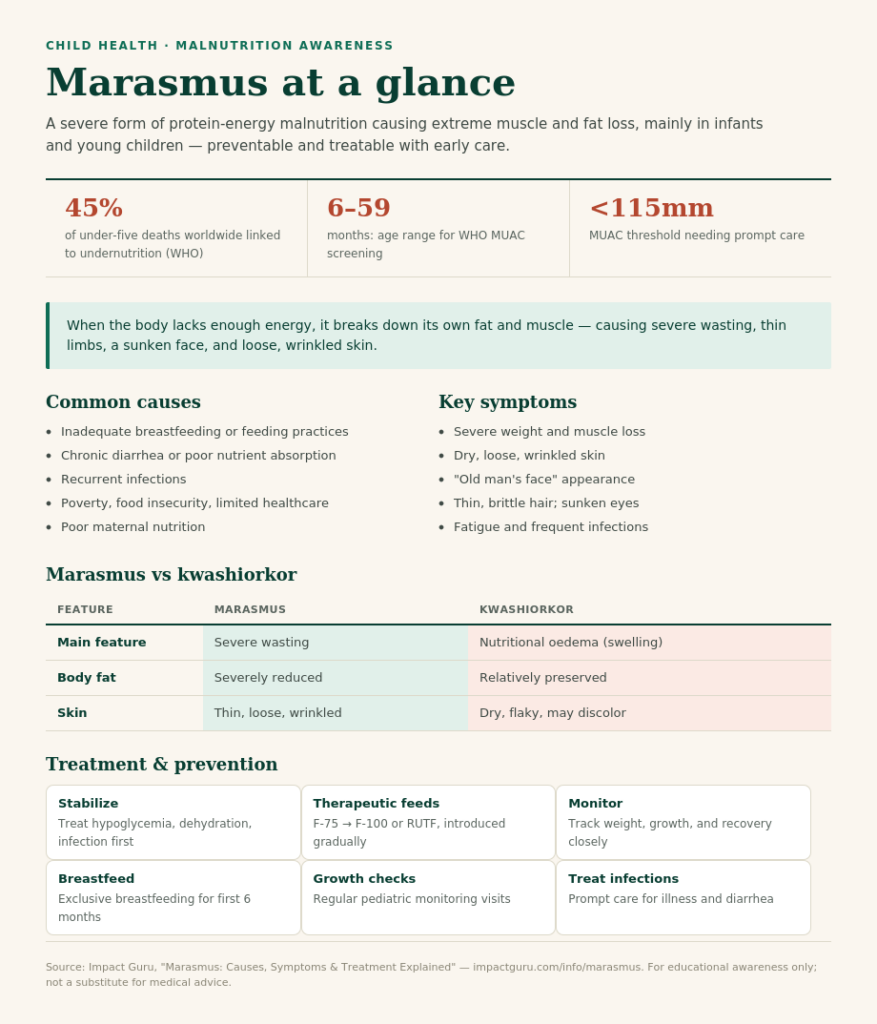
According to WHO, undernutrition is associated with about 45% of deaths among children under five worldwide, and marasmus is one of its most severe and visible forms. It occurs when a child’s body does not receive enough energy and nutrients and begins breaking down its own fat and muscle stores to maintain essential functions. The result can be severe wasting, weakness, and increased vulnerability to infections. Marasmus is preventable and treatable, but early recognition and appropriate medical care are critical. Understanding what causes marasmus, how to recognize its symptoms, and how it is diagnosed and treated can help parents and caregivers identify warning signs early and seek medical attention before serious complications develop.
Crowdfunding For Your Baby’s Health On ImpactGuru
What Is Marasmus?
Marasmus is a severe form of protein-energy malnutrition caused by prolonged inadequate intake of calories, protein, and other essential nutrients. When the body does not receive enough energy to meet its needs, it begins using stored fat and muscle as fuel, leading to severe wasting and significant weight loss.
Marasmus most commonly affects infants and young children, particularly where access to adequate nutrition and healthcare is limited. However, severe wasting can also occur in adults with prolonged undernutrition or certain underlying health conditions.
In children, marasmus is commonly considered within the broader clinical framework of severe acute malnutrition (SAM). Healthcare professionals assess severe malnutrition using measures such as weight-for-height or weight-for-length, mid-upper arm circumference (MUAC), and the presence or absence of nutritional oedema.
The defining feature of marasmus is severe wasting, with marked loss of body fat and muscle. Children may appear extremely thin, with prominent bones, thin limbs, a sunken face, and loose or wrinkled skin.
What Causes Marasmus?
Marasmus develops when the body does not receive enough energy and nutrients over a prolonged period to support normal growth and essential functions. The underlying problem may be inadequate food intake, difficulty absorbing nutrients, increased nutritional requirements, or a combination of these factors.
Causes of Marasmus in Children
Common causes and contributing factors include:
- Inadequate breastfeeding or inappropriate feeding practices
- Early introduction of complementary foods that do not provide adequate nutrition
- Insufficient access to calorie- and nutrient-dense foods
- Chronic diarrhea or gastrointestinal conditions that interfere with nutrient absorption
- Recurrent or severe infections that increase nutritional needs or reduce appetite
- Poverty, food insecurity, or limited access to healthcare
- Underlying conditions that affect digestion, absorption, metabolism, or nutritional requirements
- Poor maternal nutrition and inadequate infant and young-child feeding support
In some children, marasmus may result from a combination of inadequate dietary intake and an underlying illness rather than from food shortage alone.
Read More : Nutrient Deficiency in India – Complete Guide 2026
Signs and Symptoms of Marasmus
Recognizing the signs and symptoms of marasmus early can make a significant difference in outcomes.
Common signs and symptoms of marasmus include:
- Severe weight and muscle loss
- Significant loss of body fat
- Very thin limbs and prominent bones
- Loose or wrinkled skin
- Sunken or aged-looking facial appearance
- Weakness, fatigue, or reduced physical activity
- Increased susceptibility to infections
Symptoms of Marasmus in Children
- Severe weight loss and visible wasting of muscle and fat
- Dry, loose, and wrinkled skin
- A shrunken or “old man’s face” appearance due to loss of facial fat
- Poor growth or growth faltering
- Thin, brittle hair that may change color or fall out easily
- Fatigue, irritability, or lethargy
- Increased susceptibility to infections
- Sunken eyes
- Delayed developmental milestones in severe or prolonged cases
Marasmus vs Kwashiorkor: What’s the Difference?
Marasmus and kwashiorkor are both forms of severe protein-energy malnutrition, but they have different characteristic clinical features. Marasmus is primarily characterized by severe wasting and loss of body fat and muscle, while kwashiorkor is characterized by nutritional oedema, or swelling caused by fluid accumulation in the tissues. Some children can have features of both conditions, known as marasmic kwashiorkor.
| Feature | Marasmus | Kwashiorkor |
| Main clinical feature | Severe wasting and marked loss of body fat and muscle | Nutritional oedema (swelling caused by fluid accumulation) |
| Body appearance | Very thin, with prominent bones, thin limbs, and reduced muscle and fat | Swelling may make the child appear less visibly wasted |
| Body fat | Severely reduced | May be relatively preserved compared with marasmus |
| Oedema | Typically absent | Characteristic feature |
| Skin changes | Skin may become thin, loose, and wrinkled | Skin may become dry, flaky, peeling, or discolored |
| Hair changes | Hair may become thin, brittle, or sparse | Hair may become thin, brittle, and lose its normal color |
| Facial appearance | Sunken or aged-looking face due to loss of facial fat | Facial swelling may occur |
| Mixed presentation | May occur with oedema as marasmic kwashiorkor | May occur with severe wasting as marasmic kwashiorkor |
The distinction is based mainly on the child’s clinical presentation rather than a simple difference between calorie deficiency and protein deficiency. Severe malnutrition can result from several interacting nutritional, infectious, social, and medical factors.
Marasmus vs Kwashiorkor Symptoms
The most noticeable difference is wasting versus oedema. A child with marasmus typically has severe loss of muscle and body fat and appears extremely thin. A child with kwashiorkor may have swelling of the feet, legs, hands, or other areas because of nutritional oedema.
Some children have both severe wasting and oedema. This is called marasmic kwashiorkor and requires prompt medical assessment and treatment.
Read More : How Can Parents Raise Money for Child’s Surgery in India?
Marasmus in Children
Marasmus is most commonly seen in infants and young children because their bodies require adequate energy and nutrients for rapid growth and development. Inadequate food intake, recurrent infections, poor nutrient absorption, and food insecurity can all increase the risk.
Parents and caregivers may notice severe thinness, visible ribs or other prominent bones, loss of muscle and body fat, loose skin, reduced activity, or poor growth. However, the appearance of a child alone is not enough to diagnose marasmus.
Healthcare professionals assess children for severe wasting using measurements such as mid-upper arm circumference (MUAC) and weight-for-height or weight-for-length, along with an examination for nutritional oedema and other medical complications. Children who meet criteria for severe acute malnutrition require prompt assessment and appropriate treatment.
How Is Marasmus Diagnosed?
Doctors diagnose marasmus by assessing the child’s nutritional status, physical appearance, growth measurements, medical history, and possible underlying causes. Diagnosis is not based on body appearance alone.
Depending on the child’s age and clinical condition, assessment may include:
- Weight-for-height/length: Helps identify severe wasting using standardized growth measurements.
- Mid-upper arm circumference (MUAC): A simple screening measurement used to identify severe acute malnutrition in children 6–59 months.
- Assessment for nutritional oedema: Healthcare professionals check both feet and other areas for bilateral pitting oedema.
- Dietary and feeding history: Doctors may assess food intake, breastfeeding, complementary feeding, and recent changes in appetite.
- Medical history and examination: This can help identify infections, gastrointestinal problems, or other conditions contributing to malnutrition.
- Laboratory tests: Blood or other tests may be recommended when needed to investigate complications, infections, electrolyte disturbances, or underlying conditions.
WHO recommends prompt medical assessment for children aged 6–59 months who have a MUAC below 115 mm, severe wasting based on weight-for-height/length, or swelling in both feet (bilateral pitting oedema).
Read More : Ultimate Guide To High Protein-Rich Foods In India
How Is Marasmus Treated?
Marasmus treatment focuses on safely restoring nutrition while identifying and managing infections, dehydration, hypoglycemia, and other complications. The treatment approach depends on the severity of malnutrition, the child’s appetite, medical condition, and whether complications are present.
Treatment may involve:
- Medical stabilization: Healthcare professionals first assess and manage problems such as hypoglycemia, hypothermia, dehydration, infections, and other medical complications.
- Therapeutic nutrition: Children with severe malnutrition receive specially formulated therapeutic feeds rather than simply being given larger amounts of regular food. The amount and type of nutrition are adjusted according to the child’s condition and stage of recovery.
- Gradual nutritional rehabilitation: For children receiving inpatient care, nutrition is introduced gradually and increased as their condition stabilizes. F-75 may be used during the stabilization phase, followed by a transition to higher-energy therapeutic nutrition such as F-100 or ready-to-use therapeutic food (RUTF), depending on the child’s clinical condition and treatment setting, in accordance with WHO guidance on the management of severe acute malnutrition.
- Micronutrient support: Appropriate vitamins and minerals may be provided as part of nutritional rehabilitation.
- Treatment of underlying conditions: Infections, gastrointestinal disorders, or other medical conditions contributing to malnutrition are treated as needed.
- Follow-up and monitoring: Healthcare professionals monitor appetite, weight, growth, nutritional recovery, and any ongoing medical problems throughout treatment.
Nutrition must be reintroduced carefully in severely malnourished children because their bodies may not tolerate usual amounts of certain nutrients during the initial stage of treatment. Gradual feeding and appropriate monitoring help reduce the risk of serious metabolic complications, including refeeding syndrome.
Not every child with severe acute malnutrition requires hospitalization. Children who are clinically well and alert, have a good appetite, and do not have certain medical complications may be treated as outpatients. Children with medical complications, poor appetite, severe oedema, or danger signs may require inpatient care.
Because severe malnutrition can become life-threatening, marasmus should be treated under the guidance of qualified healthcare professionals rather than through dietary changes alone.
Read More : Microgreens Benefits: Nutrition, Research & Safety Guide
What Are the Complications of Marasmus?
Severe marasmus can affect the body’s immune function, metabolism, fluid balance, and ability to respond to infection. Without timely treatment, severe malnutrition can lead to serious complications.
Possible complications include:
- Infections: Severe malnutrition can weaken immune defenses and increase susceptibility to infections such as pneumonia and gastrointestinal infections.
- Hypoglycemia: Severely malnourished children are at risk of dangerously low blood sugar, particularly when they have not been fed or have a serious infection.
- Hypothermia: Malnourished children may have difficulty maintaining normal body temperature, and hypothermia can occur alongside hypoglycemia or serious infection.
- Dehydration and electrolyte disturbances: Diarrhea and other fluid losses can cause dehydration, while assessing and correcting fluid balance in severely malnourished children requires particular care.
- Shock: Severe dehydration or other complications can contribute to circulatory shock, which requires urgent medical treatment.
- Growth and developmental problems: Prolonged or severe malnutrition during childhood can interfere with normal growth and development.
Early recognition and appropriate treatment can reduce the risk of these complications and improve the chances of nutritional recovery.
Read More : Inborn Errors Of Metabolism
Can Marasmus be Prevented
Preventing marasmus largely comes down to ensuring consistent access to adequate nutrition and healthcare:
- Encouraging exclusive breastfeeding for the first six months of life
- Introducing nutritionally balanced complementary foods at the right age
- Regular growth monitoring during pediatric check-ups
- Prompt treatment of infections and diarrheal illness in children
- Improving maternal nutrition before, during, and after pregnancy
- Community-level nutrition and health education programs
Managing the Cost of Marasmus Treatment Through Crowdfunding
Marasmus often affects children living in conditions of food insecurity, where families may already struggle to afford adequate food. When severe malnutrition progresses to complications such as serious infections, hypoglycemia, dehydration, or shock, the child may require hospitalization, therapeutic nutrition, medicines, diagnostic tests, and close medical monitoring. These additional healthcare costs can place an overwhelming burden on families with limited financial resources.
Treatment also cannot simply involve giving a severely malnourished child large amounts of food at once. Nutrition must be reintroduced carefully under medical supervision because rapid nutritional changes can contribute to refeeding syndrome, a potentially serious metabolic complication.
For families who need donations for medical treatment, medical crowdfunding can provide a way for friends, relatives, communities, and other donors to contribute toward these expenses. Funds may help cover hospitalization, medicines, diagnostic tests, therapeutic nutrition, and travel for specialized care.
If you are wondering how to raise funds for medical treatment, sharing the diagnosis, treatment plan, estimated costs, and the family’s financial circumstances can help people understand the need. ImpactGuru provides a platform to create and share a medical fundraiser, allowing a wider community to support families facing the financial impact of serious illness.
Read More : Child Help Foundation: Reviews, Donations & Best Alternatives in India (2026)

Conclusion
Marasmus is more than severe weight loss; it is a serious form of malnutrition in which the body lacks the energy and nutrients needed for normal growth and essential functions. Recognizing severe wasting, understanding the causes and symptoms of marasmus, and seeking medical care early can help reduce the risk of serious complications. Treatment focuses on appropriate nutritional rehabilitation and management of any underlying medical problems.
For families facing the financial burden of hospitalization or treatment for marasmus and related critical illnesses, medical crowdfunding may provide an additional source of support. If you need donations for medical treatment, platforms such as ImpactGuru can help you create a fundraiser and learn how to raise funds for medical treatment while focusing on your loved one’s recovery.
Frequently Asked Questions
Marasmus is a severe form of protein-energy malnutrition caused by prolonged inadequate intake of calories, protein, and other essential nutrients. It results in significant loss of body fat and muscle, causing severe wasting.
Marasmus can develop when the body does not receive enough calories and essential nutrients over a prolonged period. Food insecurity, inadequate feeding, recurrent infections, poor nutrient absorption, and certain underlying health conditions can contribute to it.
Marasmus is primarily characterized by severe wasting and loss of body fat and muscle, while kwashiorkor is characterized by nutritional oedema, or swelling caused by fluid accumulation in the tissues. Some people can have features of both conditions, known as marasmic kwashiorkor.
Early signs may include noticeable weight loss, loss of muscle and body fat, thin limbs, loose or wrinkled skin, low energy, and poor growth in children. Severe cases can cause marked wasting and increased susceptibility to infections.
Marasmus can often be successfully treated with timely and appropriate nutritional and medical care. Recovery depends on the severity of malnutrition, underlying causes, complications, and how quickly treatment begins.
No. Marasmus is most commonly seen in infants and young children, but severe wasting can also occur in adults because of prolonged undernutrition, chronic illness, malabsorption, eating disorders, or other conditions affecting nutritional intake or requirements.