

Table of Contents
- Quick Summary
- Introduction
- How to Choose the Right NGO to Support
- How to Volunteer for an NGO Online Without Leaving Home
- How to Offer Your Professional Skills to an NGO for Free
- How to Use Social Media to Support an NGO’s Cause
- How to Advocate for an NGO Through Petitions and Campaigns
- How to Donate In-Kind Items Instead of Money
- How to Start an Online Fundraiser for an NGO Without Donating Money Yourself
- How to Use Your Time for Hands-On Local Volunteering
- How to Mentor or Tutor Through an NGO’s Programs
- How to Help an NGO with Research, Translation, or Content Work
- How to Support an NGO by Spreading Verified Awareness in Your Community
- Conclusion
- FAQs
Quick Summary
- There are many practical ways to support NGOs besides donating, from skill-based volunteering to social media advocacy.
- Online volunteering lets you contribute time and expertise to NGOs from anywhere, on your own schedule.
- Sharing verified campaigns and signing petitions helps NGOs build awareness and influence policy at no cost to you.
- Offering professional skills like design, writing, or data analysis can be more valuable to an NGO than a one-time gift.
- Starting or supporting a fundraiser for someone else’s cause is a direct way to help without donating from your own pocket.
- Small, consistent actions, not just large gifts, are often what keep an NGO’s mission moving forward.
Introduction
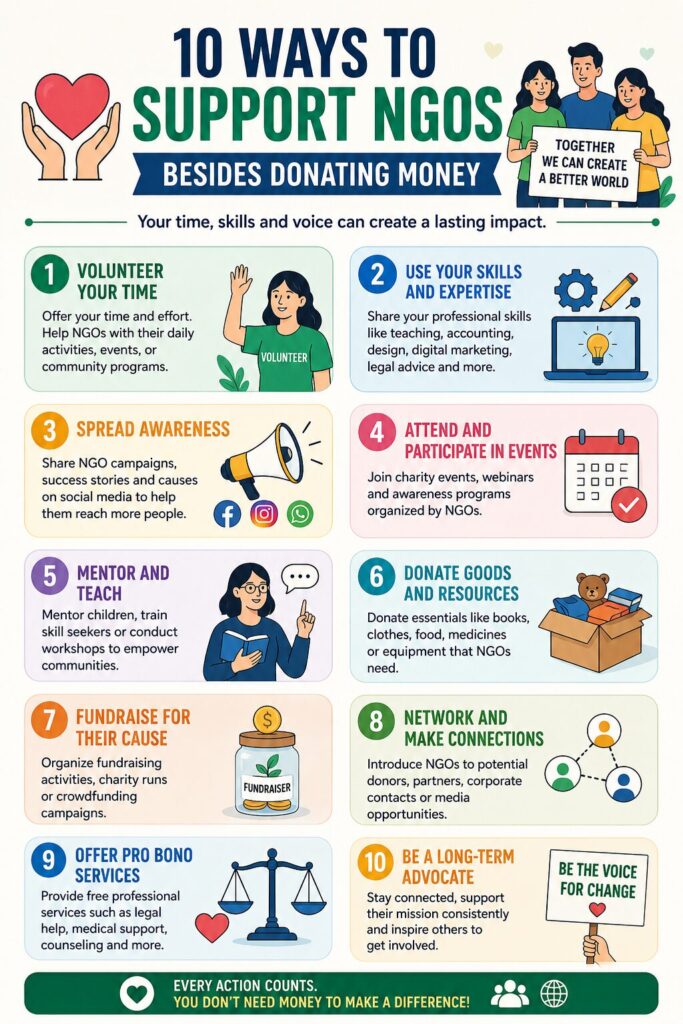
According to a joint study by the International Labour Organization and United Nations Volunteers, around 90 percent of volunteers in India engage in direct, person-to-person help rather than formal donations alone. This shows that support for social causes in India already leans heavily on time, skill, and action, not just money. If you’ve ever wanted to help an NGO but felt donating wasn’t an option right now, you’re not alone, and you’re not without choices. There are practical ways to support NGOs besides donating that are just as meaningful: volunteering online, advocating for a cause, raising awareness, and lending your professional skills. This guide walks through ten verified, actionable methods you can start using today, whether you have ten minutes or ten hours to give.
How to Choose the Right NGO to Support
Before volunteering or contributing your skills, take time to identify an NGO whose mission aligns with your values.
Consider the following factors:
- The NGO’s mission and objectives
- Transparency in operations
- Impact reports and success stories
- Volunteer opportunities
- Community reviews
- Registration and legal compliance
- Communication and responsiveness
Choosing a trustworthy NGO ensures your efforts contribute to genuine social impact.
How to Volunteer for an NGO Online Without Leaving Home
Online or “virtual” volunteering has grown into one of the most accessible ways to support an NGO, especially for people balancing jobs, studies, or family responsibilities. Platforms built specifically for remote volunteering connect skilled and unskilled volunteers alike with NGOs that need help with tasks like content writing, data entry, translation, or website support. In India, platforms such as iVolunteer have made this even more accessible by matching volunteers to nonprofits for tasks like content creation, web development, and data analysis, regardless of where either party is located.
If you’re new to this, start small: many NGOs need just a few hours a week for tasks like transcribing interviews, organizing spreadsheets, or proofreading reports, apart from people showing support by donating monetarily. This lowers the barrier to entry and lets you test which resonates with you before committing more time.
How to Offer Your Professional Skills to an NGO for Free
Skill-based volunteering, sometimes called pro bono service, means contributing the same expertise you use in your career, rather than general labor. A marketer might help an NGO build a social media calendar. A financial analyst might help structure a budget. A UX designer might redesign a clunky donation page.
This model has gained traction globally through organizations like the Taproot Foundation, which pioneered structured pro bono volunteering and has expanded its model to India, among other countries. Industry analysis suggests skills-based volunteers can meaningfully expand a nonprofit’s reach and operational efficiency compared to general volunteering, because the work directly strengthens how the organization runs, not just what it delivers on a given day.
If you have a professional skill sitting idle outside work hours, ask an NGO directly whether they need it. Most don’t have full-time staff for specialized functions like legal review, IT support, or graphic design, so even a few hours can fill a real gap.
How to Use Social Media to Support an NGO’s Cause
You don’t need a large following to make social media advocacy count. Sharing a verified NGO’s campaign, tagging their handle, or posting about a cause using a consistent hashtag helps NGOs reach audiences they couldn’t access through their own channels alone.
The effectiveness of this approach isn’t theoretical; campaigns like the 2014 Ice Bucket Challenge for ALS demonstrated how a simple, shareable social action can generate both massive awareness and indirect fundraising momentum once it gains traction. While not every post will go viral, consistent, genuine engagement, commenting on updates, sharing impact stories, and correcting misinformation about a cause, builds the kind of community trust NGOs rely on to grow their support base.
Before sharing, always verify the NGO is registered and the campaign is current. Misinformation, even shared with good intent, can hurt the very cause you’re trying to support.
How to Advocate for an NGO Through Petitions and Campaigns
Advocacy means using your voice to influence policy, public opinion, or institutional decisions in favor of a cause, and it’s one of the most underused ways to support an NGO. Signing and sharing verified petitions, writing to local representatives, or participating in awareness campaigns can move issues that donations alone can’t fix, such as policy gaps or systemic neglect.
NGOs working on issues like environmental protection, child rights, or public health often run structured advocacy campaigns specifically because policy change scales further than individual aid. If an NGO you support has an active petition or letter-writing campaign, participating costs you nothing but a few minutes and adds your voice to a count that policymakers do track.
How to Donate In-Kind Items Instead of Money
Not all support has to be financial. Many NGOs, particularly those working in education, disaster relief, or animal welfare, rely heavily on in-kind donations, such as books, clothing, school supplies, medical equipment, or even surplus food from events. This is a practical way to support a cause using resources you already have rather than spending new money.
Before donating items, check with the NGO directly about what they currently need. Unsolicited donations of items that an NGO can’t use end up costing them time and storage space, which defeats the purpose of the gift.
How to Start an Online Fundraiser for an NGO Without Donating Money Yourself
You don’t have to give money personally to help raise it. Starting or sharing a fundraiser on behalf of an NGO’s cause, or for someone who needs urgent support, lets your network contribute even if you can’t. This is especially relevant when the need is specific and time-sensitive, such as how to raise funds for medical treatment online for a patient that an NGO is supporting.
Setting up a campaign on an established online donation platform takes a few minutes and gives the cause a verified, trustworthy place to raise donations online. If someone in your community urgently needs help and you’re searching for a donation for medical treatment or want to know how to raise funds for medical treatment online, medical crowdfunding platforms like ImpactGuru let you start a verified campaign and share it directly with your network, turning your reach into real support, even without contributing yourself financially.
How to Use Your Time for Hands-On Local Volunteering
While this guide focuses on online support, it’s worth noting that many NGOs still benefit most from occasional in-person help, distributing and donating supplies, running awareness drives, or assisting at events. If you’re local to an NGO’s operating city, even a single day of hands-on volunteering, organized through their official channels, adds tangible value that complements your online contributions.
Combining online and offline support, sharing campaigns digitally while occasionally showing up physically, tends to build a more lasting relationship between a volunteer and an NGO than either alone.
How to Mentor or Tutor Through an NGO’s Programs
Many NGOs, particularly those focused on education and youth development, run structured mentorship or online tutoring programs. If you have subject expertise, language skills, or career experience to share, mentoring a student or young professional through an NGO’s program is a high-impact, low-cost way to contribute consistently over time.
This kind of support often requires more commitment than a one-off share or signature, but it tends to create the deepest impact, since it’s built on a direct relationship rather than a single transaction.
How to Help an NGO with Research, Translation, or Content Work
NGOs frequently need help translating materials for different communities, researching grant opportunities, or producing content like newsletters and reports. If you’re multilingual, a strong writer, or comfortable with research, this is a specific, high-value way to contribute skills many NGOs can’t otherwise afford to hire for.
Reach out to an NGO’s volunteer coordinator directly and ask what content or research gaps they currently have. This is usually more effective than waiting for a public call for volunteers.
How to Support an NGO by Spreading Verified Awareness in Your Community
Sometimes the simplest way to help is also the most overlooked: talking about a cause accurately within your own community, workplace, or family. Awareness doesn’t require a platform or a title; it requires consistency and accuracy. Correcting myths about a cause, explaining why an NGO’s work matters, or simply introducing someone to a campaign they hadn’t heard of extends an NGO’s reach in ways their own marketing often can’t.
This is particularly valuable for causes that carry stigma or misunderstanding, where a trusted personal voice can shift opinion more effectively than an institutional one.
Conclusion
Providing support to NGOs doesn’t have to start with donating money. Whether it’s offering a professional skill, signing a petition, sharing a verified campaign, or helping someone access a donation for medical treatment through a trusted online donation platform, every one of these actions adds real, measurable value to a cause. The common thread across all ten methods is consistency; a single share or one volunteering session helps, but showing support repeatedly is what NGOs remember and rely on. If you know someone who needs to raise donations online for a medical emergency, you can start a free, verified fundraiser on ImpactGuru in minutes and share it with your network today, no donation required from you to make a real difference.
FAQs
You can support NGOs through online volunteering, offering professional skills like writing or design, sharing verified campaigns on social media, signing petitions, donating items instead of cash, mentoring through an NGO’s programs, or simply spreading accurate awareness about a cause within your community.
Yes. Online or virtual volunteering is a recognized and growing way to help NGOs, especially for tasks like content writing, translation, data entry, and design. Platforms such as iVolunteer in India formally connect volunteers with NGOs for this kind of remote work, and many established global organizations run structured virtual volunteer programs.
Skill-based volunteering means offering your professional expertise, such as marketing, finance, legal, or design skills, rather than general or unskilled labor. It’s considered more valuable for an NGO’s internal capacity, since it directly strengthens specialized work that the organization often can’t otherwise afford to staff.
No. Under Section 80G of India’s Income Tax Act, tax deductions apply only to monetary donations made to NGOs registered under 12A and 80G. Volunteering time, skills, or in-kind item donations are valuable contributions, but they do not qualify for an 80G tax deduction.
Check whether the NGO is officially registered, look for verifiable program details and impact reports on its website, and confirm that any fundraiser is hosted on an established, transparent platform before sharing it. Avoid sharing campaigns you can’t verify, even with good intentions, since misinformation can damage the cause you’re trying to support.
No. Even a small, engaged audience can help by sharing verified campaigns, signing petitions, or correcting misinformation about a cause. Consistent, genuine engagement over time tends to build more trust and reach for an NGO than a single large viral post.
Yes. You can start or share an online fundraiser on behalf of someone in need, such as a patient requiring medical treatment, on a verified donation platform. This lets your network contribute directly, even if you’re not able to give money yourself.
Yes. Combining online support, like sharing campaigns or offering remote skills, with occasional in-person volunteering tends to build a stronger, more lasting relationship with an NGO than either form of support on its own.