


Table of Contents
Quick Summary
- Vitiligo in children often has a better outlook than in adults, with many cases responding well to treatment.
- About half of all vitiligo cases begin before age 20, and roughly a quarter start before age 14.
- It’s not caused by anything a parent did or didn’t do; vitiligo is autoimmune, not a result of diet or care.
- Treatment options are more limited for young children than adults, but they do exist.
- Emotional support matters just as much as medical treatment for a child’s confidence.
- A pediatric dermatologist can help you build a safe, age-appropriate care plan.
Introduction
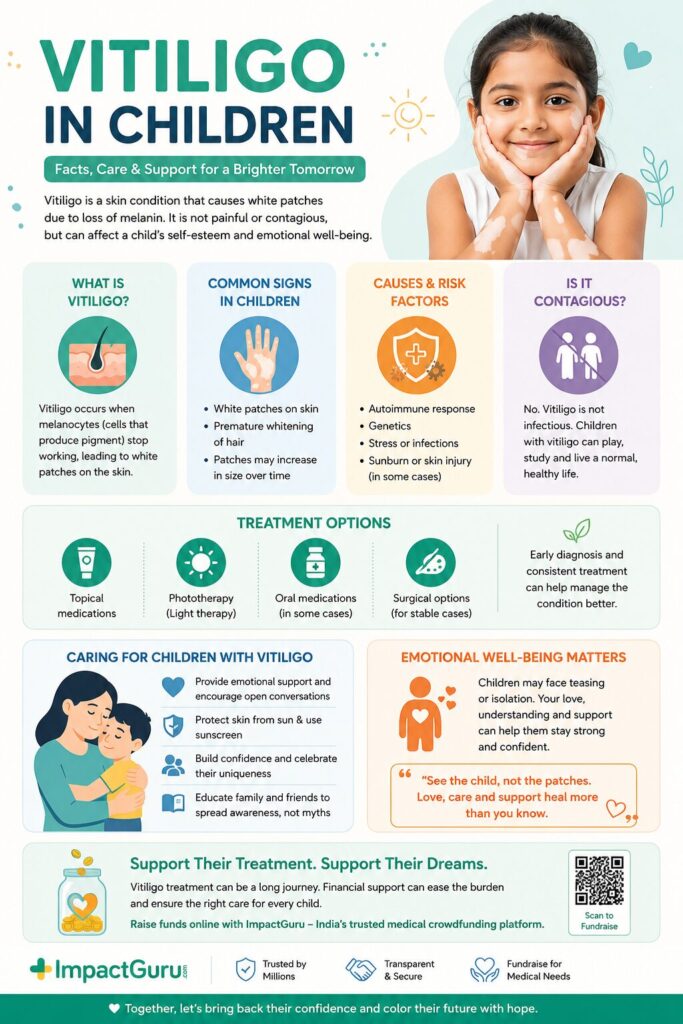
Noticing a light patch on your child’s skin for the first time can bring up a flood of questions all at once: Is this serious? Will it spread? How did it happen? Is it due to my negligence? Take a breath. Vitiligo in children is more common than most parents realize, and it’s not something you did or missed. This guide walks through what vitiligo actually means for a child, what treatment realistically looks like at different ages, and how to support your child emotionally through it, not just medically.
Families managing vitiligo in children can explore child health crowdfunding to help cover treatment and related medical expenses.
Is Vitiligo in Children Common
Yes, in fact more than most parents expect. About half of all people with vitiligo develop it before age 20, and in roughly a quarter of cases, it starts before age 14. Among children and adolescents specifically, up to about 2% may have some degree of vitiligo, a number that’s genuinely surprising to most parents hearing it for the first time. If your child has it, they are far from alone, even if it doesn’t feel that way at home.
What Causes Vitiligo in Children
The most important thing to understand here is that you didn’t cause this, and neither did your child. Vitiligo is an autoimmune condition. In this condition, the immune system mistakenly attacks the cells that give skin its color. It isn’t caused by diet, hygiene, an infection, or anything that happened during pregnancy. Family history can play a role; if vitiligo runs in the family, a child has a somewhat higher chance of developing it, but even then, it isn’t guaranteed and isn’t anyone’s fault.
Read More : Vitiligo Stages: How the Condition Progresses Over Time
Will My Child’s Vitiligo Go Away
This is usually the first question parents ask, and the honest answer is: vitiligo is a chronic condition, meaning it doesn’t fully go away on its own, but children generally respond better to treatment than adults do.
One study following children treated with narrow-band UVB found most cases were generalized (the more common type), with response rates in children often exceeding 85% for generalized vitiligo. There’s also a genuinely encouraging pattern with segmental vitiligo, the type limited to one area, which tends to stabilize within six months to a year in children and often stays that way long-term. The takeaway: “chronic” doesn’t mean “hopeless.” Most children who start treatment see real improvement.
Is Vitiligo Treatment Safe for Children
Yes, generally, vitiligo treatment is considered safe for children, though there are some age limits worth knowing about.
- For younger kids, doctors usually start with topical creams like tacrolimus, often at a gentler strength than what’s used for adults.
- Light therapy (NB-UVB) is another option that’s been studied and used safely in children for over 30 years, usually starting around age 6-7, with eye protection worn throughout each session.
- Ruxolitinib, a newer cream treatment, is currently approved for kids 12 and up, though it’s being studied in younger children too, including some as young as 2.
- For very young kids, doctors weigh how much a child can realistically handle day to day against the benefits of starting early.
Sticking with a treatment consistently tends to matter more than how strong it is.
Helping Your Child Build Confidence
Medical treatment is only half the picture. Vitiligo can affect how a child feels about themselves, especially once they’re old enough to notice other kids looking or asking questions, and this part of the journey deserves just as much attention as the treatment plan itself.
- Talk about it honestly, at their level: Kids often handle it better when they understand simply what’s happening in their own words, rather than sensing that something’s being hidden or treated as shameful.
- Prepare them for questions from other kids: A simple, confident explanation (“it’s just how my skin makes color, it’s not contagious”) goes a long way, and rehearsing it at home helps.
- Involve them in decisions where appropriate: Whether or not to use camouflage makeup, how to talk to a teacher, these choices feel less overwhelming when a child has some say.
- Watch for signs of social withdrawal or anxiety: If you do see such signs, don’t hesitate to involve a counselor or child psychologist if it starts affecting school or friendships. This is a real part of care, not an overreaction.
- Connect with other families going through the same thing: If available, this is one of the best ways to boost a child’s confidence and make them feel comfortable. Kids and parents alike often find real comfort in not being the only ones.
When to See a Pediatric Dermatologist
If you notice a new light patch on your child’s skin, it’s worth getting it looked at rather than waiting to see if it spreads. Early evaluation matters because starting treatment sooner, especially before age 12, tends to lead to better outcomes, and because a dermatologist can also rule out other conditions that look similar ( our guide comparing vitiligo to other skin conditions can help you understand the difference in the meantime).
Ongoing treatment for a child- phototherapy sessions, prescriptions, repeat consultations- can add up over months or years, and like adult vitiligo treatment, it’s often not covered by insurance. If cost becomes a genuine concern for your family, an online donation platform is technically one option worth knowing about for the portion insurance won’t cover. Options for fundraising in India through a medical crowdfunding platform exist for exactly this kind of ongoing family medical expense; it’s worth checking directly with a platform on eligibility for your child’s specific treatment before relying on it as your main plan.
Also Read : White Patches on Skin: What’s Causing Them and When to Worry

Conclusion
A vitiligo diagnosis in your child isn’t the emergency it might feel like in the first few days. It’s a manageable, chronic condition with real treatment options, especially when caught early, and children tend to respond better to treatment than adults do. The most important things you can offer right now are a good pediatric dermatologist, patience with the timeline, and an environment where your child feels safe talking about how they feel, not just how their skin looks. Explore our vitiligo treatment guide next to start building your child’s care plan.
FAQs
Vitiligo is a skin condition in which children develop lighter or white patches due to loss of pigment-producing cells.
No. Vitiligo is not contagious and cannot spread from one person to another through physical contact.
Yes. Treatment may help restore skin colour or slow progression. A dermatologist can recommend suitable options based on the child’s condition.
Yes. Visible skin changes may affect a child’s confidence and emotional health. Support from parents, teachers, and healthcare professionals can help.
Families facing financial difficulties may explore medical crowdfunding. Platforms such as ImpactGuru can help families raise donations online from friends, relatives, and wider communities.
Families can consider a best crowdfunding platform India like ImpactGuru to create an online fundraiser and raise donations online for eligible medical expenses.