

Table of Contents
- Quick Summary
- Introduction
- What is Vitamin B6 and Why Is It Important?
- Early Warning Signs of Vitamin B6 Deficiency in Indians
- Is Vitamin B6 Deficiency a Sign of an Underlying Disease?
- What are the Causes of Vitamin B6 Deficiency in India?
- Best Foods to Prevent Vitamin B6 Deficiency Naturally
- Diagnosis of Vitamin B6 Deficiency in India
- Cost of Diagnosis and Treatment of Vitamin B6 Deficiency in India
- Conclusion
- FAQs
Quick Summary
- Vitamin B6 Deficiency in India is often secondary to chronic illnesses like TB and kidney disease.
- Early signs include fatigue, cracked lips, tingling, and mild anemia.
- Diagnosis requires a PLP blood test and medical evaluation.
- Mild cases are inexpensive to treat, but chronic disease increases costs.
- Early intervention prevents nerve damage and long-term complications.
Introduction
According to the National Family Health Survey (NFHS-5) and research supported by the Indian Council of Medical Research, nearly 57% of women aged 15–49 are anaemic. While most focus on iron, Vitamin B6 deficiency in India plays a significant role in this burden. This nutrient is often overlooked despite its crucial role in brain function, nerve health, and red blood cell production.
As part of the larger problem of nutrient deficiency in India and the rising prevalence of vitamin deficiencies, inadequate dietary diversity, chronic illnesses, and certain medications increase the risk. Thankfully, with early recognition and timely treatment, Vitamin B6 deficiency is preventable and manageable.
What is Vitamin B6 and Why Is It Important?
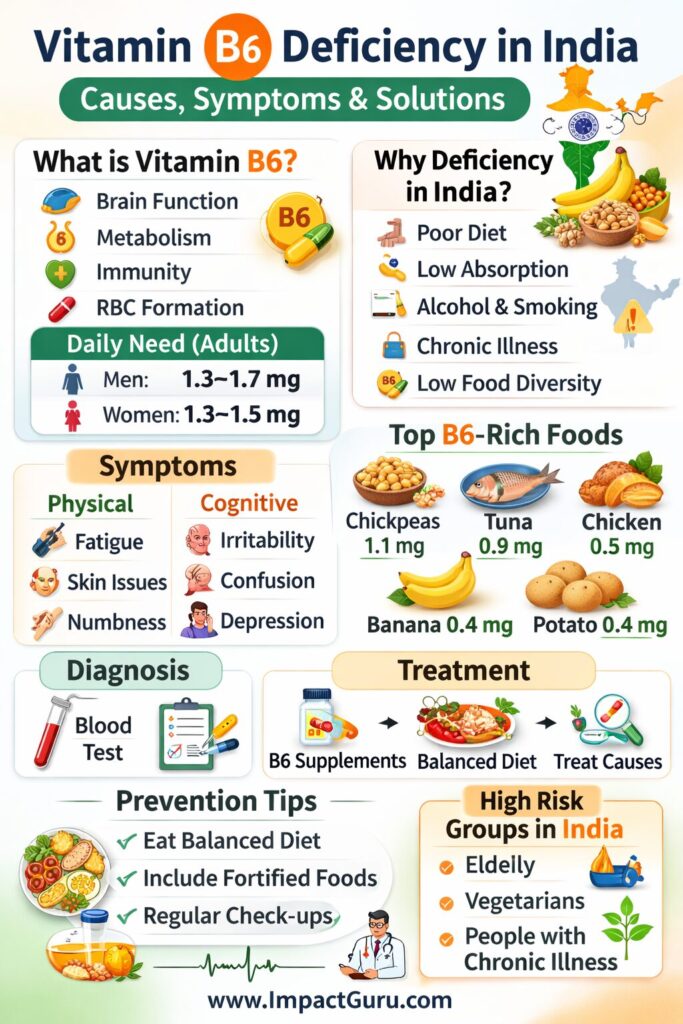
Vitamin B6, also known as pyridoxine, is a water-soluble B-complex vitamin essential for brain development, red blood cell formation, immune strength, and protein metabolism. In India, where dietary diversity can vary widely, Vitamin B6 plays a critical role in preventing anemia, nerve damage, and mood-related symptoms linked to broader nutrient deficiency.
Biologically, Vitamin B6 acts as a coenzyme in more than 100 enzyme reactions, primarily those involved in amino acid metabolism. It helps produce neurotransmitters like serotonin and dopamine (mood regulation), supports hemoglobin synthesis (oxygen transport), and aids immune cell production.
Recommended Daily Intake (India)
As per the Indian Council of Medical Research National Institute of Health 2020 guidelines:
- Infants & Toddlers (0-3 years): Needs are small, ranging from 0.1 mg to 0.5 mg.
- Growing Children (4-13 years): Intake should increase to 0.6 mg – 1.0 mg to support brain development.
- Teens & Adults (14-50 years):
- Men: Need 1.3 mg – 1.9 mg.
- Women: Need 1.2 mg – 1.9 mg.
- Seniors (51+ years): Requirements rise to 1.5 mg – 1.7 mg to protect nerve health.
- Expectant & New Mothers: This is the highest-need group at 2.0 mg – 2.3 mg per day.
Requirements may increase in chronic illness, high-protein diets, and certain medical treatments (such as tuberculosis therapy).
Adequate intake is especially important in India, where anemia remains highly prevalent and micronutrient gaps often overlap.
The Secondary Deficiency Concept
Vitamin B6 deficiency is often secondary, meaning it develops because of another medical condition rather than simple dietary neglect. For example:
- A dialysis patient may lose water-soluble vitamins.
- A TB patient on isoniazid therapy may experience drug-induced depletion.
- A person with chronic alcoholism may have impaired activation of the vitamin.
In such cases, treating the deficiency requires addressing the underlying disease, not just taking supplements. This distinction is critical for accurate diagnosis and long-term recovery.
Quick Answer: What does Vitamin B6 do in the body?
Vitamin B6 helps the body convert food into energy, produce neurotransmitters like serotonin, form hemoglobin for oxygen transport, and strengthen immune function. It acts as a coenzyme in over 100 metabolic reactions, making it essential for brain health, red blood cell production, and protein metabolism. In many cases, it is secondary to an underlying medical condition rather than simple low intake.
Early Warning Signs of Vitamin B6 Deficiency in Indians
Vitamin B6 deficiency in India often develops gradually and may initially present with subtle, non-specific symptoms. Because these signs overlap with other vitamin deficiencies in India, such as B12 or iron deficiency, early recognition is important for timely testing and treatment.
Common early warning signs include:
- Persistent fatigue despite adequate sleep
- Irritability, mood changes, or mild depression (due to reduced serotonin production)
- Cracked lips (angular cheilitis) and an inflamed, swollen tongue (glossitis)
- Tingling or numbness in hands and feet (early nerve involvement)
- Seborrheic dermatitis-like skin rashes, especially around the face
- Mild anemia, leading to weakness and pale skin
According to data referenced by the Indian Council of Medical Research, micronutrient deficiencies often coexist in Indian populations, meaning Vitamin B6 deficiency may appear alongside iron or folate deficiency, making proper diagnosis essential.
In high-risk groups such as elderly individuals, patients undergoing tuberculosis treatment, or those with chronic kidney disease, these symptoms may progress faster if untreated.
Quick Answer: What are the early signs of Vitamin B6 deficiency?
Early signs include fatigue, irritability, cracked lips, tongue inflammation, skin rashes, and tingling or numbness in the hands and feet. Mild anemia may also develop. Because symptoms overlap with other deficiencies, a blood test is required for accurate diagnosis.

Is Vitamin B6 Deficiency a Sign of an Underlying Disease?
In many Indian patients, Vitamin B6 deficiency is secondary, meaning it develops due to another medical condition rather than poor diet alone.
Common underlying causes include:
- Tuberculosis therapy (isoniazid use): Interferes with Vitamin B6 metabolism and increases neuropathy risk. Preventive supplementation is commonly prescribed in India.
- Chronic Kidney Disease (CKD): Dialysis and impaired metabolism reduce Vitamin B6 levels.
- Celiac disease and malabsorption disorders: Limit nutrient absorption despite adequate intake.
- Alcohol use disorder: Reduces absorption and activation of Vitamin B6.
Why Treating the Root Cause Matters
If the deficiency is secondary, supplements alone will not provide lasting improvement. The underlying illness must be identified and managed to prevent recurrent anemia, nerve damage, or persistent symptoms.
Quick Answer: Is Vitamin B6 deficiency linked to other diseases?
Yes. In India, Vitamin B6 deficiency is often secondary to tuberculosis treatment, chronic kidney disease, malabsorption disorders, or alcohol use disorder. Treating the underlying condition is essential for long-term recovery.
What are the Causes of Vitamin B6 Deficiency in India?
According to the WHO report 2025, India accounts for nearly 27% of the global tuberculosis burden, making medication-induced Vitamin B6 deficiency clinically significant. Understanding the causes helps in early detection and appropriate treatment.
1. Inadequate Dietary Intake
Low consumption of protein-rich and diverse foods can reduce Vitamin B6 levels. Diets heavily dependent on polished rice with limited pulses, vegetables, or animal protein increase vulnerability, especially in low-income populations facing broader nutrient deficiency in India.
2. Poor Dietary Diversity (Hidden Malnutrition)
Even when calorie intake is sufficient, micronutrient gaps can exist. Limited intake of chickpeas, bananas, fish, poultry, or seeds contributes to a gradual deficiency.
3. Tuberculosis Treatment (Isoniazid Use)
Patients undergoing TB therapy are routinely prescribed pyridoxine because isoniazid interferes with Vitamin B6 metabolism. India bears one of the highest TB burdens globally, making this a significant clinical risk factor.
4. Chronic Kidney Disease
Kidney disease alters Vitamin B6 metabolism and increases loss during dialysis. Patients on long-term dialysis are particularly at risk.
5. Alcohol Dependence
Chronic alcohol consumption reduces absorption, increases breakdown, and impairs activation of Vitamin B6, leading to deficiency and nerve damage.
6. Malabsorption Disorders
Conditions such as celiac disease, inflammatory bowel disease, or chronic diarrhea impair nutrient absorption, causing secondary deficiency.
7. Pregnancy and Lactation
Requirements increase during pregnancy (approximately 2.2 mg/day as per Indian Council of Medical Research guidelines). Without adequate supplementation or diet, the risk of deficiency rises.
8. Elderly Population
Reduced appetite, medication interactions, and poor absorption make older adults more vulnerable.
Quick Answer: What causes Vitamin B6 deficiency in India?
Vitamin B6 deficiency in India is caused by poor dietary diversity, tuberculosis treatment (isoniazid use), chronic kidney disease, alcohol dependence, malabsorption disorders, pregnancy-related increased needs, and aging.
Best Foods to Prevent Vitamin B6 Deficiency Naturally
Preventing Vitamin B6 deficiency in India begins with dietary diversity and early medical evaluation when symptoms appear. Because Vitamin B6 (pyridoxine) is a water-soluble vitamin, the body does not store large amounts; regular intake through food is essential.
Best Foods Rich in Vitamin B6
Including these foods in daily meals can help prevent deficiency:
Vegetarian Sources:
- Chickpeas (chole) – one of the richest plant sources
- Bananas – easily accessible and affordable
- Potatoes – especially with skin
- Spinach and other leafy greens
- Sunflower seeds
Non-Vegetarian Sources:
- Chicken
- Fish (such as tuna and salmon)
- Eggs
Quick Answer: Which foods are rich in Vitamin B6?
A balanced Indian thali that includes pulses, vegetables, and either dairy or lean protein can often meet this requirement naturally. However, diet alone may not correct the deficiency if it is secondary to conditions like tuberculosis treatment, chronic kidney disease, or malabsorption disorders.
Diagnosis of Vitamin B6 Deficiency in India
Diagnosing Vitamin B6 deficiency requires both clinical insight and laboratory tests. Because its symptoms, like fatigue and tingling, overlap with B12 or iron deficiency, accurate testing is essential.
Step 1: Clinical Evaluation
A doctor will first review your medical history. In India, they specifically look for:
- Medication Use: Especially Isoniazid for tuberculosis.
- Chronic Conditions: Kidney disease or digestive disorders.
- Lifestyle Factors: Alcohol consumption and dietary diversity.
- Neurological Signs: Numbness, burning sensations, or balance issues.
Step 2: Laboratory Testing
The most reliable way to confirm a deficiency is a blood test.
- PLP Test: This measures Plasma Pyridoxal 5’-Phosphate, the active form of Vitamin B6.
- Supportive Tests: Doctors may also order a Complete Blood Count (CBC) to check for anemia or kidney function tests.
Cost of Diagnosis and Treatment of Vitamin B6 Deficiency in India
While mild cases may only require affordable supplements, severe or secondary deficiencies linked to chronic illness can increase overall medical expenses significantly.
1. Cost of Diagnostic Tests in India
Confirming Vitamin B6 deficiency requires laboratory testing.
- Plasma Pyridoxal 5’-Phosphate (PLP) test: ₹2,000 – ₹5,000 (varies by city and laboratory)
- Comprehensive vitamin panels: ₹6,000 – ₹10,000 in premium diagnostic centers
- Complete Blood Count (CBC): ₹300 – ₹800
Prices are typically higher in metro cities such as Mumbai, Delhi, and Bengaluru.
Because Vitamin B6 deficiency symptoms overlap with B12, folate, and iron deficiency, doctors often recommend additional tests for accurate diagnosis.
2. Cost of Treatment
Mild Deficiency
- Oral Vitamin B6 tablets: Often less than ₹10–₹20 per strip
Moderate to Severe Deficiency
- High-dose supplements (as prescribed)
- Periodic follow-up testing
3. When Vitamin B6 Deficiency Is Secondary to Chronic Illness
In India, Vitamin B6 deficiency is often secondary to:
- Tuberculosis treatment (isoniazid therapy)
- Chronic Kidney Disease (CKD)
- Dialysis
- Alcohol-related liver disease
- Malabsorption disorders
In such cases, the cost burden shifts from vitamin supplementation to managing the primary illness:
Approximate associated costs:
- Dialysis: ₹1,100 – ₹2,500 per session
- Neuropathy management: ₹5,000 – ₹20,000 per month (medications, consultation, therapy)
- Advanced neurological procedures (rare cases): ₹80,000 – ₹4,00,000 depending on complexity
These figures vary by hospital type and city.
How Medical Crowdfunding Bridges the Gap
For many Indian families, these unexpected costs lead to “medical debt.” When insurance is insufficient, medical crowdfunding provides a verified, donation-based alternative.
Platforms like ImpactGuru allow families to:
- Raise Funds Online: Quickly collect donations for long-term treatments like dialysis or neuropathy care.
- Access Verified Support: Use a trusted donation platform to ensure funds are transferred directly to hospitals.
Quick Answer: What is the cost of testing and treating Vitamin B6 deficiency in India?
A Vitamin B6 (PLP) test typically costs ₹2,000–₹5,000 in India. Oral supplements are inexpensive, often under ₹20 per strip. However, if deficiency is linked to chronic illnesses like kidney disease or tuberculosis, treatment costs may increase significantly due to ongoing medical care.

Conclusion
Vitamin B6 deficiency in India is often overlooked but clinically significant. While mild cases can be corrected through diet and supplementation, many instances are secondary to chronic illnesses such as tuberculosis or kidney disease. Early diagnosis through proper testing prevents complications like anemia and irreversible nerve damage. A balanced diet, timely medical evaluation, and management of underlying conditions remain the most effective strategies. Recognizing the signs early can reduce long-term health and financial burden.
FAQs
Poor diet diversity, low absorption, chronic illnesses, and lifestyle factors like alcohol or smoking.
Fatigue, skin rashes, numbness, irritability, and mood changes.
Chickpeas, tuna, chicken, bananas, potatoes, nuts, and whole grains.
Through a blood test and a doctor’s review of symptoms and diet.
Elderly adults, vegetarians, pregnant women, alcohol users, and people with chronic conditions.