

Table of Contents
- Quick Summary
- Introduction
- What Is Thalassemia?
- Thalassemia in India: The Scale of the Problem
- Types of Thalassemia
- Difference Between Thalassemia Major and Minor
- What are the Symptoms of Thalassemia?
- What Causes Thalassemia?
- How Is Thalassemia Diagnosed?
- Thalassemia Treatment Options
- Thalassemia and Pregnancy
- Complications of Thalassemia
- Thalassemia Prognosis and Survival
- Can Thalassemia Be Prevented?
- Living with Thalassemia: What Ongoing Care Looks Like
- The Cost of Thalassemia Treatment in India
- Conclusion
- FAQs
Quick Summary
- Thalassemia is an inherited blood disorder where the body produces less haemoglobin than it needs, leading to chronic anaemia, and its symptoms range from mild to life-threatening.
- India carries one of the highest thalassemia burdens in the world; an estimated 10,000–15,000 children with thalassemia major are born here every year.
- The condition is caused by genetic mutations passed from parents to children; two carrier parents have a 25% chance of having an affected child with each pregnancy.
- Thalassemia major requires lifelong management through regular blood transfusions, iron chelation therapy, or, in eligible cases, a bone marrow transplant.
- Early diagnosis, genetic counselling, and consistent treatment significantly improve quality of life and long-term survival for thalassemia patients.
Introduction
Every 40 minutes, a child is born in India with Thalassemia Major. This translates to about 10,000 – 15,000 children every year who will require lifelong blood transfusions to survive. While thalassemia is incredibly common in India, a lack of routine screening means most families only discover it when their child becomes critically ill.
The name itself comes from the Greek words thalassa (sea) and haima (blood). This is because scientists first found the condition in populations around the Mediterranean Sea. Today, however, the geographic reality has shifted. India now carries the highest burden of thalassemia in the world.
This guide simplifies everything you need to know about the condition. It covers:
- The Cause: Why thalassemia happens and how it passes through genes.
- The Signs: What the Thalassemia symptoms look like at different stages of life.
- The Steps: How doctors diagnose the condition through blood tests.
- The Options: What standard treatments and curative therapies are available?
- The Reality: What daily life looks like for patients and caregivers.
Whether you are a parent processing a new diagnosis, a carrier checking your risks, or a family member offering support, this guide is built for you.
What Is Thalassemia?
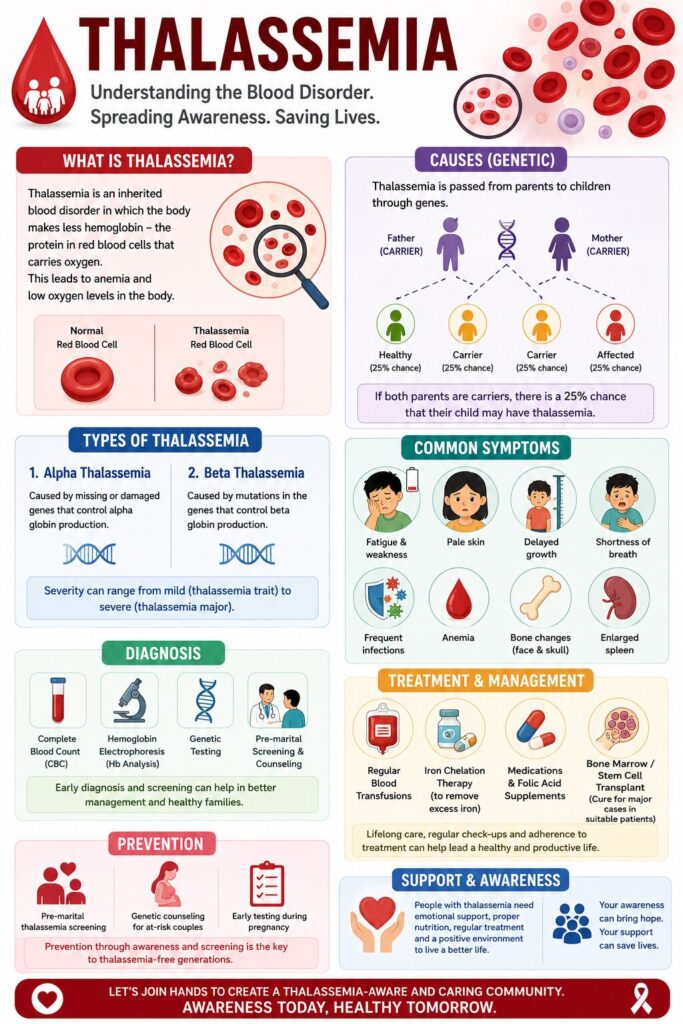
Thalassemia is a genetic blood disorder in which the body produces abnormal or insufficient haemoglobin, the protein in red blood cells responsible for carrying oxygen. The resulting shortage of healthy red blood cells causes anaemia, which can range from mild fatigue to a severe, life-threatening condition requiring regular medical intervention.
To understand thalassemia, think of hemoglobin as a structure built from four protein chains:
- Alpha-globin chains: Controlled by four genes (two inherited from each parent)
- Beta-globin chains: Controlled by two genes (one inherited from each parent)
When any of these inherited genes are defective or missing, the delicate assembly line breaks down. As a result, the body either produces too little hemoglobin or creates an abnormal form that cannot function properly.
The Domino Effect on the Body
The consequences of this genetic defect affect the entire body:
- Fragile Red Blood Cells: Red blood cells carrying defective hemoglobin are smaller, weaker, and break down much faster than the normal 120-day lifespan.
- Bone Marrow Overwork: The body detects the oxygen shortage and signals the bone marrow to produce more red blood cells to compensate.
- Organ Stress and Anemia: Over time, the bone marrow cannot keep up with the rapid destruction of blood cells. This ongoing cycle leads to chronic anemia, skeletal stress, enlarged organs, and, in severe cases, lifelong dependence on medical treatment.
How Thalassemia Is Inherited
Thalassemia is an autosomal recessive disorder. This means a child must inherit defective genes from both parents to develop the severe form of the disease, known as thalassemia major.
If a child inherits a mutated gene from only one parent, they become a thalassemia carrier (also called thalassemia minor or trait). Carriers usually have no symptoms or only mild anemia and often live completely normal lives. However, they can still pass the defective gene to their children.
Thalassemia in India: The Scale of the Problem
The numbers are stark: India is the thalassemia capital of the world, home to the largest population of children with Thalassemia Major globally.
Data from the ICMR-National Institute of Immunohaematology (NIIH) reveals the true weight of this public health crisis:
- Carrier Base: According to the National Health Mission (NHM) Guidelines on Hemoglobinopathies, the average prevalence of beta-thalassemia carriers in India is 3% to 4%. This translates to a massive baseline of 35 to 45 million hidden carriers across the country who show no symptoms.
- Annual Birth Rate: According to the Press Information Bureau (PIB) Delhi, between 10,000 and 15,000 children are born with Thalassemia Major every year in India.
- Global Share: According to epidemiological tracking published in the Journal of South Asian Federation of Obstetrics and Gynaecology (JSAFOG), roughly 10% of the entire global burden of the disease falls on India.
Community and Regional Hotspots
The risk is not distributed evenly. Because of historical marriages within specific social groups, carrier rates spike dramatically in certain communities and states:
- High-Risk Communities: Ethnic groups, including Sindhis, Kutchi Bhanushalis, and Lohanas, experience carrier rates as high as 8% to 17%.
- High-Burden States: The geographic strain is concentrated heaviest across Maharashtra, Gujarat, West Bengal, Punjab, and Tamil Nadu.
The Awareness Gap
Despite the massive scale of these statistics, public awareness remains dangerously low. Because carrier screening is not a routine protocol, the vast majority of families only discover thalassemia exists after a child falls critically ill, missing the window for early management and care.
Types of Thalassemia
Thalassemia is divided into Alpha Thalassemia and Beta Thalassemia depending on which hemoglobin protein chain is affected. Each type ranges from mild carrier states with little or no symptoms to severe transfusion-dependent disease requiring lifelong treatment.
1. Alpha Thalassemia
Hemoglobin relies on four alpha globin genes (two inherited from each parent) to form correctly. The severity of Alpha Thalassemia depends on how many of these four genes are missing, damaged, or mutated.
Silent Carrier (1 Mutated Gene)
This is the mildest form of Alpha Thalassemia.
- Usually causes no symptoms
- Daily life remains completely normal
- The person can still pass the mutation to their children
Most people only discover they are carriers during family screening or routine blood testing.
Alpha Thalassemia Trait / Minor (2 Mutated Genes)
This form usually causes mild anemia.
Common features include:
- Mild fatigue
- Smaller-than-normal red blood cells (microcytosis)
- Mild anemia is often mistaken for iron deficiency
Most individuals do not require treatment and live normal lives.
Hemoglobin H Disease (3 Mutated Genes)
This is a more serious form of Alpha Thalassemia that causes chronic anemia.
Symptoms may include:
- Moderate to severe anemia
- Weakness and fatigue
- Enlarged spleen
- Mild jaundice
Some patients may require occasional blood transfusions, especially during infections, pregnancy, or physical stress.
Alpha Thalassemia Major / Hydrops Fetalis (4 Mutated Genes)
This is the most severe form of Alpha Thalassemia.
- The body produces little to no functional alpha-globin chains
- Severe anemia develops before birth
- Serious complications occur during pregnancy
Without highly specialized fetal treatment, including intrauterine blood transfusions, the condition is often fatal before or shortly after birth.
2. Beta Thalassemia
Beta Thalassemia is the more common and clinically significant form seen in India.
Hemoglobin depends on two beta globin genes (one inherited from each parent). The severity depends on whether one or both genes are affected and how severely they are altered.
Beta Thalassemia Minor / Trait (1 Mutated Gene)
Also known as the thalassemia carrier state.
Common features include:
- Mild anemia or no symptoms at all
- Small red blood cells
- Frequently mistaken for simple iron-deficiency anemia.
Most carriers have a normal life expectancy and do not require treatment.
Beta Thalassemia Intermedia (2 Mildly Altered Genes)
This form causes moderate chronic anemia that falls between Minor and Major in severity.
Symptoms and complications may include:
- Persistent fatigue
- Enlarged spleen
- Delayed growth in some children
- Occasional need for blood transfusions
Some individuals remain stable for years without regular transfusions, while others gradually become transfusion-dependent later in life.
Beta Thalassemia Major / Cooley’s Anemia (2 Severely Altered Genes)
This is the most severe form of Beta Thalassemia.
- The body produces very little or no functional beta globin
- Severe anemia develops within the first 1–2 years of life
- Lifelong blood transfusions become necessary for survival
Without regular treatment, Thalassemia Major can lead to severe anemia, bone deformities, organ enlargement, heart complications, and life-threatening organ damage during childhood.
Difference Between Thalassemia Major and Minor
Thalassemia Minor (trait) is usually a mild carrier condition with little or no impact on daily life, while Thalassemia Major is a severe inherited blood disorder that requires lifelong medical treatment and regular blood transfusions.
| Feature | Thalassemia Minor | Thalassemia Major |
| Gene Inheritance | One defective gene | Two defective genes |
| Severity | Mild | Severe |
| Symptoms | Often none or mild anaemia | Severe anaemia and organ complications |
| Blood Transfusions | Usually not needed | Required regularly for life |
| Life Expectancy | Normal | Depends on treatment access |
| Diagnosis | Often incidental | Usually diagnosed during infancy |
| Treatment | Usually none | Lifelong management required |
Many people with thalassemia minor only discover they are carriers during pregnancy screening, premarital testing, or after a child in the family is diagnosed.
What are the Symptoms of Thalassemia?
Thalassemia symptoms range from completely unnoticeable to severe and life-threatening. Thalassemia carriers often experience no symptoms or only mild anemia. Severe forms, particularly Thalassemia Major, can cause profound anemia, delayed growth, bone changes, organ enlargement, and serious complications that require lifelong medical care.
1. Silent or Absent Symptoms (Carriers / Minima)
- Individuals with Alpha Thalassemia Minima or Beta Thalassemia Minor are considered thalassemia carriers.
Most carriers experience no noticeable daily symptoms and live completely normal lives. - Many people only discover their carrier status during routine blood tests, premarital screening, pregnancy testing, or family investigations after a child is diagnosed with thalassemia.
2. Mild to Moderate Symptoms (Thalassemia Minor & Intermedia)
People with Alpha Thalassemia Minor or Thalassemia Intermedia may develop mild to moderate chronic anemia. Common symptoms include:
- Persistent fatigue and weakness, even without heavy physical activity
- Pale skin or a mild yellowish tint (jaundice)
- Shortness of breath during exercise or routine activity
- Mild anemia that is often mistaken for iron-deficiency anemia
- Mild enlargement of the spleen, especially in thalassemia intermedia
Some individuals remain stable for years with minimal treatment, while others may require occasional medical support during illness, pregnancy, or periods of physical stress.
3. Severe Symptoms (Thalassemia Major)
Symptoms of Beta Thalassemia Major usually appear during infancy, often between 3 and 6 months of age, as natural fetal hemoglobin levels begin to decline.
Without regular blood transfusions and ongoing treatment, symptoms progressively worsen and may include:
- Severe anemia causing extreme tiredness, irritability, weakness, and poor feeding
- Slow growth, poor weight gain, and delayed puberty
- Enlarged spleen (splenomegaly) and liver (hepatomegaly)
- Bone deformities, particularly involving the facial bones and skull, are caused by bone marrow expansion.
- Yellowing of the skin and eyes (jaundice)
- Dark or tea-colored urine due to the rapid breakdown of red blood cells
- Increased susceptibility to infections
Why These Symptoms Happen:
Because defective red blood cells break down rapidly, the body constantly struggles to replace them. The bone marrow expands in an attempt to produce more blood cells, while organs such as the liver and spleen become overworked, clearing damaged cells from circulation.
Note: Without treatment, severe thalassemia major can lead to heart complications, organ damage, severe skeletal abnormalities, and life-threatening anemia during childhood.
What Causes Thalassemia?
Thalassemia is caused by mutations or deletions in the genes responsible for producing hemoglobin, the protein that carries oxygen in red blood cells. These genetic changes are inherited from parents to children. To develop the severe form of the disease, known as Thalassemia Major, a child usually must inherit defective genes from both parents.
How Inheritance Works
Beta thalassemia follows an autosomal recessive inheritance pattern. This means both parents must usually be thalassemia carriers for a child to develop the major form of the disease.
When two carriers have a child together, each pregnancy carries the following possibilities:
- 25% chance: The child inherits two defective genes and develops Thalassemia Major.
- 50% chance: The child inherits one defective gene and becomes a thalassemia carrier (Thalassemia Minor or Trait).
- 25% chance: The child inherits two normal genes and is completely unaffected.
If only one parent is a carrier, the child cannot develop Thalassemia Major but may still inherit the carrier trait.
This is why premarital screening, family testing, and pre-pregnancy genetic counselling are strongly recommended in high-risk communities and regions.
Why Is Thalassemia More Common in Certain Indian Communities?
The high prevalence of thalassemia in specific communities across India is linked to both historical and social factors.
Historical Malaria Protection
Researchers believe that carrying a single thalassemia gene may have provided partial protection against severe malaria in earlier centuries. In malaria-endemic regions, carriers were more likely to survive and pass the gene to future generations.
Community Endogamy
The long-standing practice of marrying within the same community or social group also contributed to higher carrier rates in certain populations. Over generations, this increased the frequency of thalassemia genes within communities such as Sindhis, Kutchi Bhanushalis, and Lohanas.
How Is Thalassemia Diagnosed?
Thalassemia is diagnosed through blood tests that examine haemoglobin levels, red blood cell size and count, and haemoglobin types. Genetic testing confirms the specific mutation. Diagnosis in thalassemia major typically occurs within 3-6 months of age. Prenatal diagnosis is available for at-risk pregnancies.
Blood Tests
- Complete Blood Count (CBC): The first test ordered. In thalassemia, the CBC shows low haemoglobin, reduced red blood cell count, and smaller-than-normal red blood cells (microcytosis).
- Peripheral Blood Smear: The shape and appearance of red blood cells under a microscope, thalassemia cells appear pale, irregular, and fragile.
- Serum Ferritin and Iron Studies: These rule out iron deficiency anaemia, which mimics thalassemia on a CBC. Important distinction, because treating thalassemia carriers with iron supplements can cause iron overload.
- Haemoglobin Electrophoresis (HPLC): The most important diagnostic test. It identifies the type and proportion of haemoglobin variants present, confirming beta thalassemia and distinguishing trait from major.
- Reticulocyte Count: Measures immature red blood cells to assess how the bone marrow is compensating.
Genetic Testing
Genetic testing identifies the specific mutation on the alpha or beta globin gene. This is essential for confirming alpha thalassemia (which cannot be diagnosed on HPLC alone), for carrier detection, and for planning family pregnancies.
Prenatal Diagnosis
For couples who are both confirmed carriers, prenatal diagnosis is available through:
- Chorionic Villus Sampling (CVS): Done at 10–12 weeks of pregnancy
- Amniocentesis: Done at 14–18 weeks
These tests can determine with high accuracy whether the foetus has been affected. Genetic counselling should accompany any decision about these tests.
Newborn Screening
India has significantly expanded its screening framework. Under the National Health Mission, targeted point-of-care newborn screening programs are actively expanding across high-burden states (like Maharashtra and Gujarat). If you are a known carrier, do not wait for routine hospital protocols; request a hemoglobin screening for your newborn immediately at birth.
Thalassemia Treatment Options
There is no single treatment for all forms of thalassemia. Mild cases may need no treatment. Moderate cases require monitoring and occasional intervention. Thalassemia major requires lifelong blood transfusions and iron chelation, and a bone marrow or stem cell transplant remains the only established cure.
Blood Transfusions
For thalassemia major patients, regular blood transfusions are the cornerstone of management. They maintain haemoglobin at levels that allow normal growth, activity, and organ function.
- Patients typically require transfusions every 2–4 weeks
- Each session takes 2–4 hours
- Over the years of life, a single patient may require hundreds of units of blood.
The challenge is not just logistics. Repeated transfusions cause iron to accumulate in the body because blood contains iron, and the body has no natural mechanism to excrete excess iron. Without management, this iron deposits in the heart, liver, and endocrine glands, causing serious organ damage.
Iron Chelation Therapy
Iron chelation removes excess iron from the body and is essential for any patient receiving regular transfusions.
- Deferoxamine (Desferal): Given as a slow subcutaneous infusion over 8–12 hours, 5–6 nights a week. Highly effective but cumbersome.
- Deferasirox (Exjade/Asunra): An oral medication taken daily. More convenient and widely used in India today.
- Deferiprone (Kelfer): Another oral option, particularly used for cardiac iron overload.
Iron chelation is not optional for transfusion-dependent patients. Inadequate chelation is one of the leading causes of early death in thalassemia major.
Folic Acid Supplementation
Folic acid supports red blood cell production and is recommended for all thalassemia patients, particularly those not receiving regular transfusions.
Splenectomy
In cases where the spleen becomes severely enlarged and begins destroying transfused blood cells too rapidly, surgical removal of the spleen (splenectomy) may be recommended. This increases transfusion efficiency but also raises infection risk.
Bone Marrow and Stem Cell Transplant (BMT/SCT)
A matched bone marrow or stem cell transplant is currently the only established cure for thalassemia.
The transplant replaces the patient’s defective bone marrow with healthy marrow from a compatible donor. The donor’s stem cells then begin producing normal haemoglobin. For patients transplanted early (before significant organ damage), success rates at experienced Indian centres range from 80–90% when using a matched sibling donor.
The challenges are significant:
- Only about 25–30% of patients have a compatible sibling donor
- The procedure carries serious risks, including graft-versus-host disease, infections, and transplant failure
- In India, the cost of BMT ranges from approximately ₹12.5 lakh to ₹33.5 lakh, depending on the centre, donor type, and complications.
Unrelated donor transplants are available but carry higher risks and costs. Research into haploidentical (half-matched) transplants and gene therapy is ongoing, with promising early results.
Gene Therapy
Advanced and Emerging Options are as follows:
- Luspatercept (Rojuzda / Reblozyl): An injectable erythroid maturation agent that helps red blood cells mature properly, successfully reducing the total transfusion burden. While the original imported drug is expensive, the widespread availability of domestic versions like Rojuzda has made this therapy much more accessible in India.
- Gene Therapy & CRISPR: This cutting-edge frontier involves removing a patient’s own stem cells, genetically repairing them to produce healthy hemoglobin, and infusing them back. While international breakthroughs (like Casgevy) are transitioning toward regulatory reviews, indigenous clinical trials are actively progressing at premier Indian research institutions to make this permanent cure available locally.
Thalassemia and Pregnancy
Most thalassemia carriers can have healthy pregnancies with routine monitoring. However, women with Thalassemia Major face higher maternal and fetal risks and require specialised medical care. Preconception counselling and early genetic screening are strongly recommended when one or both partners are thalassemia carriers.
Pregnancy for Thalassemia Carriers (Minor)
For individuals with Alpha or Beta Thalassemia Minor, pregnancy is generally safe, though closer blood monitoring may be required.
- Worsening Anemia: Mild anemia can become more noticeable during pregnancy because blood volume naturally increases.
- Iron Supplement Precautions: Iron supplements should only be taken if blood tests confirm true iron deficiency. Many thalassemia carriers already have normal or elevated iron stores, and unnecessary supplementation may contribute to iron overload.
Pregnancy for Thalassemia Major Patients
Advances in transfusion care and iron chelation therapy have made pregnancy increasingly possible for women with Thalassemia Major. However, these pregnancies are still considered high risk and require multidisciplinary care involving hematologists, obstetricians, cardiologists, and endocrinologists.
- Maternal Risks: Pregnancy increases strain on the heart and other organs already affected by chronic anemia and iron overload, raising the risk of cardiac complications, diabetes, and other pregnancy-related problems.
- Fetal Risks: Severe maternal anemia may increase the likelihood of premature delivery, low birth weight, and intrauterine growth restriction (IUGR).
- Carrier Couples: If both parents are confirmed thalassemia carriers, prenatal diagnostic options such as Chorionic Villus Sampling (CVS) or amniocentesis may be recommended early in pregnancy.
Complications of Thalassemia
When severe thalassemia is not adequately treated, or when patients live with the condition for many years, complications extending far beyond anemia can develop.
Iron Overload
Iron overload is the most serious long-term complication in transfusion-dependent thalassemia patients. Because repeated blood transfusions introduce excess iron into the body, iron gradually accumulates in vital organs.
- Heart: May lead to arrhythmias, cardiomyopathy, and heart failure
- Liver: Can cause fibrosis, liver damage, and cirrhosis
- Endocrine System: May trigger diabetes, thyroid disorders, delayed puberty, and fertility problems
Bone Disease
Chronic anemia forces the bone marrow to expand in an attempt to produce more red blood cells. Over time, this weakens bone structure and increases the risk of:
- Osteoporosis
- Bone pain
- Fractures
- Facial bone deformities in poorly controlled disease
Increased Infection Risk
Patients with thalassemia may face a higher risk of infections for several reasons:
- Individuals who undergo splenectomy (spleen removal) become more vulnerable to serious bacterial infections
- Repeated transfusions historically carried risks of Hepatitis B, Hepatitis C, and HIV, though modern blood screening methods have made transfusions significantly safer today
Delayed Growth and Development
Children with poorly controlled Thalassemia Major may experience:
- Slow physical growth
- Delayed puberty
- Reduced bone density
- Hormonal complications related to iron overload
Heart Complications
Cardiac iron overload remains one of the leading causes of mortality in adults with transfusion-dependent thalassemia.
Regular monitoring through Cardiac MRI (T2*) scans allows doctors to detect iron accumulation early and adjust iron chelation therapy before permanent heart damage develops.
Thalassemia Prognosis and Survival
With modern treatment and consistent medical care, many individuals with Thalassemia Major now live into their 50s, 60s, and beyond with significantly improved quality of life. While severe thalassemia was historically fatal during childhood or adolescence, survival today depends heavily on regular blood transfusions, effective iron chelation therapy, and long-term specialist monitoring.
The Survival Timeline: Then vs. Now
Data from international thalassemia registries show a major improvement in survival rates over the past few decades.
- Early Childhood Survival: For children receiving regular treatment and monitoring, survival from birth through age 10 now approaches 99%.
- Long-Term Outcomes: Beyond early adulthood, outcomes begin to vary more significantly depending on the consistency of treatment, particularly iron chelation therapy and cardiac monitoring.
- The Importance of Treatment Adherence: Iron overload develops gradually and may remain silent for years before causing symptoms. Missing chelation therapy or follow-up care can allow excess iron to damage the heart, liver, and endocrine organs over time.
The Healthcare Reality in India
Outcomes for thalassemia patients in India are often shaped by access to healthcare infrastructure and specialist services.
- Access in Urban Centres: Patients treated in major cities generally benefit from safer blood supplies, experienced hematologists, regular monitoring, and advanced diagnostics such as Cardiac MRI (T2*) scans.
- Challenges in Rural Areas: Families in smaller towns and rural regions may face difficulties, including inconsistent blood availability, delayed diagnosis, limited access to iron chelation therapy, and fewer specialist treatment centres.
The Closest Thing to a Cure
A matched Hematopoietic Stem Cell Transplant (HSCT), commonly called a Bone Marrow Transplant (BMT), remains the only established curative treatment for Thalassemia Major.
- Best Timing for Transplant: Outcomes are generally strongest when transplantation is performed early in childhood, ideally before significant iron-related organ damage develops.
- Why Early Treatment Matters: Repeated blood transfusions over many years can lead to iron accumulation in vital organs such as the heart and liver. Performing transplantation before severe organ damage occurs improves long-term transplant success and reduces complications.
Can Thalassemia Be Prevented?
Thalassemia cannot be reversed once a child is born with the condition. However, many cases of Thalassemia Major can be prevented through carrier screening, genetic counselling, and prenatal diagnosis. Several countries have significantly reduced new thalassemia cases through large-scale awareness and screening programmes.
What Works in Practice
Premarital and Pre-Pregnancy Screening: A simple blood test, such as HbA2 estimation or HPLC testing, can identify whether a person is a thalassemia carrier. If both partners are carriers, genetic counselling helps them understand the chances of passing the condition to their children and the reproductive options available.
Genetic Counselling: Genetic counsellors help couples understand inheritance risks, prenatal testing options, and family planning decisions in a medically informed and non-directive manner.
Prenatal Diagnosis: For couples where both partners are confirmed carriers, prenatal tests such as Chorionic Villus Sampling (CVS) or amniocentesis can determine whether the fetus is affected by Thalassemia Major during pregnancy.
Screening Programmes and Public Awareness: Countries such as Cyprus and Sardinia have successfully reduced severe thalassemia births through widespread carrier screening and awareness programmes. In India, the National Health Mission (NHM) supports haemoglobinopathy screening initiatives in several high-burden states, including Maharashtra, Gujarat, and Punjab.
Early screening remains one of the most effective ways to reduce the long-term burden of severe thalassemia in India.
Living with Thalassemia: What Ongoing Care Looks Like
For individuals with Thalassemia Major, treatment is lifelong and requires consistent medical monitoring, regular transfusions, and careful management of iron overload and organ health.
The Regular Treatment Routine
Blood Transfusions: Most patients with transfusion-dependent thalassemia require blood transfusions every 2 to 4 weeks to maintain healthy hemoglobin levels and support normal growth, activity, and organ function.
Iron Chelation Therapy: Because repeated transfusions gradually cause iron buildup in the body, daily iron chelation therapy is essential. Medications such as Deferasirox, Deferiprone, or Deferoxamine help remove excess iron and reduce long-term organ damage.
Ongoing Monitoring and Follow-Up
Long-term care also involves regular testing to detect complications early and adjust treatment plans when needed.
Common monitoring includes:
- Cardiac MRI (T2*) scans to assess iron levels in the heart
- Liver iron concentration (LIC) monitoring through MRI
- Blood sugar, thyroid, and hormone testing
- Bone density scans to detect osteoporosis
- Viral infection screening related to transfusion safety
Care After Splenectomy
Some patients may require surgical removal of the spleen (splenectomy) if the spleen becomes excessively enlarged or destroys transfused blood cells too rapidly.
After splenectomy, patients face a higher risk of severe bacterial infections and usually require:
- Pneumococcal, meningococcal, and Haemophilus influenzae (Hib) vaccinations
- Preventive antibiotics as advised by their doctor
- Prompt medical attention for fever or signs of infection
Transitioning Into Adult Care
As children with thalassemia grow older, their healthcare needs change significantly. Adult patients may require ongoing support for:
- Fertility and reproductive health
- Bone health and osteoporosis
- Diabetes and hormonal complications
- Cardiac monitoring
- Mental health and treatment-related fatigue
Long-term care is ideally managed by an adult hematologist experienced in transfusion-dependent conditions, alongside psychological and family support when needed.
The Cost of Thalassemia Treatment in India
Thalassemia major is not just medically demanding; it is financially crushing for most families.
Annual treatment costs for a thalassemia major patient in India, covering transfusions, iron chelation, and monitoring, are estimated at USD 5,000–13,000 per year, depending on the city, hospital, and chelation regimen. Over a childhood and adolescence, these cumulative costs run into tens of lakhs of rupees before a transplant is even considered.
A bone marrow transplant, the curative option, costs between ₹12.5 lakh and ₹33.5 lakh at Indian hospitals, and this is before accounting for complications, extended hospital stays, or the need for a matched unrelated donor.
For families who find themselves facing these costs, medical crowdfunding has become a practical lifeline. Platforms dedicated to medical crowdfunding and online crowdfunding allow families to raise funds transparently from a network of supporters, friends, family, community, and strangers moved by the story.
Read More: You can read our detailed guide on how to raise funds for thalassemia treatment here
Conclusion
Thalassemia is a condition that demands attention from families, from the medical community, and from society at large. It is preventable through awareness, detectable through simple blood tests, and manageable, sometimes curable, through timely, appropriate care.
Receiving a thalassemia diagnosis, whether for yourself, your child, or a family member, can feel overwhelming. But this is a disease that medicine has made enormous strides against. Children who are properly managed today go to school, play sports, build careers, and live full lives. The goal of this guide is to make sure you have the knowledge to advocate for that outcome.
If you are a parent, get your child tested early. If you are planning a family and either partner has Indian ancestry from a high-prevalence community, both of you should get a haemoglobin electrophoresis test before pregnancy. If you are already navigating treatment and struggling with the financial burden, know that support exists.
Treatment for thalassemia major is expensive, but it is also life-saving. If you need help funding your child’s treatment, from regular transfusions to a bone marrow transplant, explore how online crowdfunding and medical crowdfunding platforms have helped thousands of Indian families raise funds without losing time.
FAQs
Thalassemia is an inherited blood disorder where the body produces less hemoglobin, leading to anemia and low oxygen levels in the body.
Common symptoms include fatigue, weakness, pale skin, delayed growth, shortness of breath, and frequent infections.
Yes, thalassemia is passed from parents to children through genes. A child may inherit the condition if one or both parents are carriers.
The main types are Alpha Thalassemia and Beta Thalassemia. Severity can range from mild to major forms.
Some severe cases may be treated with a bone marrow or stem cell transplant, while others require lifelong management.
Treatment may include regular blood transfusions, iron chelation therapy, medications, and bone marrow transplant in certain cases.
This article is intended for informational purposes only and does not constitute medical advice. Please consult a qualified haematologist or medical professional for diagnosis, treatment planning, or any health-related decision.