
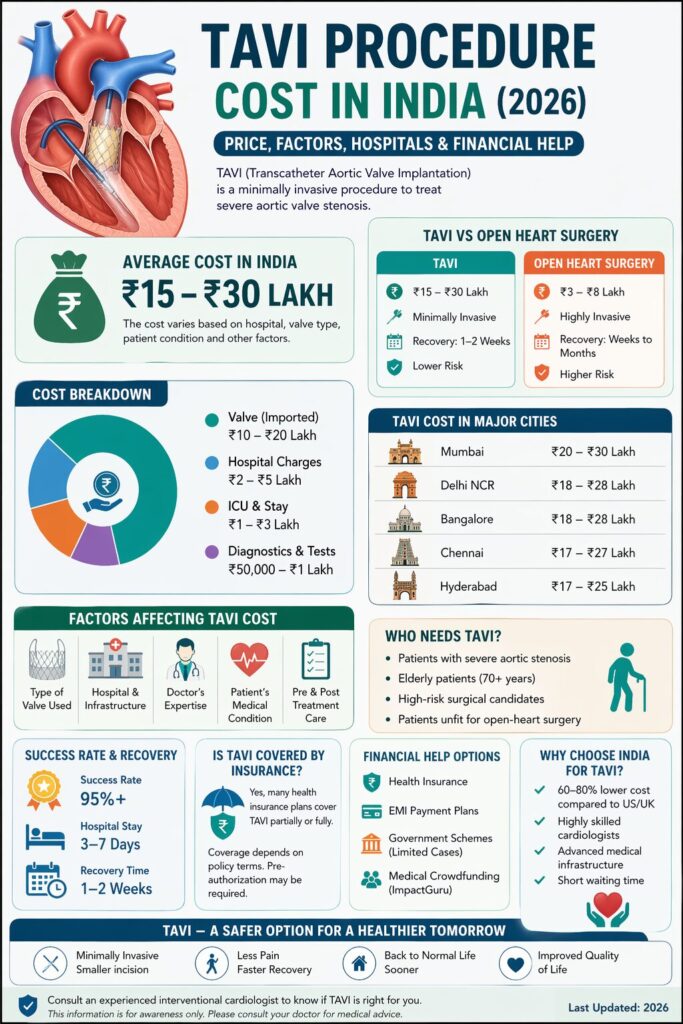
The TAVI procedure cost in India typically ranges between ₹15 lakh and ₹30 lakh, depending on the hospital, valve type, and patient condition. This minimally invasive heart valve replacement is significantly more affordable in India compared to Western countries, while maintaining high success rates and advanced medical care.
Transcatheter Aortic Valve Implantation (TAVI), also known as TAVR, is a minimally invasive heart procedure used to treat severe aortic valve stenosis—especially in elderly or high-risk patients.
If you’re planning this treatment, one of the most important concerns is cost. This guide explains TAVI procedure cost in India, factors affecting pricing, hospital options, insurance coverage, and financial support.
Read More: Impactguru hospital finder
Understanding the cost breakdown of the TAVI procedure in India involves several components. The total expenditure typically encompasses pre-procedure assessments, the actual TAVI procedure, medical staff fees, facility charges, post-operative care, and any additional tests or medications. While the cost savings can be substantial, it’s essential to consider factors like the medical facility’s reputation, the medical team’s experience, and the comprehensiveness of the medical package being offered.
It’s advisable for individuals considering the TAVI procedure to conduct thorough research, consult medical professionals, and evaluate various hospitals or clinics offering the procedure in India. This ensures a well-informed decision that balances both affordability and quality healthcare.
With its minimally invasive approach and cost-effective nature, the TAVI procedure addresses health concerns and highlights the potential for medical tourism to flourish in a globalised healthcare landscape. As medical technologies advance and countries like India continue to offer economical yet proficient healthcare options, patients can navigate their heart health journey more optimistically and economically than ever before.
Table of Contents
- What Is the Cost of TAVI Procedure in India?
- Factors Influencing The TAVI Procedure Cost in India
- Diagnosis Tests For TAVI Procedure With Their Costs
- About TAVI Procedure
- What Are The Risks Of The TAVI Procedure?
- What To Expect During, Before And After The TAVI Procedure?
- Quick Comparison of Top TAVI Hospitals
- Financial Help for TAVI Procedure
- Conclusion
- FAQs
What Is the Cost of TAVI Procedure in India?
The TAVI procedure cost in India ranges from ₹15 lakh to ₹30 lakh depending on several factors like hospital, valve type, and patient condition.
Average Cost Breakdown
| Component | Estimated Cost |
|---|---|
| Valve (Imported) | ₹10–20 lakh |
| Hospital Charges | ₹2–5 lakh |
| ICU & Stay | ₹1–3 lakh |
| Diagnostics & Tests | ₹50,000–₹1 lakh |
Factors Influencing The TAVI Procedure Cost in India
The price of Transcatheter Aortic Valve Implantation (TAVI) in India can differ greatly based on a variety of factors. TAVI is a less invasive alternative to traditional open-heart surgery for treating aortic valve disease. Here are the key factors that influence the cost of the TAVI procedure in India:
1. Hospital Choice: The hospital you choose for the TAVI procedure will have a substantial impact on the cost. Premium, internationally accredited hospitals in major cities may charge more for their services than smaller, local hospitals. The level of care, quality of facilities, and reputation of the hospital all play a role in pricing.
2. Geographic Location: India is a vast country with varying healthcare costs by region. Major metropolitan cities tend to have higher prices for medical procedures compared to smaller towns and rural areas. For instance, hospitals in cities like Mumbai, Delhi, and Bangalore may charge more for TAVI than hospitals in smaller cities.
3. Type of Valve: The choice of the aortic valve used during the TAVI procedure can significantly affect the overall cost. Different valves have different prices, and the choice may depend on factors such as the patient’s condition, physician recommendations, and patient preferences.
4. Medical Team and Surgeon’s Fees: The experience and reputation of the medical team, including the surgeon, anesthesiologist, and supporting staff, can influence the cost. Highly skilled and renowned medical professionals may charge higher fees for their expertise.
5. Pre-operative Evaluation: Patients typically need a series of pre-operative tests and evaluations to determine their eligibility for TAVI. These can include echocardiograms, CT scans, and blood tests. The cost of these tests will be added to the overall procedure cost.
6. Post-operative Care: After the TAVI procedure, patients require post-operative care, including medications, monitoring, and follow-up appointments. The duration and intensity of this care can vary from patient to patient, affecting the overall cost.
7. Medical Complications: Sometimes, patients may experience complications or require additional procedures after TAVI. These unexpected costs can significantly impact the final bill.
8. Insurance Coverage: Health insurance coverage can significantly reduce the out-of-pocket expenses for TAVI. The extent of coverage and the type of insurance plan will determine how much you need to pay personally.
9. Negotiation and Discounts: Many hospitals in India offer packages and discounts for medical procedures, including TAVI. Negotiating with the hospital or exploring package deals may help reduce the cost.
10. Government Policies: Government policies and regulations can also influence the cost of medical procedures in India. Subsidies, tax benefits, and price caps may exist in some regions.
11. Currency Exchange Rates: For international patients seeking TAVI in India, currency exchange rates can affect the overall cost. Fluctuations in exchange rates can lead to variations in the final price.
It’s essential to discuss the complete cost breakdown with your healthcare provider and the hospital’s financial department before undergoing the TAVI procedure in India. This will help you plan financially and understand all the factors contributing to the total cost.
Diagnosis Tests For TAVI Procedure With Their Costs
Some of the common diagnostic tests for TAVI and their costs in India are as follows:
Physical examination: The doctor examines the symptoms of the patient, such as chest pain, shortness of breath, fainting, etc. A heart murmur sound (a whooshing sound) heard with a stethoscope may indicate an aortic valve condition. The medical history and family history of the patient are also noted. The cost of a physical examination may vary depending on the doctor and the hospital, but it is usually around Rs 500 to Rs 1000.
Echocardiogram: Sound waves are used to obtain the images of the heart in motion in this imaging test. It can measure the size & shape of the heart, the function and thickness of the heart chambers and valves, and the blood flow through the heart. It can also assess the severity of aortic stenosis and its impact on heart function. The cost of an echocardiogram may range from Rs 1500 to Rs 3000.
Transesophageal echocardiogram: This test involves using a flexible tube containing a transducer guided down the throat into the oesophagus. It can provide more detailed images of the heart valves and structures than a standard echocardiogram. It can also help to determine the size and type of the artificial valve that will be used for TAVI. The cost of a transesophageal echocardiogram may range from Rs 5000 to Rs 10000.
Carotid ultrasound: It uses sound waves to develop images of the carotid arteries, which supply blood to the brain. It can detect any narrowing or blockage in these arteries, which may increase the risk of stroke during or after TAVI. The cost of a carotid ultrasound may range from Rs 2000 to Rs 4000.
CT aortogram: This test uses X-rays and contrast dye to create detailed images of the aorta, the primary artery that supplies blood from the heart to the other body parts. It can measure the diameter and length of the aorta, as well as identify any calcification, aneurysm, or dissection in it. It can also help to plan the best route for inserting the artificial valve through a catheter during TAVI. The cost of a CT aortogram may range from Rs 10000 to Rs 20000.
The total cost of these diagnostic tests for TAVI may vary depending on the hospital, location, and individual patient factors. However, an approximate estimate may be around Rs 20000 to Rs 40000. These tests are essential to ensure that TAVI is safe and effective for each patient. They can also help to avoid any complications or adverse outcomes from the procedure. Therefore, patients should consult their doctor and follow their instructions before undergoing these tests.
About TAVI Procedure
One of the treatments for aortic stenosis is TAVI- Transcatheter Aortic Valve Implantation. It is a minimally invasive medical treatment that involves putting a new valve inside your damaged valve without removing it. The new valve is made of organic animal heart tissue (cow or a pig) & is delivered to the valve site through a catheter, a thin, flexible tube.
How is TAVI different from standard valve replacement?
The standard valve replacement surgery requires opening the chest and stopping the heart. The surgeon then removes the diseased valve & sews a new one in its place. This surgery is effective but has some risks and requires a longer recovery time.
TAVI, on the other hand, does not require opening the chest or stopping the heart. The new valve is expanded inside the old valve, pushing it aside and taking over its function. This medical procedure is less invasive and has a shorter recovery time. It also has some risks, such as bleeding, infection, stroke, or damage to the heart or blood vessels.
TAVI is available for people with severe aortic stenosis with low, intermediate, or high risk for standard valve replacement surgery. Your doctor will evaluate your condition & determine whether you are suitable for TAVI.
What is involved in a TAVI procedure?
TAVI can be performed using one of two medical approaches:
– Infiltrating through the femoral artery (large artery in the groin), known as the transfemoral approach. This does not need a surgical incision in the chest.
– Trying a minimally invasive surgical approach with a small incision in the chest & entering through a large artery in the chest or the tip of the left ventricle (the apex), known as the transapical approach.
The choice of approach depends on your anatomy and medical condition. Your doctor will explain the pros & cons of each option and recommend the best one for you.
What Are The Risks Of The TAVI Procedure?
TAVI, or Transcatheter Aortic Valve Replacement (TAVR), is a minimally invasive medical procedure for treating aortic valve stenosis. While it is generally considered safe & effective, like any medical procedure, TAVI does carry some risks. Discussing these risks with your healthcare team to make an informed decision about the procedure is essential. Here are some of the potential risks and complications associated with TAVI:
1. Bleeding: There is a high risk of bleeding at the catheter insertion site, typically in the groin or chest. In some cases, this bleeding may require a transfusion or surgical intervention.
2. Infection: Infection can occur at the catheter insertion site or in the heart. This risk is relatively low but can be severe if it happens.
3. Stroke: During the procedure, there is a small risk of dislodging debris or causing blood clots to form, which can cause stroke. Patients are often recommended blood thinners to reduce this risk.
4. Valve Migration/Leakage: The new valve might not be positioned correctly or may leak, which can reduce its effectiveness. This may require a repeat procedure or surgery to fix.
5. Heart Rhythm Disturbances: TAVI can sometimes cause heart rhythm problems (arrhythmias), like atrial fibrillation. These may require treatment with medication or other procedures.
6. Kidney Damage: In some cases, the contrast dye used during the procedure can cause kidney problems, especially in individuals with pre-existing kidney disease.
7. Vascular Complications: The catheter insertion can cause damage to blood vessels, including dissection (tearing) or blockages. This can lead to decreased blood flow to the limbs and may require further intervention.
8. Coronary Artery Obstruction: The new valve can obstruct the coronary arteries, which supply blood to the heart muscle. This is a rare but highly life-threatening complication.
9. Allergic Reactions: Some people may have allergic reactions to the contrast dye or medications used during the procedure.
10. Death: While TAVI is generally considered a safe medical procedure, there is always a risk of death associated with any medical intervention, particularly in elderly or high-risk patients.
It’s important to note that the risks associated with TAVI can vary depending on factors such as the patient’s overall health, age, and the specific technique used by the medical team. Before undergoing TAVI, your healthcare provider will thoroughly evaluate your risk profile & discuss the potential benefits and risks of the procedure with you.
Despite the risks, TAVI is often recommended for patients who are not good candidates for traditional open-heart surgery due to its less invasive nature and shorter recovery time. The decision to undergo TAVI should be made after careful consideration of all factors, and it’s crucial to have open and honest discussions with your healthcare team to make the best choice for your individual circumstances.
What To Expect During, Before And After The TAVI Procedure?
Here’s what you can expect during, before, and after a TAVI procedure:
Before The TAVI Procedure:
1. Evaluation: Your medical team will perform a thorough evaluation, including medical history, physical examination, and various tests, such as echocardiograms, CT scans, and angiograms, to determine if you are a suitable candidate for TAVI.
2. Preoperative Preparation: You may be asked to stop certain medications, like blood thinners, before the procedure. Your doctor will provide specific health instructions on how to prepare, including fasting instructions.
3. Discussion: You’ll have discussions with your healthcare team to understand the risks, benefits, and alternatives to TAVI. It’s essential to have a clear understanding and consent before proceeding.
During The TAVI Procedure:
1. Anesthesia: TAVI is typically operated under local anaesthesia with sedation or general anaesthesia, based on your condition and the preference of your medical team.
2. Access: The doctor will access your aortic valve with a blood vessel, usually in the groin (transfemoral approach) or between the ribs (transapical or transaortic approach). They will guide a catheter with a replacement valve attached through the vessel to the aortic valve.
3. Valve Placement: Once the catheter is in position, the new valve is expanded within the old, damaged valve, effectively replacing it. The doctor will use imaging techniques like fluoroscopy and echocardiography to guide the placement.
4. Monitoring: Your vital signs and heart function will be closely monitored throughout the procedure. The duration of the medical procedure can vary but generally takes a few hours.
After The TAVI Procedure:
1. Recovery Room: After the medical procedure, you will be taken to a recovery area where medical staff will assess you closely as you wake up from anaesthesia.
2. Hospital Stay: You’ll typically spend a few days in the hospital for observation and recovery. The length of the stay can differ depending on your circumstances.
3. Medications: You will receive medications to prevent infection and manage pain and other symptoms. Blood thinners may also be recommended to avoid blood clots.
4. Physical Therapy: You may undergo physical therapy to help with mobility and recovery.
5. Follow-Up Care: After discharge, you will have regular follow-up appointments with your cardiologist to monitor your progress and ensure the new valve is functioning correctly.
6. Lifestyle Changes: Your healthcare team will provide guidelines for post-procedure care, including dietary restrictions, activity limitations, and any necessary lifestyle modifications.
7. Long-term Outlook: TAVI can significantly improve symptoms and quality of life for many patients. It’s essential to follow your doctor’s advice & attend all follow-up appointments to ensure the best long-term outcomes.
Remember that recovery experiences can vary from person to person, and your medical team will provide personalised guidance throughout the process. If you have specific concerns or questions about your TAVI procedure, it’s essential to discuss them with your healthcare provider.
Quick Comparison of Top TAVI Hospitals
| Hospital | City | Key Strength | Best For |
|---|---|---|---|
| Medanta | Gurugram | Complex cases | High-risk patients |
| Fortis Escorts | Delhi | Experience | High success rate |
| Apollo | Chennai/Delhi | Global standards | International patients |
| Kokilaben | Mumbai | Advanced tech | Premium care |
| Asian Heart | Mumbai | Cardiac specialization | Precision care |
| Artemis | Gurugram | Infrastructure | Modern treatment |
Financial Help for TAVI Procedure
Since TAVI can be expensive, many patients explore financial support options.
Available Options:
- Health insurance
- EMI payment plans
- Government schemes (limited cases)
- Medical crowdfunding
Platforms like ImpactGuru help patients raise funds quickly for life-saving treatments.
Conclusion
The TAVI procedure cost in India can range from ₹15 lakh to ₹30 lakh, making it a significant financial decision. However, with advanced healthcare facilities, experienced doctors, and financial support options like crowdfunding, patients can access life-saving treatment more easily.
If you’re considering TAVI, consult a cardiologist, compare hospital options, and explore funding avenues to make the procedure affordable.
FAQs
The cost ranges from ₹15 lakh to ₹30 lakh depending on hospital and valve type.
Yes, for high-risk or elderly patients, TAVI is safer and offers faster recovery.
TAVI valves typically last 8–15 years.
No, it is minimally invasive and performed under anesthesia.
Yes, through insurance, hospital packages, and crowdfunding.