

Spinal Muscular Atrophy (SMA) is a rare but serious genetic disorder that affects muscle strength, movement, and overall physical development. The condition primarily damages motor neurons—specialized nerve cells in the spinal cord that control voluntary muscle movements such as sitting, standing, walking, swallowing, and breathing. As these motor neurons gradually deteriorate and die, muscles become weaker and shrink over time, leading to significant physical disabilities and life-threatening complications.
Although Spinal Muscular Atrophy (SMA) is classified as a rare disease, its impact on affected families is profound. The condition often requires lifelong medical care, rehabilitation, respiratory support, and specialized treatment. In severe cases, symptoms may appear shortly after birth, while milder forms can develop later in childhood or adulthood. Without timely diagnosis and intervention, SMA can significantly affect a person’s quality of life and life expectancy.
Recent medical advancements have transformed the treatment landscape for Spinal Muscular Atrophy (SMA). Innovative therapies such as gene replacement therapy, disease-modifying medications, and supportive rehabilitation have improved survival rates and functional outcomes for many patients. However, these treatments are among the most expensive medical interventions available today, making affordability a major challenge for families.
In India, many parents and caregivers struggle to arrange funds for life-saving SMA treatments. As a result, medical crowdfunding has emerged as a powerful solution, enabling families to raise donations online and access treatment that would otherwise remain financially out of reach. Platforms like ImpactGuru have helped numerous families gather support from friends, communities, and donors across the country.
This comprehensive guide explains everything you need to know about Spinal Muscular Atrophy (SMA), including its causes, symptoms, types, diagnosis, treatment options, costs in India, life expectancy, and how medical crowdfunding can help families manage the financial burden of care.
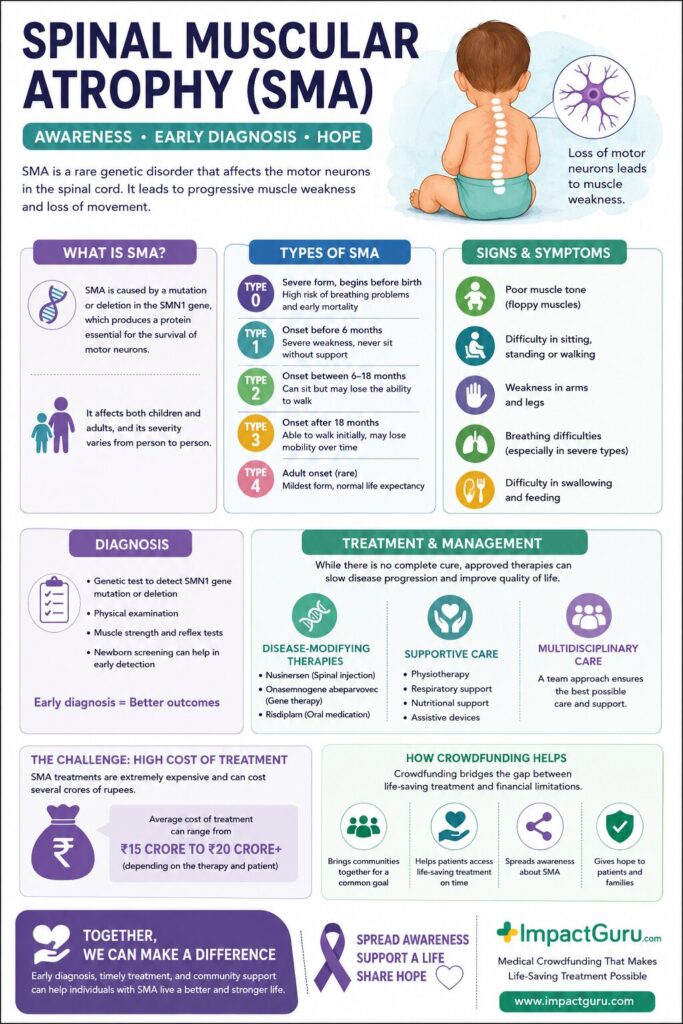
Table of Contents
- What Is Spinal Muscular Atrophy (SMA)?
- Symptoms of Spinal Muscular Atrophy (SMA)
- What Causes Spinal Muscular Atrophy?
- Types of Spinal Muscular Atrophy (SMA)
- Treatments for Spinal Muscular Atrophy (SMA)
- Spinal Muscular Atrophy Causes
- Spinal Muscular Atrophy Testing
- Why Early SMA Testing Is Important
- Spinal Muscular Atrophy Life Expectancy
- Cost of Spinal Muscular Atrophy (SMA) Treatment in India
- How Medical Crowdfunding Platforms Support SMA Families
- Conclusion
- FAQ’s
What Is Spinal Muscular Atrophy (SMA)?
Spinal Muscular Atrophy (SMA) is a genetic neuromuscular disorder that affects the nerve cells responsible for controlling voluntary muscle movement. The condition occurs due to mutations or deletions in the Survival Motor Neuron 1 (SMN1) gene, which is essential for producing the Survival Motor Neuron (SMN) protein. This protein plays a critical role in maintaining healthy motor neurons.
When the body does not produce enough SMN protein, motor neurons gradually degenerate and die. As a result, muscles receive fewer signals from the brain and spinal cord, causing progressive muscle weakness and muscle wasting (atrophy).
The muscles most commonly affected include:
- Shoulder muscles
- Hip muscles
- Leg muscles
- Arm muscles
- Neck muscles
- Breathing muscles
- Swallowing muscles
Unlike many neurological conditions, SMA does not affect intelligence, learning abilities, memory, or emotional development. Most individuals with SMA have normal cognitive function and can lead productive lives with proper medical care and support.
Symptoms of Spinal Muscular Atrophy (SMA)
The symptoms of Spinal Muscular Atrophy (SMA) vary depending on the type of SMA, the age at which symptoms begin, and the severity of motor neuron loss. SMA primarily affects the muscles responsible for movement, posture, breathing, and swallowing. As motor neurons in the spinal cord gradually deteriorate, communication between the brain and muscles becomes impaired, leading to progressive muscle weakness and muscle wasting.
Symptoms may appear during infancy, childhood, adolescence, or adulthood. In severe forms, symptoms can be noticeable within the first few months of life, while milder forms may not become apparent until later years.
Common Symptoms of Spinal Muscular Atrophy
Although symptoms differ among individuals, the most common signs of SMA include:
- Progressive muscle weakness
- Muscle wasting (atrophy)
- Poor muscle tone (hypotonia)
- Difficulty sitting, standing, or walking
- Delayed motor milestones
- Difficulty swallowing
- Feeding problems
- Breathing difficulties
- Weak cough
- Frequent respiratory infections
- Tremors in the hands or fingers
- Fatigue during physical activity
- Poor balance and coordination
- Scoliosis (curvature of the spine)
- Joint stiffness and contractures
What Causes Spinal Muscular Atrophy?
The primary cause of Spinal Muscular Atrophy (SMA) is a mutation or deletion in the SMN1 gene. This gene provides instructions for producing the Survival Motor Neuron protein, which keeps motor neurons healthy and functioning properly.
Without adequate SMN protein, motor neurons cannot survive. Over time, the loss of these neurons results in progressive muscle weakness and loss of motor function.
Understanding the Genetics of SMA
Every person inherits two copies of the SMN1 gene:
- One copy from the mother
- One copy from the father
For a child to develop SMA, both copies of the SMN1 gene must be defective.
This inheritance pattern is known as autosomal recessive inheritance.
What Happens If Only One Parent Carries the Gene?
If only one parent carries the defective gene:
- The child may become a carrier.
- The child usually does not develop SMA.
What Happens If Both Parents Are Carriers?
When both parents are carriers:
- 25% chance the child will have SMA
- 50% chance the child will be a carrier
- 25% chance the child will inherit normal genes
Because carriers usually have no symptoms, many families are unaware they carry the gene until a child is diagnosed.
Types of Spinal Muscular Atrophy (SMA)
1. SMA Type 0 (Prenatal or Neonatal SMA)
SMA Type 0 is the rarest and most severe form, detected before birth or immediately after delivery.
- Onset: Before birth or at birth.
- Symptoms: Profound muscle weakness, poor movement, and breathing difficulties.
- Prognosis: Unfortunately, life expectancy is limited, with most infants not surviving beyond a few months.
2. SMA Type 1 (Werdnig-Hoffmann Disease)
SMA Type 1 appears within the first six months of life and is one of the most common forms.
- Onset: 0–6 months
- Symptoms: Severe muscle weakness, difficulty swallowing, and breathing issues
- Prognosis: Without treatment, life expectancy is often reduced, but recent therapies have significantly improved outcomes
3. SMA Type 2 (Intermediate SMA)
SMA Type 2 develops between 6 and 18 months of age.
- Onset: 6–18 months
- Symptoms: Children can sit but cannot stand or walk unaided; progressive muscle weakness
- Prognosis: Lifespan varies, but with therapy and medical care, individuals can live well into adulthood
4. SMA Type 3 (Kugelberg-Welander Disease)
SMA Type 3 typically manifests after 18 months and is milder compared to earlier-onset types.
- Onset: After 18 months to adolescence.
- Symptoms: Difficulty walking, frequent falls, or the need for mobility aids later in life.
- Prognosis: Most individuals have a near-normal life expectancy with ongoing physiotherapy and care.
5. SMA Type 4 (Adult-Onset SMA)
SMA Type 4 is the mildest form, appearing in early adulthood.
- Onset: 18 years or older.
- Symptoms: Gradual muscle weakness and fatigue, usually not affecting life expectancy.
- Prognosis: Slow progression and manageable symptoms through physiotherapy and lifestyle care.
Treatments for Spinal Muscular Atrophy (SMA)
1. Gene and Molecular Therapies
(a) Nusinersen (Spinraza®)
- How it works: Increases production of the SMN (survival motor neuron) protein essential for nerve and muscle function.
- Who it’s for: Approved for infants, children, and adults with SMA.
- Administration: Injected into the spinal fluid periodically.
(b) Onasemnogene Abeparvovec-xioi (Zolgensma®)
- How it works: Delivers a working copy of the SMN1 gene to replace the faulty one causing SMA.
- Who it’s for: Typically given as a one-time intravenous (IV) infusion to children under two years.
- Impact: Can dramatically improve survival and motor function in early-diagnosed patients.
(c) Risdiplam (Evrysdi®)
- How it works: Oral medication that boosts SMN protein production across the body.
- Who it’s for: Approved for patients aged two months and older.
- Benefit: Allows at-home treatment, improving accessibility and adherence.
2. Supportive and Rehabilitative Therapies (For All SMA Types)
- Physical Therapy: Helps maintain mobility, prevent joint contractures, and improve posture and balance.
- Occupational Therapy: Assists with daily living skills, adaptive tools, and independence in daily activities.
- Respiratory Therapy: Provides breathing support through non-invasive ventilation or airway clearance techniques, especially for severe types (Type 0–2).
- Nutritional Management: Ensures proper growth and energy levels, addressing feeding challenges or swallowing difficulties.
- Orthopaedic and Assistive Devices: Includes braces, standing frames, and wheelchairs to maintain movement and comfort.
3. Emotional & Social Support
SMA impacts not only patients but also their families. Emotional and social support resources such as counselling, support groups, and social services—help families cope, connect, and stay informed.
Read More : SMA Treatment in India (2026 Guide)
Spinal Muscular Atrophy Causes
1. Genetic Cause:
- Inherited Condition: SMA is a condition you are born with, meaning it’s passed down from your parents.
- Genes Involved: Our bodies are made up of cells, and inside each cell are tiny structures called genes. Our bodies receive instructions on how to grow and function from genes. In SMA, a specific gene called the SMN1 gene doesn’t work properly.
- Role of the SMN1 Gene: The SMN1 gene makes a protein called the SMN protein. This protein is essential because it helps keep the nerve cells in the spinal cord healthy. These nerve cells send signals from the brain to the muscles, telling them to move.
- What Happens in SMA: The SMN1 gene is faulty or missing in people with SMA. Because of this, there isn’t enough SMN protein being made. Without enough of this protein, the nerve cells in the spinal cord start to die, and when these nerve cells die, the muscles don’t get the signals they need to move. Over time, this causes the muscles to become weak and shrink.
2. How It’s Inherited:
- Recessive Disorder: SMA is a “recessive” genetic disorder. This means that a child has to inherit two copies of the faulty SMN1 gene one from each parent to develop SMA.
- Carrier Parents: Sometimes, parents may carry one faulty SMN1 gene but don’t have SMA themselves because they also have one working SMN1 gene. These parents are called “carriers.” If both parents are carriers, there’s a 25% (1 in 4) possibility with each pregnancy that the child will inherit two faulty genes and have SMA.
3. Other Genes:
- SMN1 Gene: When the SMN1 gene is faulty, the body cannot produce enough SMN protein. This leads to the degeneration of motor neurons, resulting in progressive muscle weakness, reduced mobility, and other related complications.
- SMN2 gene: Another gene, called SMN2, also produces SMN protein, but it is less effective than SMN1. Some people with SMA have multiple copies of the SMN2 gene, which allows their bodies to generate more SMN protein. This typically results in milder symptoms and slower disease progression, making the number of SMN2 copies an important factor that doctors consider when assessing severity and planning treatment.
Spinal Muscular Atrophy Testing
1. Genetic Testing
Genetic testing is the main way to diagnose SMA.
A small blood sample is taken and checked for changes in the SMN1 gene, which makes the survival motor neuron (SMN) protein. If this gene is missing or faulty, it confirms SMA.
- Most SMA cases can be diagnosed with this test.
- It can also show whether someone is a carrier of the SMA gene.
2. Prenatal Testing
If there’s a family history of SMA, doctors can test a baby for SMA before birth. There are two common prenatal tests:
- Chorionic Villus Sampling (CVS): Done between the 11th and 14th week of pregnancy, this test takes a small sample of cells from the placenta to check for the SMA gene.
- Amniocentesis: Usually done between the 15th and 20th week, it tests a small sample of the amniotic fluid (the fluid around the baby) for SMN1 gene changes.
These tests help parents prepare and discuss treatment options early.
3. Newborn Screening
In some places, SMA is included in newborn screening programs.
A few drops of blood are taken from the baby’s heel soon after birth to test for SMN1 gene mutations. Detecting SMA early allows treatment to begin before symptoms start, improving long-term outcomes.
4. Carrier Screening
Carrier screening is a simple blood test that helps adults find out if they carry the SMA gene mutation.
- It’s recommended for people with a family history of SMA or couples planning to have children.
- If both parents are carriers, there’s a chance their child could inherit SMA.
Carrier testing helps families make informed decisions about pregnancy and genetic counseling.
5. Additional Tests
Sometimes, doctors may suggest other tests to check muscle and nerve health, especially if SMA is suspected but not confirmed:
- Electromyography (EMG): Measures electrical activity in the muscles.
- Muscle Biopsy: Examines a small piece of muscle under a microscope.
- Nerve Conduction Velocity (NCV) Test: Checks how quickly signals travel from nerves to muscles.
These tests give doctors more details about muscle weakness and nerve function.
Why Early SMA Testing Is Important
Early SMA diagnosis makes a big difference. With new gene therapies and SMA medications, starting treatment early—sometimes before symptoms appear—can greatly improve muscle strength and quality of life.
Spinal Muscular Atrophy Life Expectancy
Spinal Muscular Atrophy (SMA) life expectancy varies by type, age of onset, and access to treatment. The five main types being SMA Type 0, Type 1, Type 2, Type 3, and Type 4 differ in severity and long-term outlook.
(a) SMA Type 0 and Type 1: Severe Forms
Type 0 SMA appears before birth and is the most severe, causing profound weakness and breathing failure. Sadly, life expectancy is usually just a few months.
Type 1 SMA (Werdnig-Hoffmann disease) develops within the first six months of life. Without treatment, most children did not live beyond two years. However, new therapies like Zolgensma, Spinraza, and Evrysdi have dramatically improved survival and motor function.
(b) SMA Type 2: Intermediate Form
Type 2 SMA appears between 6–18 months. Children can sit but often need help to move or walk. With early intervention, supportive care, and modern SMA treatments, many now live into their 30s or longer with improved quality of life.
(c) SMA Type 3 and Type 4: Mild Forms
Type 3 (Kugelberg-Welander) and Type 4 (adult-onset) SMA progress slowly and usually do not affect life expectancy. People may experience mobility issues but can lead normal, active lives with physical therapy and supportive care.
Cost of Spinal Muscular Atrophy (SMA) Treatment in India
| Treatment/Expense Category | Estimated Cost in India |
|---|---|
| Zolgensma (Gene Therapy) | ₹14 Crore – ₹18 Crore (one-time treatment) |
| Spinraza (Nusinersen) | ₹3 Crore – ₹5 Crore in the first year |
| Spinraza Maintenance Doses | ₹1 Crore – ₹2 Crore per year |
| Risdiplam (Evrysdi) | ₹50 Lakh – ₹70 Lakh per year |
| Genetic Testing | ₹15,000 – ₹75,000 |
| Neurologist Consultation | ₹1,000 – ₹5,000 per visit |
| Electromyography (EMG) | ₹5,000 – ₹20,000 |
| Hospitalization | ₹5,000 – ₹25,000 per day |
| ICU Charges | ₹15,000 – ₹75,000 per day |
| Physiotherapy | ₹500 – ₹2,500 per session |
| Monthly Physiotherapy Cost | ₹5,000 – ₹20,000+ |
| Respiratory Support Equipment | ₹50,000 – ₹5 Lakh |
| Airway Clearance Devices | ₹30,000 – ₹2 Lakh |
| Wheelchairs & Mobility Aids | ₹15,000 – ₹5 Lakh |
| Orthotic Braces & Walkers | ₹5,000 – ₹1 Lakh |
| Nutritional Support & Feeding Equipment | ₹10,000 – ₹1 Lakh |
| Annual Follow-up Care | ₹20,000 – ₹2 Lakh+ |
How Medical Crowdfunding Platforms Support SMA Families
A medical crowdfunding platform like ImpactGuru provides families with the tools and support needed to launch and manage a fundraising campaign effectively.
Features may include:
- Easy campaign setup
- Secure payment processing
- Dedicated fundraising guidance
- Social media promotion support
- Transparent donation tracking
- Assistance in reaching a wider audience
Through SMA crowdfunding, many families have successfully raised funds for costly treatments that would otherwise be difficult to access.
Conclusion
Spinal Muscular Atrophy (SMA) is a rare genetic disorder that affects motor neurons, leading to progressive muscle weakness and loss of movement. While the severity of SMA varies across different types, early diagnosis and timely intervention can significantly improve quality of life and long-term outcomes. Advances in medical science, including gene therapies and disease-modifying treatments, have brought new hope to patients and families affected by SMA.
However, one of the biggest challenges remains the extremely high cost of treatment, which can place an overwhelming financial burden on families. In such situations, medical crowdfunding has emerged as a powerful solution, helping patients access life-saving therapies and supportive care when traditional funding options fall short.
By increasing awareness, encouraging genetic screening, promoting early treatment, and leveraging community support through crowdfunding, more children and adults living with SMA can receive the care they need. With continued medical advancements and collective support, the future for SMA patients is becoming increasingly hopeful, offering greater opportunities for improved health, independence, and quality of life.
FAQ’s
Early symptoms include weak muscle tone, delayed movement, trouble swallowing or breathing, and poor head control in infants. These signs usually appear within the first few months of life.
There’s no permanent cure for SMA, but gene therapy (Zolgensma®) and drugs like Spinraza® and Evrysdi® can slow progression and improve muscle strength if started early.
SMA is confirmed through a genetic blood test that checks for changes in the SMN1 gene. In some regions, it’s also detected through newborn screening.
The cost of SMA treatment in India varies — Zolgensma® can cost around ₹16–18 crore, while ongoing therapies like Evrysdi® or Spinraza® require regular doses. Many families turn to crowdfunding platforms like ImpactGuru for financial help.
With early diagnosis, treatment, and therapy, many with SMA — especially Types 2, 3, and 4 — can live long, active, and fulfilling lives with proper care and support.