


Kidney stones can cause intense pain and discomfort, often requiring advanced medical treatment for effective removal. Retrograde Intrarenal Surgery (RIRS) has emerged as a popular minimally invasive procedure that helps patients achieve faster recovery and excellent treatment outcomes. However, before undergoing treatment, many patients are concerned about the RIRS surgery cost and the factors that influence it. Understanding the cost of RIRS surgery, along with hospital charges, surgeon fees, insurance coverage, and recovery expenses, can help patients make informed healthcare decisions. This guide provides a detailed breakdown of RIRS surgery costs in India and everything you need to know before treatment.
Kidney stones can cause severe pain, urinary complications, and significant discomfort if left untreated. For patients seeking a minimally invasive and highly effective treatment option, Retrograde Intrarenal Surgery (RIRS) has become one of the most preferred procedures. RIRS uses advanced laser technology to remove kidney stones without making any external incisions, resulting in faster recovery and reduced post-operative complications.
One of the most common concerns among patients and their families is the RIRS surgery cost in India. The overall treatment expense can vary depending on factors such as the hospital’s location, the surgeon’s expertise, diagnostic tests, hospitalization charges, and the complexity of the kidney stone.
In India, the average RIRS surgery cost typically ranges from ₹80,000 to ₹1,50,000. However, the final cost may differ based on individual medical requirements and healthcare facilities. Understanding the complete cost structure helps patients make informed treatment decisions and prepare financially for their healthcare journey.
This comprehensive guide covers everything you need to know about RIRS surgery, including treatment costs, factors affecting pricing, benefits, recovery timelines, insurance coverage, and options for financial support through medical crowdfunding.
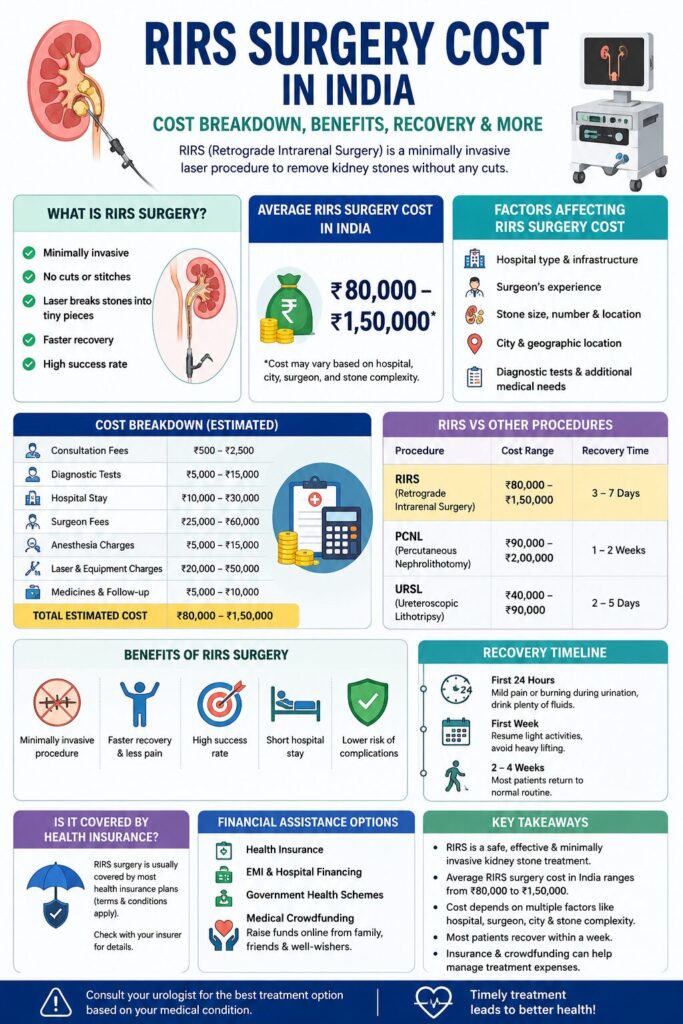
Table of Contents
- What Is RIRS Surgery?
- RIRS Surgery Cost in India
- Factors Affecting The RIRS Surgery Cost in India
- RIRS Surgery Cost in India: Is It Worth It?
- What Are The Benefits Of RIRS?
- What Are The Side Effects Of RIRS?
- Diagnostic Tests For RIRS Surgery
- What To Expect During, Before, And After RIRS Surgery?
- Why Consider Medical Crowdfunding for Kidney Stone Treatment?
- Conclusion
- FAQs
What Is RIRS Surgery?
Retrograde Intrarenal Surgery (RIRS) is an advanced, minimally invasive procedure used to remove kidney stones. During the procedure, a flexible ureteroscope is inserted through the urinary tract to access the kidney. A laser fiber is then used to break the stones into tiny fragments, which are either removed or passed naturally through urine.
RIRS is particularly effective for:
- Kidney stones smaller than 2 cm
- Hard-to-reach kidney stones
- Recurrent kidney stones
- Patients unsuitable for traditional surgery
- Individuals seeking faster recovery
RIRS Surgery Cost in India
The average cost of RIRS surgery in India ranges from Rs. 80,000 to Rs. 1,25,000. However, this is just an estimate, and the actual price may vary from person to person. To get a more accurate idea of how much RIRS surgery will cost you in India, you should consult a qualified urologist who can assess your condition and give you a personalised quote.
Here are some examples of RIRS surgery costs in different cities in India:
– The cost of RIRS surgery in Mumbai is between Rs. 90,000 to Rs. 1,25,000.
– The cost of RIRS surgery in Delhi is between Rs. 80,000 to Rs. 1,10,000.
– The cost of RIRS surgery in Bangalore is between Rs. 80,000 to Rs. 1,10,000.
– The cos of RIRS surgery costs in Chennai between Rs. 70,000 and Rs. 1,05,000.
These costs are indicative and may vary depending on the specific hospital, doctor and case details. To get a more accurate estimate of RIRS surgery cost in India, you should consult a qualified urologist who can assess your condition and recommend the best treatment plan.
The cost of RIRS surgery in India includes various components, such as:
– The consultation fee of the urologist
– The fee of the anesthesiologist
– The fee of the endoscopist
– The hospital charges for admission, room rent, nursing care, etc.
– The charges for the endoscope, laser and other equipment used during the surgery
– The charges for the laboratory tests before and after the surgery
– The charges for the medications before and after the surgery
– The charges for the follow-up visits after the surgery
Factors Affecting The RIRS Surgery Cost in India
Robotic-assisted surgery, or Robotically-assisted Radical Prostatectomy (RIRS), is a sophisticated surgical procedure used for treating various urological conditions, most commonly prostate-related issues like prostate cancer. The cost of RIRS surgery in India can vary significantly based on several factors. Here’s a detailed breakdown of the factors that affect the cost of RIRS surgery in India:
1. Hospital or Clinic Reputation and Location:
– The reputation of the hospital or clinic where the surgery is conducted plays a significant role in determining the cost. Well-known and high-end hospitals in major cities generally charge more than smaller hospitals in less urban areas.
2. Surgeon’s Experience and Expertise:
– The surgeon’s qualifications, experience, and reputation also impact the cost. Highly experienced and renowned surgeons often charge more for their services.
3. Medical Facilities and Technology:
– Hospitals equipped with state-of-the-art robotic surgical systems and advanced medical facilities tend to charge higher fees for RIRS surgery.
4. Preoperative Workup:
– The cost includes preoperative tests such as blood tests, imaging scans, and consultations with specialists. The extent and complexity of these tests can affect the overall cost.
5. Type and Stage of Disease:
– The type and stage of the urological condition being treated can impact the surgery’s complexity and, consequently, its cost. More advanced conditions might require longer surgical times and more specialised procedures.
6. Duration of Hospital Stay:
– The length of the hospital stay can differ depending on the patient’s condition and the post-operative recovery process. Longer stays result in higher overall costs.
7. Postoperative Care:
– Post-surgery care, including medications, follow-up visits, and rehabilitation, will add to the overall cost. This may also include physical therapy or other forms of rehabilitation if needed.
8. Choice of Room and Amenities:
– Patients can choose different types of rooms in hospitals, ranging from general wards to private rooms. The type of room and its amenities can affect the overall cost.
9. Geographical Location:
– The price of medical procedures in India can vary significantly by region. Major metropolitan areas often have higher costs of living and healthcare, which can influence the price of RIRS surgery.
10. Health Insurance:
– Whether or not the patient has health insurance coverage can significantly impact the out-of-pocket expenses. Insurance policies may cover part or all of the surgical costs depending on the terms and conditions.
11. Additional Costs:
– Patients should also consider additional costs such as travel expenses, accommodation, and caregiver expenses if they are coming from another city or country.
12. Negotiation Skills:
– Some hospitals may be open to negotiation when it comes to the cost of surgery, especially if the patient is paying out of pocket. It’s worth discussing the price and potential discounts with the hospital administration.
13. Government Policies and Regulations:
– Government policies and regulations regarding healthcare services can also influence the cost of surgery.
It’s essential to thoroughly research and consult with healthcare providers to get a precise estimate for RIRS surgery in India. Patients should consider the quality of care, the surgeon’s expertise, and the hospital’s reputation alongside the cost when making their decision. Additionally, they should check for any financial assistance programs, insurance coverage, or payment plans available to help manage the cost.
RIRS Surgery Cost in India: Is It Worth It?
RIRS surgery is a modern and minimally invasive technique for kidney stone removal that offers many benefits over other methods. It can help you eliminate kidney stones without significant complications or side effects. It can also improve your quality of life and prevent future stone formation. Therefore, if you are suffering from kidney stones and looking for a reliable and effective treatment option, RIRS surgery may be worthwhile.
However, before you undergo RIRS surgery, you should consult a qualified urologist who can evaluate your condition and advise you on the best course of action. You should also know the cost of RIRS surgery in India and plan your budget accordingly. You should also compare prices from different hospitals and doctors and choose the one that suits your needs and preferences. You should also check your insurance coverage and reimbursement policies and seek financial assistance.
By following these steps, you can make a well-informed decision about RIRS surgery and get the best treatment for your kidney stones at an affordable cost in India.
What Are The Benefits Of RIRS?
RIRS offers several advantages over other methods of kidney stone treatment, such as:
– Minimally invasive: No incisions or scars are required.
– Less painful: The patient experiences less pain and discomfort after the surgery.
– Shorter recovery time: The patient can resume normal activities within a few days.
– Minimal bleeding: The risk of bleeding or infection is very low.
– Less damage to the renal tissue: The laser energy does not harm the surrounding healthy tissue.
– Fewer complications: The chances of recurrence or need for re-treatment are reduced.
What Are The Side Effects Of RIRS?
RIRS is generally safe and effective, but like any surgery, it may have some potential risks or complications, such as:
– Infection: A urinary tract infection or sepsis risk may occur after the surgery.
– Bleeding: There may be some blood in urine after RIRS surgery, which usually resolves within a few days.
– Injury: There may be some damage to the ureter or kidney during the endoscope insertion or laser.
– Stent discomfort: The patient may feel some pain or irritation due to the presence of the stent in the ureter until it is removed.
- Failure: The surgery may not successfully remove all the stones or require multiple sessions.
Diagnostic Tests For RIRS Surgery
These tests are performed before the surgery to assess your health condition and plan the treatment. Some common diagnostic tests performed before RIRS are:
– X Rays – Rs. 200 onwards
– Abdominal ultrasound – Rs. 1,000 onwards
– MRI – Rs. 1,500 onwards
– Blood urea nitrogen (BUN) test – Rs. 50 to 250
– Blood test – Rs. 50 onwards
– Urinalysis- Rs. 100 onwards
What To Expect During, Before, And After RIRS Surgery?
RIRS, or Retrograde Intrarenal Surgery, is a minimally invasive procedure for treating kidney stones and other urinary tract problems. Here’s what you can generally expect before, during, and after the surgery:
Before RIRS Surgery:
1. Consultation: You will have an appointment with a urologist to discuss the medical procedure, its risks, benefits, and alternatives. You may also need to undergo preoperative tests such as blood tests, urine analysis, and imaging studies (like a CT scan) to evaluate the size and location of the kidney stone.
2. Medications: Your doctor may prescribe medications to help prepare for the procedure. These may include antibiotics to stop infection or medications to help relax and expand the ureter to ease the insertion of the ureteroscope.
3. Fasting: Typically, you will be instructed to fast for several hours before the surgery. This is to ensure that your stomach is empty during the medical procedure, reducing the risk of aspiration.
During RIRS Surgery:
1. Anesthesia: RIRS is usually performed under general anesthesia, which means you’ll be asleep and won’t feel any pain during the procedure. However, in some cases, local anesthesia or sedation may be used.
2. Ureteroscope Insertion: A thin, flexible tube with a camera and tools is inserted through the urethra and into the ureter. The urologist will guide the scope up into the kidney to locate the stone.
3. Stone Removal: Once the stone is located, it can be fragmented into smaller pieces using laser energy, electrohydraulic lithotripsy, or other techniques. These smaller pieces can then be removed or passed naturally through the urine.
4. Stent Placement: In some cases, a temporary ureteral stent may be placed to help drain urine from the kidney and prevent any blockage caused by stone fragments or swelling.
After RIRS Surgery:
1. Recovery Room: After the procedure, you’ll be taken to a recovery room to wake up from anesthesia. You’ll be monitored for a period to ensure there are no immediate complications.
2. Pain Management: You may experience some discomfort or pain after the medical procedure, which can usually be comforted with pain medication prescribed by your doctor.
3. Hospital Stay: RIRS is typically an outpatient procedure, but in some cases, you may need to stay in the hospital for observation, especially if a stent has been placed.
4. Activity: Your doctor will guide you when you resume normal activities. Typically, you’ll be advised to rest and avoid strenuous activities for a few days.
5. Follow-up: You will have a follow-up appointment with your urologist to monitor your recovery, remove any stents if they were placed, and discuss any further treatment or prevention strategies for kidney stones.
It’s important to note that recovery times can vary on the basis of the size & location of the kidney stone & individual factors. Follow your doctor’s instructions properly to ensure a smooth recovery. If you experience severe pain, fever, or signs of infection after the surgery, contact your healthcare provider immediately, as these could be a reason for complications.
Why Consider Medical Crowdfunding for Kidney Stone Treatment?
When treatment costs become overwhelming, crowdfunding can provide timely financial assistance. Online fundraising platforms help patients collect donations for:
- Surgery expenses
- Hospital bills
- Medicines
- Diagnostic tests
- Post-operative care
Crowdfunding has helped thousands of families access critical medical treatment without delaying care due to financial constraints.
Conclusion
Understanding the RIRS surgery cost in India is essential for planning treatment and avoiding unexpected medical expenses. While the cost varies based on factors such as hospital location, surgeon expertise, diagnostic tests, and post-operative care, RIRS remains one of the most effective and minimally invasive treatments for kidney stones.
For patients who find treatment costs challenging, medical crowdfunding platforms like ImpactGuru can provide a practical way to raise donation support from a wider community. Through transparent medical fundraising campaigns, patients can focus on recovery while receiving financial assistance for surgery, medications, and related healthcare expenses. Combining proper financial planning, insurance benefits, and crowdfunding support can help make quality kidney stone treatment more accessible and affordable.
FAQs
The average RIRS surgery cost in India ranges from ₹80,000 to ₹1,25,000, depending on the hospital, city, surgeon’s expertise, and the complexity of the kidney stone case.
Several factors influence the total cost, including hospital reputation, surgeon experience, diagnostic tests, room category, anesthesia charges, medications, and post-operative care.
Many health insurance policies cover RIRS surgery if it is medically necessary. Patients should verify coverage limits, waiting periods, and reimbursement terms with their insurer before treatment.
Yes. Patients facing financial challenges can use medical crowdfunding platforms like ImpactGuru to raise donation online support from friends, family, colleagues, and compassionate donors for surgery, hospitalization, and recovery expenses.
Medical crowdfunding helps patients access timely treatment without delaying surgery due to financial constraints. It enables individuals to share their medical story and receive contributions for healthcare expenses.
To begin medical fundraising, collect medical reports, treatment estimates, and supporting documents. Then create a campaign on trusted medical crowdfunding platforms like ImpactGuru, share your story, and promote it through social media and personal networks.