


Pulmonary embolism (PE) is a serious and potentially life-threatening condition that occurs when a blood clot blocks one or more arteries in the lungs. Most pulmonary embolisms originate from blood clots in the legs, a condition known as deep vein thrombosis (DVT), which then travel to the lungs through the bloodstream.
Without prompt diagnosis and treatment, PE can lead to severe complications, including lung damage, heart strain, and even death. Understanding its symptoms, causes, treatment options, and associated medical costs can help patients seek timely medical attention and improve outcomes.
In cases where emergency hospitalization, ICU admission, or surgery creates financial stress, many families turn to emergency fundraising, raise donation online campaigns, and medical crowdfunding platforms to access life-saving treatment without delay.
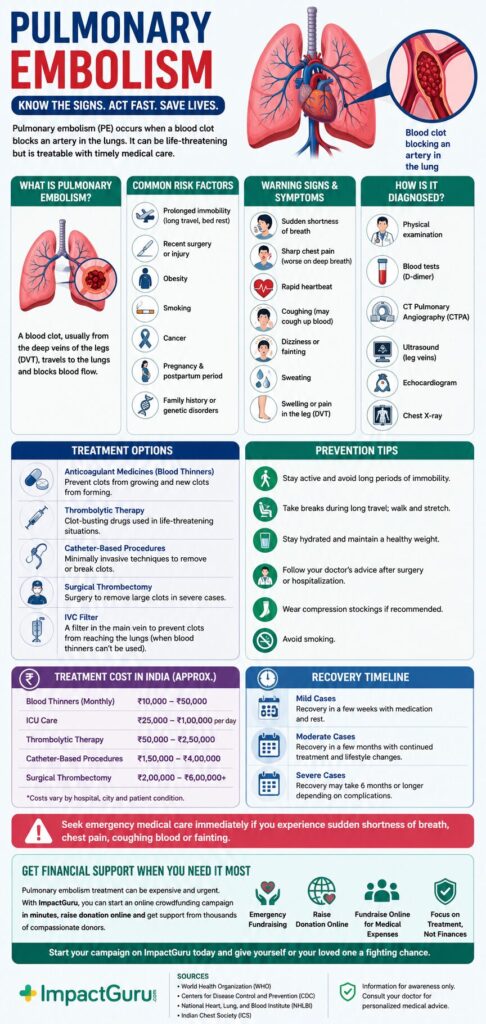
Table of Contents
What Is Pulmonary Embolism?
Pulmonary embolism occurs when a blood clot, fat particle, air bubble, or other material obstructs blood flow within the pulmonary arteries. The blockage prevents oxygen-rich blood from reaching lung tissue and can significantly reduce oxygen supply to the body.
The majority of PE cases result from deep vein thrombosis, where blood clots form in the deep veins of the legs before traveling to the lungs.
Prompt treatment is essential because pulmonary embolism can rapidly become fatal if left untreated.
Symptoms of Pulmonary Embolism
Pulmonary embolism (PE) symptoms can range from mild to extreme, based on the size of the blood clot & how much of the lung is affected. Sometimes, symptoms may come on suddenly and require immediate medical attention. Below is a detailed explanation of the common symptoms to look out for:
1. Shortness of Breath
- This is one of the most common symptoms of pulmonary embolism.
- It may feel like you can’t catch your breath or that breathing is more challenging than usual.
- The shortness of breath can happen suddenly and worsen when you move or exert yourself.
2. Chest Pain
- Chest pain in PE often feels sharp and may worsen when one takes deep breaths, coughs, or lies down.
- It can sometimes feel like a heart attack, but the cause is the blocked blood flow in the lungs.
3. Cough
- A persistent cough is another usual symptom of PE.
- Sometimes, the cough may have blood or blood-streaked mucus, a sign of a serious issue.
4. Rapid or Irregular Heartbeat
- Pulmonary embolism can make your heart beat faster or irregularly (palpitations) because your body isn’t getting enough oxygen.
- This happens as the heart works harder to pump blood through the blocked lungs.
5. Swelling or Pain in the Leg
- PE often starts with a blood clot in the leg (deep vein thrombosis or DVT).
- Symptoms like swelling, redness, or pain in the leg, especially in the calf, may occur before the clot travels to the lungs.
6. Feeling Lightheaded or Fainting
- A lack of oxygen can cause dizziness, lightheadedness, or even fainting.
- This symptom often happens alongside others, like shortness of breath or chest pain.
7. Blue or Pale Skin (Cyanosis)
- In serious cases, the lack of oxygen can make your skin, lips, or nails appear blue or pale.
- This is a medical emergency & needs immediate attention.
8. Excessive Sweating
- Sudden, unexplained sweating (cold sweats) can also be a symptom of pulmonary embolism as your body reacts to the reduced oxygen levels.
9. Anxiety or Restlessness
- Some people with PE may feel a sudden sense of anxiety, unease, or restlessness.
- This can be due to the body signaling that something is wrong.
If you notice any of these signs, particularly difficulty breathing, chest discomfort, or coughing up blood, get medical help right away. PE is a medical emergency, and early treatment can save lives. Recognizing the symptoms early and acting promptly can make a huge difference in handling this condition effectively.
Pulmonary Embolism Treatment
In India, the approach to treating PE is multifaceted, depending on the severity and underlying causes of the condition. Here’s an overview of the various treatments available and their associated costs.
Medication-Based Treatments:
The first line of treatment for PE often involves anticoagulant medications designed to prevent new clots from forming and stop existing ones from growing. The cost for medication-based treatments can range from INR 7,500 to INR 37,500 per month.
Surgical and Invasive Procedures:
In serious situations, surgery might be required. Medical procedures like thrombectomy (removal of the clot) or the insertion of a vena cava filter (to prevent clots from reaching the lungs) are considered. These procedures can cost anywhere between INR 75,000 and INR 4,50,000.
Clot-Busting Drugs:
For emergencies, thrombolytic therapy may be employed, which involves administering drugs to dissolve the clot. This treatment is more expensive and can significantly increase the overall cost.
Long-Term Management:
Patients with PE may require long-term management, which includes regular check-ups, blood tests, and follow-up medications. These ongoing costs can add up over time but are crucial for preventing recurrence.
It’s important to note that the costs can vary widely based on the hospital, city, and the patient’s specific medical needs. Also, some patients may require a combination of treatments, affecting the total expense.
Pulmonary Embolism Treatment Cost in India
Treatment costs vary depending on hospital, city, severity, and required interventions.
| Treatment | Estimated Cost |
|---|---|
| Blood Thinners | ₹10,000 – ₹50,000 |
| ICU Care | ₹25,000 – ₹1,00,000 per day |
| Thrombolytic Therapy | ₹50,000 – ₹2,50,000 |
| Catheter Procedures | ₹1,50,000 – ₹4,00,000 |
| Surgical Thrombectomy | ₹2,00,000 – ₹6,00,000 |
Patients requiring prolonged ICU stays may face significantly higher expenses.
What Causes Pulmonary Embolism?
The primary cause of PE is a blood clot that develops elsewhere in the body, typically in the legs (a medical condition called deep vein thrombosis, or DVT), and then travels to the lungs. When a clot obstructs the pulmonary artery or one of its branches, it hinders adequate blood flow to the lungs, potentially leading to fatal consequences. Let’s understand the causes & risk factors associated with pulmonary embolism.
1. Deep Vein Thrombosis (DVT)
- Most common cause: PE is often caused by a blood clot that arises in the deep veins of the legs or pelvis, a medical condition called deep vein thrombosis (DVT).
- These clots can break free & travel through the bloodstream to the lungs, causing a blockage.
2. Prolonged Immobility
- Staying in one position for a long time can restrict blood flow in the veins, leading to clot formation. Common situations include:
- Long flights or car rides: Sitting for hours without movement.
- Hospitalization or bed rest: After surgery or illness, when you’re unable to move.
3. Surgery or Injury
- Certain surgeries, especially those involving the legs, hips, or abdomen, can increase the possibility of blood clots.
- Injuries like fractures or trauma to the veins can also lead to clot formation.
4. Medical Conditions
Certain health conditions can make blood clotting more likely, such as:
- Heart disease: Conditions like heart failure increase clot risk.
- Cancer: Some cancers and cancer treatments make blood more likely to clot.
- Blood disorders: Conditions like thrombophilia cause abnormal blood clotting.
5. Pregnancy and Childbirth
- During pregnancy, the pressure on the veins in the pelvis & legs increases, slowing blood flow and raising the risk of clots.
- The risk continues after childbirth, especially if there are complications or extended bed rest.
6. Hormonal Factors
- Birth control medications or hormone replacement therapy: These increase the levels of certain hormones that can make the blood clot more easily.
- Estrogen therapy: Used during menopause, it can raise the risk of blood clots.
7. Lifestyle Factors
- Obesity: Excess weight sets pressure on the veins, slowing blood flow and increasing clot risks.
- Smoking: Damages blood vessels & makes blood more prone to clotting.
8. Family History
- Your risk is higher if you have a family history of blood clots or pulmonary embolism. Genetic conditions like Factor V Leiden can also increase clotting tendencies.
9. Infections or Inflammation
- Certain infections or chronic inflammatory conditions, such as autoimmune diseases, can increase the likelihood of clot formation.
10. Cancer Treatment
- Chemotherapy and other cancer therapies can make blood thicker or damage veins, increasing clot risks.
11. Other Rare Causes
- Amniotic fluid embolism: A rare condition during childbirth where amniotic fluid enters the bloodstream & causes a blockage.
- Fat embolism: Sometimes occurs after a significant bone fracture when fat particles enter the blood.
- Air embolism: Rare cases where air bubbles block a blood vessel.
How It Happens
When these clots travel through the bloodstream to the lungs, they can block one of the pulmonary arteries, leading to pulmonary embolism. The blockage can reduce or stop blood flow, making it hard for the lungs to deliver oxygen to the body, which can be life-threatening.
Recognizing & addressing these risk factors can help prevent blood clots and lower the chances of pulmonary embolism. If you’re at risk due to any of these causes, consult your doctor about prevention strategies like medication, lifestyle changes, or compression stockings.
Pulmonary Embolism Diagnosis
Diagnosing pulmonary embolism (PE) begins with a thorough review of your symptoms and medical history, mainly focusing on risk factors like previous blood clots or surgery. Physicians may conduct several tests to confirm the diagnosis:
- Blood Tests: A D-dimer test measures clot breakdown products in the blood, which can be elevated in PE, but it’s not definitive.
- Imaging Tests: CT Pulmonary Angiography (CTPA) is the gold standard, and it uses dyes and X-rays to identify clots in the lungs. A V/Q scan may be used to assess lung function and blood flow if a CT is unavailable.
- Ultrasound: If DVT (deep vein thrombosis) is suspected, an ultrasound can check for clots in the legs or pelvis, which might have traveled to the lungs.
- ECG and Chest X-ray: These tests can rule out other conditions like heart attacks but aren’t enough to diagnose PE alone.
Pulmonary Embolism Prevention
Preventing PE is crucial, especially for those at high risk. Key steps to reduce the chances of developing PE include:
- Post-Surgery Care: After surgery or long periods of immobility, staying active, using compression stockings, and possibly taking blood thinners can prevent clot formation.
- Medication: Blood-thinning medications (e.g., heparin or warfarin) help reduce the risk of clotting, especially after surgery or if you have a history of clots.
- Healthy Lifestyle: Routine exercise, a healthy diet, and quitting smoking all improve circulation and lower clot risk.
- Managing Health Conditions: Keeping conditions like heart disease, obesity, or clotting disorders in check can prevent complications like PE.
- Hydration: Staying hydrated helps prevent blood from thickening, reducing the likelihood of clot formation.
Taking preventive measures and being aware of PE symptoms can significantly reduce your risk of developing this dangerous condition.
Emergency Fundraising for Pulmonary Embolism Treatment
The sudden nature of pulmonary embolism often results in unexpected medical expenses. Emergency hospitalization, intensive care, advanced imaging, medications, and surgery can place a significant financial burden on families.
Medical crowdfunding offers a practical solution for patients who need immediate financial assistance.
Through trusted crowdfunding platforms, families can:
- Start an emergency fundraising campaign within minutes
- Raise donation online from friends, relatives, and supporters
- Share their medical story across social media
- Access treatment without waiting for financial arrangements
- Fundraise online for ICU bills, surgery costs, medicines, and rehabilitation
Thousands of patients across India have successfully used medical crowdfunding to bridge treatment funding gaps during critical health emergencies.
Conclusion
Pulmonary embolism is a potentially life-threatening condition that requires immediate medical attention and timely treatment. Early diagnosis, appropriate medical intervention, and regular follow-up care can significantly improve recovery outcomes and reduce the risk of complications. Understanding the symptoms, causes, treatment options, and associated costs can help patients and their families make informed healthcare decisions during a critical time.
The financial burden of emergency hospitalization, ICU care, medications, and surgical procedures can be overwhelming for many families. In such situations, online crowdfunding can serve as a valuable source of financial support. Through medical crowdfunding platforms like ImpactGuru, patients can raise funds quickly, reach a wider network of donors, and focus on recovery instead of worrying about medical expenses. Whether it is emergency fundraising, seeking support to raise donations online, or covering long-term treatment costs, crowdfunding can help bridge the financial gap and ensure timely access to life-saving care.
FAQs
Sudden shortness of breath is often one of the earliest warning signs.
Most cases can be successfully treated when diagnosed early.
Recovery ranges from several weeks to several months depending on severity.
Treatment costs typically range from ₹10,000 for medication management to over ₹6 lakh for advanced surgical interventions.
Yes. Medical crowdfunding platforms allow patients and families to raise donation online and fundraise online for hospitalization, surgery, medicines, and recovery expenses.