

Table of Contents
- Quick Summary
- Introduction
- What Is Psoriasis?
- When Should You Visit A Hospital For Psoriasis?
- Signs That You Should Seek Immediate Medical Care
- What To Look For In A Psoriasis Hospital
- Best Government Hospitals For Psoriasis Treatment In India
- Best Private Hospitals For Psoriasis Treatment In India
- Why Choosing The Right Hospital Matters
- Treatments Offered At Psoriasis Hospitals
- How To Choose The Right Hospitals for Psoriasis
- Does Health Insurance Cover Psoriasis Treatment?
- Government Schemes For Financial Assistance
- How ImpactGuru Helps Patients Afford Psoriasis Treatment
- Tips Before Choosing A Hospital
- Conclusion
- FAQs
Quick Summary
- Psoriasis is a chronic autoimmune skin disease that affects millions of people worldwide. While some individuals experience mild symptoms that can be managed with topical medications, others may develop severe psoriasis requiring specialised hospital care, advanced therapies, and long-term follow-up. Choosing the right hospital for psoriasis plays a crucial role in managing the condition, preventing complications, and improving quality of life.
- India has several leading hospitals equipped with experienced dermatologists, advanced diagnostic facilities, phototherapy units, biologic therapy services, and multidisciplinary teams to treat different types of psoriasis.
- Whether you have plaque psoriasis, pustular psoriasis, erythrodermic psoriasis, or psoriatic arthritis, receiving timely treatment from the right healthcare facility can make a significant difference.
- This guide explains when hospital treatment becomes necessary, what to look for in a psoriasis hospital, the best hospitals for psoriasis treatment in India, treatment options, costs, insurance coverage, and how patients facing financial challenges can explore medical crowdfunding through ImpactGuru.
Introduction
Psoriasis is much more than a recurring skin condition. It is a lifelong autoimmune disease that causes the immune system to trigger rapid skin cell growth, leading to thick, red, scaly patches on the skin. Although it is not contagious, psoriasis can cause persistent itching, pain, cracked skin, nail changes, and even joint problems in some individuals.
For many people, psoriasis can be managed with prescribed creams and regular visits to a dermatologist. However, moderate to severe cases often require specialised medical care that may only be available at hospitals with dedicated dermatology departments. Treatments such as phototherapy, biologic therapy, skin biopsies, and management of psoriatic arthritis usually require experienced specialists and advanced medical facilities.
Choosing the right hospital is therefore an important step in managing psoriasis effectively. A hospital with experienced dermatologists, access to modern treatment options, and a multidisciplinary care team can help control flare-ups, reduce complications, and improve long-term outcomes.
In this guide, we’ll explore when hospital care is needed, the features of a good psoriasis treatment centre, some of the best hospitals in India for psoriasis treatment, the costs involved, and the financial support options available for patients requiring long-term care.
What Is Psoriasis?
Psoriasis is a chronic inflammatory autoimmune skin disease in which the immune system mistakenly attacks healthy skin cells, causing them to multiply much faster than normal. Instead of taking several weeks to renew, skin cells may develop within just a few days. Because the old cells do not shed quickly enough, they build up on the surface of the skin and form thick, raised plaques covered with silvery-white scales.
The condition commonly affects the:
- Scalp
- Elbows
- Knees
- Lower back
- Hands
- Feet
- Nails
However, psoriasis can develop almost anywhere on the body.
The severity of psoriasis varies widely. Some people experience only a few small patches that improve with topical treatment, while others develop widespread skin involvement that significantly affects their daily life.
Psoriasis usually follows a cycle of flare-ups and remission. Symptoms may improve for weeks or months before returning due to triggers such as stress, infections, certain medications, smoking, or skin injuries.
Although there is currently no permanent cure, early diagnosis and appropriate treatment can help control symptoms and reduce the frequency of flare-ups.
Why Specialist Care Matters
Because psoriasis is a chronic autoimmune disease, managing it often requires more than simply treating visible skin lesions.
Experienced dermatologists evaluate several factors before deciding on the most appropriate treatment, including:
- Type of psoriasis
- Severity of symptoms
- Body surface area affected
- Nail involvement
- Joint symptoms
- Previous treatments
- Other medical conditions
Hospital-based specialists also monitor patients for complications such as psoriatic arthritis, infections, and side effects associated with long-term medications.
Access to specialised care becomes particularly important when advanced treatments like biologic therapy or phototherapy are required. These treatments require careful monitoring and should only be administered under medical supervision.
Many leading hospitals also offer multidisciplinary care, where dermatologists work closely with rheumatologists, nutritionists, psychologists, and other specialists to provide comprehensive treatment.
This coordinated approach helps address not only the physical symptoms of psoriasis but also its impact on overall health and emotional well-being.
Read More : Psoriasis: Symptoms, Types, Causes & Treatment
When Should You Visit A Hospital For Psoriasis?
Not every person with psoriasis requires hospital-based treatment. Mild cases often respond well to prescription creams and regular follow-up with a dermatologist.
However, hospital care becomes important when symptoms become more severe or difficult to control.
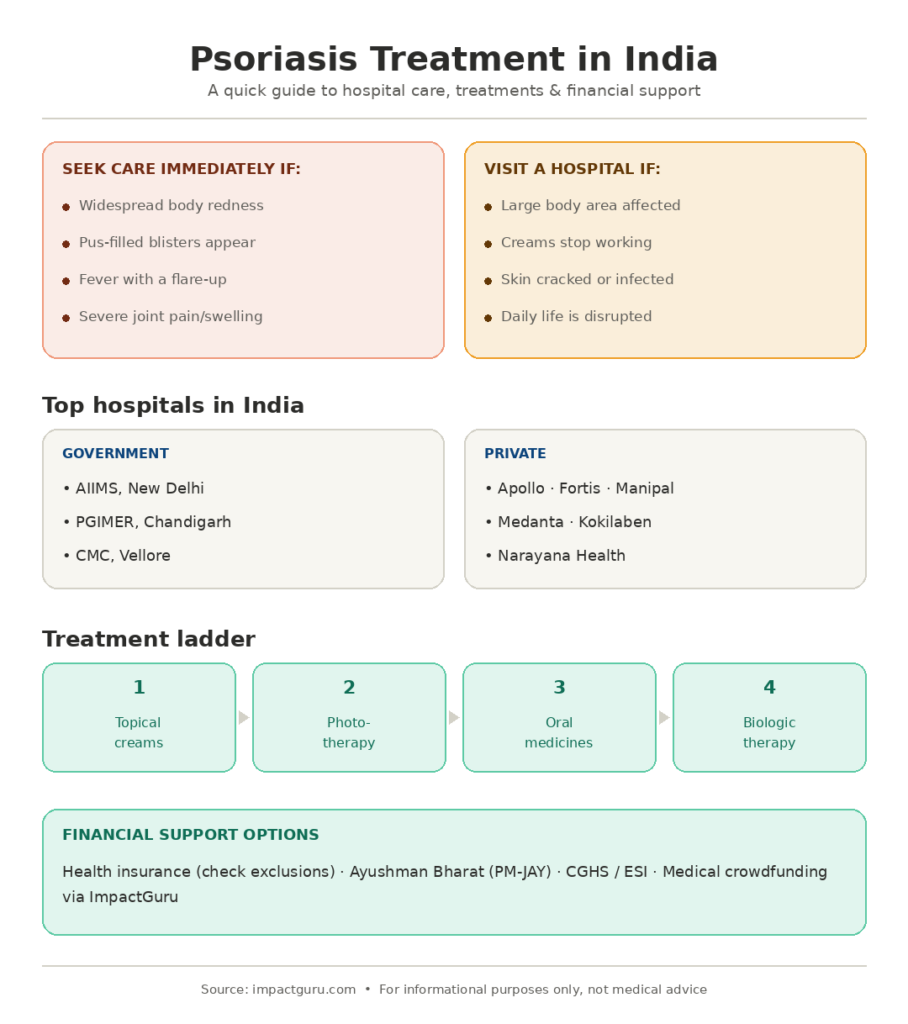
You should consider visiting a hospital if:
- Psoriasis covers a large area of your body.
- Topical treatments are no longer effective.
- You experience severe itching or pain.
- Your skin becomes cracked, infected, or starts bleeding.
- You develop joint pain or stiffness.
- Your daily activities are affected by psoriasis.
- Your dermatologist recommends phototherapy or biologic treatment.
- Symptoms continue to worsen despite ongoing treatment.
Hospital-based care allows access to specialised investigations, advanced medications, and multidisciplinary management that may not be available in smaller clinics.
Seeking timely medical attention can help prevent complications and improve long-term disease control.
Signs That You Should Seek Immediate Medical Care
Although most psoriasis flare-ups can be managed on an outpatient basis, certain symptoms require urgent medical evaluation.
Seek immediate medical care if you experience:
Widespread Redness Across The Body
Extensive redness affecting most of the skin may indicate erythrodermic psoriasis, a rare but potentially serious medical emergency.
Numerous Pus-Filled Blisters
The sudden appearance of widespread pus-filled blisters may suggest generalised pustular psoriasis, which requires immediate hospital treatment.
High Fever Or Chills
Fever accompanied by severe psoriasis may indicate an infection or a serious flare-up requiring urgent evaluation.
Severe Joint Pain
Painful, swollen joints may be a sign of psoriatic arthritis. Early diagnosis and treatment are essential to prevent permanent joint damage.
Difficulty Performing Daily Activities
If pain, itching, or extensive skin involvement begins affecting your ability to work, sleep, or perform routine tasks, consult a specialist without delay.
Rapidly Worsening Symptoms
Any sudden or significant worsening of psoriasis despite treatment should be assessed by a dermatologist as soon as possible.
Recognising these warning signs early can help prevent complications and ensure that appropriate treatment is started without unnecessary delays.
Read More : Skin Cancer Treatment Cost In India (2026 Guide)
What To Look For In A Psoriasis Hospital
Choosing the right hospital is one of the most important decisions when managing psoriasis. Since it is a chronic condition that may require long-term care, regular follow-ups, and advanced therapies, selecting a hospital with the right expertise can make a significant difference in treatment outcomes.
Before deciding where to seek treatment, consider the following factors:
Experienced Dermatologists
A hospital should have qualified dermatologists with experience in diagnosing and treating different types of psoriasis. Specialists who regularly manage complex skin diseases are better equipped to recommend personalised treatment plans and monitor long-term progress.
Access To Advanced Treatment Options
Modern psoriasis care goes beyond creams and ointments. A good hospital should offer:
- Topical therapies
- Phototherapy (UVB/PUVA)
- Oral medications
- Biologic therapies
- Treatment for psoriatic arthritis
Having all these services under one roof makes treatment more convenient and ensures continuity of care.
Diagnostic Facilities
Although psoriasis is usually diagnosed through a physical examination, some patients may require additional tests such as:
- Skin biopsy
- Blood investigations
- Imaging tests for suspected psoriatic arthritis
Hospitals with comprehensive diagnostic facilities can provide faster and more accurate evaluations.
Multidisciplinary Care
Psoriasis can affect more than just the skin. It may involve the joints, nails, mental health, and overall quality of life.
Leading hospitals often provide access to:
- Rheumatologists
- Orthopaedic specialists
- Nutritionists
- Psychologists
- Physiotherapists
This collaborative approach helps patients manage both the physical and emotional aspects of the disease.
Patient Support And Follow-Up
Since psoriasis requires ongoing management, choose a hospital that provides regular follow-up appointments, patient education, counselling, and easy access to specialists whenever symptoms worsen.
Read More : Financial Assistance For Chronic Conditions: Your Guide
Best Government Hospitals For Psoriasis Treatment In India
India has several government hospitals that provide high-quality dermatology services at affordable costs. Many of these institutions are also involved in research, medical education, and the treatment of complex skin diseases.
AIIMS, New Delhi
All India Institute of Medical Sciences (AIIMS), New Delhi, is widely regarded as one of India’s leading healthcare institutions.
Its Department of Dermatology offers comprehensive care for psoriasis, including:
- Clinical evaluation
- Skin biopsy
- Phototherapy
- Systemic medications
- Biologic therapies for selected patients
- Management of psoriatic arthritis through multidisciplinary collaboration
Patients from across the country visit AIIMS for specialised dermatological care because of its experienced faculty and advanced treatment facilities.
PGIMER, Chandigarh
Postgraduate Institute of Medical Education and Research (PGIMER) is another nationally recognised centre for dermatology.
The hospital provides specialised care for patients with:
- Chronic plaque psoriasis
- Pustular psoriasis
- Nail psoriasis
- Psoriatic arthritis
- Complex autoimmune skin diseases
Its multidisciplinary approach ensures that patients receive comprehensive care from dermatologists and other specialists when required.
Christian Medical College (CMC), Vellore
Christian Medical College (CMC), Vellore is well known for providing advanced dermatological care.
Patients benefit from:
- Experienced dermatologists
- Modern diagnostic facilities
- Phototherapy services
- Long-term psoriasis management
- Access to multidisciplinary care
CMC is often recommended for patients seeking specialised treatment for chronic skin diseases.
Best Private Hospitals For Psoriasis Treatment In India
Private hospitals often provide quicker access to specialists, shorter waiting times, and a wider range of advanced treatment options, including biologic therapies.
Apollo Hospitals
Apollo Hospitals has dermatology departments across multiple cities in India.
Many Apollo centres offer:
- Comprehensive psoriasis diagnosis
- Phototherapy
- Advanced biologic therapy
- Management of nail psoriasis
- Treatment for psoriatic arthritis
Its nationwide network makes specialist care accessible to patients in different regions.
Fortis Hospitals
Fortis Healthcare provides dermatology services through experienced consultants who manage both common and complex forms of psoriasis.
Treatment facilities may include:
- Diagnostic evaluation
- Medical management
- Biologic therapies
- Long-term follow-up care
Manipal Hospitals
Manipal Hospitals is recognised for its comprehensive dermatology departments and Psoriasis treatment.
Patients can access:
- Experienced dermatologists
- Phototherapy units
- Systemic treatments
- Biologic medications
- Patient education programmes
The hospital also focuses on long-term disease management and lifestyle counselling.
Medanta – The Medicity
Medanta – The Medicity provides specialised dermatology care supported by advanced diagnostic and treatment facilities.
Patients with moderate to severe psoriasis can receive:
- Detailed evaluation
- Modern medical therapies
- Biologic treatment where indicated
- Multidisciplinary consultation
Kokilaben Dhirubhai Ambani Hospital
Kokilaben Dhirubhai Ambani Hospital offers advanced dermatological care for various autoimmune skin disorders, including psoriasis.
The hospital provides access to:
- Dermatology specialists
- Modern diagnostic services
- Phototherapy
- Advanced treatment options
- Personalised follow-up care
Narayana Health
Narayana Health offers dermatology services through experienced specialists across several centres in India.
Patients benefit from:
- Comprehensive diagnosis
- Evidence-based treatment plans
- Long-term follow-up
- Multidisciplinary support when required
Why Choosing The Right Hospital Matters
Psoriasis is a lifelong condition that requires ongoing monitoring and timely treatment adjustments. Choosing a hospital with experienced dermatologists, access to advanced therapies, and comprehensive patient support can improve disease control and reduce the risk of complications.
Rather than selecting a hospital based solely on cost or location, patients should also consider the quality of dermatology services, availability of specialised treatments, and the hospital’s experience in managing chronic autoimmune skin diseases.
A well-equipped hospital not only treats current symptoms but also helps patients develop a long-term management plan that supports better skin health and overall quality of life.
Treatments Offered At Psoriasis Hospitals
Leading psoriasis hospitals in India provide a wide range of treatments depending on the type, severity, and progression of the disease. Since psoriasis affects every patient differently, dermatologists create personalised treatment plans based on age, medical history, lifestyle, and response to previous treatments.
Most hospitals offer a combination of medical treatment, regular follow-ups, and patient education to help control symptoms and reduce future flare-ups.
Topical Treatments
Topical medicines are usually recommended for patients with mild to moderate psoriasis. These medications are applied directly to the affected areas of the skin to reduce inflammation, scaling, and itching.
Common topical treatments include:
- Corticosteroid creams and ointments
- Vitamin D analogues
- Topical retinoids
- Coal tar preparations
- Salicylic acid products
- Moisturisers and emollients
These treatments are often the first step in managing plaque psoriasis and can be used alongside other therapies for better results.
Phototherapy
Many specialised hospitals have dedicated phototherapy units that use controlled ultraviolet (UV) light to treat psoriasis.
The most commonly used options include:
- Narrowband UVB therapy
- Broadband UVB therapy
- PUVA (Psoralen + UVA) therapy
Phototherapy is generally recommended for patients with moderate psoriasis or for those whose symptoms have not improved with topical treatments alone. Multiple sessions are usually required over several weeks to achieve noticeable improvement.
Oral Medications
For moderate to severe psoriasis, dermatologists may prescribe oral medicines that work throughout the body to regulate the immune system and slow the rapid growth of skin cells.
Common oral medications include:
- Methotrexate
- Cyclosporine
- Acitretin
- Apremilast
These medicines require regular monitoring through blood tests and follow-up consultations to ensure they remain safe and effective.
Biologic Therapy
Biologic therapy is one of the most advanced treatment options available for moderate to severe psoriasis.
Unlike conventional medicines, biologics target specific parts of the immune system responsible for inflammation. They are usually recommended when other treatments have not provided adequate relief or when psoriasis is associated with psoriatic arthritis.
Most biologics are administered through injections or intravenous infusions under medical supervision.
Management Of Psoriatic Arthritis
Around one-third of people with psoriasis may develop psoriatic arthritis, a condition that causes joint pain, swelling, and stiffness.
Hospitals with multidisciplinary care teams often involve rheumatologists alongside dermatologists to ensure both the skin and joints are treated effectively.
Counselling And Lifestyle Guidance
Many hospitals also educate patients about:
- Stress management
- Healthy eating habits
- Weight management
- Smoking cessation
- Limiting alcohol consumption
- Daily skincare routines
- Identifying personal triggers
Lifestyle changes cannot cure psoriasis, but they often help reduce flare-ups and improve treatment outcomes.
Read More : Merkel Cell Carcinoma: Symptoms, Causes, Diagnosis & Treatment
How To Choose The Right Hospitals for Psoriasis
With many hospitals offering dermatology services, choosing the right one can feel overwhelming. Looking beyond reputation alone can help you make a more informed decision.
Here are a few factors to consider:
Expertise Of The Dermatology Team
Choose a hospital with experienced dermatologists who regularly treat moderate and severe psoriasis. Hospitals that manage a high number of psoriasis cases are often better equipped to handle complex situations.
Availability Of Advanced Treatments
Not every hospital offers phototherapy or biologic therapy. If your dermatologist recommends these treatments, ensure the hospital has the necessary facilities and trained specialists.
Accessibility
Psoriasis often requires long-term follow-up. Selecting a hospital that is reasonably close to your home can make regular appointments easier and reduce travel expenses.
Cost Transparency
Before starting treatment, ask for a clear estimate covering consultations, investigations, medicines, procedures, and follow-up visits. Understanding the expected costs helps avoid unexpected financial strain.
Patient Reviews And Reputation
Patient experiences can provide useful insights into waiting times, quality of care, communication, and overall satisfaction. While reviews should not be the only deciding factor, they can help you evaluate different hospitals.
Multidisciplinary Care
If you have psoriatic arthritis or other medical conditions, consider hospitals where dermatologists work closely with rheumatologists, physiotherapists, and other specialists.
Does Health Insurance Cover Psoriasis Treatment?
Health insurance can reduce the financial burden of psoriasis treatment, but coverage varies depending on the insurer and policy terms.
Many comprehensive health insurance plans cover:
- Hospitalisation
- Inpatient treatment
- Diagnostic investigations
- Treatment of complications
- Prescription medicines during hospital admission
However, certain expenses may have limited or no coverage, including:
- Routine outpatient consultations
- Long-term topical medications
- Some biologic therapies
- Regular phototherapy sessions
- Cosmetic procedures for residual skin changes
Before beginning treatment, patients should carefully review their policy to understand:
- Waiting periods
- Coverage limits
- Co-payment requirements
- Exclusions
- Network hospitals
Speaking with both your insurer and the hospital’s insurance desk can help clarify available benefits and minimise unexpected expenses.
Read More : Most Expensive Treatment Crowdfunding in India
Government Schemes For Financial Assistance
Patients who meet the eligibility criteria may also benefit from government-supported healthcare schemes that help reduce treatment costs.
Some commonly available schemes include:
- Ayushman Bharat – Pradhan Mantri Jan Arogya Yojana (PM-JAY)
- Employees’ State Insurance (ESI)
- Central Government Health Scheme (CGHS)
- State government health insurance schemes
The coverage available under these programmes varies based on eligibility, hospital empanelment, and the specific treatment required.
Patients should consult their treating hospital or the relevant government authorities to determine whether they qualify for financial assistance.
Understanding the available insurance benefits and government schemes before starting treatment can make long-term psoriasis care more affordable and accessible.
Read More : Best Crowdfunding Platforms in 2026
How ImpactGuru Helps Patients Afford Psoriasis Treatment
Psoriasis is a lifelong condition, and for many patients, treatment doesn’t end after a few weeks or months. Regular dermatologist consultations, prescription medications, phototherapy sessions, biologic therapies, and treatment for complications such as psoriatic arthritis can lead to significant medical expenses over time.
For families already managing household expenses, the financial burden of long-term psoriasis treatment can become overwhelming. Delaying or discontinuing treatment due to cost may increase the risk of severe flare-ups and complications.
This is where ImpactGuru can make a meaningful difference.
ImpactGuru is one of India’s leading medical crowdfunding platforms, helping patients raise funds for a wide range of medical treatments. Patients diagnosed with severe psoriasis or related complications can create a verified fundraiser to seek financial support from friends, family, colleagues, and compassionate donors across the country.
Through ImpactGuru, patients can:
- Create a verified medical fundraising campaign.
- Share their medical journey with a wider audience.
- Receive secure online donations.
- Track fundraising progress transparently.
- Get dedicated fundraising support from experienced campaign experts.
Medical crowdfunding can help patients continue essential treatment without compromising on the quality of care because of financial limitations. It also enables families to focus on recovery instead of worrying about mounting medical bills.

Tips Before Choosing A Hospital
Selecting the right hospital is an important part of successful psoriasis management. Before beginning treatment, take some time to evaluate your options.
Here are a few practical tips:
- Choose a hospital with experienced dermatologists who regularly treat psoriasis.
- Ensure advanced treatments such as phototherapy and biologic therapy are available if needed.
- Ask about the expected treatment plan and long-term follow-up schedule.
- Understand the estimated costs before starting treatment.
- Check whether your health insurance is accepted at the hospital.
- Read patient reviews to learn about the quality of care and patient experience.
- Consider the hospital’s location if frequent follow-up visits are expected.
- Don’t hesitate to seek a second opinion for complex or severe cases.
Making an informed decision early can improve treatment outcomes and reduce unnecessary delays.
Conclusion
Psoriasis is a chronic autoimmune skin disease that often requires long-term medical care and regular follow-up. While mild cases may be managed with topical medications, moderate to severe psoriasis often needs specialised hospital treatment, advanced therapies, and multidisciplinary care. Choosing the right hospital can significantly improve disease control, reduce complications, and enhance overall quality of life.
India is home to several reputed government and private hospitals that offer comprehensive psoriasis care through experienced dermatologists, advanced diagnostic facilities, phototherapy units, biologic therapies, and specialised treatment for psoriatic arthritis. Understanding the treatment options available, comparing hospitals, and evaluating costs can help patients make informed healthcare decisions.
For individuals struggling to afford long-term psoriasis treatment, financial support can be just as important as medical care. ImpactGuru provides a trusted medical crowdfunding platform that enables eligible patients to raise funds for consultations, medicines, advanced therapies, and hospital expenses. By connecting patients with compassionate donors, ImpactGuru helps ensure that financial challenges do not become a barrier to receiving timely treatment.
With expert medical care, the right hospital, and access to financial support when needed, people living with psoriasis can manage their condition effectively and enjoy a better quality of life.
FAQs
When psoriasis covers a large body area, topical treatments stop working, you have severe itching/pain, cracked or infected skin, joint pain, or your dermatologist recommends phototherapy or biologic therapy.
Government options include AIIMS Delhi, PGIMER Chandigarh, and CMC Vellore. Private options include Apollo, Fortis, Manipal, Medanta, Kokilaben Dhirubhai Ambani Hospital, and Narayana Health.
Topical medications, phototherapy (UVB/PUVA), oral medications (like methotrexate), biologic therapy for moderate-to-severe cases, and specialized management for psoriatic arthritis.
Coverage varies — hospitalisation, diagnostics, and inpatient treatment are usually covered, but routine outpatient visits, long-term topical medicines, some biologics, and regular phototherapy sessions may have limited or no coverage.
Government schemes like Ayushman Bharat (PM-JAY), CGHS, and ESI may help, and platforms like ImpactGuru allow patients to raise funds through medical crowdfunding for consultations, medicines, and advanced therapies.