

Penile cancer is a rare type of cancer that develops in the tissues and skin of the penis. Although it is uncommon compared to other cancers, early diagnosis and treatment are crucial for achieving the best outcomes. Unfortunately, many men delay seeking medical attention due to embarrassment or lack of awareness, which can allow the disease to progress.
Understanding penile cancer symptoms, causes, risk factors, and treatment options can help individuals recognize warning signs early and seek timely medical care. This comprehensive guide covers everything you need to know about penile cancer, including its symptoms, stages, diagnosis, treatment options, survival rates, prevention strategies, and treatment costs in India.
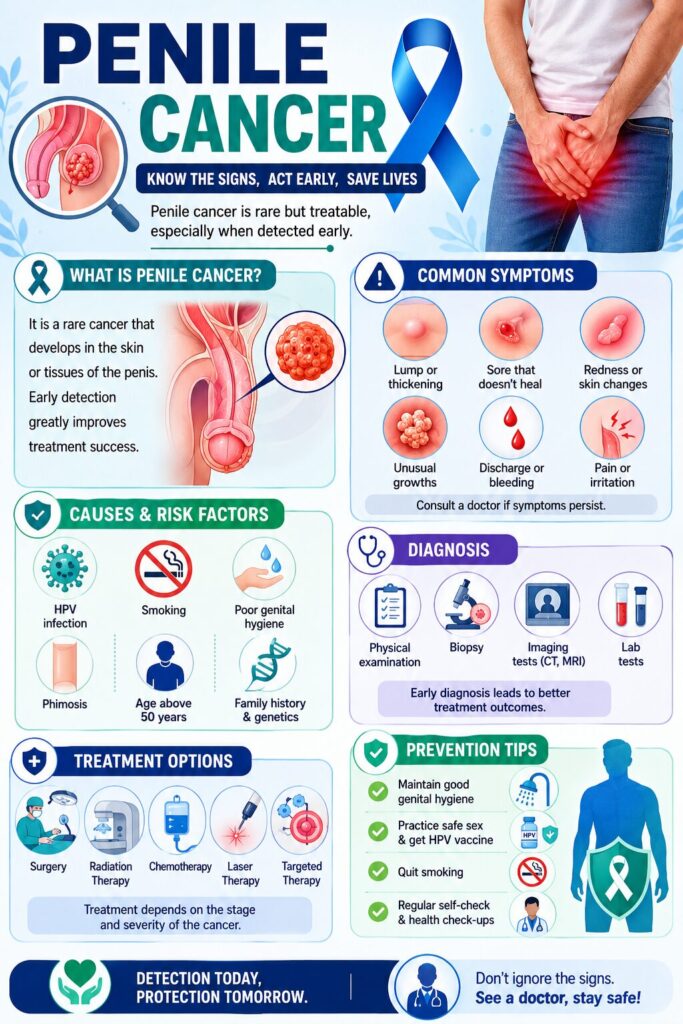
Table of Contents
- What Is Penile Cancer?
- Penile Cancer Symptoms
- Penile Cancer Causes & Risk Factors
- Penile Cancer Staging
- Is Penile Cancer Curable?
- Penile Cancer Treatment
- Cost of Penile Cancer Treatment in India
- Types Of Penile Cancer
- Penile Cancer Diagnosis
- Emotional and Financial Challenges of Penile Cancer
- Medical Crowdfunding for Penile Cancer Treatment
- Conclusion
What Is Penile Cancer?
Penile cancer occurs when abnormal cells in the tissues of the penis grow uncontrollably and form a tumor. Most penile cancers begin in the skin cells of the penis and may spread to nearby tissues, lymph nodes, and other organs if left untreated.
The disease is relatively rare, accounting for less than 1% of cancers among men in many countries. However, its impact on physical health, emotional well-being, and quality of life can be significant.
Penile Cancer Symptoms
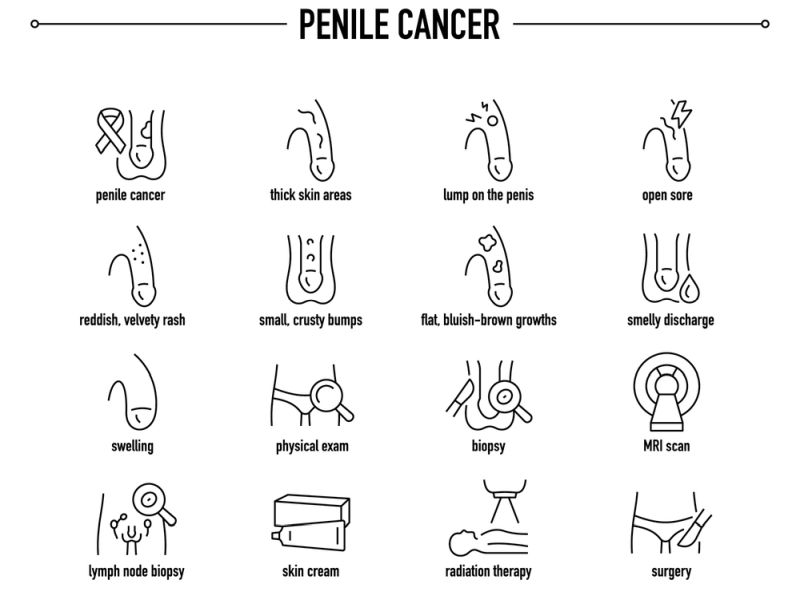
Penile cancer is a rare kind of cancer that affects the tissues of the penis. The symptoms of penile cancer can vary, and it’s important to note that other, less severe conditions may also cause these symptoms. If you observe any persistent changes or abnormalities in the genital area, it’s crucial to consult a healthcare professional for proper evaluation. Common symptoms of penile cancer may include:
1. Changes in the skin: Look out for any alterations in the color, thickness, or texture of the skin on the penis. This could include redness, rash, or the development of ulcers.
2. Lumps or masses: Feel for any unusual lumps or growths on the penis. These may be visible or palpable during self-examination.
3. Bleeding: Unexplained bleeding, discharge, or foul-smelling drainage from the penis can be a cause for concern and should be investigated.
4. Pain or discomfort: Persistent pain, tenderness, or discomfort in the penis, particularly during erections or urination, can be indicative of a problem.
5. Changes in appearance: Any changes in the size, shape, or appearance of the penis, including curvature, may be a sign of an issue.
6. Swelling: Swelling in the penis or surrounding areas can occur, and it’s essential to monitor for any unusual changes.
7. Difficulty retracting foreskin: For men with a foreskin, difficulty retracting it may be a symptom. This could be due to the presence of a growth or other abnormality.
It’s essential to remember that various non-cancerous conditions, such as infections or inflammatory conditions, can also cause these symptoms. However, any persistent or worrisome signs or symptoms should prompt you to visit a medical practitioner for a proper diagnosis and appropriate treatment.
Penile Cancer Causes & Risk Factors
The exact cause of penile cancer is not fully comprehended, but several risk factors have been recognized. It’s vital to remember that having one or more risk factors does not assure that an individual will develop penile cancer, and many people with this cancer may not have any known risk factors. Here are some of the potential causes and risk factors associated with penile cancer:
1. Human Papillomavirus (HPV) Infection:
– HPV is a group of viruses that can harm the genital area, leading to an increased risk of penile cancer.
– Certain strains of HPV, particularly HPV-16 and HPV-18, are strongly associated with the development of penile cancer.
– Individuals with a history of genital warts or different HPV-related infections are at a higher risk.
2. Poor Hygiene:
– Lack of proper hygiene, including not cleaning the penis regularly, may contribute to the accumulation of smegma, a substance that can harbor bacteria & irritants.
– Chronic irritation and inflammation may increase the risk of developing penile cancer.
3. Smoking:
– Smoking tobacco is a risk characteristic for a variety of cancers, including penile cancer.
– The chemicals in tobacco smoke may accumulate in the genital area, increasing the likelihood of cancer development.
4. Age:
– Penile cancer is more common in older men, with the risk increasing with age.
5. Phimosis:
– Phimosis is a medical state where the foreskin is tight and cannot be pulled back over the head of the penis.
– Men with untreated or recurrent phimosis have a higher risk of penile cancer.
6. Chronic Inflammation:
– Conditions that cause chronic inflammation of the penis, such as balanitis or lichen sclerosus, may increase the risk of developing cancer.
7. Uncircumcised Men:
– Studies have shown that uncircumcised men may have a slightly higher risk of penile cancer compared to those who are circumcised.
8. Multiple Sexual Partners:
– Engaging in sexual activity with many partners or having sexual partners with a history of HPV infection may elevate the risk.
9. HIV Infection:
– Patients with HIV have a higher possibility of developing certain cancers, including penile cancer.
10. Family History:
– A family history of penile or other related cancers may contribute to an increased risk.
It’s essential to note that practicing good hygiene, using protection during sexual activity, & getting vaccinated against HPV can help limit the risk of penile cancer. If you have concerns about your risk factors or notice any unusual symptoms, it’s advisable to consult with a healthcare professional.
Penile Cancer Staging
It can be classified into different stages, depending on how far it has grown and spread. The stages of penile cancer are:
– Stage 0: The cancer is only in the top layer of the skin and has not invaded deeper tissues. This stage is called penile intraepithelial neoplasia (PIN) or carcinoma in situ (CIS).
– Stage 1: The cancer has developed into the layer of soft tissue below the skin, but it has not reached the blood vessels, nerves, or the corpus spongiosum (the spongy tissue along the bottom of the penis). The cancer is low-grade, meaning it looks similar to normal cells.
– Stage 2: The cancer has one of the following features:
– It has grown into the blood vessels, nerves, or the corpus spongiosum.
– It has grown into the corpus cavernosum (the erectile tissue on either side of the penis).
– It is high grade, which looks very different from normal cells.
– Stage 3: The cancer has moved to nearby lymph nodes in the groin but not to other body parts.
– Stage 4: The cancer has one of the following features:
– It has spread to lymph nodes in the pelvis or abdomen.
– It has spread to other organs, such as the lungs, liver, or bones.
– It has invaded nearby structures, such as the urethra, prostate, or bladder.
Is Penile Cancer Curable?
Penile cancer is highly curable when detected early. The treatment options depend on the stage and grade of the cancer and the patient’s preferences and overall health. The prognosis (chance of recovery) and survival rate for penile cancer depend on multiple factors, like the stage and grade of the cancer, the patient’s age and general health, and the response to treatment. Generally, the earlier the stage and the lower the grade, the better the prognosis and survival rate.
As per the American Cancer Society, the five-year relative survival rate for penile cancer is
– 85% for localized (stage I) disease
– 59% for regional (stage II-III) disease
– 11% for distant (stage IV) disease
The five-year relative survival rate compares the survival of people with penile cancer to that of people without it. It does not take into account other causes of death.
Penile Cancer Treatment
Penile cancer can be treated with various methods depending on the stage and extent of the disease. Surgery, radiation therapy, chemotherapy, and immunotherapy are the main treatment options.
Surgery for Penile Cancer
Surgery is the most standard medical treatment for penile cancer. It involves removing the tumor and nearby healthy tissue to ensure no cancer tumors are left behind. The type and extent of surgery depend on the size & location of the tumor, as well as the patient’s preference and overall health.
The main types of surgery for penile cancer are:
– Circumcision: This is a simple procedure that removes the foreskin, the skin that conceals the head of the penis. It is usually done for tumors that are confined to the foreskin or under it.
– Wide local excision: This procedure removes the tumor & a margin of healthy tissue around it. It is usually done for small tumors that are on or near the surface of the penis.
– Partial penectomy: This is a procedure that removes part of the penis along with the tumor. It is usually done for larger tumors that have developed into deeper layers of the penis.
– Total penectomy: This is a procedure that removes the entire penis along with the tumor. It is usually done for very large or advanced cancer tumors that have spread to other parts of the penis or nearby structures.
– Lymph node dissection: This medical procedure removes some or all of the lymph nodes in the groin area, where penile cancer often spreads. It is usually done to check if the cancer has spread or to prevent it from spreading further.
The surgery cost for penile cancer in India ranges from $6000 to $7000 (INR 4,44,000 to INR 5,18,000), depending on the type and extent of surgery, the hospital, and the surgeon. The cost includes hospital stays, anesthesia, surgery fees, medications, and post-operative care.
Radiation Therapy for Penile Cancer
Radiation therapy uses high-energy rays or beams to kill or restrict cancer cells from growing. It can be used as an alternative to surgery for some patients with early-stage penile cancer or as an adjuvant therapy after surgery to lower the risk of recurrence. It can also be used as a palliative therapy for patients with advanced or metastatic penile cancer to relieve symptoms & improve quality of life.
The main types of radiation therapy for penile cancer are:
– External beam radiation therapy: This is a type of radiation therapy that delivers radiation from a machine outside the body to the tumor and surrounding areas. It is usually given in daily sessions over several weeks.
– Brachytherapy: This is a type of radiation therapy that involves placing radioactive sources inside or near the tumor. It delivers a high radiation dose to a small area while sparing nearby healthy tissues. It can be given as permanent or temporary implants removed after a few days.
The cost of radiation therapy for penile cancer in India ranges from $3000 to $4000 (INR 2,22,000 to INR 2,96,000), depending on the type and duration of radiation therapy, the hospital, and
the radiation oncologist. The cost includes hospital stays, radiation therapy fees, medications,
and follow-up care.
Read More : Radiation Therapy Cost In India
Chemotherapy for Penile Cancer
Chemotherapy is a medical therapy that uses drugs to stop cancer cells from growing. It can be used as a neoadjuvant therapy before surgery or radiation therapy to compress the cancer tumor & make it easier to remove or treat. It can also be used as an adjuvant therapy after surgery or radiation therapy to kill any remaining cancer cells and prevent recurrence.
The main types of chemotherapy for penile cancer are:
– Systemic chemotherapy: This is a type of chemotherapy that involves injecting drugs into a vein or taking them by mouth. The drugs flow through the bloodstream & reach all body parts where cancer cells may be present.
– Regional chemotherapy: This type of chemotherapy involves delivering drugs directly to the tumor or the affected area. It can be done by injecting drugs into an artery that provides blood to the penis or by placing a catheter into the bladder and instilling drugs into the urine.
The cost of chemotherapy for penile cancer in India ranges from $2000 to $3000 (INR 1,48,000 to INR 2,22,000), depending on the type and number of drugs, the number of cycles, the hospital, and the medical oncologist. The cost includes hospital stays, chemotherapy fees, medications, and follow-up care.
Immunotherapy for Penile Cancer
Immunotherapy is a treatment that uses substances that stimulate or enhance the body’s immune system to fight cancer. It can be used as a first-line therapy for some patients with advanced or metastatic penile cancer that has a high level of a protein called PD-L1 or has certain genetic mutations. It can also be used as a second-line therapy for patients who have not responded to or have progressed after chemotherapy.
The main types of immunotherapy for penile cancer are
– Immune checkpoint inhibitors: These drugs block the proteins on the exterior of cancer cells or immune cells that limit the immune system from attacking cancer. They help the immune system recognize and destroy cancer cells more effectively. The most common immune checkpoint inhibitors for penile cancer are pembrolizumab and nivolumab.
– Cancer vaccines: These substances contain antigens, molecules that trigger an immune response. They help the immune system identify and target cancer cells more specifically. The most common cancer vaccine for penile cancer is bacillus Calmette-Guérin (BCG), which is also used to treat bladder cancer.
The cost of immunotherapy for penile cancer in India ranges from $4000 to $5000 (INR 2,96,000 to INR 3,70,000), depending on the type and dose of immunotherapy, the number of cycles, the hospital, and the immunologist. The cost includes hospital stays, immunotherapy fees, medications, and follow-up care.
These costs are only indicative and may vary depending on various factors. It is advisable to consult a doctor and get a personalized estimate before starting any treatment.
Cost of Penile Cancer Treatment in India
Treatment costs vary based on the hospital, treatment type, stage, and city.
| Treatment | Estimated Cost (INR) |
|---|---|
| Consultation & Diagnosis | ₹5,000 – ₹50,000 |
| Surgery | ₹50,000 – ₹4,00,000 |
| Radiation Therapy | ₹1,00,000 – ₹5,00,000 |
| Chemotherapy | ₹50,000 – ₹6,00,000 |
| Immunotherapy | ₹1,50,000 – ₹15,00,000+ |
| Hospitalization | ₹20,000 – ₹2,00,000 |
The total cost may increase substantially for advanced-stage disease requiring multiple treatments.
Types Of Penile Cancer
There are different types of penile cancer, which are classified based on their characteristics and the cells involved. Here are some types of penile cancer:
1. Squamous Cell Carcinoma (SCC): Accounting for over 95% of cases. It usually starts in the squamous cells lining the surface of the penis. SCC can present as verrucous carcinoma, which is slower-growing and less aggressive than other types.
2. Adenocarcinoma: Adenocarcinoma is less common than SCC but tends to be more aggressive. It may be associated with pre-existing conditions like penile intraepithelial neoplasia (PIN).
3. Sarcoma: Penile sarcomas are rare and develop in the connective tissue of the penis, like the blood vessels, muscles, or fat cells. They are generally more aggressive than SCC.
4. Melanoma: Penile melanoma originates in the skin’s pigment-producing cells (melanocytes). Melanoma is relatively rare in the penis, but it can be aggressive.
5. Basal Cell Carcinoma: This type starts in the basal cells in the lower part of the epidermis. It is less common than SCC and tends to be less aggressive.
6. Verrucous Carcinoma: A subtype of squamous cell carcinoma, it is characterized by slow growth and a wart-like appearance. It is generally less aggressive and has a better prognosis than other SCC forms.
Penile Cancer Diagnosis
Penile cancer diagnosis involves a combination of medical history review, physical examinations, and various tests to confirm the presence of cancer & determine its stage. Here is an overview of the general steps involved in the diagnosis of penile cancer:
1. Medical History and Physical Examination:
– The doctor will begin by discussing the patient’s medical history, including any risk factors such as smoking, human papillomavirus (HPV) infection, or a history of genital warts.
– A thorough physical examination of the penis and surrounding areas will be conducted to look for any abnormalities, such as lumps, sores, or changes in the skin.
2. Biopsy:
– The next step is a biopsy if suspicious lesions or abnormalities are identified during the physical examination. A biopsy involves the removal of a slight sample of tissue from the affected area for laboratory analysis.
– There are different types of biopsies, including a punch biopsy, excisional biopsy, or incisional biopsy. The choice is based on the size & area of the suspicious lesion.
3. Pathology Examination:
– The biopsy sample is dispatched to a pathology lab where a pathologist evaluates the tissue under a microscope. This helps confirm whether cancer cells are present and, if so, the type and grade of the cancer.
4. Imaging Studies:
– Imaging tests may be conducted to decide the extent (stage) of the cancer and to identify if it has metastasized to surrounding lymph nodes or other organs. Common imaging modalities include ultrasound, magnetic resonance imaging (MRI), computed tomography (CT) scans, & positron emission tomography (PET) scans.
5. Lymph Node Evaluation:
– Sentinel lymph node biopsy or imaging studies may be used to assess whether the cancer has spread to nearby lymph nodes. This is crucial for determining the stage of the cancer and guiding treatment decisions.
6. Blood Tests:
– Blood tests may be performed to assess overall health and check for specific markers that can indicate the presence of cancer.
7. Genetic Testing:
– In some cases, genetic testing may be preferred to identify specific genetic mutations that could influence treatment options.
8. Additional Procedures:
– Additional procedures or tests may be recommended to gather more information and guide treatment planning, depending on the findings and stage of cancer.
Emotional and Financial Challenges of Penile Cancer
Beyond medical treatment, patients often face significant emotional and financial burdens.
Common challenges include:
- Loss of income during treatment
- Expensive diagnostic tests
- Travel and accommodation expenses
- Emotional stress and anxiety
- Long-term rehabilitation costs
Support from family, healthcare providers, and patient communities can play a crucial role in recovery.
Medical Crowdfunding for Penile Cancer Treatment
Cancer treatment can be financially overwhelming, especially when surgery, chemotherapy, radiation therapy, and long-term follow-up care are required. Many families struggle to manage these expenses while maintaining their daily financial responsibilities.
Medical crowdfunding has emerged as an effective solution for patients seeking financial assistance. Through online fundraising campaigns, individuals can raise donations online from friends, relatives, colleagues, and compassionate donors.
A trusted medical crowdfunding platform like ImpactGuru can help patients access life-saving treatment without delaying care due to financial constraints. Crowdfunding not only provides financial support but also creates a community of encouragement and hope during challenging times.
Conclusion
In conclusion, penile cancer is a relatively rare but severe condition that requires prompt attention and awareness. Recognizing the symptoms, including changes in skin color, lumps, or ulcers, is crucial for early detection. Various risk factors, such as HPV infection and smoking, contribute to the development of penile cancer, emphasizing the importance of preventive measures and regular health check-ups.
Understanding the distinct stages of penile cancer is essential for tailoring appropriate treatment plans, which may involve surgery, radiation therapy, or chemotherapy. Timely intervention and a multidisciplinary approach are pivotal in improving outcomes & enhancing the quality of life for individuals affected by this condition.
Penile cancer treatment often involves substantial medical expenses, including surgery, chemotherapy, and follow-up care. Crowdfunding provides a platform for individuals to share their stories and receive financial support from a compassionate community.
Penile cancer is a rare cancer that develops in the tissues or skin of the penis, usually starting in the skin cells.
Common early signs include a lump, sore, skin discoloration, thickened skin, unusual growths, or persistent irritation on the penis.
The exact cause is unknown, but HPV infection, poor genital hygiene, smoking, and chronic inflammation can increase the risk.
Early-stage penile cancer is often painless, though some patients may experience discomfort, tenderness, or pain as the disease progresses.