
Schemes are essential for improving the quality of life and helping the country’s development. People often need assistance when dealing with specific health-related issues. This may be for different kinds of reasons. Some people may need to learn who to approach to get the necessary treatment, whereas some people may need more financial means that would allow them to afford specific healthcare schemes. This is where the Government of India comes in. They have formulated schemes that will aid and assist those that require it, helping them to receive good quality and timely medical assistance. The National Leprosy Eradication Programme (NLEP programme) is also a scheme that is important in addressing the issues of those that are dealing with Leprosy in the country.
Table of Contents
- What is the National Leprosy Eradication Programme (NLEP programme)?
- National Leprosy Eradication Programme benefits
- National Leprosy Eradication Programme eligibility
- Objectives of the National Leprosy Eradication Programme (NLEP prgramme)
- Need for the National Leprosy Eradication Programme (NLEP programme) in developing countries like India
- What are the new initiatives of the National Leprosy Eradication Programme (NLEP prgramme)?
- Milestones of the National Leprosy Eradication Program (NLEP programme)
- Social, economic, and cultural challenges faced by people concerning Leprosy
- Reduction in Leprosy cases in India due to coronavirus
- How is Leprosy caused?
- Has Leprosy been eradicated from India?
- What is the symbol of the National Leprosy Program?
- Is Leprosy rare?
- Transmission
- Treatment of Leprosy
- Prevention of Leprosy
- Who does Leprosy affect?
- How long does it take to recover from Leprosy treatment?
- Other Government initiatives for Leprosy
- Conclusion
What is the National Leprosy Eradication Programme (NLEP programme)?
National Leprosy Eradication Programme (NLEP programme) or the National Leprosy Control Programme in the country was launched by the Government of India in soon after independence in the year 1955. Patients began to be given Multi Drug Therapy (MDT) in 1982, and the National Leprosy Eradication Programme was introduced to the public in India in the year 1983. The strategy of the National Leprosy Eradication Programme (NLEP programme) was to control the disease by minimizing the quantum of infection in the population as far as possible. It also focused on reducing infective sources and halting the transmission of the disease from one person to another in different ways.
The National Leprosy Control Programme was initially taken up in endemic districts and was extended to all districts around 1994, with the assistance of the World Bank. Four Research & Training Institutes were established directly under DGHS, namely Central Leprosy Training and Research Institute Institutes (CLTRI) Chengalpattu, Regional Leprosy Training and Research Institute (RLTRI) at Raipur, Gauripur, and Aska. A training center was established in Agra under ICMR. These training institutes and training centers have been greatly important to the research and development of Leprosy services in India. Significant progress has been made regarding alleviating the issues faced by people in the country. As we make more progress in the healthcare field and set up more schemes like the National Leprosy Eradication Programme (NLEP programme), we can improve lives and sometimes even save them to a much greater extent.
National Leprosy Eradication Programme benefits
It can be helpful for a person to understand the benefits of a scheme they may like to take up, just as the National Leprosy Eradication Programme (NLEP programme) or National Leprosy Control Programme. This will help them understand and ascertain if this programme or scheme is suitable for them. National Leprosy Eradication Programme benefits may help in the timely treatment and addressing issues related to Leprosy in the country in a proper manner.
Some National Leprosy Eradication Programme benefits are:
- Integrated Leprosy services through the facilities that provide General Health Care Services for citizens that reside in India
- Early diagnosis and prompt MDT treatment of freshly diagnosed Leprosy cases through routine and special efforts by the necessary medical staff
- Conducting household contact surveys in order to detect cases of Leprosy early
- Involvement of Accredited Social Health Activists (ASHAs) that help with the detection as well as the conclusion of treatment of Leprosy cases in a timely and convenient manner
- Strengthening of services related to Disability Prevention and Medical Rehabilitation (DPMR)
- Information, Education, and Communication (IEC), also known as “Behavioral Change & Communication (BCC),” by employing local and Mass Media in order to reduce Social Stigma and Discrimination so that people may be motivated to self-report Leprosy disease to the Primary Health Centers or PHCs
If you have any doubts or queries related to National Leprosy Eradication Programme benefits, you may search for the same on any search engine online. You can also find contacts relating to the scheme online and inquire about the same from them and ask any additional questions if you need to do so.
National Leprosy Eradication Programme eligibility
One may want to know about the National Leprosy Eradication Programme eligibility to take up National Leprosy Eradication Programme benefits. It may be a good idea to know about the eligibility criteria of a scheme before you take it up. Learning National Leprosy Eradication Programme eligibility criteria will ensure that you can take up the benefits of this scheme and meet all the requirements to do so.
Leprosy Eradication Programme eligibility criteria are:
- Screening for Leprosy under the Rashtriya Bal Swasthya Karyakram (RBSK) for screening of children (0-18 years) and under Ayushman Bharat for the screening of people who are above 30 years of age for Leprosy
As of 31st May 2022, a total of 72,914 leprosy patients were receiving treatment in the country, as per the Monthly Progress Report of Central Leprosy Division, Directorate General of Health Services. If you have any more questions about National Leprosy Eradication Programme eligibility, you may search online. You can also find contact numbers of authorities that can expand on National Leprosy Eradication Programme eligibility for you and answer any other questions that may be related to it.
Objectives of the National Leprosy Eradication Programme (NLEP prgramme)
It is important to understand the objectives of any scheme to understand what it aims to offer and achieve for its beneficiaries. This may be a deciding factor for an eligible person if they want to take up a particular scheme, just as they may for the National Leprosy Eradication Programme (NLEP prgramme).
Objectives of the National Leprosy Eradication Programme (NLEP prgramme) are:
- To reduce the Prevalence rate to less than 1/10,000 population at the sub-national and district level
- To reduce Grade II disability % < 1 among new cases at the National level
- To reduce Grade II disability cases < 1 case per million population at the National level
- Zero disabilities among new cases of children being diagnosed with Leprosy.
- Eradication of stigma and discrimination against people that are suffering from Leprosy
You may search online to know more about these National Leprosy Eradication Programme (NLEP prgramme) objectives. Any additional information you need will be provided on online sources and online platforms. You may also find out and contact any authority that may be able to assist and provide you with information relating to National Leprosy Eradication Programme (NLEP prgramme)
Need for the National Leprosy Eradication Programme (NLEP programme) in developing countries like India
People who reside and belong to developing countries like India face many problems and insecurities when it comes to attaining necessities in life. To address these issues, the Government has set up and initiated schemes that will be able to reduce the hardships faced by people. Some schemes also address health-related issues and allow people to receive the necessary medical treatments through them. They will also receive assistance related to Leprosy through this scheme, which is very important for people suffering from it in India who do not have the means to deal with or get the necessary treatment properly.
The Government has been implementing the National Leprosy Eradication Programme (NLEP)in the country with the goal of making India Leprosy free and eradicating it completely in the territory of India. NLEP is a Centrally Sponsored Scheme that is offered to people under the umbrella of the National Health Mission (NHM). This programme is implemented in all the States/UTs.The major focus of the Programme is to try and detect cases of Leprosy at a preliminary stage. It also aims to provide people with treatment for it completely free of cost, in order to prevent the severe complications that could often be faced as result of Leprosy, like the occurrence of disability.
What are the new initiatives of the National Leprosy Eradication Programme (NLEP prgramme)?
Some great initiatives are set up under the National Leprosy Eradication Programme (NLEP prgramme) for people dealing with or affected by this health impediment.
Some major Initiatives that have been set up under the National Leprosy Eradication Programme (NLEP prgramme are as follows:
- Leprosy Case Detection Campaigns (LCDC) for 14 days in high endemic districts
- ASHA-Based Surveillance for Leprosy Suspects (ABSULS)
- Focused Leprosy Campaign (FLC) in low endemic districts for case detection
Milestones of the National Leprosy Eradication Program (NLEP programme)
Milestones of the National Leprosy Eradication Programme (NLEP prgramme) are:
- 1955 – The Government of India launched National Leprosy Eradication Programme (NLEP prgramme)
- 1983 – The Government of India launched National Leprosy Eradication Programme (NLEP prgramme)and introduced MDT
- 1993 – 2000 – World Bank supported National Leprosy Eradication Programme (NLEP prgramme) – I
- 2001 – 2004 – World Bank supported National Leprosy Eradication Programme (NLEP prgramme)– II
- 2005 – (Jan.) – National Leprosy Eradication Programme (NLEP prgramme) NLEP continued with Government of India funds & donor partners’ support
- 2005 – (Dec.) – India achieved elimination as a public health problem
- 2006 – DPMR was introduced as a component of the National Leprosy Eradication Programme (NLEP prgramme)
- 2007 – Disability Prevention & Medical Rehabilitation Guidelines for primary, secondary, and tertiary level distributed by National Leprosy Eradication Programme (NLEP prgramme)
- 2012 – Special action plan for 209 high endemic districts in 16 States/UT’s
- 2016 – Leprosy Case Detection Campaign (LCDC) is initiated
Social, economic, and cultural challenges faced by people concerning Leprosy
People in India may face unique social, economic, and cultural challenges concerning Leprosy. It is good to address these issues so that people who are currently suffering from the disease will be able to get the necessary help for it and be able to live their lives with more ease.
The social, economic, and cultural challenges that people often face in India concerning Leprosy are:
- Stigma against Leprosy, which includes people that have it or people that may have suffered from it in the past
- Difficulty integrating people who have had Leprosy and their acceptance in the community
- Low knowledge of the population about Leprosy and changing health-seeking behavior
- Access to doctors or a suitable medical professional that may be able to provide leprosy services
According to national data, the number of Leprosy cases in India fell sharply after the onset of the coronavirus pandemic. After the lockdown in 2020 due to COVID-19, there was a 29% fall in Leprosy cases reported in the first quarter from April to June 2020 compared to the previous year, 2019.
How is Leprosy caused?
It is essential to keep informed about the causes of different health issues. This will help a person understand how to avoid that disease or health impediment. They will also be able to comprehend the nature and effects of that disease. By understanding the causes of Leprosy, one will also face less confusion and be more aware when facing treatment for the same.
Some important facts about Leprosy are:
- Leprosy is a chronic and infectious disease caused by a bacteria called Mycobacterium leprae
- This disease primarily affects the skin and peripheral nerves of a person, and if it is not appropriately treated, the disease may lead to disabilities that may get worse with time and will not be able to be treated
- The bacteria are transmitted via droplets that escape from the nose and mouth when close and frequent contact occours with those suffering from it, who have not yet been treated
- Leprosy may be cured using multi-drug therapy or MDT
- Leprosy is reported in all the six WHO Regions
- Most annual detections of new cases are from South-East Asia
Suppose you have any additional questions related to how Leprosy is caused. In that case, you may approach a suitable doctor or a healthcare professional that is qualified to advise and guide you about the same. They can clear doubts and help you understand this disease better.
Has Leprosy been eradicated from India?
It is essential to Highlight the achievements of the National Leprosy Eradication Programme. The prevalence rate of Leprosy has fallen from around 0.69 per 10,000 population in 2014-15 to around 0.45 in 2021-22. Also, the annual new case detection rate per 100,000 population decreased from 9.73 in 2014-15 to 5.52 in 2021-22.
What is the symbol of the National Leprosy Program?
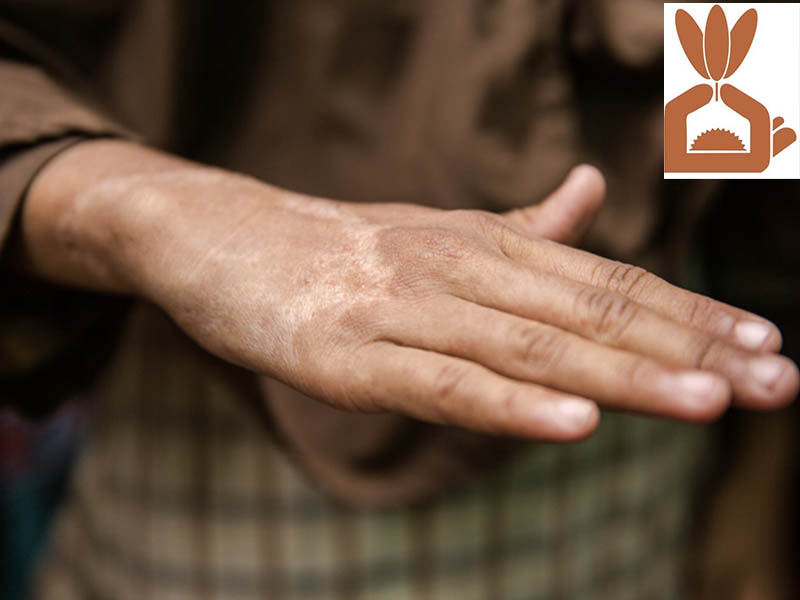
The NLEP emblem represents beauty and purity in a lotus that Leprosy can be cured; it also shows that a leprosy patient can be a productive member of society by a partially affected thumb, a normal fore-finger and the shape of the house, the symbol of hope and optimism in a rising sun.
Is Leprosy rare?
Although the disease is rare, people are still affected by Leprosy even today. As per the World Health Organization, roughly 208,000 people in the world are currently suffering from Leprosy, also known as Hansen’s disease. Most cases of Leprosy are found in Asian and African countries. Many countries in these regions are also still developing, so many people face even more issues when it comes to the treatment and proper address of this medical impediment. In the United States, about 100 people receive a diagnosis of Leprosy or Hansen’s disease on an annual basis.
Currently, India is running one of the world’s most wide-ranging leprosy eradication programmes, known as the National Leprosy Eradication Programme (NLEP programme) or National Leprosy Control Programme. Even though the National Leprosy Eradication Programme (NLEP programme) may be great in its scale, around 120,000 to 130,000 cases of Leprosy are reported annually in India. Leprosy has been deemed as an endemic in many states and union territories of the country. There is an annual case detection rate of 4.56 per 10,000 people. The prevalence rate of Leprosy is roughly 0.4 per 10,000 of the population in the country.
Transmission
Leprosy is passed from one person to the other through drops from the nose and mouth of the person with it. After these droplets are passed to the next person, they may start experiencing the symptoms of Leprosy. An extended contact with a person suffering from Leprosy over a long period, such as weeks or months, is usually needed to catch the disease. The disease may not pass to another person through casual contact such as shaking hands or hugging, sharing meals, or sitting next to each other. Moreover, the patient also usually stops transmitting the disease to others when they begin treating it. So they will only be able to transmit the disease to others if they have yet to start treatment for Leprosy.
Treatment of Leprosy
Leprosy can be cured with the right kind of approach and treatment. The National Leprosy Eradication Programme may also help with this by serving the needs of Leprosy patients in India. There are three drugs that may be given to a patient with Leprosy: dapsone, rifampicin, and clofazimine. The combination may be given to the patient when they receive multi-drug therapy or MDT. The treatment lasts for around a period of six months for PB and 12 months for MB cases.
MDT kills the pathogen that is causing the disease. As a result, the patient with Leprosy may be cured and can live an everyday life after receiving the treatment. It may be helpful if a person is diagnosed early and receives timely treatment. This may often help in the prevention of severe and permanent disabilities. WHO has been providing MDT completely free to those who need it. Free MDT was initially funded by The Nippon Foundation. Since 2000, it has been donated to people that need the same through an agreement with Novartis.
Prevention of Leprosy
Prevention of Leprosy is very important. Leprosy is a disease that may greatly reduce the quality of life of a person, so by preventing it, one may be saved from a lot of stress and struggle related to the disease. The case detection and treatment with MDT alone have not been sufficient enough to hamper the transmission of Leprosy from one person to another.
To prevent Leprosy, the WHO recommends tracing household contacts along with the local and social contacts of every patient that is currently receiving treatment for Leprosy. This will help determine who has Leprosy and who could be at risk of suffering from the same. This may be accompanied by administration of one dose of rifampicin as preventive chemotherapy for Leprosy.
Who does Leprosy affect?
Leprosy may affect people of all ages. It has usually been observed in people aged five to 15 or those over 30. Research suggests that over 95% of people that have actually been infected with Mycobacterium leprae do not develop Leprosy because their bodies fight them off. They will never even know that they were infected by it. The patient’s health stays the same; they do not face or experience any detriments of this infection.
How long does it take to recover from Leprosy treatment?
Usually, Leprosy or Hansen’s disease treatment takes quite long. It generally takes one to two years to complete the entire treatment for Leprosy and fully cure it. During the patient’s treatment time, their doctor or a suitable medical professional may usually monitor the progress relating to the treatment they are being afforded. The doctor or appropriate medical professional will also monitor and observe the patient’s health condition to ensure that it is stable and they are not experiencing any unwanted side effects of the treatments being done.
Other Government initiatives for Leprosy
In the year 2017, SPARSH Leprosy Awareness Campaign was launched. This was launched to foster awareness and address issues relating to stigma and discrimination that people suffering from or have suffered from Leprosy may face. This is an important and troubling issue that must be appropriately addressed and eradicated immediately. This will improve the quality of life for Leprosy patients and reduce the problems that they face.
Conclusion
By adequately addressing Leprosy in the country through the National Leprosy Eradication Programme (NLEP programme), we will address the health problems faced by a great deal of the population. Since its inception, the scheme has proven valuable and beneficial to several sects of the populace dealing with Leprosy and will continue to do so in the future. It is imperative to know and understand such schemes, especially for Leprosy patients, as this will help them receive the necessary medical assistance and treatment for their condition safely, conveniently, and timely.
Additionally, often times one might find it difficult to fund their treatment with just government support, and in such cases, fundraising is the perfect way to raise funds and one can easily raise funds online nowadays with platforms like Impact Guru.