


Table of Contents
- Quick Summary
- What Is Manganese Deficiency?
- Introduction
- What Is Manganese and Why Is It Important?
- Manganese Deficiency in India
- Causes of Manganese Deficiency
- Manganese Deficiency Symptoms
- Symptom Progression at a Glance
- Health Effects of Low Manganese Levels
- Manganese Deficiency Diagnosis and Treatment in India
- Manganese Deficiency Treatment
- How to Raise Funds for Manganese Deficiency Treatment in India
- How Medical Crowdfunding Supports Manganese Deficiency Treatment in India
- Foods Rich in Manganese to Prevent Deficiency
- Preventing Manganese Deficiency in India
- Conclusion
- FAQs
Quick Summary
- Manganese deficiency in India is uncommon but can occur due to poor nutrition, digestive disorders, or long-term medical conditions.
- Low manganese levels may affect bone development, metabolism, and antioxidant defence mechanisms.
- Early symptoms may include fatigue, poor bone health, and impaired wound healing.
- Timely diagnosis and treatment help restore mineral balance and prevent long-term complications.
- Ragi (finger millet), whole grains, nuts, and leafy vegetables are excellent Indian dietary sources of manganese.
What Is Manganese Deficiency?
Manganese deficiency occurs when the body does not receive or absorb sufficient amounts of the trace mineral manganese over a sustained period. It can impair bone development, disrupt carbohydrate and amino acid metabolism, and reduce the activity of antioxidant enzymes — particularly superoxide dismutase (MnSOD), a key cellular protector. While rare globally, manganese deficiency may go underdiagnosed in individuals with restricted diets, chronic digestive conditions, or malabsorption syndromes.
Introduction
Micronutrient deficiencies remain an important public health concern, particularly in countries where dietary diversity and nutritional awareness may vary. While much attention is given to deficiencies such as iron, iodine, and vitamin D, manganese deficiency in India is less commonly discussed but still relevant in certain populations.
Manganese is a trace mineral required for several biological functions, including bone formation, metabolism, and antioxidant activity. When the body receives insufficient amounts of manganese over time, it may lead to subtle but important health effects. Understanding the causes of manganese deficiency, its symptoms, diagnosis, and treatment can help ensure early detection and proper nutritional management.
What Is Manganese and Why Is It Important?
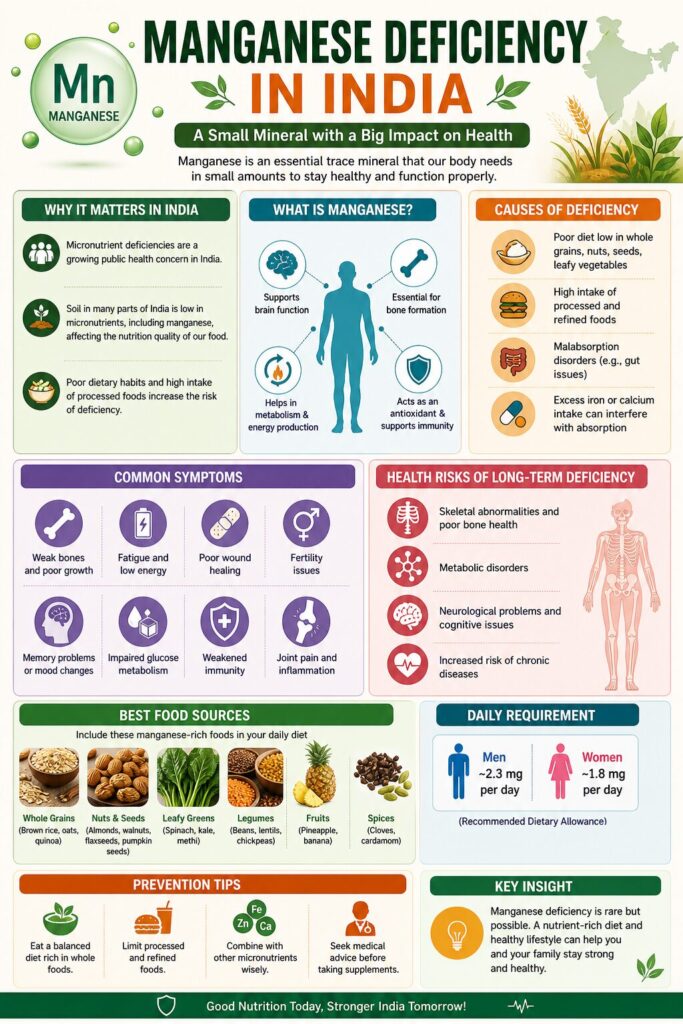
Manganese is a trace mineral required in small amounts for normal body function. It plays a crucial role in bone formation, metabolism, and protection against cellular damage through antioxidant enzymes.
The mineral is also involved in carbohydrate metabolism, connective tissue formation, and nervous system function, making it essential for overall physiological stability.
- Supports Bone Health
- Aids Metabolism
- Acts as an Antioxidant
- Supports Nervous System Function
Read More : Mineral Deficiencies in India Guide 2026 (16+ Minerals)
Manganese Deficiency in India
Although manganese deficiency is relatively rare, certain populations may still be at risk. Individuals with restricted diets, chronic illnesses, or nutrient absorption disorders may develop low manganese levels over time.
In India, nutritional imbalance and poor dietary diversity can sometimes contribute to subclinical micronutrient deficiencies, including manganese.
- Manganese deficiency in India is rare but can occur due to poor diet or absorption issues.
- It may affect bone health, metabolism, and enzyme function.
- Low levels can lead to fatigue and weakened bones.
- Balanced nutrition helps prevent deficiency.
Read More: Iron Deficiency in India: Causes, Symptoms, Diagnosis & Treatment
Causes of Manganese Deficiency
Several factors may contribute to low manganese levels in the body.
1. Poor Dietary Intake
A diet lacking nuts, whole grains, legumes, and leafy vegetables may reduce manganese intake over time.
2. Digestive Disorders
Conditions affecting nutrient absorption, such as chronic intestinal disorders, may interfere with manganese uptake.
3. Long-Term Medical Conditions
Chronic illnesses that affect metabolism or nutritional balance may indirectly contribute to manganese deficiency.
4. Highly Processed Diets
Frequent consumption of processed foods with low micronutrient content can reduce manganese intake.
Manganese Deficiency Symptoms
Symptoms of manganese deficiency can vary depending on the severity and duration of the deficiency.
Early Symptoms
Early manganese deficiency symptoms may include fatigue, poor wound healing, mild metabolic imbalance, and reduced bone strength.
Advanced Symptoms
In prolonged deficiency, individuals may develop bone abnormalities, impaired growth in children, altered metabolism, and reproductive health disturbances.
Symptom Progression at a Glance
| Symptom Area | Early Stage | Advanced Stage |
|---|---|---|
| Energy | Mild fatigue | Chronic fatigue, persistent weakness |
| Bone Health | Slightly reduced bone strength | Visible bone abnormalities, low bone density |
| Wound Healing | Slower healing than normal | Significantly impaired healing |
| Growth (Children) | Subtle developmental delays | Stunted skeletal development |
| Metabolism | Mild irregularities | Significant glucose & amino acid dysfunction |
| Antioxidant Function | Slight reduction in MnSOD activity | Elevated oxidative stress markers |
Read More: Vitamin D Deficiency: Symptoms, Causes & Solutions
Health Effects of Low Manganese Levels
Manganese plays a role in several metabolic pathways. When levels fall significantly, various physiological processes may be affected.
Possible manganese deficiency health effects include:
- Reduced bone mineralisation
- Impaired antioxidant defence
- Metabolic irregularities
- Altered neurological function in severe cases
Although rare, long-term deficiency may influence skeletal development and metabolic stability.
Manganese Deficiency Diagnosis and Treatment in India
Diagnosis typically involves clinical evaluation and laboratory testing.
Healthcare professionals may recommend:
- Blood tests to assess trace mineral levels
- Nutritional assessment
- Evaluation of dietary habits and medical history
These investigations help identify low manganese levels in the body and determine the underlying cause.
Manganese Deficiency Treatment
Treatment depends on severity and the underlying cause.
Mild Deficiency
Increasing dietary intake of manganese-rich foods such as whole grains, nuts, legumes, and green vegetables may be sufficient to restore normal levels.
Moderate Deficiency
Oral manganese supplements may be prescribed under medical supervision to correct a deficiency and support metabolic recovery.
Severe or Complicated Cases
If deficiency is associated with chronic illness or malnutrition, medical management and nutritional therapy may be required in a clinical setting.
In complex medical situations where prolonged treatment becomes necessary, access to healthcare resources can be important. Within the broader healthcare ecosystem, platforms such as ImpactGuru help families explore financial support options for medical care when required.
How to Raise Funds for Manganese Deficiency Treatment in India
Managing manganese deficiency in India can sometimes require ongoing medical care, including diagnostic tests, dietary planning, and supplementation. Although manganese deficiency is rare, it can still impact meta
bolism, bone health, and growth if not addressed properly . For many families, the cost of treatment and long-term care can become a burden, making it difficult to access timely medical support. This is where patients often turn to platforms that help them raise funds for essential healthcare needs. By choosing to raise funds through trusted medical crowdfunding platforms, individuals can cover expenses such as consultations, lab tests, and nutritional therapy without delaying treatment.
In such situations, the ability to raise funds quickly can significantly improve health outcomes. Since manganese deficiency may also be linked to poor dietary intake or absorption issues (Medicover Hospitals), treatment often requires sustained care and lifestyle changes. Medical crowdfunding makes it easier to raise funds from a larger community, ensuring that patients receive continuous treatment and support. By sharing their story and choosing to raise funds online, individuals can reduce financial stress and focus on recovery, making healthcare more accessible and affordable in India.
How Medical Crowdfunding Supports Manganese Deficiency Treatment in India
Medical crowdfunding has emerged as a crucial support system for patients in India dealing with nutritional disorders like manganese deficiency. While manganese deficiency is considered rare, it can still affect metabolism, bone health, and overall growth if left untreated . In such cases, treatment may involve diagnostic tests, dietary corrections, and sometimes supplementation—all of which can create financial strain for families. This is where medical crowdfunding plays a vital role, helping patients raise funds for consultations, lab tests, and ongoing treatment. By leveraging medical crowdfunding platforms, individuals facing manganese deficiency can access timely care without delaying treatment due to cost concerns.
In India, the rising awareness around medical crowdfunding has made it easier for patients with conditions like manganese deficiency to seek financial assistance from a wider community. Since causes of manganese deficiency may include poor diet, malabsorption issues, or underlying health conditions, treatment often requires a combination of medical guidance and long-term care. Medical crowdfunding not only reduces the economic burden but also ensures continuity of care, especially for patients from low-income backgrounds. By sharing their stories through medical crowdfunding campaigns, patients can receive support for essential treatments and improve their chances of recovery.
Foods Rich in Manganese to Prevent Deficiency
Maintaining a balanced diet can help prevent manganese deficiency.
Common manganese-rich foods include:
- Whole grains (brown rice, oats, millet)
- Nuts such as almonds and hazelnuts
- Legumes and beans
- Leafy green vegetables
- Tea and certain fruits like pineapple
Regular dietary diversity ensures adequate intake of trace minerals essential for metabolic health.
| Food | Manganese per 100g | Practical Notes |
|---|---|---|
| Ragi (Finger Millet) | ~5.4 mg | Outstanding source; widely available across India |
| Brown Rice | ~1.8 mg | Significantly higher than white rice |
| Oats | ~3.6 mg | A good breakfast option |
| Chickpeas (Chana) | ~1.7 mg | Common staple — dal, chaat, curries |
| Almonds | ~2.2 mg | Easy snack; also provides healthy fats |
| Spinach (Palak) | ~0.9 mg | Use in sabzi, dal palak, smoothies |
| Whole Wheat (Atta) | ~3.0 mg | Choose whole grain over refined flour |
| Pineapple (Fresh) | ~0.9 mg | One of the few fruits high in manganese |
| Brewed Tea (per cup) | ~0.2–0.5 mg | Common across India; contributes meaningfully |
| Hazelnuts | ~6.2 mg | Very high; use as garnish or snack |
Tip: Pairing manganese-rich foods with vitamin C sources (such as lemon juice or tomatoes) may support overall mineral absorption.
Preventing Manganese Deficiency in India
Dietary prevention is straightforward when awareness is present. The following practices support adequate manganese intake:
- Choose whole grains over refined: Opt for ragi, brown rice, jowar, and bajra instead of white rice and maida-based products.
- Include dals and legumes daily: Chana, rajma, moong, and masoor dal are cost-effective sources available across India.
- Eat a handful of nuts regularly: Almonds, hazelnuts, and peanuts are affordable and convenient.
- Prioritise green vegetables: Palak, methi, and other leafy greens contribute both manganese and other essential micronutrients.
- Limit ultra-processed foods: Packaged snacks, instant noodles, and refined baked goods are poor in trace minerals.
- Seek professional guidance for restrictive diets: If following a specific dietary plan, consult a registered dietitian to ensure micronutrient completeness.
Read More: Calcium Deficiency in India
Conclusion
Manganese deficiency in India is relatively uncommon but may occur in individuals with nutritional imbalance, digestive disorders, or chronic illness. Since manganese supports bone health, metabolism, and antioxidant defence, maintaining adequate levels is important for overall health.
Early recognition of manganese deficiency symptoms, proper diagnosis, and timely treatment can prevent complications and restore mineral balance. Encouraging balanced nutrition and awareness of micronutrient requirements remains essential for long-term health stability.
FAQs
No, it is rare, but certain populations may be at risk due to poor diet or health conditions.
Early signs include fatigue, weak bones, and metabolic issues.
Ragi, whole grains, nuts, spinach, and brown rice are good sources.
Yes, it can affect metabolism and energy levels.
Only under medical supervision, as excess intake can be harmful.
Sources:
National Institutes of Health – Office of Dietary Supplements
World Health Organization – Trace Elements in Human Nutrition
National Institute of Nutrition (ICMR-NIN), India
Harvard T.H. Chan School of Public Health – Micronutrients