

Table of Contents
- Quick Summary
- Introduction
- What Is the Liver and Why Does Its Size Matter?
- What Is the Normal Liver Size in Adults?
- How Is Normal Liver Size Measured?
- What Affects Normal Liver Size?
- What Causes an Enlarged Liver?
- What Are the Symptoms of Abnormal Liver Size?
- Can Liver Size Return to Normal?
- When Should You Consult a Doctor for Abnormal Liver Size?
- How to Keep Your Liver Healthy
- Conclusion
- FAQs
Quick Summary
- Normal liver size in a healthy adult: roughly 13.5–15.5 cm in length (midclavicular line).
- Measured mainly by ultrasound, with CT/MRI for detailed volume assessment.
- Age, sex, height, weight, and body build are the biggest natural influences on liver size.
- An enlarged liver (hepatomegaly) can point to fatty liver disease, hepatitis, alcohol-related damage, or heart failure.
- A shrunken liver is often linked to advanced cirrhosis or chronic liver disease.
- Liver dimension is also checked before living liver donation and transplant surgery.
Introduction
If you’ve just had an ultrasound and seen the phrase “liver span” or “liver size” on your report, you’re probably wondering what counts as normal. In a healthy adult, the normal liver size generally falls between 13 cm and 15.5 cm, measured along the midclavicular line, a reference line running down from the middle of the collarbone. As the body’s largest internal organ, the liver carries out more than 500 functions, from filtering toxins to aiding digestion, so liver span is one of several clues doctors use to assess how well it’s working.
This guide breaks down what normal liver size looks like across age groups, how doctors measure it, what causes it to change, and when a size outside the normal range is worth discussing with a doctor.
Need help with liver treatment costs? Refer a patient for medical help and connect them with trusted hospitals.
If a loved one is facing fatty liver disease, cirrhosis, or a liver transplant, medical costs can add up quickly. Platforms like ImpactGuru help families raise funds for liver treatment and transplant care.
Medical Disclaimer: This article is for general educational purposes only and is not a substitute for professional medical advice, diagnosis, or treatment. Liver size measurements can vary based on the imaging method, technician, and individual body type. Always consult a qualified doctor or hepatologist to interpret your specific test results.
What Is the Liver and Why Does Its Size Matter?
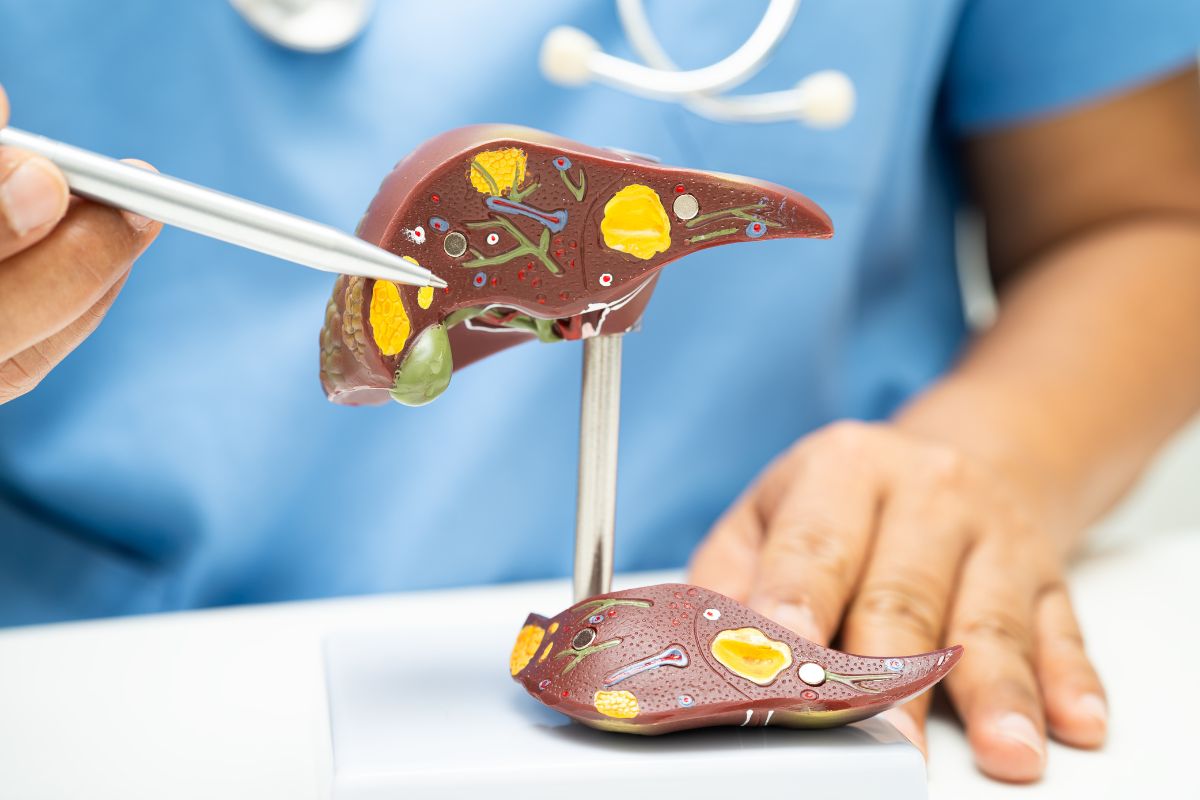
The liver sits under the right ribcage and is the largest solid organ in the body. It plays a central role in:
- Filtering toxins and waste products from the blood
- Producing bile to help digest fats
- Storing energy in the form of glycogen
- Metabolizing medications, alcohol, and nutrients
- Supporting immune function
Because the liver is so metabolically active, changes in its measurements often reflect what’s happening inside it. Doctors track liver size to catch early signs of fatty liver disease, hepatitis, cirrhosis, tumors, or congestive heart failure, often before other symptoms appear. Liver size is also checked as part of screening for living liver donors and patients being evaluated for a liver transplant, since a donor’s liver needs to be healthy and of appropriate dimensions for safe donation and regeneration.
What Is the Normal Liver Size in Adults?
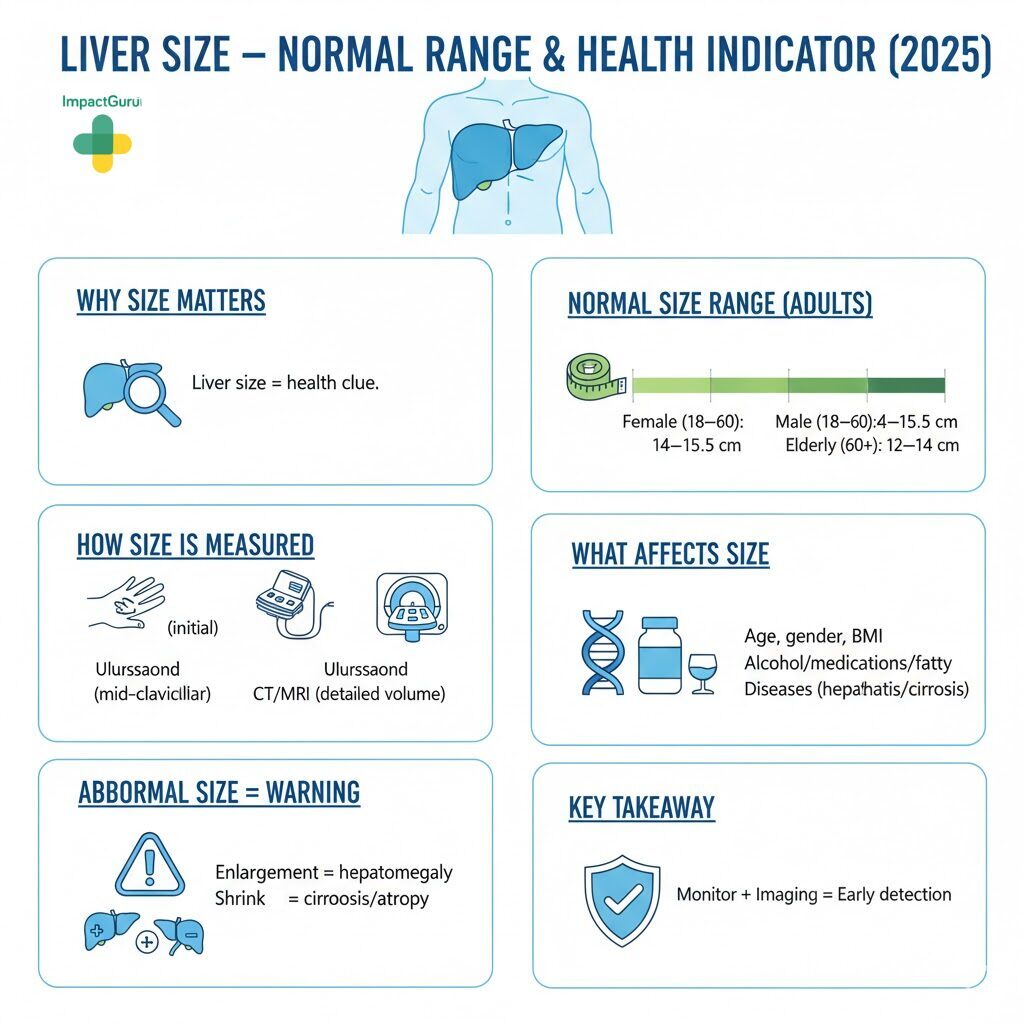
The normal liver size varies slightly by age, sex, and body build, but in most healthy adults it measures 13.5–15.5 cm in length along the midclavicular line (MCL) on ultrasound, the standard reference point radiologists use.
Normal Liver Size by Age Group
| Age Group | Normal Liver Size (Span) | Note |
| Newborn (0–1 month) | 4.5–5 cm | Relatively large compared to body size at birth |
| Infant (1–12 months) | 5–6.5 cm | Grows rapidly in the first year |
| Toddler (1–3 years) | 6–8 cm | Measured via palpation or ultrasound |
| Child (4–10 years) | 7–10 cm | Increases gradually with height and weight |
| Adolescent (11–17 years) | 9–12 cm | Affected by growth spurts |
| Adult Female (18–60 years) | 13–14.5 cm | Slightly smaller than males on average |
| Adult Male (18–60 years) | 14–15.5 cm | Taller or heavier individuals often measure higher |
| Elderly (60+ years) | 12–14 cm | May reduce slightly with age; function often stays stable |
Typical adult liver span on ultrasound:
- Females: 13.0–14.5 cm
- Males: 14.0–15.5 cm
(Values can vary slightly by body build, height, and ethnicity; this table is a general reference, not a diagnostic cutoff.)
Understand your medical costs better with the Disease Cost Calculator.
How Is Normal Liver Size Measured?
Doctors use a mix of physical exams and imaging to check whether liver size falls within the normal range.
| Method | Description | When It’s Used |
| Physical examination | Doctor palpates the liver edge below the right ribcage to check for protrusion or firmness | Initial screening, especially in children |
| Ultrasound (USG) | Most common method; measures liver span at the midclavicular line | Routine checks, pregnancy-safe, donor screening |
| CT scan | Detailed cross-sectional and 3D imaging of liver volume and structure | Pre-surgical planning, detecting masses or trauma |
| MRI | High-resolution imaging for volume and internal lesions or fibrosis | Advanced diagnosis, transplant preparation |
| Liver biopsy | Not used for size, but evaluates tissue health if imaging shows abnormalities | When disease or damage is suspected |
Why the Midclavicular Line (MCL) Matters
The MCL is a vertical line drawn from the midpoint of the collarbone downward. During an ultrasound, liver span measured along this line is considered the most reliable estimate of liver size, which is why it’s the standard reference doctors use when reporting whether a liver falls within the normal range.
Accuracy and Limitations
Ultrasound measurements can vary slightly depending on the technician, the patient’s breathing, and body build, so a single borderline reading isn’t usually treated as diagnostic on its own. CT and MRI offer more precise volume measurements and are typically reserved for surgical planning or transplant evaluation, where accuracy matters most.
Take the first step toward recovery — find a hospital and fund your treatment.
What Affects Normal Liver Size?
Several natural and lifestyle-related factors influence where a person’s liver size falls within the normal range.
- Age: The liver can shrink gradually with age due to natural tissue changes, though function often remains stable even as dimensions decreases.
- Sex: Men generally have a somewhat larger liver than women, largely tied to differences in overall body size.
- Height and body build: Taller or larger-framed individuals tend to have a proportionally larger liver span.
- Body weight and BMI: Higher BMI is linked to a higher chance of liver enlargement, particularly when fatty liver disease develops; very low BMI can sometimes correspond to a smaller liver.
- Individual variation: Ethnicity, muscle mass, and general physiology all contribute to normal variation between individuals, which is why liver measurements is always assessed as a range rather than a single fixed number.
What Causes an Enlarged Liver?
An enlarged liver, known medically as hepatomegaly, can result from several underlying conditions:
- Fatty liver disease (NAFLD/NASH): Fat buildup in liver cells causes swelling
- Hepatitis (B or C): Viral or autoimmune inflammation
- Alcohol-related liver disease: Fat accumulation and inflammation from long-term alcohol use
- Heart failure: Backflow of blood into the liver causes congestion
- Tumors (primary or metastatic): Growths increase liver size or distort its shape
- Genetic and metabolic disorders: Conditions like Wilson’s disease (copper buildup) or hemochromatosis (iron overload)
- Cysts or abscesses: Fluid-filled sacs or infections enlarging specific liver lobes
Read More: Guide to Body Parts Donation in India
Read more: Find Hospitals near you.

What Are the Symptoms of Abnormal Liver Size?
Liver size changes are often asymptomatic in the early stages, which is part of why routine imaging catches many cases before symptoms appear. When symptoms do show up, they can include:
- A feeling of fullness or discomfort in the upper right abdomen
- Abdominal swelling or bloating
- Fatigue and persistent weakness
- Jaundice (yellowing of skin and eyes)
- Unexplained weight loss
- Loss of appetite, nausea, or vomiting
- In advanced cases: fluid retention, confusion, or easy bruising
If imaging shows liver dimensions outside the normal range, further testing helps identify the underlying cause.
Can Liver Size Return to Normal?
In many cases, yes, especially when the underlying cause is addressed early.
- Treating the underlying condition: Managing hepatitis, fatty liver, or heart failure often allows liver size to normalize over time
- Weight management: Losing excess weight can reduce fat buildup and shrink an enlarged liver back toward the normal range
- Alcohol cessation: Stopping alcohol use halts further damage and supports liver recovery
- Medications: Prescribed treatment for the root cause (e.g., antivirals for hepatitis) can reduce liver dimensions over time
- Lifestyle changes: A balanced diet, regular exercise, and avoiding hepatotoxic substances support liver regeneration
Liver tissue has a notable capacity to regenerate, which is also why living liver donors can safely donate a portion of their liver, but recovery timelines and outcomes depend heavily on the underlying cause and should be tracked by a doctor.
Read More: Appendix Cancer- Symptoms, Diagnosis, Stages & More
When Should You Consult a Doctor for Abnormal Liver Size?
See a doctor if you notice:
- Persistent pain or fullness in the upper right abdomen
- Yellowing of skin or eyes (jaundice)
- Unexplained fatigue or weight loss
- Abdominal swelling or bloating that doesn’t resolve
- An abnormal liver measurements flagged on a routine scan, even without symptoms
Early diagnosis through imaging and liver function tests significantly improves outcomes, since many liver conditions are manageable, or even reversible, when caught early.
Read More: Liver Transplant Donor Criteria: Complete Guide for India
Read more: Calculate the Cost of your Treatment.
How to Keep Your Liver Healthy
- Eat a balanced diet rich in vegetables, fiber, and lean protein; limit processed and high-fat foods
- Exercise regularly to support a healthy weight and reduce fat buildup in the liver
- Maintain a healthy weight, since obesity is a leading driver of fatty liver disease
- Get vaccinated against hepatitis A and B where appropriate
- Limit alcohol intake
- Manage diabetes and cholesterol, both of which are closely linked to liver health
Conclusion
Understanding your normal liver size gives you and your doctor a useful early signal for overall liver health. A liver within the typical 13–15.5 cm range generally points to proper function, while sizes outside that range, whether enlarged or shrunken, are worth investigating further. Liver measurements should never be read in isolation; it’s most meaningful when interpreted alongside symptoms, blood tests, and imaging by a qualified doctor.
If liver disease or a transplant creates financial strain for you or a loved one, ImpactGuru’s medical crowdfunding platform can help you raise funds for treatment without delay.
FAQs
The average normal liver size in adults ranges between 13–15 cm in the midclavicular line.
Doctors usually measure liver size using ultrasound, CT scan, or MRI for accuracy.
Conditions like fatty liver, hepatitis, alcohol use, or cirrhosis can change liver size.
Common signs include abdominal pain, swelling, jaundice, fatigue, or unexplained weight loss.
You should seek medical advice if you notice persistent abdominal discomfort, jaundice, or abnormal test results.