


Table of Contents
- Quick Summary
- Introduction
- What is Nova Flu? Is It Dangerous?
- Symptoms of the New Flu Virus in India: What to Watch For
- Is Nova Flu a New Virus or Just Normal Flu? Understanding the Difference
- What causes the Nova Flu? Understanding Viral Infection Symptoms and Transmission
- How to Treat Flu Infection at Home in India
- What to Expect During Nova Flu Recovery
- Cost of Flu Treatment in India: What Families Should Expect
- How to Afford Treatment for Viral Infections: Financial Help Options in India
- Preventing Nova Flu: Practical Steps for Indian Households
- Conclusion
- FAQs
Quick Summary
- Nova flu is not a newly classified virus; it refers to emerging or mutating influenza strains (like H3N2, H1N1) causing flu-like illness in India in 2024–25
- Symptoms include high fever, body aches, sore throat, cough, and fatigue, often lasting 5–7 days.
- Most cases recover at home with rest, hydration, and basic medication; antivirals are prescribed for high-risk groups.
- Flu treatment in India ranges from ₹500–₹1,500 (OPD) to ₹30,000+ for hospitalisation in severe cases
- If flu leads to serious complications like pneumonia or respiratory distress, medical crowdfunding platforms like ImpactGuru can help families manage unexpected treatment costs.
Introduction
Every few months, a new flu-related term starts trending in India, and right now, it is Nova Flu. People are searching for it, WhatsApp forwards are spreading panic about it, and worried parents are rushing to doctors asking whether this is something new and dangerous.
Nova Flu is not a newly discovered virus. What is actually happening is that flu viruses like H3N2 and H1N1 keep changing slightly over time, and when a changed version spreads, your body does not recognise it. The result? The fever hits harder, the body aches feel worse, and recovery takes longer than a normal flu. That is what people are experiencing and calling nova flu, not a new disease, but a familiar one behaving differently.
In this guide, you will find everything you need: Nova Flu symptoms to watch for, how it spreads, how to treat it at home, and what flu treatment actually costs in India. If things turn serious and finances become a concern, we have covered that too.
Disclaimer: This article is intended for general informational purposes only and does not constitute medical advice, diagnosis, or treatment. The information provided here is based on publicly available health data and is not a substitute for professional medical consultation.
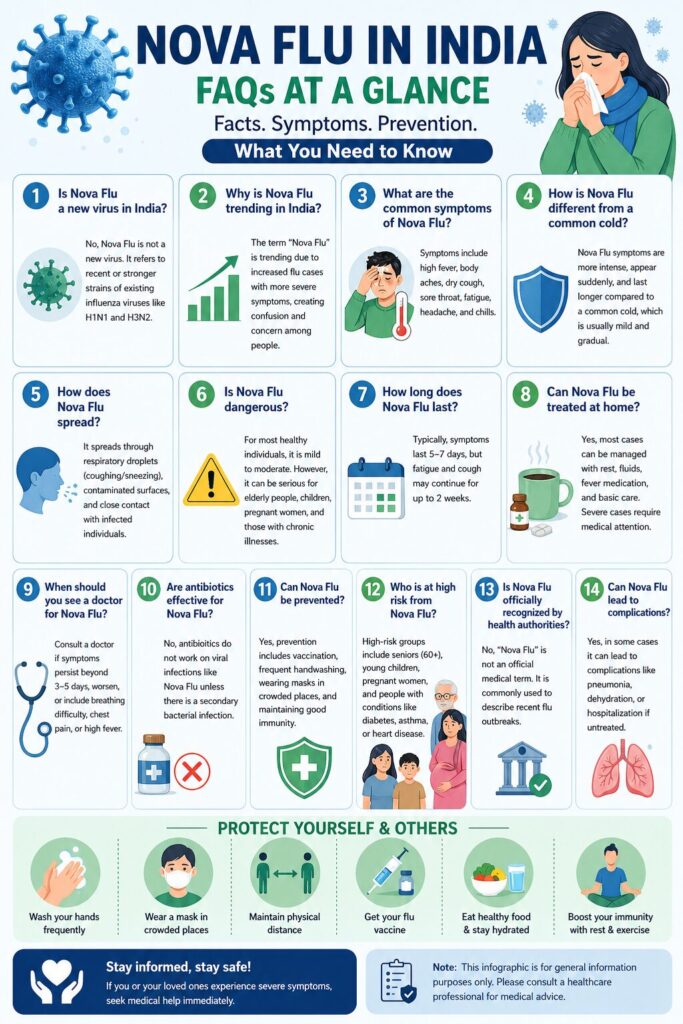
What is Nova Flu? Is It Dangerous?
Nova flu is not an officially named virus recognised by the WHO or ICMR. No doctor has discovered it, no health authority has declared it a virus. The name has simply caught on because people needed something to call what they were experiencing.
What is actually going on is this. The flu virus, the same one that causes your seasonal cough, fever, and body aches every year, mutates regularly. Sometimes the new version is mild. Sometimes it is not. Right now, strains like H3N2 and H1N1 are circulating in India in forms that feel stronger and last longer than what most people are used to. That unfamiliar, harder-hitting experience is what people are calling Nova Flu.
So is it dangerous? For most healthy adults and older children, the body fights it off within a week with proper rest and care. But for the elderly, young children below five, pregnant women, and people with conditions like diabetes or asthma, it can turn serious faster than expected. That is when it needs medical attention, not just home remedies.
The bottom line: Nova Flu is real in terms of how it feels, but it is not a new mystery virus. Knowing that should make it a lot less scary.
Symptoms of the New Flu Virus in India: What to Watch For
Quick Answer: Nova flu symptoms in India typically include sudden high fever (above 101°F), body aches, severe fatigue, dry cough, sore throat, and headache. Some patients also report chills, nasal congestion, and loss of appetite. Symptoms usually appear 1–4 days after exposure and last 5–7 days.
Here is a breakdown of symptoms by severity:
Mild to moderate (most common):
- High fever (101–104°F), often sudden in onset
- Severe body aches and joint pain
- Dry or productive cough
- Sore throat and nasal congestion
- Fatigue and weakness lasting several days
- Headache and chills
Symptoms requiring medical attention:
- Difficulty breathing or chest tightness
- Fever lasting more than 5 days
- Persistent vomiting or dehydration
- Confusion or altered consciousness (especially in elderly patients)
- Blue-tinged lips or fingertips
While most people recover from flu within a week, complications such as pneumonia and bronchitis can develop, particularly in vulnerable individuals.
Is Nova Flu a New Virus or Just Normal Flu? Understanding the Difference
Nova flu is not a newly discovered virus. It most likely refers to currently circulating influenza A or B strains that feel more severe due to immune unfamiliarity. Unlike COVID-19, it is not a novel pathogen, but mutating strains can cause stronger symptoms than the flu strains people have encountered before.
Here is how to distinguish between flu and a general viral infection:
| Feature | Flu (Influenza/H3N2) | Common Viral Infection (Cold) |
| Onset | Sudden: Hits within hours | Gradual: Develops over several days |
| Fever | High: Typically 101–104°F; can last 3–4 days | Low-grade: Usually below 100°F or absent entirely |
| Body Aches | Severe: Intense muscle and joint pain (myalgia) | Mild: Slight discomfort or no aches at all |
| Fatigue | Extreme: Debilitating exhaustion that can last weeks | Moderate: Mild tiredness; doesn’t stop daily work |
| Cough | Dry & Persistent: Often harsh and may cause chest pain | Mild: Often “wet” or productive; focuses on nose/throat |
| Duration | 7–14 Days: Recovery often takes 1–2 weeks | 3–7 Days: Most clear up within a few days |
The difference between flu and a viral infection often comes down to intensity. Flu hits hard and fast; general viral infections tend to be milder and shorter.
What causes the Nova Flu? Understanding Viral Infection Symptoms and Transmission
Flu viruses spread through respiratory droplets released when an infected person coughs, sneezes, or talks. You can also contract it by touching a contaminated surface and then touching your nose or mouth.
Key causes and risk amplifiers in India:
- Seasonal changes: monsoon-to-winter transition is the peak flu season
- Crowded settings: offices, schools, public transport, and religious gatherings amplify the risk
- Low vaccination rates: Annual flu vaccination uptake remains low in India
- Mutating strains: H3N2 has become the dominant circulating subtype in India, with approximately 25% of tested individuals testing positive in 2024
- Weakened immunity: stress, poor nutrition, and comorbid conditions increase susceptibility
High-risk groups in India include adults over 60, children under 5, pregnant women, people with diabetes, asthma, or heart conditions, and healthcare workers.
How to Treat Flu Infection at Home in India
Most flu cases in India can be managed at home with rest, adequate fluid intake (ORS, warm soups, coconut water), paracetamol for fever, and steam inhalation. Antiviral medications like Oseltamivir (Tamiflu) are only prescribed by a doctor for high-risk patients or severe cases; do not self-medicate.
Effective home care steps:
- Rest completely: do not push through work or school; this slows recovery
- Stay hydrated: aim for 8–10 glasses of fluids; include warm water with tulsi and ginger
- Manage fever: paracetamol (as directed) is safe; avoid aspirin in children
- Steam inhalation: helps relieve nasal congestion and throat irritation; add a few drops of eucalyptus oil
- Eat light: khichdi, dal, and warm soups are easy on the digestive system during the flu
- Isolate: stay home for at least 5 days from symptom onset to prevent spreading it
When to see a doctor immediately:
- Breathlessness or chest pain
- Fever not reducing after 3–4 days
- Symptoms in infants under 6 months, the elderly, or immunocompromised individuals
Antiviral medications such as Oseltamivir (Tamiflu) and Zanamivir can be used to treat flu, including H3N2, and are most effective when started within 48 hours of symptom onset.
What to Expect During Nova Flu Recovery
Most people want to know one thing when they are sick: when will I actually feel like myself again? Here is a realistic day-by-day picture:
- Days 1 – 2: This is usually the worst of it. Fever is at its highest, body aches are intense, and fatigue makes even getting out of bed feel impossible. Rest completely, do not try to push through it.
- Days 3 – 4: Fever begins to drop for most people. Body aches ease up gradually. You may still feel very weak and have a lingering cough or mild sore throat. Appetite slowly starts returning; eat light, warm meals.
- Days 5 – 7: Most healthy adults feel significantly better by this point. Energy starts coming back, though not fully. This is the stage where most people make the mistake of resuming normal activity too soon, and then relapse.
- Week 2 onwards: A mild cough, slight fatigue, and occasional headaches can linger for up to two weeks after the fever is gone. This is completely normal and not a sign that something is wrong.
One important reminder: Even after you feel better, you can still spread the virus for up to 48 hours. Avoid close contact with elderly family members, young children, or anyone with a weak immune system during this period.
Note: If fever returns after it has already subsided, or if breathing becomes difficult at any point during recovery, see a doctor immediately; this could indicate a secondary infection like pneumonia.
Cost of Flu Treatment in India: What Families Should Expect
Flu treatment in India costs ₹500–₹1,500 for a standard OPD visit with medication. If hospitalisation is needed, for pneumonia, respiratory failure, or severe dehydration, costs can range from ₹25,000 to ₹1,50,000+, depending on the city, hospital type, and ICU requirement.
Here is a realistic cost breakdown:
| Treatment Stage | Government Hospital | Private Hospital (Tier 1 City) |
| Doctor consultation | ₹0–₹200 | ₹500–₹1,500 |
| Diagnostic tests (blood, rapid flu test) | ₹200–₹500 | ₹1,000–₹3,000 |
| Antiviral medication (5-day course) | ₹300–₹600 | ₹1,500–₹3,000 |
| Hospitalisation (general ward, 3 days) | ₹3,000–₹8,000 | ₹25,000–₹60,000 |
| ICU admission (if required) | ₹8,000–₹15,000 | ₹60,000–₹1,50,000+ |
Costs vary significantly across cities like Mumbai, Delhi, Bengaluru, Hyderabad, and Chennai versus smaller towns. Annual flu vaccines like Influvac Tetra are available in India at approximately ₹1,800–₹2,100 and are among the most cost-effective preventive measures.
How to Afford Treatment for Viral Infections: Financial Help Options in India
Flu rarely becomes financially devastating, but when it progresses to pneumonia, respiratory failure, or requires ICU care, the costs can overwhelm families, especially those without health insurance.
Options to consider:
1. Government schemes: Ayushman Bharat (PM-JAY) covers hospitalisation costs for eligible low-income families. CGHS and ESIC also provide coverage for government employees.
2. Health insurance: If you have an active health insurance policy, hospitalisation due to flu complications is typically covered. Always check your policy’s waiting period clauses.
3. Medical crowdfunding: For families that fall outside insurance coverage or face costs beyond policy limits online crowdfunding has emerged as a genuine lifeline. Platforms like ImpactGuru, one of India’s trusted medical fundraising sites, allow families to raise funds quickly for hospitalisation, ICU care, or post-recovery support. Campaigns can be started within minutes, shared across WhatsApp and social media, and have helped thousands of Indian families access financial help for medical treatment without delays.
ImpactGuru is particularly useful when treatment is urgent, and insurance paperwork or loan approvals would take too long.
4. NGO and hospital-based assistance: Many large hospitals have patient welfare funds or tie-ups with charitable trusts. It is worth asking the hospital’s social worker department.
Preventing Nova Flu: Practical Steps for Indian Households
- Get your annual flu vaccine before the season peaks (October–November in India)
- Wash your hands frequently with soap for at least 20 seconds
- Avoid touching your face in public places
- Wear a mask in crowded or enclosed spaces during flu season
- Maintain ventilation at home and in workplaces
- Boost immunity with adequate sleep, a balanced diet, and regular physical activity.
- Keep high-risk family members, elderly parents, and young children vaccinated.
Disclaimer: This article is for informational purposes only and does not constitute medical advice. Please consult a qualified healthcare professional for diagnosis and treatment of any illness.
Conclusion
Nova flu may sound alarming, but the fundamentals of dealing with it are well within reach for most Indian families. Recognise the symptoms early, rest properly, stay hydrated, and see a doctor if things escalate, especially for high-risk family members.
Prevention remains your strongest tool. An annual flu vaccine, basic hygiene habits, and keeping your immunity in good shape go a long way in keeping the Nova flu out of your home.
Where families do get caught off guard is the cost, particularly when a straightforward flu turns into a hospitalisation or ICU situation. If that happens and financial support is needed urgently, easy fundraising through medical crowdfunding platforms like ImpactGuru can bridge the gap when insurance falls short or is unavailable.
Stay informed, act early, and do not let a lack of financial resources stand between your family and timely care.
FAQs
No, Nova Flu is not a new virus. It is a term used to describe recent or stronger strains of existing influenza viruses like H1N1 and H3N2.
The term “Nova Flu” is trending due to increased flu cases with more severe symptoms, creating confusion and concern among people.
Symptoms include high fever, body aches, dry cough, sore throat, fatigue, headache, and chills.
Nova Flu symptoms are more intense, appear suddenly, and last longer compared to a common cold, which is usually mild and gradual.
It spreads through respiratory droplets (coughing/sneezing), contaminated surfaces, and close contact with infected individuals.
For most healthy individuals, it is mild to moderate. However, it can be serious for elderly people, children, pregnant women, and those with chronic illnesses.