


Table of Contents
- Quick Summary
- Introduction
- Does Eating Sugar Increase Cholesterol Levels in the Body?
- How Does Sugar Affect LDL and HDL Cholesterol?
- Hidden Sources of Sugar in Indian Diets
- Health Risks of High Sugar Intake
- Early Warning Signs of Cholesterol Imbalance
- Diet Plan to Reduce Cholesterol in India
- Lifestyle Changes That Make a Difference
- Cost of Cholesterol Treatment in India
- How to Afford Long-Term Cholesterol Management
- Conclusion
- FAQs
Quick Summary
- Does sugar cause high cholesterol ? Not directly, but excess sugar significantly disrupts fat metabolism and raises harmful lipid levels.
- High sugar intake increases triglycerides and LDL (bad cholesterol) while lowering HDL (good cholesterol), raising heart disease risk.
- In India, diets high in refined carbs and sugar are contributing to rising cholesterol and metabolic disorders.
- Long-term cholesterol management requires diet, lifestyle changes, regular monitoring, and sometimes financial planning.
Introduction
For years, fats have been blamed as the primary cause of high cholesterol. But modern research has shifted this perspective, highlighting sugar as a hidden contributor to poor heart health.
So, does sugar cause high cholesterol? The truth is more nuanced. Sugar does not contain cholesterol, but excessive intake can alter the body’s metabolism, leading to increased fat production and unhealthy lipid levels.
In India, where sweets, sugary beverages, and refined carbohydrates are a regular part of the diet, this connection becomes even more important. With cardiovascular diseases becoming one of the leading causes of death, understanding the impact of sugar is critical for prevention and long-term health.
Does Eating Sugar Increase Cholesterol Levels in the Body?
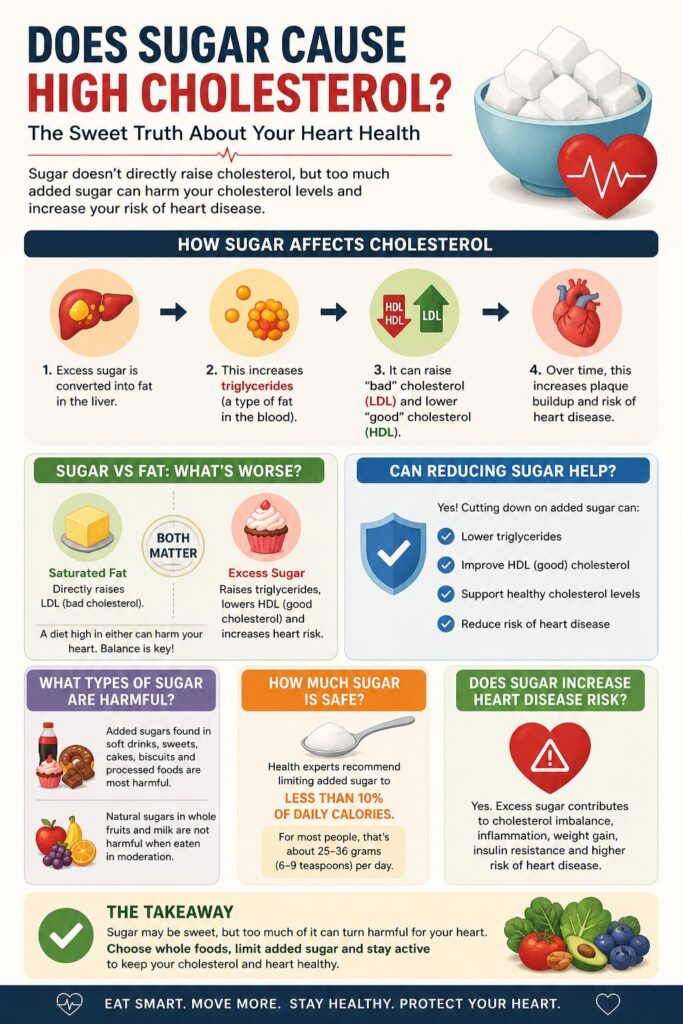
Yes, whether eating sugar increases cholesterol levels in the body is a valid concern, and the answer is yes, indirectly.
When you consume more sugar than your body needs:
- The liver converts excess sugar into fat (lipogenesis)
- This increases triglyceride levels in the bloodstream
- High triglycerides contribute to the formation of LDL cholesterol
- Excess fat may also accumulate in the liver, leading to fatty liver disease
Over time, this process disrupts the body’s lipid balance and increases cardiovascular risk.
How Does Sugar Affect LDL and HDL Cholesterol?
To understand how sugar affects LDL and HDL cholesterol, it’s important to look at how the body handles excess energy.
Impact on LDL (Bad Cholesterol)
- Increased sugar intake boosts fat production in the liver
- This leads to higher levels of LDL particles
- LDL contributes to plaque buildup in arteries
Impact on HDL (Good Cholesterol)
High sugar diets are associated with reduced HDL levels
Lower HDL means less removal of excess cholesterol from the blood
This imbalance (high LDL + low HDL) is one of the strongest risk factors for heart disease.
Is Sugar Worse Than Fat for Cholesterol?
The debate around whether sugar is worse than fat for cholesterol is ongoing.
The Reality:
- Saturated fats – Directly increase LDL
- Sugar – Indirectly raises triglycerides and worsens lipid profile
However, in modern Indian diets:
The biggest issue is processed foods combining both sugar and unhealthy fats
Examples:
- Mithai (sweets) made with sugar + ghee
- Bakery products (cakes, biscuits)
- Packaged snacks
These foods are far more harmful than either sugar or fat alone.
Hidden Sources of Sugar in Indian Diets
Many people underestimate their sugar intake because it comes from hidden sources.
Common Hidden Sugars:
- Packaged fruit juices
- Flavoured yogurt
- Breakfast cereals
- Tea/coffee with multiple teaspoons of sugar
- Sauces and processed foods
Even “healthy-looking” foods can contribute to high sugar intake.
Health Risks of High Sugar Intake
Excess sugar impacts multiple systems in the body.
Major Health Risks:
- High cholesterol and heart disease
- Obesity and belly fat accumulation
- Type 2 diabetes
- Non-alcoholic fatty liver disease
- Increased inflammation
In India, these conditions are rising rapidly due to urban lifestyles and dietary changes.
Early Warning Signs of Cholesterol Imbalance
High cholesterol often has no obvious symptoms, but some warning signs may appear:
- Fatigue and low energy
- Chest discomfort (in severe cases)
- Weight gain, especially around the abdomen
- Family history of heart disease
Regular blood tests are the only reliable way to detect cholesterol issues early.
Diet Plan to Reduce Cholesterol in India
A practical diet plan to reduce cholesterol in India should focus on balance, not restriction.
Foods to Include:
- Oats, barley, and millets
- Green leafy vegetables
- Fruits like apples, guava, and papaya
- Nuts and seeds (in moderation)
- Healthy oils (mustard, groundnut, olive oil)
Foods to Limit:
- Sugary drinks and sweets
- Refined carbs (maida, white bread)
- Deep-fried foods
- Packaged snacks
Simple Swaps:
- Replace sugary chai with low-sugar or no sugar
- Choose fruits instead of desserts
- Switch to whole grains
Lifestyle Changes That Make a Difference
Managing cholesterol requires consistency.
Key Lifestyle Tips:
- Exercise for at least 30–45 minutes daily
- Maintain a healthy BMI
- Sleep 7–8 hours regularly
- Manage stress (yoga, meditation)
- Avoid smoking
Even small daily changes can significantly improve cholesterol levels over time.
Cost of Cholesterol Treatment in India
The cost of cholesterol treatment in India is relatively affordable but ongoing.
Approximate Costs:
- Doctor consultation: ₹500 to ₹2,000
- Lipid profile test: ₹500 to ₹2,500
- Monthly medicines: ₹300 to ₹2,000
However, untreated cholesterol can lead to expensive complications like heart surgery.
How to Afford Long-Term Cholesterol Management
Since this is a lifelong condition, planning is important.
Practical Options:
- Preventive lifestyle changes
- Regular monitoring to avoid complications
- Health insurance coverage
- Government schemes (Ayushman Bharat, state programs)
In cases where treatment costs increase significantly, some families turn to crowdfunding platforms like ImpactGuru to manage healthcare expenses.
Read More: Diabetes Treatment
Conclusion
So, does sugar cause high cholesterol? Not directly, but its impact on the body makes it a major hidden contributor to unhealthy lipid levels.
In India’s evolving dietary landscape, reducing sugar intake, staying active, and monitoring health regularly are essential steps toward preventing heart disease.
The good news? With awareness, small lifestyle changes, and timely intervention, cholesterol can be effectively managed and, in many cases, reversed early.
FAQs
Not directly, but excess sugar can increase bad cholesterol (LDL) and lower good cholesterol (HDL) over time.
High sugar intake raises triglycerides and can lead to unhealthy cholesterol balance, increasing heart disease risk.
Both matter. Saturated fats directly raise LDL, but excess sugar also negatively impacts overall lipid levels and heart health.
Yes, cutting down added sugar may improve HDL levels and reduce triglycerides, supporting healthier cholesterol levels.
Added sugars (like soft drinks, sweets, processed foods) are most harmful—not natural sugars in fruits or milk.
Sources:
Ministry of Health and Family Welfare