

Table of Contents
- Quick Summary
- Introduction
- What Are the Early Signs of Congenital Heart Disease in Children?
- Types of Congenital Heart Defects
- How Is Congenital Heart Disease Diagnosed and Treated in Children?
- Living With CHD: Life After Treatment
- What Is the Cost of Congenital Heart Surgery in India?
- How to Raise Funds Online for Child Heart Surgery in India
- How ImpactGuru Helps Families With Emergency Fundraising for Congenital Heart Disease in Children
- Conclusion
Quick Summary
- Congenital heart disease in children affects nearly 1 in 100 newborns globally, making it the most common birth defect requiring medical intervention.
- Symptoms can range from mild (slight murmurs) to severe (blue-tinged skin, breathlessness, poor feeding in infants)
- Treatment often involves open-heart surgery or catheter-based procedures, with costs in India ranging from ₹1.5 lakh to ₹10 lakh or more.
- Early diagnosis through fetal echocardiography and newborn screening significantly improves survival outcomes.
- Families in financial distress can use ImpactGuru’s fundraising platform to raise donations online and cover emergency medical expenses.
Introduction
Congenital heart disease (CHD) is a structural abnormality of the heart present at birth. It is not a single condition but an umbrella term covering over 40 distinct defects that affect the walls, valves, and vessels of the heart. In India alone, approximately 2.4 lakh children are born with some form of CHD every year, and a significant number of these cases require urgent surgical or interventional care.
For parents, a CHD diagnosis can be overwhelming. The medical journey is complex, the emotional toll is immense, and the financial burden can be devastating. Heart surgeries for children are among the most expensive medical procedures, and not every family has the savings, insurance coverage, or institutional support to manage these costs.
This guide is designed to walk you through everything you need to know about congenital heart disease in children, from early warning signs to diagnosis, treatment, costs, and how platforms like ImpactGuru are helping thousands of Indian families turn to crowdfunding donations to save their children’s lives.
What Are the Early Signs of Congenital Heart Disease in Children?
Recognising CHD early can be the difference between life and death. The symptoms vary significantly depending on the type and severity of the defect, but there are common warning signs every parent and caregiver should know.
In Newborns and Infants:
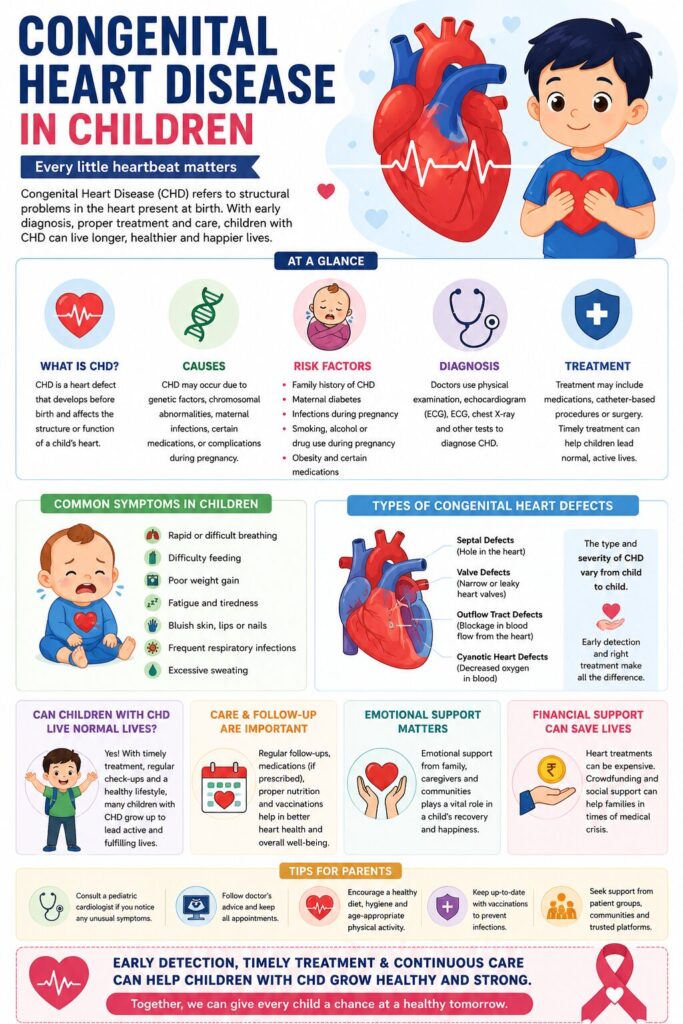
- Cyanosis is a bluish or greyish tint to the lips, fingernails, or skin
- Rapid or laboured breathing even at rest
- Difficulty feeding or tiring quickly during feeds
- Poor weight gain or failure to thrive
- Swelling in the legs, abdomen, or around the eyes
- Abnormal heart murmur detected during routine examination
In Older Children:
- Shortness of breath during physical activity or play
- Frequent fainting or dizziness
- Chest pain or palpitations
- Chronic fatigue or low energy levels
- Swollen ankles or feet
- Delayed physical growth compared to peers
It is important to note that some children with mild CHD show no symptoms at all. This is why routine cardiac screening during infancy is critical. A murmur detected by a paediatrician should never be dismissed without a proper evaluation by a paediatric cardiologist.
When to See a Doctor Immediately:
If your child’s lips or fingertips turn blue, they lose consciousness, or they have severe difficulty breathing, treat it as a medical emergency. Do not wait for a scheduled appointment.
Types of Congenital Heart Defects
Understanding the specific defect your child has been diagnosed with can help you ask better questions and make more informed decisions.
Acyanotic Defects (No bluish discolouration):
- Ventricular Septal Defect (VSD): A hole between the two lower chambers of the heart. The most common CHD. Small VSDs often close on their own; large ones require surgery or device closure.
- Atrial Septal Defect (ASD): A hole between the two upper chambers. Often goes undetected until adulthood in mild cases.
- Patent Ductus Arteriosus (PDA): A blood vessel that normally closes shortly after birth remains open, causing abnormal blood flow between the aorta and pulmonary artery.
- Pulmonary Stenosis: Narrowing of the pulmonary valve, restricting blood flow to the lungs.
- Aortic Stenosis: Narrowing of the aortic valve, restricting blood flow from the heart to the body.
Cyanotic Defects (Cause low oxygen levels and blue discolouration):
- Tetralogy of Fallot (TOF): A combination of four defects, a ventricular septal defect, pulmonary stenosis, an overriding aorta, and right ventricular hypertrophy. One of the most common complex CHDs. Requires open-heart surgery.
- Transposition of the Great Arteries (TGA): The aorta and pulmonary artery are switched, causing oxygen-poor blood to circulate through the body. A surgical emergency in newborns.
- Tricuspid Atresia: Absence of the tricuspid valve, meaning no blood flows from the right atrium to the right ventricle. Requires staged surgical correction.
- Total Anomalous Pulmonary Venous Connection (TAPVC): Pulmonary veins connect to the wrong location, preventing oxygenated blood from reaching the body correctly. Requires urgent surgery.
- Hypoplastic Left Heart Syndrome (HLHS): The left side of the heart is severely underdeveloped. One of the most complex CHDs requires a series of three staged open-heart surgeries (Norwood, Glenn, and Fontan procedures).
How Is Congenital Heart Disease Diagnosed and Treated in Children?
Diagnosis
Modern medicine offers multiple tools for detecting congenital heart disease, some of which can identify defects even before birth.
- Fetal Echocardiography: The standard screening window is 18–22 weeks of pregnancy, though it can be performed from 16 weeks onward in high-risk pregnancies. This specialised ultrasound detects structural abnormalities in the baby’s heart while still in the womb, giving parents and doctors time to plan a safer delivery and immediate postnatal care.
- Pulse Oximetry Screening: A non-invasive test done on newborns within the first 24–48 hours of birth. It measures oxygen saturation in the blood and can flag critical heart defects early.
- Echocardiogram (Echo): The gold standard for diagnosing CHD in infants and children. It provides a detailed ultrasound image of the heart’s structure and function.
- Electrocardiogram (ECG): Measures the electrical activity of the heart and helps identify rhythm abnormalities.
- Chest X-ray: Helps assess heart size and lung condition.
- Cardiac MRI or CT Scan: Used for complex cases where more detailed imaging is required before surgery.
- Cardiac Catheterisation: An invasive but highly informative procedure where a thin tube is passed into the heart through a blood vessel. It is sometimes used both for diagnosis and as a treatment tool.
Treatment Options
Treatment depends entirely on the type and severity of the defect. Not all congenital heart defects require immediate intervention; some minor defects close on their own as the child grows.
However, moderate to severe defects require one or more of the following:
1. Open-Heart Surgery: The most common form of treatment for complex CHDs. The surgeon repairs the structural defect directly. Some conditions require staged surgeries spread over months or years.
2. Catheter-Based Procedures (Interventional Cardiology): Less invasive than surgery, these procedures use catheters threaded through blood vessels to repair defects. Common examples include balloon valvuloplasty for narrowed valves and device closure for holes in the heart (ASD/VSD).
3. Heart Transplant: In rare and severe cases where the heart cannot be repaired, a transplant may be the only option.
4. Medications: Drugs like diuretics, ACE inhibitors, and digoxin are used to manage symptoms, reduce fluid buildup, and help the heart function more efficiently, often as a bridge to surgery or in mild cases.
5. Ongoing Monitoring: Even after successful treatment, children with CHD require lifelong cardiology follow-up. Many grow up to lead completely normal lives, but regular monitoring ensures any complications are caught early.
Living With CHD: Life After Treatment
A CHD diagnosis does not define a child’s future. With the right medical care, most children who undergo successful treatment go on to lead healthy, active, and fulfilling lives.
What Parents Should Know About Long-Term Care:
- Lifelong Cardiology Follow-Up Is Essential: Even after a “complete repair,” children with CHD need regular cardiac check-ups. Some may need additional procedures or medications as they grow.
- Physical Activity Guidelines Vary: Many children with treated CHD can participate in sports and physical education. However, some conditions require restrictions. Always consult your cardiologist before starting any new physical activity.
- School and Development: Most children with CHD attend regular schools and meet developmental milestones normally. Those who had prolonged hospitalisations or oxygen deprivation early in life may benefit from early developmental support.
- Mental Health Matters Too: CHD affects the entire family. Parents, siblings, and the child themselves may experience anxiety, depression, or PTSD related to the diagnosis and treatment journey. Seeking psychological support is not a sign of weakness; it is a critical part of complete care.
- Pregnancy in Women With CHD: Female patients with CHD who reach adulthood will need specialised maternal-foetal cardiology care if they plan to become pregnant, as pregnancy places added stress on the heart.
What Is the Cost of Congenital Heart Surgery in India?
This is one of the most searched and most stressful questions for any parent facing a CHD diagnosis. The honest answer: costs vary widely depending on the type of surgery, the hospital, and the city.
Approximate Cost Ranges in India (2026):
| Procedure | Estimated Cost (INR) |
| ASD/VSD Device Closure (Catheter-based) | ₹1.5 lakh – ₹3 lakh |
| Open-Heart Surgery (simple defects, private hospital) | ₹3 lakh – ₹5 lakh |
| Open-Heart Surgery (complex, e.g., TOF repair) | ₹5 lakh – ₹10 lakh |
| Staged surgeries (e.g., Fontan procedure) | ₹10 lakh – ₹20 lakh+ |
| Heart Transplant | ₹20 lakh – ₹35 lakh+ |
These figures include surgery, ICU stay, anaesthesia, and basic post-operative care. They do not account for:
- Pre-operative diagnostics and consultations
- Post-operative medications (often required for years)
- Travel and accommodation for families from smaller cities
- Repeated hospital visits for follow-up care
- Loss of income for parents who take extended leave
For a middle-class or lower-income family in India, even a “basic” open-heart surgery can consume years of savings, or be entirely out of reach without external support.
Does Health Insurance Cover CHD Surgery in India?
Some government schemes like Ayushman Bharat (PM-JAY) cover congenital heart disease surgeries for children and adults for eligible families. However, coverage gaps, documentation requirements, and hospital empanelment issues mean many families still face significant out-of-pocket expenses. Private health insurance coverage for paediatric cardiac procedures also varies significantly between policies.
This financial reality is exactly why crowdfunding for medical emergencies has grown so rapidly in India over the past decade.
How to Raise Funds Online for Child Heart Surgery in India
When savings run dry, insurance falls short, and the surgery cannot wait, families need to act fast. Online fundraising has emerged as one of the most powerful and accessible tools for families facing a medical crisis.
Why Online Crowdfunding Works for Medical Emergencies:
- It removes geographical barriers; donors from anywhere in the world can contribute
- Campaigns can go live within hours of a diagnosis
- Social sharing through WhatsApp, Instagram, and Facebook dramatically amplifies reach
- It builds a community of supporters around the child and family
- Transparent fund usage builds donor trust and encourages repeat giving
How to Run a Successful Medical Fundraiser:
1. Share the Child’s Story Honestly: A compelling, authentic narrative is the single most important element of a successful campaign. Include the child’s name, age, diagnosis, what treatment is needed, why, and what the funds will be used for. Avoid medical jargon; write as a parent speaking to another parent.
2. Set a Realistic Target: Get a written estimate from the hospital. Break down costs: surgery, ICU, medications, post-op care, travel. A specific, justified target earns more trust than a vague round number.
3. Use Strong Visuals: A photo of the child, ideally smiling, showing their personality, creates an emotional connection. Videos of parents speaking directly to potential donors are even more effective.
4. Update Regularly: Campaigns that provide regular updates (every few days) receive significantly more donations. Even a short “surgery is scheduled for next Tuesday” update keeps donors engaged and reminds them to share.
5. Leverage Your Network First: The first 30–40% of donations almost always come from the family’s own network, relatives, colleagues, friends, and neighbours. Once a campaign shows traction, it becomes easier to attract donations from strangers.
6. Tag Hospitals, Doctors, and NGOs: Organisations with large social media followings can amplify your campaign to audiences far beyond your personal network.
How ImpactGuru Helps Families With Emergency Fundraising for Congenital Heart Disease in Children
ImpactGuru is one of India’s most trusted and established medical crowdfunding platforms, with thousands of successful fundraisers for cardiac surgeries, cancer treatment via ImpactGuru, transplants, and other critical medical needs.
Why Families Choose ImpactGuru for Medical Crowdfunding:
1. Fast Campaign Setup: An ImpactGuru fundraiser can be created and made live in under 30 minutes. In medical emergencies where time is everything, this speed matters enormously. The platform’s support team guides families through the process step by step.
2. Verified and Trusted: ImpactGuru verifies medical documents submitted by fundraisers, which increases donor confidence. When donors know a campaign has been reviewed, they are far more likely to contribute and share.
3. Zero Platform Fee on Medical Fundraisers: Unlike many platforms, ImpactGuru medical crowdfunding comes with zero platform fees, meaning more of every crowdfunding donation goes directly toward the child’s treatment.
4. Dedicated Fundraising Support: Each ImpactGuru fundraiser is assigned a relationship manager who helps optimise the campaign, advises on outreach strategy, and assists with fund disbursement to hospitals. This is especially valuable for families who have never run a fundraiser before and are simultaneously managing a medical crisis.
5. Direct Hospital Disbursement: For families concerned about the misuse of funds, ImpactGuru can disburse funds directly to the treating hospital, adding an extra layer of accountability and trust for donors.
6. Multi-Channel Reach: ImpactGuru’s online crowdfunding platform is optimised for sharing across WhatsApp, Facebook, Instagram, and email, the channels where most Indian donor networks are most active.
Real Impact in Numbers: ImpactGuru has helped raise hundreds of crores for medical emergencies across India. Families from tier-2 and tier-3 cities, who previously had no access to institutional funding or charity support, have been able to fund complex cardiac surgeries through ImpactGuru crowdfunding donation campaigns that reached donors across India and abroad.
How to Start a Fundraiser on ImpactGuru for Heart Surgery:
- Visit the ImpactGuru website and click “Start a Fundraiser.”
- Select “Medical” as the cause category
- Enter details about the child, diagnosis, hospital, and treatment plan
- Upload medical documents (diagnosis reports, hospital estimate letters)
- Set your fundraising target and add a photo or video
- Share your campaign link immediately with family and friends via WhatsApp and social media
- Keep updating your campaign as the treatment progresses
The entire process is free to start, and ImpactGuru’s team is available to assist at every stage — from launch to fund withdrawal.
Conclusion
Congenital heart disease in children is a serious, life-altering diagnosis, but it is not without hope. Medical science has advanced dramatically over the past three decades, and the vast majority of children with CHD, even those with complex defects, can now survive and thrive with the right treatment.
The two greatest barriers that families in India face are delayed diagnosis and financial hardship. On the diagnostic front, increased awareness among parents and primary care providers can save lives. On the financial front, platforms like ImpactGuru have genuinely democratised access to emergency fundraising, allowing families who have no other options to raise donations online through crowdfunding campaigns that reach thousands of compassionate donors.
If your child has been diagnosed with a congenital heart defect and you are struggling to arrange funds for treatment, you do not have to face this alone. Start an ImpactGuru fundraiser today. India has shown, time and again, that when one family reaches out for help, thousands of strangers step forward to give.
Medical Disclaimer: This article is intended for informational purposes only and does not constitute medical advice. Always consult a qualified paediatric cardiologist for diagnosis and treatment decisions specific to your child’s condition.
FAQs
Congenital heart disease is a heart defect that develops before birth and affects the structure or function of a child’s heart.
CHD may occur due to genetic factors, chromosomal abnormalities, maternal infections, certain medications, or complications during pregnancy.
Common symptoms include rapid breathing, difficulty feeding, poor weight gain, fatigue, bluish skin or lips, and frequent respiratory infections.
Yes. Many congenital heart defects can be diagnosed during pregnancy through fetal ultrasound and fetal echocardiography.
Many congenital heart defects can be successfully treated through medications, catheter-based procedures, or surgery, allowing children to lead healthy lives.
Families can seek support through ImpactGuru medical crowdfunding platforms, charitable organizations, and donor communities to help cover treatment expenses.
Yes. Medical crowdfunding can help families raise donations for surgeries, hospitalization, medications, and post-operative care when treatment costs become overwhelming.