


Table of Contents
- Quick Summary
- Introduction
- What Is Dementia? How Is It Different From Alzheimer’s?
- What Are the Early Signs of Alzheimer’s or Dementia?
- When Should You See a Doctor About Memory Loss?
- How Is Dementia Diagnosed?
- What Are the Stages of Alzheimer’s and Dementia?
- Is There a Cure for Alzheimer’s Disease?
- What Are the Treatment Options for Alzheimer’s and Dementia?
- What Increases the Risk of Dementia?
- How Much Does Dementia Care Cost in India?
- Choosing the Right Hospital or Memory Care Center
- How to Care for a Parent With Dementia
- What Is Lewy Body Dementia and How Is It Related to Parkinson’s Disease?
- How Can Families Fund Long-Term Alzheimer’s and Dementia Care?
- Conclusion
- Frequently Asked Questions
Quick Summary
- Alzheimer’s and dementia treatment in India may include medicines, cognitive and physical therapies, lifestyle measures, caregiver support, and long-term care depending on the cause and stage.
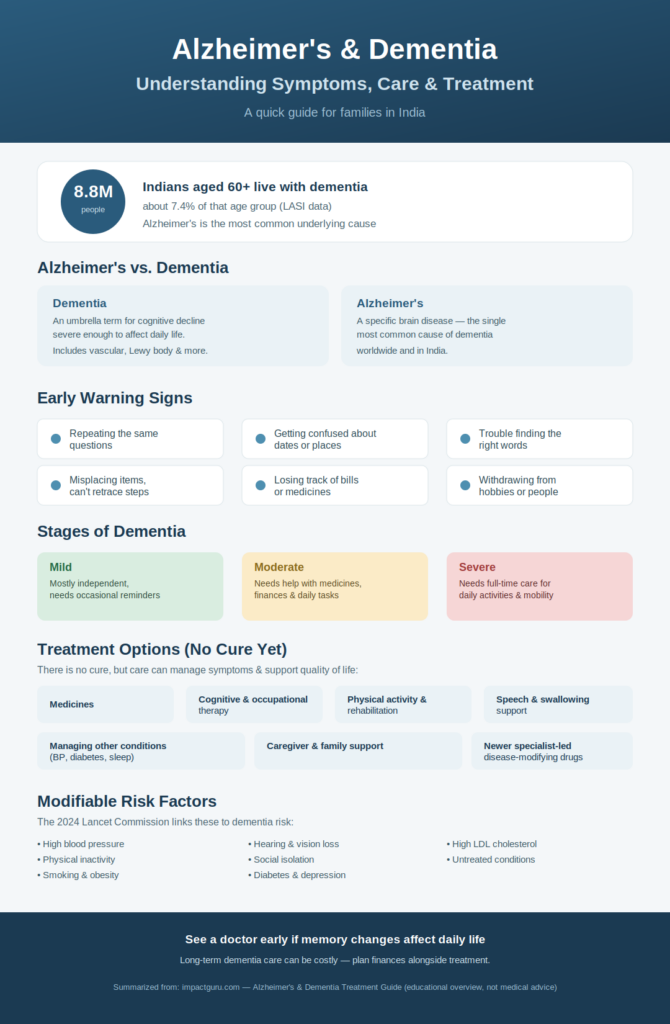
- An estimated 8.8 million Indians aged 60 and older live with dementia, representing about 7.4% of that population, according to nationally representative LASI data.
- Alzheimer’s disease is the most common cause of dementia, but dementia is an umbrella term that also includes conditions such as vascular dementia and Lewy body dementia.
- There is currently no cure for Alzheimer’s disease, but treatment can manage symptoms, support independence and, for some eligible patients, slow disease progression.
- Dementia care can become a long-term financial commitment as the condition progresses, particularly when families need professional caregivers, nursing support, or residential care.
Introduction
An estimated 8.8 million Indians aged 60 and older live with dementia. But numbers like that can feel abstract until it is your own parent forgetting where they parked the car, asking the same question several times, or suddenly struggling with something that was once routine.
A dementia diagnosis affects far more than memory. Families often have questions about what caused the symptoms, whether Alzheimer’s is the same as dementia, which treatments are available, when specialist care is needed, and how much long-term care may cost. This guide explains Alzheimer’s and dementia treatment in India, from early symptoms and diagnosis to medicines, therapies, hospitals, caregiving, costs, and options for managing the financial burden of ongoing care.
Read More : Difference Between Alzheimer’s and Dementia, Explained
What Is Dementia? How Is It Different From Alzheimer’s?
Dementia is an umbrella term for problems with memory, thinking, reasoning, language, or other cognitive abilities that become severe enough to interfere with everyday life. It is not a single disease.
Alzheimer’s disease is a specific brain disease and the most common cause of dementia. Other conditions can cause dementia as well, including:
- Vascular dementia: Cognitive problems caused by damage to the brain’s blood vessels or reduced blood flow, sometimes after a stroke or a series of smaller vascular events.
- Lewy body dementia: A condition associated with abnormal alpha-synuclein protein deposits and symptoms that may include fluctuating attention, visual hallucinations, sleep disturbances, and movement problems.
- Frontotemporal dementia: A group of disorders that can cause prominent changes in behaviour, personality, language, or executive function, often at a younger age than typical Alzheimer’s disease.
- Mixed dementia: A person can have changes associated with more than one underlying brain disease, such as Alzheimer’s and vascular disease.
In simple terms, Alzheimer’s vs dementia is not really a comparison between two separate diseases. Alzheimer’s is one cause of dementia, while dementia describes the broader clinical syndrome.
For a more detailed comparison of symptoms, causes, and diagnosis, see our guide to Alzheimer’s vs other dementias: symptoms and diagnosis.
What Are the Early Signs of Alzheimer’s or Dementia?
Occasional forgetfulness is common, particularly with ageing. The concern is usually a persistent pattern of cognitive changes that is getting worse and beginning to interfere with everyday life.
Early signs may include:
- Forgetting recently learned information or important conversations
- Repeatedly asking the same questions
- Difficulty planning, organising, or solving familiar problems
- Getting confused about dates, places, or familiar routes
- Difficulty finding familiar words during conversations
- Losing track of bills, medicines, appointments, or finances
- Misplacing objects and being unable to retrace one’s steps
- Losing interest in hobbies, work, or social activities
- Changes in judgement, mood, or behaviour
One symptom alone does not establish dementia. Depression, sleep problems, medication side effects, vitamin deficiencies, thyroid disorders, infections, hearing or vision problems, and other medical conditions can also affect memory and thinking.
What matters is whether the changes are persistent, progressive, and affecting a person’s ability to function independently.
When Should You See a Doctor About Memory Loss?
See a doctor when memory or thinking problems are becoming noticeable, recurring, or interfering with everyday activities.
An evaluation is particularly important when someone:
- Repeatedly forgets important information they previously knew
- Gets lost in familiar places
- Has difficulty managing medicines or finances
- Struggles with cooking, driving, work, or other familiar activities
- Shows significant changes in behaviour or personality
- Has experienced a sudden or rapidly worsening change in cognition
A sudden change in memory, confusion, speech, behaviour, or alertness should not automatically be assumed to be dementia. Sudden confusion can have other causes and may require urgent medical assessment.
For families trying to understand whether symptoms fit Alzheimer’s disease or another condition, our detailed guide to Alzheimer’s vs other dementias: symptoms and diagnosis explains what doctors look for.
How Is Dementia Diagnosed?
There is no single blood test or scan that can independently confirm every case of dementia. Doctors usually combine several types of information to understand what is happening.
Medical and family history
The doctor may ask when the symptoms started, how they have changed, which daily activities are affected, and whether there is a family history of neurological disease.
A family member or caregiver may be asked to describe changes the patient does not notice themselves.
Cognitive assessment
Brief cognitive tests can assess areas such as memory, attention, language, orientation, and problem-solving. More detailed neuropsychological testing may be recommended in some cases.
Blood tests
Blood tests may be used to look for medical conditions that can contribute to cognitive symptoms or mimic dementia.
Brain imaging
MRI or CT scans may help identify strokes, tumours, structural abnormalities, or other causes of cognitive decline. They can also provide information that helps doctors assess the pattern of brain changes.
Assessment of daily functioning
Doctors also need to understand how much the symptoms affect everyday independence. Someone may have measurable memory changes while remaining largely independent, whereas another person may already need help with medicines, finances, cooking, or personal care.
A diagnosis therefore involves more than checking whether someone is forgetful. It requires looking at the person’s symptoms, health, cognitive function, and ability to manage everyday life.
What Are the Stages of Alzheimer’s and Dementia?
The course of Alzheimer’s disease varies between individuals, but doctors often describe dementia in terms of increasing levels of cognitive and functional impairment.
Mild or early-stage dementia
A person may still manage many activities independently but experience noticeable memory problems, difficulty with complex tasks, or increasing reliance on reminders and family support.
Moderate or middle-stage dementia
Memory and thinking problems become more pronounced. A person may need help with medicines, finances, appointments, dressing, cooking, or other daily activities. Behavioural and communication changes can also become more noticeable.
Severe or late-stage dementia
A person may eventually require extensive assistance with everyday activities, communication, eating, mobility, and personal care. Full-time supervision or professional care may become necessary.
The progression is not identical for everyone. Staging is useful because it helps doctors and families plan treatment, safety measures, caregiving, and long-term support.
Is There a Cure for Alzheimer’s Disease?
There is currently no cure for Alzheimer’s disease.
However, treatment can still make a meaningful difference. Depending on the cause and stage of dementia, treatment may help manage symptoms, maintain function for as long as possible, address behavioural or psychological symptoms, and support quality of life.
Treatment can include:
- Medicines for cognitive symptoms
- Medicines for associated mood or behavioural symptoms when appropriate
- Cognitive and occupational therapies
- Physical activity and rehabilitation
- Speech and swallowing support when required
- Management of other health conditions
- Caregiver education and support
- Safety and environmental adaptations
Some newer Alzheimer’s medicines are designed to target disease processes rather than only manage symptoms. Lecanemab, an amyloid-targeting treatment, has undergone regulatory review in India, and CDSCO records show permission to import and market the drug subject to post-approval requirements. Its use is not appropriate for everyone and requires specialist assessment, including consideration of eligibility, potential risks, monitoring, and access.
This is an area where treatment decisions should be made with a specialist rather than based on online symptom or drug lists.
For a detailed breakdown of medicines, therapies, and caregiver support, see our guide to treatment options for Alzheimer’s: medication, therapy, and caregiver support.
What Are the Treatment Options for Alzheimer’s and Dementia?
Treatment depends on the underlying cause. Alzheimer’s disease, vascular dementia, Lewy body dementia, and frontotemporal dementia do not all have the same treatment approach.
Medicines
Doctors may prescribe medicines to manage cognitive symptoms or other symptoms associated with dementia. The choice depends on the diagnosis, stage, other medical conditions, and potential side effects.
Newer disease-modifying Alzheimer’s treatments may be considered for carefully selected patients with appropriate disease characteristics. These treatments require specialist evaluation and monitoring.
Cognitive and occupational therapy
Therapy can help a person maintain everyday skills and adapt to changes in memory, attention, or problem-solving.
Occupational therapy may focus on making everyday activities safer and more manageable.
Physical activity and rehabilitation
Appropriate physical activity can support mobility, strength, balance, and overall health. Physiotherapy may be useful when dementia occurs alongside movement or balance problems.
Speech and swallowing support
As some dementias progress, communication or swallowing may become difficult. Speech-language professionals can help assess these problems and suggest appropriate strategies.
Managing other medical conditions
Conditions such as high blood pressure, diabetes, hearing loss, sleep problems, depression, and cardiovascular disease may affect overall brain health and functioning. Managing them is an important part of comprehensive care.
Caregiver and family support
Dementia and Alzheimer’s treatment does not happen only inside a hospital. Family members often become responsible for medication schedules, appointments, meals, safety, personal care, and emotional support.
Our detailed guide to treatment options for Alzheimer’s explains these approaches and what families can expect from each.
Read More : Most Expensive Treatment Crowdfunding in India
What Increases the Risk of Dementia?
Age is one of the strongest known risk factors for dementia, but dementia is not an inevitable part of getting older.
Research has identified several potentially modifiable factors associated with dementia risk, including high blood pressure, physical inactivity, smoking, obesity, high LDL cholesterol, hearing loss, social isolation, depression, diabetes, and untreated vision loss.
The 2024 Lancet Commission estimated that addressing 14 modifiable risk factors could potentially prevent or delay a substantial proportion of dementia cases worldwide. This does not mean dementia can always be prevented. Genetics, age, underlying diseases, and other factors also play important roles.
For older adults, managing cardiovascular health, staying physically active, addressing hearing and vision problems, maintaining social connections, and treating other medical conditions can form part of a broader approach to healthy ageing.
How Much Does Dementia Care Cost in India?
There is no single dementia care cost in India because expenses vary significantly from one family to another.
The total cost can depend on:
- The type and stage of dementia
- Frequency of neurologist or geriatrician consultations
- Diagnostic tests and follow-up assessments
- Prescription medicines
- Physiotherapy, occupational therapy, or other rehabilitation
- Professional caregivers at home
- Nursing support
- Hospitalisation for complications or other illnesses
- Adult day-care or supervised care services, where available
- Assisted living or residential care
- The city and type of facility
In the early stages, a family may mainly have outpatient consultation, diagnostic, medicine, and therapy expenses. As dementia progresses, a person may need help with daily activities, supervision, nursing, or residential care, potentially making long-term care the larger financial commitment.
For a detailed breakdown of how much dementia care costs in India, including treatment, nursing, home care, and residential options, see our dedicated cost guide.
Choosing the Right Hospital or Memory Care Center
A hospital’s general reputation is not the only consideration when seeking dementia care. Families should look for access to clinicians and services appropriate for cognitive disorders.
When comparing memory care centers in India or hospitals, consider whether the facility provides:
- Neurology, geriatric medicine, or another relevant specialist
- Assessment of memory and cognitive function
- Appropriate laboratory and imaging facilities
- Access to psychological or psychiatric support when required
- Rehabilitation services
- Speech and swallowing assessment when needed
- Caregiver counselling and education
- Follow-up for progressive conditions
- Support for long-term care planning
The right setting also depends on the person’s stage of illness. Someone in the early stages may primarily need specialist consultations and periodic follow-up, while a person with advanced dementia and alzheimer’s treatment may require continuous supervision or nursing support.
For a detailed comparison of what families should look for, see our guide to the best neurology hospitals and memory care centers in India.
How to Care for a Parent With Dementia
Caring for a parent with dementia often changes gradually. What begins with reminders and appointments can eventually involve medicines, meals, mobility, personal care, home safety, and constant supervision.
Some practical steps can help:
Keep routines predictable
Regular times for meals, medicines, sleep, and familiar activities can make daily life easier to navigate.
Make the home safer
Remove avoidable fall hazards, improve lighting, secure potentially dangerous items, and consider measures to reduce the risk of wandering.
Communicate simply
Use short, clear sentences and give the person enough time to respond. Arguing over a mistaken memory usually does not help.
Involve the person in decisions
Where possible, allow the person to participate in choices about routines, appointments, food, activities, and care. Dementia does not remove a person’s need for dignity and autonomy.
Watch for caregiver burnout
Dementia caregiving can become physically and emotionally demanding. Sharing responsibilities among family members, using professional support when possible, and taking regular breaks can help make long-term caregiving more sustainable.
For practical advice on communication, home safety, daily routines, and caregiver wellbeing, see Caring for a loved one with dementia: a practical guide.
What Is Lewy Body Dementia and How Is It Related to Parkinson’s Disease?
Lewy body dementia and Parkinson’s disease are both associated with abnormal deposits of alpha-synuclein in the brain, but they are distinct clinical diagnoses.
Lewy body dementia can involve cognitive changes, fluctuations in attention and alertness, visual hallucinations, sleep disturbances, and movement symptoms.
Parkinson’s disease primarily affects movement, although some people with Parkinson’s can develop significant cognitive impairment or dementia during the course of the disease.
Because the symptoms and treatment considerations can differ, people experiencing both movement and cognitive symptoms need an appropriate neurological assessment.
For information about Parkinson’s symptoms, diagnosis, treatment, deep brain stimulation, and long-term care, see our guide to Parkinson’s disease treatment in India.
How Can Families Fund Long-Term Alzheimer’s and Dementia Care?
Dementia and Alzheimer’s treatment and care can continue for years, making the financial burden different from that of a one-time medical procedure.
When savings, insurance, or family resources are not enough to cover ongoing expenses, families may consider medical crowdfunding as one way to seek financial support.
With crowdfunding for medical treatment, a family can create an online fundraiser explaining the person’s diagnosis, treatment or care requirements, expected expenses, and financial situation. The campaign can then be shared with relatives, friends, colleagues, community groups, and other potential donors.
Online crowdfunding sites can make this process easier by providing a platform where a family’s story and fundraising requirements can be shared in one place.
If long-term Alzheimer’s or dementia treatment and care is creating a financial challenge, our guide to crowdfunding for long-term Alzheimer’s and dementia care explains how families can approach fundraising for ongoing expenses.
You can also learn more about how medical crowdfunding works in India before starting a campaign.

Conclusion
Dementia can change a family’s life long before a person needs full-time care. Understanding the symptoms early, getting an appropriate diagnosis, finding the right treatment, and planning for increasing care needs can make the road ahead more manageable. There may be no cure for Alzheimer’s disease today, but treatment, rehabilitation, supportive care, and family involvement can still help preserve comfort, dignity, and quality of life.
The financial side also deserves early attention. If Alzheimer’s or dementia treatment and care is becoming difficult to afford, ImpactGuru can help families explore online crowdfunding and reach their wider support network. You can start a fundraiser and share your family’s needs with people who may be able to help.
Frequently Asked Questions
No. Dementia is an umbrella term describing a decline in cognitive abilities severe enough to interfere with everyday life. Alzheimer’s disease is a specific brain disease and the most common cause of dementia. Other causes include vascular dementia, Lewy body dementia, and frontotemporal dementia.
Early signs can include repeatedly forgetting recent information, asking the same questions, difficulty planning or solving familiar problems, confusion about time or place, difficulty finding words, changes in judgment, and withdrawal from familiar activities. A persistent pattern that affects daily life warrants medical evaluation.
Focus on predictable routines, medication and appointment management, home safety, simple communication, appropriate supervision, and preserving the person’s dignity and independence where possible. Sharing responsibilities among family members and seeking professional support can also make long-term caregiving more sustainable.
Not entirely. Age, genetics, underlying diseases, and other factors influence dementia risk. However, research has identified potentially modifiable factors associated with dementia, including high blood pressure, physical inactivity, smoking, high LDL cholesterol, hearing loss, diabetes, and social isolation. Addressing these factors may reduce or delay risk for some people.