


Table of Contents
- Quick Summary
- Introduction
- What Is Vitamin E and Why Is It Important?
- Recommended Vitamin E Intake Per Day in India
- What Are the Symptoms of Vitamin E Deficiency in Adults?
- What Causes Vitamin E Deficiency in India?
- How Is Vitamin E Deficiency Diagnosed in India?
- What Are the Best Treatment Options for Vitamin E Deficiency in India?
- Natural Ways to Increase Vitamin E: Indian Food Sources
- Conclusion
- FAQs
Quick Summary
- Vitamin E deficiency in India can cause neurological symptoms, muscle weakness, and immune dysfunction.
- Diagnosis is confirmed through a serum alpha-tocopherol blood test and lipid profile.
- Treatment includes dietary correction, supervised supplementation, and managing underlying conditions.
- Nuts, seeds, traditional oils, and whole grains are rich natural sources.
- Severe cases may require long-term care planning and financial support options.
Introduction
Vitamin E Deficiency in India is an often-overlooked yet important part of the broader crisis of nutrient deficiency in India. While severe cases are rare in healthy individuals, rising digestive disorders, restrictive dieting trends, and poor fat absorption are increasing the risk of hidden micronutrient gaps. As a powerful fat-soluble antioxidant, vitamin E acts as the body’s internal shield, protecting cells from oxidative damage, supporting nerve health, and strengthening immunity.
Within the larger spectrum of vitamin deficiencies in India, understanding the causes, symptoms, diagnosis, and treatment of Vitamin E Deficiency in India is essential for early prevention. This guide explores who is at risk, how it is diagnosed, and the best treatment options available in India.
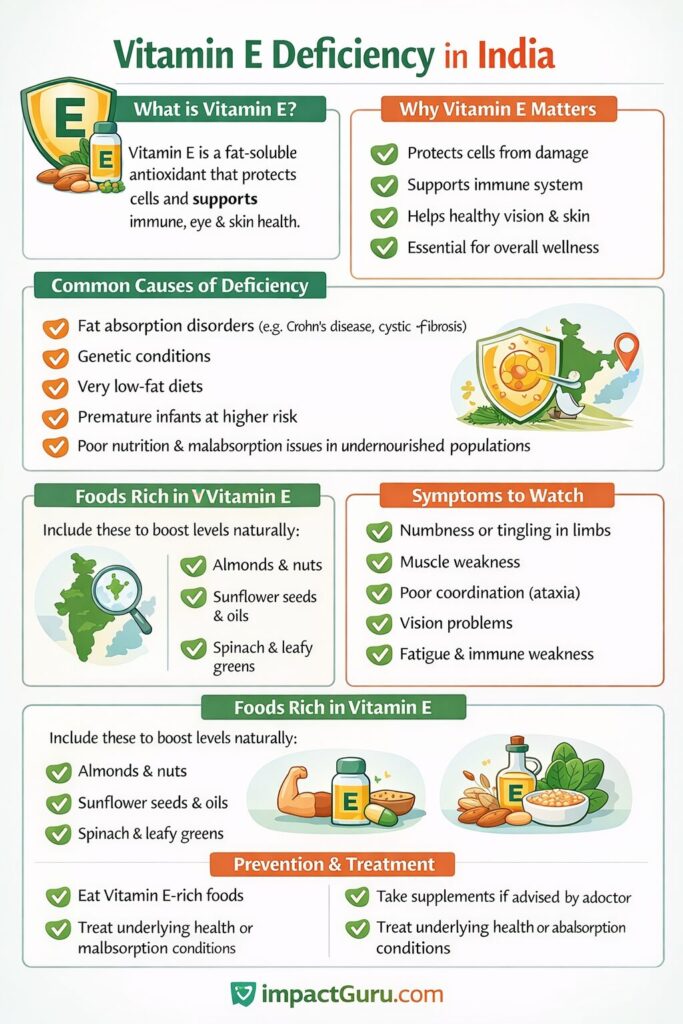
What Is Vitamin E and Why Is It Important?
Vitamin E is a fat-soluble vitamin, meaning it dissolves in dietary fats and is absorbed along with oils. Unlike water-soluble nutrients that circulate freely in the bloodstream, vitamin E embeds itself into the lipid (fat) layers of cells. This makes it the body’s primary oil-based antioxidant, playing a crucial role in protecting tissues from oxidative damage, an important factor in preventing Vitamin E Deficiency in India.
- Guardian of Cell Membranes: Every cell in the body is surrounded by a membrane made largely of fats.
- These fats are vulnerable to oxidative stress caused by pollution, smoking, infections, and chronic inflammation, common environmental and lifestyle stressors in India.
- Vitamin E protects these membranes by preventing lipid peroxidation, a process in which fats break down due to free radical damage. By stabilising cell membranes, it helps maintain structural integrity, supports immunity, and slows premature cellular aging.
- The Nerve and Vision Link: Nerves are insulated by a fatty coating called the myelin sheath, which ensures smooth transmission of signals.
- Vitamin E helps preserve this protective layer. Deficiency may contribute to muscle weakness, poor coordination, or numbness.
- The retina in the eye is also rich in delicate fatty acids. Vitamin E helps protect these tissues, supporting long-term visual health.
- Reproductive Health: Often referred to in India as the “fertility vitamin,” vitamin E supports reproductive wellness by protecting egg and sperm cells from oxidative stress and contributing to hormonal balance. While not an infertility treatment, adequate intake supports overall reproductive health.
If you want to understand the broader causes, symptoms, and types of nutrient gaps affecting people today, explore our complete guide to vitamin deficiencies in India.
Quick Answer: Vitamin E is a fat-soluble antioxidant that protects cell membranes, nerves, and the retina from oxidative damage. By preventing lipid peroxidation, it maintains nerve insulation and supports reproductive health. Adequate intake helps reduce the risk of Vitamin E Deficiency in India and related neurological complications.
Recommended Vitamin E Intake Per Day in India
The recommended daily intake of vitamin E varies by age, gender, and life stage. Because it is a fat-soluble vitamin, both deficiency and excessive supplementation can have health consequences. Meeting the recommended amount through a balanced diet remains the safest approach for most individuals.
Below is the standard daily requirement across life stages:
| Life Stage | Required Vitamin E Intake in Mg/day |
| Birth – 6 months | 4 mg |
| 7 – 12 months | 5 mg |
| 1 – 3 years | 6 mg |
| 4 – 8 years | 7 mg |
| 9 – 13 years | 11 mg |
| 14 – 18 years | 15 mg |
| Adults | 15 mg |
| During Pregnancy | 15 mg |
| Breastfeeding Women | 19 mg |
In India, dietary patterns that restrict healthy fats may reduce vitamin E absorption, even if intake appears adequate. Pregnant and breastfeeding women require slightly higher levels to support maternal and infant health.
Note: Supplementation should only be considered under medical supervision
Quick Answer: The recommended vitamin E dosage per day ranges from 4 mg in infants to 15 mg in adults. Breastfeeding women require 19 mg daily. Most people can meet these needs through nuts, seeds, and vegetable oils. Supplements should be taken only under medical guidance.
What Are the Symptoms of Vitamin E Deficiency in Adults?
Vitamin E deficiency symptoms primarily affect the nervous system because this vitamin protects nerve cells from oxidative damage. In Vitamin E Deficiency in India, symptoms usually develop gradually and may worsen if left untreated.
Common symptoms include:
- Muscle weakness
- Difficulty walking or poor coordination
- Slow reflexes
- Numbness or tingling in the hands and feet
- Fatigue
- Vision problems, including blurred vision
In severe cases, complications may include:
- Hemolytic anemia (a blood disorder where red blood cells break down)
- Abnormal blood vessel growth in the eyes
- Bleeding within the brain
- Severe vision loss or blindness
- Weakened immune system
Because these symptoms overlap with other vitamin deficiencies in India, proper diagnosis through medical evaluation is essential. Early detection can prevent long-term neurological damage.
Quick Answer: Symptoms of vitamin E deficiency in adults include muscle weakness, loss of coordination (ataxia), numbness in the limbs, blurred vision, and weakened immunity. Because vitamin E protects nerve cells and retinal tissue from oxidative damage, long-term deficiency can lead to neurological complications if not diagnosed early.

What Causes Vitamin E Deficiency in India?
Unlike many other deficiencies that occur due to low dietary intake, vitamin E deficiency is usually linked to problems with how the body absorbs and processes fats. Because vitamin E is fat-soluble, it requires healthy digestion, bile production, and specific transport proteins to enter the bloodstream. The following are some of the major causes of vitamin E deficiency:
- Fat Malabsorption Disorders: This is the most common cause. Conditions such as celiac disease, Crohn’s disease, chronic pancreatitis, and cystic fibrosis prevent the intestines from properly absorbing dietary fats. If fat absorption is impaired, vitamin E cannot be effectively absorbed, even when intake is adequate.
- The “Zero-Fat” Diet Trap: In urban India, extreme weight-loss trends and “zero-oil” diets have become more common. However, small amounts of healthy fats like nuts, seeds, ghee, and cold-pressed oils are necessary to transport vitamin E into the bloodstream. Without dietary fat, the vitamin remains unabsorbed and is eliminated from the body.
- Genetic Disorders: Rare inherited conditions such as abetalipoproteinemia and Ataxia with Vitamin E Deficiency (AVED) interfere with lipid transport mechanisms. These disorders reduce the body’s ability to deliver vitamin E to tissues, increasing the risk of neurological complications.
- Chronic Liver Disease: The liver produces bile, which is essential for fat digestion. Liver dysfunction can impair fat absorption and lead to secondary fat-soluble vitamin deficiencies.
- Premature Birth: Infants born prematurely often have low vitamin E stores because most transfer from mother to baby occurs during the final trimester of pregnancy.
- Diagnostic Overlap in India: In India, symptoms such as fatigue and weakness are often attributed to iron deficiency or vitamin B12 deficiency. However, when neurological symptoms like poor coordination or numbness are present, vitamin E status should also be evaluated by a healthcare professional.
Quick Answer: Vitamin E deficiency is primarily caused by fat malabsorption disorders, chronic liver disease, genetic transport defects, or extremely low-fat diets. Since vitamin E is fat-soluble, proper fat digestion and transport are essential for absorption. In India, digestive disorders are among the leading underlying causes.
How Is Vitamin E Deficiency Diagnosed in India?
Diagnosing Vitamin E Deficiency in India requires more than a routine physical examination because its symptoms often resemble other neurological or nutritional disorders. Accurate laboratory testing is essential to confirm low levels and assess the severity of deficiency.
- Serum Alpha-Tocopherol Test: This is the primary blood test used to measure vitamin E levels. Alpha-tocopherol is the most biologically active form of vitamin E in the human body. If circulating levels fall below the recommended range, deficiency may be confirmed.
- Lipid-Standardized Assessment: Because vitamin E is fat-soluble and travels in the bloodstream attached to lipids (fats), doctors usually evaluate the results alongside a lipid profile. In individuals with high cholesterol, vitamin E levels may appear normal unless adjusted relative to total blood fats, making lipid correlation essential for accurate diagnosis.
- Neurological Evaluation: If symptoms such as muscle weakness, numbness, or loss of balance are present, physicians may recommend nerve conduction studies or coordination assessments to evaluate the functional impact of the deficiency.
Early testing is especially important in individuals with malabsorption disorders, chronic liver disease, or unexplained neurological symptoms.
Quick Answer: Vitamin E deficiency is diagnosed through a serum alpha-tocopherol blood test. Because vitamin E circulates with blood fats, doctors often interpret results alongside a lipid profile to ensure accuracy. Additional neurological evaluation may be needed when symptoms like muscle weakness or balance problems are present.
What Are the Best Treatment Options for Vitamin E Deficiency in India?
Treating Vitamin E Deficiency in India requires addressing both the deficiency and its underlying cause. Since vitamin E is fat-soluble, treatment must be carefully supervised to restore levels safely without increasing the risk of complications such as bleeding.
Dietary Correction for Mild Cases:
For early or mild deficiency caused by restrictive diets, increasing intake of vitamin E rich foods in India — such as almonds, sunflower seeds, spinach, and cold-pressed oils — is the first step. This food-first approach reduces the need for high-dose supplementation and supports long-term nutritional balance.
Oral Supplementation and Dosage (Medical Supervision Required):
When dietary correction is insufficient or malabsorption disorders are present, oral supplements are prescribed. A commonly available supplement in India is alpha-tocopherol acetate (for example, Evion). Dosage varies depending on severity and must be determined by a healthcare provider. High doses should be avoided, especially in individuals taking anticoagulants like warfarin, as vitamin E can increase bleeding risk.
Addressing Underlying Conditions:
In cases involving celiac disease, Crohn’s disease, chronic pancreatitis, or liver disorders, managing the primary condition is essential. Without correcting fat absorption, supplementation alone may not be effective.
For families dealing with chronic digestive disorders or neurological complications, long-term treatment costs can become financially stressful. Many turn to medical fundraising and online crowdfunding platforms to raise donations online for diagnostic tests, supplements, and hospital care. Platforms like ImpactGuru, a verified donation platform and one of the leading fundraising platforms in India, enable individuals to fundraise online through a trusted crowdfunding platform in India.
Quick Answer: Best treatment options for Vitamin E deficiency include increasing dietary intake, prescribing oral supplements under medical supervision, and treating underlying malabsorption disorders. Because high doses may increase bleeding risk, supplementation must be carefully monitored. In severe cases, long-term care planning is essential.
Natural Ways to Increase Vitamin E: Indian Food Sources
Preventing nutrient deficiency in India begins with including the right fats in daily meals. Since vitamin E is fat-soluble, the richest sources are nuts, seeds, whole grains, and traditional oils.
- Nuts and Seeds: Almonds (badam) and sunflower seeds are among the highest natural sources. A handful of almonds daily can provide a significant portion of the recommended intake. Peanuts (moongphali) are an affordable and widely accessible option in Indian households.
- Traditional Oils: Cold-pressed mustard oil (sarson ka tel), rice bran oil, and sunflower oil retain higher vitamin E content compared to heavily refined oils. Using moderate amounts in cooking improves absorption.
- Leafy Greens and Vegetables: Spinach (palak) and broccoli contain vitamin E, but because it is fat-soluble, they should be cooked with a small amount of healthy fat such as ghee or oil to improve absorption.
- Whole Grains: Bajra (pearl millet), wheat germ, and minimally processed grains contain vitamin E. Limiting refined flour (maida) helps preserve natural micronutrients.
Nutrient Synergy Tip: Vitamin E works closely with vitamin C. While vitamin E protects cell membranes, vitamin C helps regenerate it into its active form. Pairing almonds with lemon water or amla enhances antioxidant support.
Quick Answer: The best natural sources of vitamin E in India include almonds, sunflower seeds, peanuts, mustard oil, rice bran oil, spinach, and whole grains. Because vitamin E is fat-soluble, consuming these foods with healthy fats improves absorption and helps prevent deficiency.

Conclusion
Vitamin E deficiency in India can quietly impact nerve health, immunity, and muscle function if left untreated. Early diagnosis through blood testing and timely dietary or medical intervention can prevent serious complications. Including vitamin E–rich foods and addressing underlying malabsorption disorders are key to recovery. For families facing costly long-term treatment, platforms like ImpactGuru provide trusted medical crowdfunding support to help manage healthcare expenses. Awareness, balanced nutrition, and timely care are essential for prevention and long-term health.
FAQs
Vitamin E deficiency occurs when the body doesn’t have enough vitamin E to protect cells from damage and support nerve and immune functions — it’s more common in people with fat-absorption issues or poor diets.
Signs include muscle weakness, numbness or tingling, poor coordination, vision issues, and a weakened immune system.
People with fat-malabsorption conditions (like Crohn’s or cystic fibrosis), very low-fat diets, or metabolic disorders have higher risk, even though deficiency is rare overall.
Doctors confirm deficiency through blood tests measuring serum alpha-tocopherol and assess symptoms and medical history.
Increasing intake of vitamin E-rich foods (nuts, seeds, vegetable oils, green leafy vegetables) and taking supplements under medical guidance can help prevent and treat deficiency.