


Vitamin D3 deficiency has quietly become one of India’s most overlooked health problems. You don’t always feel it immediately, until one day your knees hurt while climbing stairs, fatigue doesn’t go away, or your blood report shows a number that worries you.
And then comes the real confusion:
Vitamin D3 injection or supplements, which one is actually better?
This guide breaks it down clearly, honestly, and medically, without fear-mongering.
Table of Contents
Vitamin D3 Injection vs Supplements
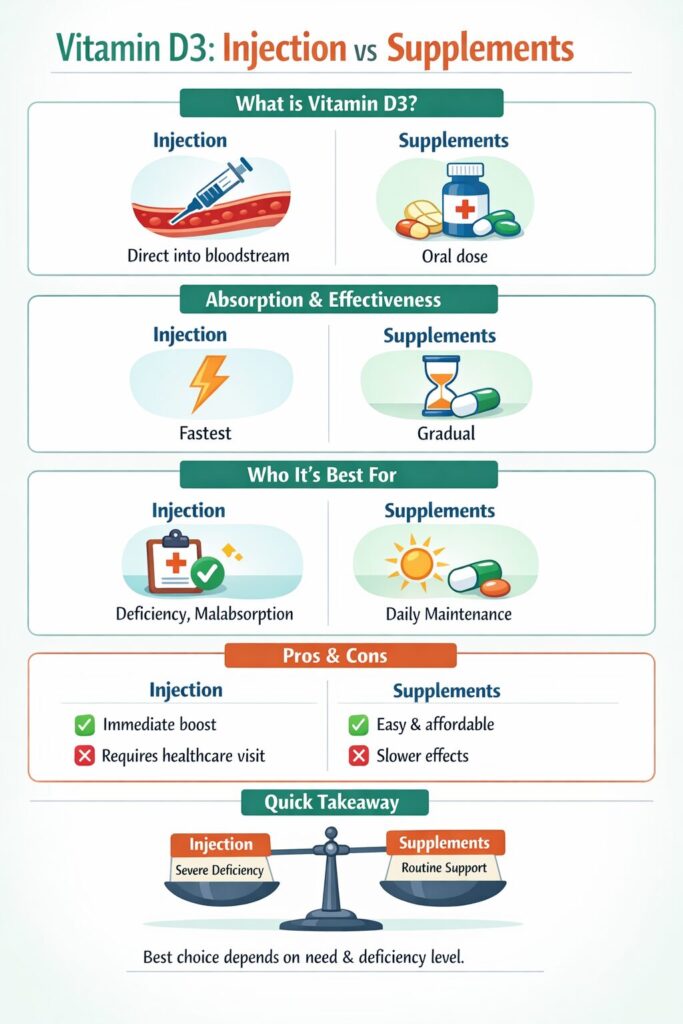
Vitamin D3 injections are usually advised when Vitamin D levels are extremely low or when the body needs quick correction. Because the dose goes directly into the muscle, injections work faster and are often chosen for people who are experiencing strong symptoms like long-lasting fatigue, bone or joint pain, muscle weakness, or frequent illnesses. They are also helpful when the body is not absorbing oral supplements properly.
Vitamin D3 supplements, however, are more suitable for regular, long-term use. They are easier to take, gentler on the body, and help maintain stable Vitamin D levels when taken consistently over time. Supplements are commonly recommended for mild to moderate deficiency, or after injections have helped bring levels back to normal. For many people, supplements combined with a proper diet and sunlight exposure are enough to keep Vitamin D levels healthy.
In the end, there is no single “better” option for everyone. The right choice depends on your blood test results, how severe your deficiency is, the symptoms you are experiencing, and how your body responds to treatment. That’s why medical guidance is important, so your treatment plan is safe, effective, and tailored to your needs.
If you want to understand the broader causes, symptoms, and types of nutrient gaps affecting people today, explore our complete guide to vitamin deficiencies in India.
Why Vitamin D3 Levels Matter So Much
Vitamin D3 isn’t just about bones; it also affects:
- Bone density and fracture risk
- Muscle strength and recovery
- Immune response
- Mood and energy levels
In India, deficiency is common despite ample sunlight due to indoor lifestyles, pollution, covered clothing, and limited dietary sources.
Vitamin D3 Levels: Where Do You Stand?
- Normal: 30–50 ng/mL
- Insufficient: 20–29 ng/mL
- Deficient: 10–19 ng/mL
- Severe Deficiency: Below 10 ng/mL
Treatment decisions are based on how low your levels are, not just symptoms.

What Are Vitamin D3 Supplements?
Vitamin D3 supplements are oral forms like tablets, capsules, sachets, or drops. They’re most commonly prescribed for mild to moderate deficiency and long-term maintenance.
When Supplements Work Best?
- Levels are low but not critical.
- You need steady improvement over time.
- Your digestion and absorption are normal.
- You can stay consistent with dosing.
Limitations
- Slower results
- Poor absorption in some gut-related conditions
- Missed doses reduce effectiveness
What Is a Vitamin D3 Injection?
Vitamin D3 injections are high-dose intramuscular shots, usually given monthly or at spaced intervals.
They’re typically used for severe deficiency or when supplements fail to raise levels.
When Injections Are Preferred:
- Levels are critically low
- Symptoms are severe (bone pain, muscle weakness)
- Absorption from the gut is poor
- Immediate correction is required
Injections must always be taken under medical supervision.

Vitamin D3 Injection vs Supplements
Speed:
- Injection → Fast correction
- Supplements → Gradual improvement
Best for:
- Injection – Severe deficiency
- Supplements – Mild to moderate deficiency
Long-term use:
- Injection- Not recommended
- Supplements – Ideal
Medical supervision:
- Injection – Mandatory
- Supplements Minimal
Injections fix urgency, and Supplements build stability.
What Doctors Actually Recommend
“For patients with severe Vitamin D deficiency, we often use injections initially to correct levels quickly, followed by oral supplements for long-term maintenance. Treatment must always be based on blood reports and individual health conditions.”
– Consultant Endocrinologist, India
This step-wise approach is backed by clinical guidelines and widely followed in medical practice.
The Cost of Delayed Treatment (Why This Matters)
Untreated Vitamin D3 deficiency can lead to:
- Frequent fractures
- Chronic joint pain
- Reduced mobility
- Long-term bone disorders
For many families, diagnostic tests, repeat consultations, and prolonged treatment become financially stressful.
Platforms like ImpactGuru help families manage such medical expenses through medical crowdfunding, enabling them to raise donations online when healthcare costs exceed savings or insurance coverage.
Healthcare shouldn’t be delayed because of money, and awareness can prevent that.
Vitamin D3 treatment isn’t about choosing injections over supplements.
It’s about choosing the right solution at the right stage.
Get tested. Follow medical advice. Support treatment with diet and consistency.
And if medical costs ever feel overwhelming, remember, help can come from people who care, through platforms like ImpactGuru.
FAQs
Vitamin D3 injections work faster and are ideal for severe deficiency, while oral supplements are better for daily maintenance and mild deficiency. The right choice depends on your blood vitamin D levels.
A Vitamin D3 injection can raise blood levels within a few days to weeks, as it bypasses digestion and goes directly into the bloodstream.
Yes, oral Vitamin D3 supplements are effective for mild to moderate deficiency when taken regularly as prescribed by a doctor.
People with severe vitamin D deficiency, malabsorption issues, or very low serum 25(OH)D levels may be advised to take Vitamin D3 injections under medical supervision.
Daily Vitamin D3 supplementation is generally safe within recommended dosage limits, but high doses should only be taken after a blood test and medical consultation.
Sources
National Institutes of Health (NIH)
Endocrine Society Clinical Practice Guidelines
Indian Council of Medical Research (ICMR)
Mayo Clinic – Vitamin D Overview