


Despite abundant sunshine, India has one of the world’s highest rates of Vitamin D3 deficiency. This blog explores why that’s happening, the effects on your health, how to treat it, and what everyday Indians can do to reverse the crisis, with insights that matter for families, healthcare seekers, and even those considering fundraising for health via ImpactGuru.
Table of Contents
- Why Vitamin D3 Deficiency is a “Silent Epidemic” in India
- What Is Vitamin D3, and Why Does It Matter?
- Why India Has Such High Rates of Deficiency?
- Why You Shouldn’t Ignore a Low Vitamin D Level? And what are its early symptoms?
- How Doctors Diagnose Vitamin D Deficiency?
- Why Awareness Matters?
- What You Should Know?
- FAQs
Why Vitamin D3 Deficiency is a “Silent Epidemic” in India
You might think that living in a tropical country like India would protect people from Vitamin D deficiency. After all, sunshine is everywhere, but the reality is startling: studies show that 80% to 90% of Indians are deficient in Vitamin D3, affecting people in both rural and urban areas.
This isn’t just a mild nutritional shortfall. Vitamin D3 plays a vital role in:
- Calcium and phosphorus absorption (bone strength)
- Muscle function
- Immune system regulation
- Mood and energy levels
And yet, despite hours of daylight, deficiency remains pervasive. That’s why doctors and nutritionists often call it a “silent epidemic.”
Vitamin deficiencies in India remain a major public health concern, with widespread gaps in Vitamin D, B12, iron, and folate affecting children, women, and the elderly.

What Is Vitamin D3, and Why Does It Matter?
Vitamin D refers to a group of fat-soluble vitamins, with D2 (ergocalciferol) and D3 (cholecalciferol) being the most important. Of the two, Vitamin D3 is more effective at raising and maintaining circulating Vitamin D levels in the blood.
Your body doesn’t get most of its Vitamin D from food; it synthesises it in the skin when UVB rays from sunlight hit bare skin. But when that process is compromised, deficiency results.
Why India Has Such High Rates of Deficiency?
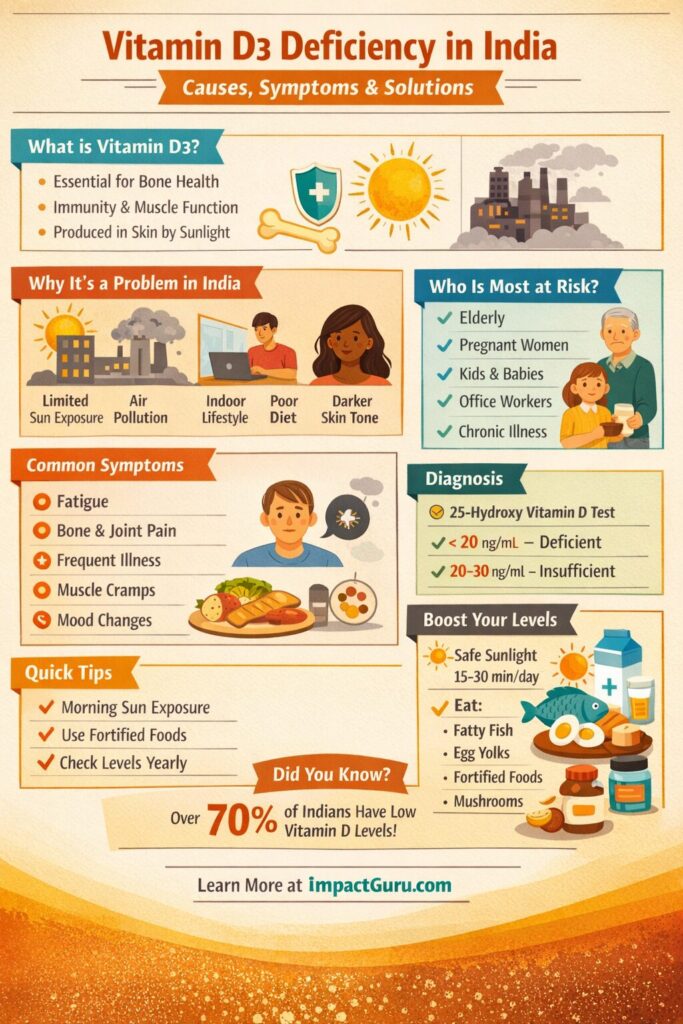
This high prevalence, even in a sun-rich country, stems from multiple cultural, environmental, and lifestyle factors:
1. Limited Sun Exposure – Most Indians work indoors, spend evenings in air-conditioned spaces, or avoid direct midday sun for fear of tanning and heat, ironically reducing UVB absorption essential for Vitamin D3 production.
2. Pollution and Urban Living – Air pollution in cities blocks UVB rays, drastically lowering the amount of Vitamin D your skin can produce itself.
3. Darker Skin Tones – Higher melanin means UVB penetration is reduced, so darker-skinned individuals often need longer sun exposure to make the same amount of Vitamin D as lighter-skinned people.
4. Clothing and Cultural Practices – Clothing that covers most of the body, common in many Indian communities, also limits skin exposure to sunlight.
5. Dietary Gaps –Indian diets, especially vegetarian ones, are naturally low in Vitamin D3 because most rich sources (like fatty fish) are animal-based, and food fortification is not widespread.
6. Indoor Lifestyles & Work Culture – Modern professions keep people inside from sunrise to sunset, which cuts off the most efficient natural vitamin D source, sunlight.
All these factors combine to make Vitamin D3 deficiency a public health concern across age groups.
Why You Shouldn’t Ignore a Low Vitamin D Level? And what are its early symptoms?
Vitamin D deficiency can be silent for years, but it eventually shows up in ways most people miss:
1. Persistent Fatigue & Low Energy
You feel tired despite sleep, because Vitamin D3 is connected to muscle performance and overall vitality.
2. Muscle Weakness & Bone Pain
Vitamin D3 deficiency often causes dull, aching bones or muscle fatigue — a symptom many Indians blame on “ageing” or “work stress.”
3. Frequent Illness or Low Immunity
Vitamin D helps regulate your immune response. Low levels can leave you catching colds more often.
4. Mood Disturbances
Research links low Vitamin D with depressed mood or seasonal mood lows.
5. Severe Signs (Long-Term)
If deficiency goes untreated, especially in children, it can cause rickets, a condition where bones soften and deform. In adults, it can lead to osteomalacia and increase fracture risk.
How Doctors Diagnose Vitamin D Deficiency?
There’s no way to know your status just by feeling tired or guessing. The gold-standard test is a 25-hydroxy vitamin D blood test, which reflects the reserves your body has built up. Levels are typically interpreted as:
< 20 ng/mL – Deficient
20–30 ng/mL – Insufficient
> 30 ng/mL – Sufficient
Vitamin D3 deficiency is confirmed at low levels and treated accordingly.
Treatment & Management: What Works (and What Doesn’t)
1. Sunlight First (Safely)
Regular sun exposure, about 15 to 30 minutes daily on arms and legs without sunscreen in the early morning, helps your skin synthesise Vitamin D. But air pollution and timetables may disrupt this in cities.
2. Diet Rich in Vitamin D3
Though few foods naturally contain Vitamin D, including:
- Fatty fish (salmon, mackerel)
- Egg yolks
- Liver
can help. Fortified foods like milk or cereals also contribute.
3. Supplements Under Doctor’s Guidance
Doctors often prescribe Vitamin D3 supplements (cholecalciferol). Typical regimens might include higher doses for 6 to 8 weeks followed by a maintenance dose, but these should be personalised based on your blood test.
Too much Vitamin D without supervision can cause toxicity, leading to high calcium levels in the blood, kidney stones, and other issues. Consultation is key.
Prevention: Building Daily Habits That Work
Here’s what individuals can do:
- Get Safe Sun Exposure: Why just stand in the shade? Aim for short, direct sun exposure when UVB rays are present, usually mid-morning.
- Eat Vitamin D Supporting Foods: Include dietary sources regularly, especially if sunlight exposure is limited.
- Annual Vitamin D Testing: Especially for people with fatigue, bone pain, obesity, diabetes, or autoimmune conditions.
- Lifestyle Adjustments: Less time indoors, reduced pollution exposure when possible, and a balanced diet help long-term.
Diet alone can’t fix Vitamin D3 deficiency, but the right foods help your body recover and maintain healthy levels once treatment begins.
Foods That Help Increase Vitamin D3
If you eat non-vegetarian food, these are available in India for preventinig vitamin D3 deficiency:
- Fatty fish like salmon, sardines, and tuna
- Egg yolks
- Fish liver oil (if prescribed)
- For vegetarians:
- Fortified milk, curd, and yoghurt
- Fortified cereals
- Sun-exposed mushrooms
- Don’t Forget Calcium & Healthy Fats
- Vitamin D helps absorb calcium, so include:
- Milk, paneer, ragi, sesame seeds, almonds
- Since Vitamin D is fat-soluble, small amounts of ghee, nuts, or healthy oils help with better absorption.
Severe deficiency usually needs doctor-prescribed Vitamin D3 supplements. Diet and sunlight help maintain levels, but shouldn’t replace medical advice.
When prolonged deficiency leads to bone or muscle problems and treatment costs rise, some families turn to medical crowdfunding platforms like ImpactGuru to raise money online for tests, supplements, and care.
Why Awareness Matters?
Low Vitamin D3 doesn’t just mean weaker bones or fatigue; it can exacerbate other health problems like diabetes, heart issues, immunological stress, and recovery after illness or injury.
In situations where deficiency contributes to a complicated health scenario, treatment costs can rise quickly, something many families struggle with. This is where platforms like ImpactGuru can be an unexpected ally: when prevention falls short and conditions worsen, families sometimes need help to raise money online for treatment, supplements, or related medical care. Understanding your body and Vitamin D status early can reduce the likelihood of such emergencies, but when life throws curveballs, knowing you have support options matters.
ImpactGuru empowers people to start a fundraiser and access financial support through trusted medical crowdfunding when treatment costs become overwhelming.

What You Should Know?
Vitamin D3 deficiency in India isn’t a rare problem; it’s one of the most widespread but least discussed public health issues. Recognising it early, understanding symptoms, and adopting lifestyle and medical interventions can protect your bones, immunity, mood, and long-term health.
Sunlight, food, and supplements can fix a deficiency, but awareness and action are the real cure. Check your levels, talk to your doctor, and make a plan that fits your lifestyle and geography.
Because Vitamin D isn’t just a vitamin, it’s essential for life that thrives not just in the sun, but inside you.
FAQs
Vitamin D3 deficiency in India is mainly caused by limited sun exposure, indoor lifestyles, pollution blocking UVB rays, darker skin tone, poor dietary intake, and lack of fortified foods. Despite abundant sunlight, many Indians do not get adequate direct sun exposure.
Common symptoms include fatigue, bone pain, muscle weakness, frequent infections, hair fall, and mood changes. In severe cases, it can lead to osteoporosis in adults and rickets in children.
Vitamin D3 deficiency is diagnosed through a blood test called the 25-hydroxy Vitamin D test. Levels below 20 ng/mL are generally considered deficient, while 20–30 ng/mL indicates insufficiency.
Treatment usually includes Vitamin D3 supplements prescribed by a doctor, increased safe sun exposure (15–30 minutes daily), and consuming Vitamin D-rich foods like fatty fish, egg yolks, fortified milk, and mushrooms.
High-risk groups include elderly individuals, pregnant women, infants, people with limited sun exposure, office workers, and patients with kidney, liver, or digestive disorders.