


Table of Contents
- Quick Summary
- Introduction
- What Is Vitamin B5 (Pantothenic Acid) and Why Is It Important in India?
- What Are the Early Signs of Pantothenic Acid Deficiency?
- Which Indian Foods Are Rich in Vitamin B5?
- What Is the Daily Requirement of Vitamin B5 for Adults?
- How Is Vitamin B5 Deficiency Diagnosed in India?
- Conclusion
- FAQs
Quick Summary
- Vitamin B5 Deficiency in India is rare but may occur due to poor dietary diversity and malnutrition.
- Early symptoms include fatigue, irritability, headaches, and burning feet.
- Diagnosis is usually clinical, as specific blood tests are rarely required.
- Treatment involves dietary correction, B-complex supplements, and managing underlying conditions.
- A balanced, minimally processed diet helps prevent pantothenic acid deficiency.
Introduction
Vitamin B5 Deficiency in India remains an overlooked concern within the broader crisis of nutrient deficiency in India. While iron, Vitamin D, and B12 deficiencies often dominate public health discussions, pantothenic acid deficiency has also played an important role in India’s medical history. One of its most well-known signs is Burning Feet Syndrome, first described in 1946 by Dr. C. Gopalan. This condition became one of the earliest documented indicators of severe Vitamin B5 deficiency among malnourished populations in India.
Today, as dietary patterns shift toward processed and low-diversity meals, subtle vitamin deficiencies in India are resurfacing in new forms. Vitamin B5 plays a critical role in energy metabolism, hormone synthesis, and nerve function. Early symptoms such as persistent fatigue, irritability, or nighttime burning sensations in the feet may signal an underlying deficiency that often goes unnoticed. Awareness is essential for prevention and timely intervention.
What Is Vitamin B5 (Pantothenic Acid) and Why Is It Important in India?
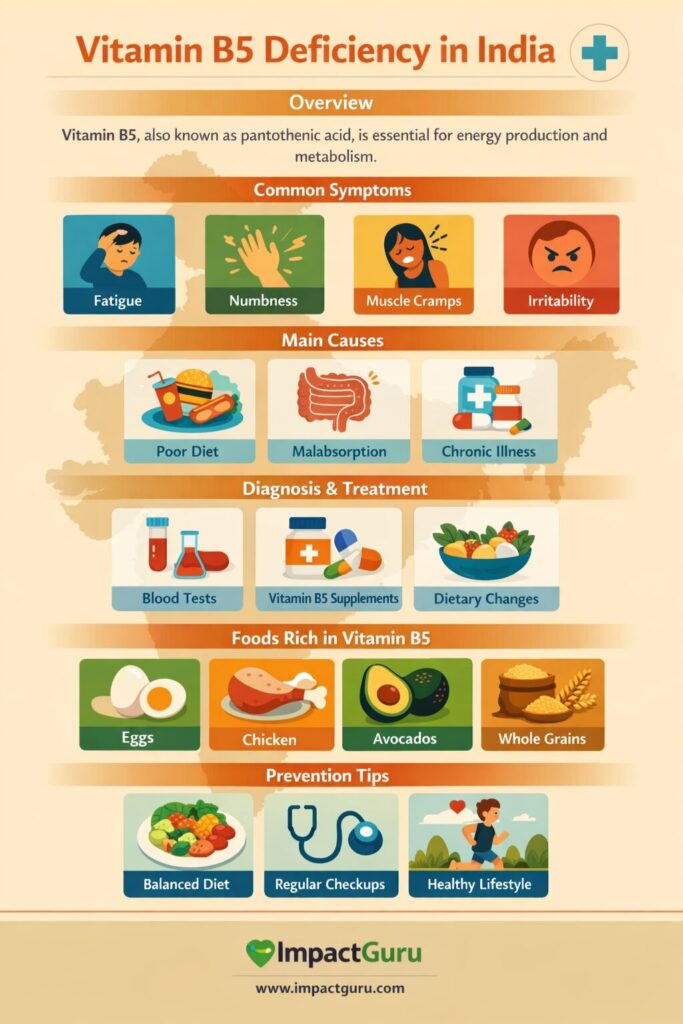
Vitamin B5, or pantothenic acid, is a water-soluble B vitamin. It is essential for energy production at the cellular level. It forms a key part of Coenzyme A, which helps convert everyday Indian staples like roti, dal, rice, and healthy fats into usable energy. Beyond metabolism, Vitamin B5 supports cortisol production, nerve function, and skin barrier health.
How Common Is Vitamin B5 Deficiency in India?
Vitamin B5 deficiency in India is considered rare because pantothenic acid is widely present in legumes, whole grains, eggs, and vegetables. However, reduced dietary diversity, reliance on polished rice and refined flour (maida), chronic malnutrition, and alcohol dependence may increase risk. Mild or subclinical deficiency can go unnoticed due to non-specific symptoms.
Quick Answer: Vitamin B5 deficiency in India is uncommon but possible, especially in people with poor dietary diversity or chronic malnutrition. Since pantothenic acid is found in many foods, severe deficiency is rare. However, mild or subclinical cases may remain undiagnosed due to vague symptoms like fatigue or nerve discomfort.
Read More : Complete Guide to Vitamin Deficiencies in India
What Are the Early Signs of Pantothenic Acid Deficiency?
Vitamin B5 deficiency symptoms are often non-specific, which makes early detection difficult. Because pantothenic acid plays a central role in energy metabolism and nerve function, initial symptoms may appear subtle.
Early Symptoms
- Persistent fatigue
- Irritability or mood changes
- Headaches
- Difficulty concentrating
These signs are commonly mistaken for stress or lack of sleep.
Moderate Symptoms
- Burning Feet Syndrome (Grierson-Gopalan Syndrome)
- Tingling or numbness in the hands and feet
- Muscle cramps
- Sleep disturbances
Burning sensations in the feet, especially at night, are among the most characteristic signs historically linked to pantothenic acid deficiency in India.
Severe Complications (Rare)
Severe deficiency is uncommon but may lead to:
- Significant nerve dysfunction
- Hormonal imbalance
- Extreme weakness
- Gastrointestinal disturbances
In most cases, symptoms improve with timely nutritional correction.
Quick Answer: Early signs of Vitamin B5 deficiency include fatigue, irritability, and headaches. As the deficiency progresses, symptoms such as burning feet, numbness, and sleep disturbances may develop. Severe complications are rare but can involve nerve dysfunction and weakness. Because symptoms are non-specific, clinical evaluation is important for accurate diagnosis.
Causes of Vitamin B5 Deficiency in India
Vitamin B5 deficiency in India is uncommon but can occur under specific nutritional and medical conditions. Since pantothenic acid is widely available in foods, deficiency usually results from broader dietary or health-related issues.
1. Poor Dietary Diversity
Diets lacking variety, especially those low in whole grains, pulses, vegetables, and protein sources, may reduce overall B-vitamin intake.
2. Highly Processed and Refined Foods
The growing consumption of polished rice, refined flour (maida), packaged snacks, and ultra-processed foods in urban India may lower micronutrient density, including pantothenic acid.
3. Chronic Alcoholism
Long-term alcohol use interferes with nutrient absorption and metabolism, increasing the risk of multiple vitamin deficiencies in India, including B-complex deficiencies.
4. Malabsorption Disorders
Conditions such as chronic gastrointestinal disease or prolonged diarrhea can impair nutrient absorption.
5. Long-Term Illness or Severe Malnutrition
Hospitalized patients, individuals with prolonged infections, or those experiencing severe malnutrition are at higher risk of nutrient deficiency in India, including Vitamin B5 deficiency.
Who Is at Risk of Vitamin B5 Deficiency?
Although rare in the general population, certain groups in India may be more vulnerable:
- Pregnant and lactating women – Increased nutritional demands may raise risk if diet is inadequate.
- Elderly individuals – Reduced appetite and absorption efficiency can contribute to deficiencies.
- People with alcohol dependence – Higher likelihood of poor nutrient absorption and intake.
- Individuals with gastrointestinal disorders – Conditions affecting the gut can impair the absorption of water-soluble vitamins.
- Severely malnourished populations – Particularly in low-income or medically vulnerable groups.
Identifying at-risk individuals early supports preventive dietary planning and timely medical care.

Which Indian Foods Are Rich in Vitamin B5?
Pantothenic acid (Vitamin B5) is widely distributed in foods, which is why deficiency is rare. However, adequate intake depends on dietary diversity and cooking methods.
Vegetarian Sources (Common in Indian Diets)
- Whole grains (brown rice, whole wheat atta, millets)
- Mushrooms
- Lentils (masoor, moong, toor dal)
- Peanuts
- Broccoli
Non-Vegetarian Sources
- Eggs
- Chicken
- Fish
- Organ meats (especially liver)
Because Vitamin B5 is a water-soluble vitamin, prolonged boiling, high-heat cooking, and discarding cooking water can reduce its content. Steaming, pressure-cooking with minimal water, and consuming whole grains instead of polished rice help preserve nutrient levels.
Quick answer: Indian foods rich in Vitamin B5 include whole grains, lentils, peanuts, mushrooms, eggs, chicken, and fish. Because pantothenic acid is water-soluble, excessive boiling or refining grains can reduce its levels. Eating diverse, minimally processed foods helps maintain adequate intake and prevents deficiency.
What Is the Daily Requirement of Vitamin B5 for Adults?
The recommended intake of Vitamin B5 is expressed as Adequate Intake (AI) because precise deficiency thresholds are rare.
Recommended Daily Intake
- Adults (19+ years): 5 mg per day
- Pregnant women: 6 mg per day
- Lactating women: 7 mg per day
- Children (4–8 years): 3 mg per day
- Adolescents (14–18 years): 5 mg per day
These recommendations are aligned with international dietary reference intakes and broadly reflected in Indian nutrition guidance.
Because pantothenic acid is present in many foods, most individuals meeting calorie needs through a balanced diet achieve adequate intake.
Quick Answer: The daily requirement of Vitamin B5 for adults is approximately 5 mg per day. Pregnant women require about 6 mg, and lactating women need around 7 mg daily. These intake levels are based on Adequate Intake recommendations from global nutrition authorities and are usually met through a balanced diet.
How Is Vitamin B5 Deficiency Diagnosed in India?
Diagnosing Vitamin B5 deficiency in India can be challenging because symptoms are often non-specific and overlap with other vitamin deficiencies in India, such as B12 or iron deficiency.
1. Clinical Evaluation
Doctors assess symptoms like fatigue, burning feet, numbness, irritability, and dietary history. A detailed nutrition assessment is crucial.
2. Dietary & Lifestyle Assessment
Evaluation includes:
- Dietary diversity
- Intake of whole grains and protein
- Alcohol consumption
- Chronic illness history
3. Laboratory Testing
Specific blood tests for pantothenic acid are rarely performed in routine practice. Instead, physicians may:
- Rule out Vitamin B12 deficiency
- Check complete blood count (CBC)
- Assess iron levels
- Evaluate overall nutritional markers
Because isolated Vitamin B5 deficiency is rare, diagnosis often depends on clinical suspicion combined with improvement after supplementation.
Quick Answer: Vitamin B5 deficiency in India is usually diagnosed through clinical evaluation rather than specific blood tests. Doctors assess symptoms, dietary history, and rule out other deficiencies like B12 or iron deficiency. In many cases, improvement after dietary correction or B-complex supplementation supports the diagnosis.
How Is Vitamin B5 Deficiency Treated in India?
Treatment focuses on correcting the underlying nutritional gap and addressing contributing conditions.
1. Dietary Correction
Increasing intake of
- Whole grains
- Lentils and legumes
- Eggs and lean meats
- Nuts and seeds
Improving overall dietary diversity is essential in preventing broader nutrient deficiency in India.
2. Supplementation
Mild cases may be treated with oral B-complex supplements.
Severe or hospitalised patients may require supervised nutritional therapy.
3. Treating Underlying Causes
- Managing alcohol dependence
- Treating gastrointestinal disorders
- Addressing severe malnutrition
While most Vitamin B5 deficiency cases are manageable through diet and supplements, severe malnutrition or prolonged illness may require hospitalisation and nutritional therapy. For families facing broader medical complications or high treatment costs, medical fundraising has become an accessible option in India.
Platforms like ImpactGuru allow individuals to fundraise online for medical treatment through verified donation campaigns.

Conclusion
Vitamin B5 Deficiency in India is uncommon but not impossible. While pantothenic acid is widely available in both vegetarian and non-vegetarian foods, reduced dietary diversity, processed food consumption, chronic illness, and malnutrition can increase risk. Because symptoms such as fatigue, irritability, or burning sensations in the feet are non-specific, the condition may go unnoticed without proper clinical evaluation.
Ensuring a balanced diet rich in whole grains, lentils, nuts, eggs, and lean proteins remains the most effective preventive strategy. In cases linked to broader nutrient deficiency in India, early diagnosis and timely nutritional correction are essential. Awareness is important especially as modern dietary habits continue to shift away from traditional, nutrient-dense meals.
FAQs
It’s a lack of pantothenic acid (Vitamin B5), which affects energy production and metabolism.
Fatigue, irritability, numbness, muscle cramps, and digestive issues.
Through medical history, symptoms, and blood tests checking Vitamin B5 levels.
With dietary changes and B5 supplements as advised by a doctor.
Eggs, dairy, fish, poultry, legumes, and whole grains.