


Table of Contents
- Quick Summary
- Introduction
- Why Selenium Is Important for the Body
- What Causes Selenium Deficiency in Indian Adults?
- Early Signs of Selenium Deficiency in India
- Selenium Deficiency Complications in Chronic Illness Patients
- How Is Selenium Deficiency Diagnosed in India?
- Selenium Deficiency Treatment in India
- Cost of Selenium Deficiency Treatment in India
- Selenium-Rich Foods in the Indian Diet
- Conclusion
- FAQs
Quick Summary
- Selenium deficiency in India is uncommon but can occur in regions with selenium-poor soil and in individuals with chronic illnesses or malabsorption disorders.
- Selenium deficiency symptoms include fatigue, weakened immunity, thyroid dysfunction, and muscle weakness.
- Low selenium levels are diagnosed through clinical evaluation and a selenium blood test in India.
- Early detection and appropriate selenium deficiency treatment in India help prevent long-term cardiac, thyroid, and immune complications.
Introduction
Selenium deficiency in India is relatively rare compared to other micronutrient deficiencies, but it remains clinically relevant in specific populations. Selenium is a trace mineral essential for antioxidant defence, thyroid hormone metabolism, and immune system regulation.
Although required in very small amounts, persistently low selenium levels may contribute to thyroid dysfunction, impaired immunity, and, in severe cases, cardiomyopathy. Understanding selenium deficiency causes, symptoms, and treatment options is important for timely management.
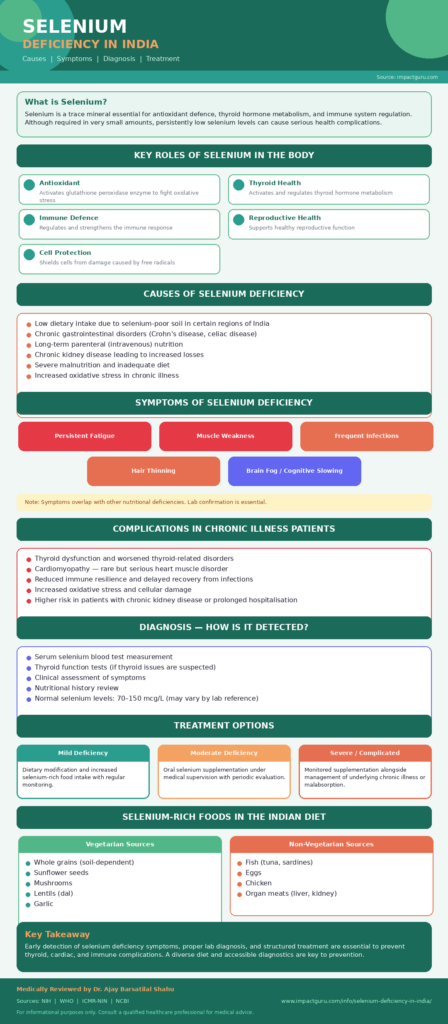
Why Selenium Is Important for the Body
Selenium plays a key physiological role in:
- Antioxidant enzyme function (glutathione peroxidase)
- Thyroid hormone activation and metabolism
- Immune response regulation
- Protection against oxidative stress
- Reproductive health
Because selenium works closely with iodine in thyroid hormone regulation, deficiency may worsen thyroid-related disorders.
What Causes Selenium Deficiency in Indian Adults?
Selenium content in food largely depends on soil concentration. Certain regions may have selenium-poor soil, reducing dietary intake.
Selenium Deficiency Causes Include:
- Low dietary intake due to soil deficiency
- Chronic gastrointestinal disorders (Crohn’s disease, celiac disease)
- Long-term parenteral nutrition
- Chronic kidney disease
- Severe malnutrition
- Increased oxidative stress in chronic illness
Understanding what causes selenium deficiency in Indian adults helps guide both dietary and medical interventions.
Early Signs of Selenium Deficiency in India
The early signs of selenium deficiency in India may be subtle and nonspecific.
Common Selenium Deficiency Symptoms:
- Persistent fatigue
- Muscle weakness
- Frequent infections
- Hair thinning
- Brain fog or cognitive slowing
Because symptoms overlap with other nutritional deficiencies, laboratory confirmation is important.
Selenium Deficiency Complications in Chronic Illness Patients
In patients with chronic illness, prolonged low selenium levels may contribute to:
- Thyroid dysfunction
- Cardiomyopathy (rare but serious)
- Reduced immune resilience
- Increased oxidative stress
- Delayed recovery from infections
Individuals with chronic kidney disease or prolonged hospitalisation are at higher risk.
How Is Selenium Deficiency Diagnosed in India?
Selenium Blood Test in India
Diagnosis involves:
- Serum selenium measurement
- Thyroid function tests (if indicated)
- Clinical assessment of symptoms
- Nutritional history review
Normal selenium levels typically range between 70–150 mcg/L (may vary by lab reference). Low levels confirm deficiency when correlated with clinical findings.

Selenium Deficiency Treatment in India
Treatment depends on the severity of the deficiency and the underlying medical condition. Management focuses on restoring optimal selenium levels while addressing contributing health factors.
Mild Deficiency
Mild selenium deficiency is often corrected through dietary modification and increased intake of selenium-rich foods. Regular monitoring ensures levels return to the normal range.
Moderate Deficiency
Moderate cases typically require oral selenium supplementation under medical supervision. Periodic evaluation helps ensure safe correction and prevents excessive intake.
Severe or Complicated Cases
Patients with chronic illness or malabsorption may require monitored supplementation and management of underlying conditions.
Cost of Selenium Deficiency Treatment in India
The cost varies depending on supplementation type, diagnostic tests, and whether hospitalisation is required. Basic supplementation is generally affordable, but expenses may increase in chronic illness patients requiring prolonged care.
In cases where extended treatment or hospitalisation becomes necessary, financial constraints may delay care. Within India’s healthcare ecosystem, crowdfunding platforms such as ImpactGuru help families manage unexpected medical expenses and access timely treatment.
Selenium-Rich Foods in the Indian Diet
Vegetarian Sources:
- Whole grains (depending on soil content)
- Sunflower seeds
- Mushrooms
- Lentils
- Garlic
Non-Vegetarian Sources:
- Fish
- Eggs
- Chicken
- Organ meats
Dietary diversity improves selenium intake and reduces deficiency risk.

Conclusion
Selenium deficiency in India, though less common than other micronutrient deficiencies, can have clinically significant effects when present, particularly in individuals with chronic illness or compromised nutritional status. Early identification of selenium deficiency symptoms, appropriate laboratory diagnosis, and structured selenium deficiency treatment in India are essential to prevent thyroid, cardiac, and immune-related complications.
Strengthening nutritional awareness, improving dietary diversity, and ensuring accessible diagnostic services remain central to prevention and long-term health stability.
FAQs
Selenium deficiency occurs when the body does not get enough selenium, an essential mineral needed for immunity, thyroid function, and antioxidant protection.
Common symptoms include fatigue, muscle weakness, hair loss, and weakened immunity.
Selenium helps protect cells from damage, supports thyroid hormone production, and strengthens the immune system.
Low selenium levels in soil and poor dietary intake can lead to deficiency in some populations.
Eating selenium-rich foods like nuts, fish, eggs, and whole grains can help maintain healthy selenium levels.
Sources:
National Institutes of Health (NIH) – Selenium Fact Sheet
World Health Organization (WHO) – Trace Elements in Human Nutrition
Indian Council of Medical Research (ICMR-NIN) – Nutrient Requirements for Indians
National Centre for Biotechnology Information (NCBI) – Selenium and Human Health