

Table of Contents
- Quick Summary
- Introduction
- Understanding Post-Discharge Recovery
- Hidden Medical Expenses After Discharge
- Non-Medical Costs That Impact Recovery
- Emotional and Psychological Costs of Post-Discharge Recovery
- Why Insurance Coverage Often Has Limits After Discharge
- Post-Discharge Recovery Challenges and Costs for Cancer Patients
- The Role of Online Crowdfunding During Recovery
- Conclusion
- FAQs
Quick Summary
- Post-discharge recovery costs often begin after hospital bills are settled and can continue for weeks or months through medicines, follow-up care, and home-based support.
- Recovery involves both medical and non-medical expenses, many of which are not clearly explained at the time of discharge.
- Emotional stress and caregiver burnout can affect recovery outcomes just as much as physical health.
- Health insurance is essential for hospitalisation, but may have limited coverage for long-term recovery needs.
- Cancer patients often face extended recovery periods that require ongoing care and sustained financial planning.
- Families in India commonly rely on savings, community support, and flexible financial options to manage recovery expenses.
Introduction
Hospital discharge is often seen as the end of a medical crisis. Once the patient leaves the hospital, families feel a sense of relief, believing that the most difficult and expensive phase is behind them. In reality, discharge marks the beginning of a long and often financially demanding recovery journey shaped by post-discharge recovery costs.
The focus on hospital bills alone hides the many expenses that quietly accumulate over weeks or months. These overlooked costs can place significant pressure on families who are already emotionally and financially drained, making recovery far more complex than anticipated.
Understanding Post-Discharge Recovery
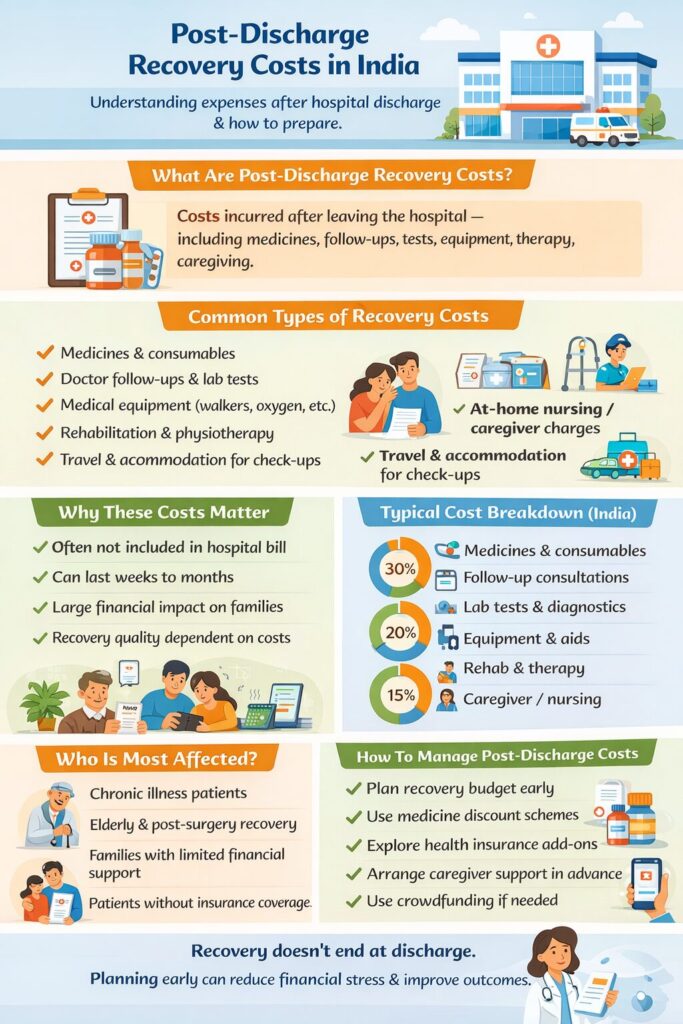
For many patients, recovery does not end when treatment stops or discharge papers are signed. Instead, it enters a phase that is less visible but equally important. Post-discharge recovery includes managing medications, attending follow-up consultations, undergoing additional tests, continuing physiotherapy, and adjusting daily routines to support healing.
This phase also shifts responsibility. While hospitals manage care during admission, families take on the role of coordinators after discharge, handling medical decisions, logistics, and expenses. Recovery timelines vary widely depending on the illness, age of the patient, and treatment intensity. Surgical patients, accident survivors, elderly individuals, and cancer patients often face longer, more complex recovery periods that extend for weeks or even months.
Understanding what recovery truly involves helps families prepare not just medically, but financially and emotionally as well.
Quick answer: Post-discharge recovery refers to the phase after a patient leaves the hospital, during which the body continues to heal and requires ongoing medical care, monitoring, and support, often at home.
Hidden Medical Expenses After Discharge
Once a patient returns home, medical spending rarely stops. In fact, many of the highest recovery-related costs begin after discharge and continue quietly over time. These expenses are often underestimated because they do not appear as a single hospital bill, but as multiple recurring payments spread across weeks or months.
Medicines and Long-Term Prescriptions
Post-discharge care often involves multiple medicines—pain management, antibiotics, supplements, or long-term drugs for chronic conditions. For patients recovering from major surgeries or cancer treatment, medication costs can become a steady monthly expense that families must manage alongside regular household spending.
Follow-Up Consultations and Diagnostic Tests
Recovery typically requires repeat visits to doctors and specialists. Blood tests, scans, and monitoring reports are common, especially when complications need to be ruled out. Each consultation and diagnostic test adds to the overall cost of recovery, even when the initial treatment has been completed.
Home Nursing, Physiotherapy, and Medical Equipment
Many patients need professional support at home. Nursing care, physiotherapy sessions, wound care, and rehabilitation services are essential for safe recovery. In addition, families may need to rent or purchase medical equipment such as oxygen support, hospital beds, walkers, or monitoring devices, all of which increase post-hospitalization expenses.
These costs are medically necessary but rarely discussed in detail at the time of discharge, leaving families unprepared for their financial impact.
Quick answer: Hidden medical expenses after discharge include ongoing medicines, follow-up consultations, diagnostic tests, home nursing or physiotherapy, and medical equipment needed for recovery at home.

Read More : Nipah Virus in India 2026: Symptoms, Spread, Risks & Prevention
Read More : Best NGOs in Kerala: How to Identify, Donate, & Help
Non-Medical Costs That Impact Recovery
While medical bills are easier to identify, non-medical expenses often place equal, if not greater, pressure on families during recovery. These costs are rarely discussed in discharge briefings, yet they directly affect a patient’s ability to heal comfortably and consistently.
Nutrition, Special Diets, and Supplements
Recovery frequently requires dietary changes. High-protein meals, supplements, immunity-boosting foods, or condition-specific diets are often prescribed but not covered by insurance. Over time, these nutrition-related expenses can significantly increase household spending.
Transportation and Repeated Hospital Visits
Post-discharge care involves frequent trips for follow-up consultations, diagnostic tests, or therapy sessions. For families living far from treatment centres, travel costs, fuel, public transport, or accommodation near hospitals can add up quickly.
Loss of Income and Caregiver-Related Costs
Many patients are unable to return to work immediately after discharge. In some cases, a family member also reduces working hours or stops working altogether to provide care. This loss of income, combined with rising expenses, creates a financial gap that is difficult to manage during recovery.
These non-medical costs may not appear on hospital bills, but they strongly influence both financial stability and the pace of recovery.
Quick answer: Non-medical recovery costs after discharge include special nutrition, transportation for follow-up visits, accommodation near hospitals, and loss of income for patients or caregivers.
Emotional and Psychological Costs of Post-Discharge Recovery
Recovery after discharge is not only physical; it carries a significant emotional and psychological toll for both patients and caregivers. The sudden shift from constant medical supervision to managing recovery at home can create anxiety, fear of complications, and uncertainty about healing progress.
Patients may experience stress related to pain management, slow recovery, or concerns about returning to normal life. For those recovering from serious illnesses or cancer treatment, emotional fatigue, mood changes, and fear of recurrence are common. Caregivers, meanwhile, often face burnout as they juggle medical responsibilities, household duties, and financial pressures.
These psychological challenges can directly affect recovery outcomes. Stress and emotional exhaustion may delay healing, reduce treatment adherence, and increase the overall burden on families, making emotional support just as important as medical care during this phase.
Quick answer: The emotional costs of post-discharge recovery include anxiety, stress, fear of complications, caregiver burnout, and mental fatigue, all of which can impact healing and decision-making.
Why Insurance Coverage Often Has Limits After Discharge
Health insurance plays a vital role in managing hospitalisation costs and protecting families from large, sudden medical bills. However, many insurance policies are designed primarily around inpatient care, which means coverage naturally changes once a patient is discharged.
Post-discharge recovery involves ongoing needs such as medicines, follow-up consultations, diagnostic tests, physiotherapy, home nursing, and rehabilitation support. While some policies offer post-hospitalisation benefits, these are often time-bound, capped, or applicable only to specific expenses. In addition, reimbursement-based coverage may require families to initially pay out of pocket while claims are processed.
These limitations do not reduce the importance of insurance, but they explain why recovery-related expenses can still create financial pressure. Understanding what insurance supports and where it pauses helps families plan recovery more realistically and avoid unexpected stress.
Quick answer: Insurance coverage often has limits after discharge because most policies focus on inpatient treatment, while recovery-related needs like medicines, follow-ups, home care, and rehabilitation may have caps or exclusions.
Post-Discharge Recovery Challenges and Costs for Cancer Patients
For cancer patients, discharge from the hospital rarely signals the end of treatment. Recovery after cancer therapy is often prolonged, unpredictable, and physically demanding, extending well beyond the hospital stay. Even when active treatment phases pause, patients may continue to require close medical monitoring and supportive care.
Post-discharge recovery for cancer patients commonly involves ongoing medications, nutritional support, follow-up scans, blood tests, and repeated consultations to assess treatment response and manage side effects. Fatigue, weakened immunity, pain, and emotional stress can persist for months, making everyday functioning difficult. Many patients also need physiotherapy or supportive therapies to regain strength and mobility.
These extended recovery needs translate into sustained expenses over time. Because recovery timelines vary and relapses or complications cannot always be predicted, families often face uncertainty, both medically and financially, long after discharge.
Quick answer: Cancer patients face prolonged post-discharge recovery challenges such as ongoing medications, nutritional needs, frequent monitoring, physical fatigue, emotional stress, and extended medical expenses that continue beyond hospital treatment.
The Role of Online Crowdfunding During Recovery
Post-discharge recovery often involves ongoing costs that are known but not always planned for in advance. Instead of waiting until savings are depleted after discharge, some families now fundraise online earlier in the treatment journey to prepare for recovery costs such as medicines, follow-up tests, home nursing, nutrition, and rehabilitation.
By using online crowdfunding platforms and online crowdfunding sites for treatment expenses, patients can raise donations online in a more organised and less stressful way. This early preparation helps families manage recovery periods that may extend beyond insurance coverage or personal savings.
In India, families also use crowdfunding donation efforts to plan for recovery, especially when care continues long after treatment ends, as in many cancer cases. Starting early helps patients manage ongoing needs such as medicines, nutrition, and rehabilitation without constant financial stress. While online crowdfunding platforms do not replace insurance, using them ahead of time can reduce pressure during recovery and allow families to focus on healing.
Quick answer: Families use online crowdfunding during recovery to manage post-discharge expenses such as medicines, follow-up care, home nursing, and extended support, especially when savings or insurance coverage are limited.

Conclusion
Hospital discharge may signal the end of active treatment, but it is not the end of medical or financial responsibility. Recovery unfolds over time, bringing with it ongoing care needs, emotional adjustments, and expenses that are often overlooked. Understanding post-discharge recovery costs helps families prepare more realistically, ask the right questions, and avoid being caught off guard during an already vulnerable period.
By recognising recovery as a critical phase of treatment, not an afterthought, patients and caregivers can make informed decisions, seek timely support, and focus on healing rather than uncertainty. Awareness, preparation, and community support together can make the recovery journey more manageable and less overwhelming.
FAQs
These are expenses incurred after leaving the hospital, including medicines, follow-ups, tests, therapy, equipment, and caregiving.
Because they are often not included in the hospital bill and can add significant financial burden during the healing period.
Common costs include medicines, lab tests, doctor visits, medical equipment, physical therapy, at-home nursing, and travel for check-ups.
Recovery costs can continue from a few weeks to several months depending on the illness or surgery.
Planning a recovery budget beforehand, using insurance coverage, accessing discounts, arranging caregiving support, and exploring crowdfunding can help reduce the financial impact.