
Table of Contents
- Quick Takeaways
- Introduction
- Why Oxygen Donation Matters?
- The Hidden Cost of Oxygen for Patients
- Why Families Struggle to Find Support with Oxygen?
- Oxygen Donation Through Crowdfunding: How It Works
- How Oxygen Donation Works in India?: A Step-by-Step Guide
- How Crowdfunding Supports Oxygen Donation?
- Conclusion
- FAQs
Quick Takeaways
- Oxygen donation plays a critical role in saving lives during medical emergencies by ensuring timely access to medical-grade oxygen for patients.
- Oxygen donation in India works through medical crowdfunding platforms, NGO-led oxygen banks, hospitals, and government relief channels.
- Crowdfunding enables rapid emergency oxygen support by pooling small contributions and disbursing funds quickly to verified hospitals or suppliers.
- Donors can support oxygen supply for patients either by contributing funds or by donating physical equipment like cylinders and concentrators.
- Selecting the right oxygen donation channel based on urgency and impact can significantly improve patient outcomes
Introduction
There are moments when the value of something as invisible as oxygen becomes painfully clear. A breath, something we take for granted, suddenly turns into a lifeline. For patients facing respiratory illness, trauma, or post-surgical complications, oxygen is not supportive care; it is survival.
In India, access to emergency oxygen often depends on how quickly help can reach the patient. Today, multiple platforms enable oxygen donation, including medical crowdfunding platforms, online crowdfunding platforms, NGO-run oxygen banks, and hospital or government-linked initiatives. Each works differently and serves different needs.
This blog explains why oxygen donation matters, how oxygen donation works during medical emergencies, and compares the best platforms for donating oxygen in India based on speed, transparency, and impact.
Quick Answer: What is oxygen donation?
Oxygen donation refers to providing medical-grade oxygen support, such as cylinders, concentrators, or funds, to patients and hospitals during medical emergencies.
Why Oxygen Donation Matters?
India’s healthcare system faces a paradox. While medical expertise and advanced treatments are expanding, access to basic life-support resources like oxygen remains unequal.
Oxygen shortages don’t only occur during national emergencies. They happen every day in:
- Smaller hospitals and rural health centres
- ICUs running at full capacity
- Emergency wards treating accident victims
- Homes where patients are on long-term oxygen therapy
Oxygen costs can become overwhelming far quicker than most families expect. Refills, maintenance, and ICU usage add up rapidly, often draining savings in a matter of days. At that point, families are forced to make decisions no one should have to make during a medical crisis.
Oxygen donation steps in at this critical moment, acting as a bridge between urgent medical need and continued access to care.
Quick Answer: Oxygen donation in India is critical due to uneven access to medical oxygen across hospitals, rural clinics, and home-care settings. Rising oxygen costs and limited infrastructure make emergency oxygen help essential for patients facing respiratory illnesses, trauma, or post-surgical complications.
The Hidden Cost of Oxygen for Patients
Oxygen is often one of the most expensive recurring medical necessities. A single patient may require:
- Multiple oxygen cylinders per day
- Continuous flow oxygen for weeks
- ICU-grade oxygen support post-surgery
- Portable oxygen for home recovery
For low-income and middle-income families, these costs accumulate faster than expected. And unlike medications that can sometimes be delayed, oxygen cannot wait. Oxygen donation directly addresses this gap.
Why Families Struggle to Find Support with Oxygen?
Even when oxygen is physically available in a city, patients often struggle to access medical oxygen support for two main reasons:
- Infrastructure at Home: Many chronic patients require long-term oxygen therapy at home. High-quality oxygen concentrators are expensive to buy and maintain, leaving low-income families with few options.
- The Hidden Costs: It isn’t just the oxygen itself; it is the cost of the flowmeters, masks, humidifiers, and the electricity or transportation required to keep the system running.
The Financial Burden
The financial strain of a medical emergency is often the biggest barrier for families who need a donation for medical treatment. For an average middle-class or lower-income family, the sudden need for medical oxygen support can deplete life savings in days. When hospital bills are coupled with the daily rent of oxygen equipment, the debt becomes insurmountable.

Oxygen Donation Through Crowdfunding: How It Works
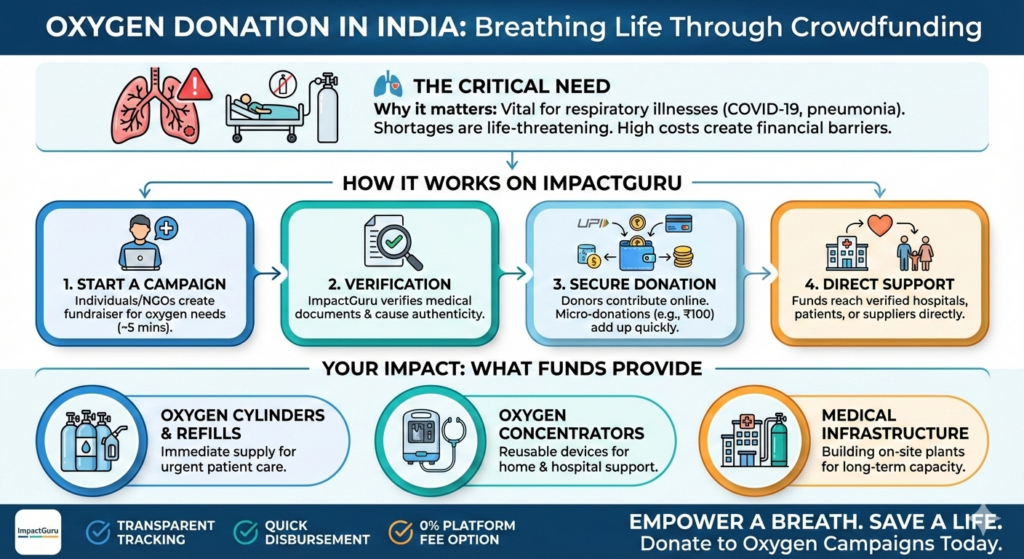
Crowdfunding transforms individual urgency into collective action, allowing families to fundraise online during medical emergencies. Instead of one family bearing the burden alone, thousands of people come together to raise donations online and ensure uninterrupted oxygen access.
From a platform perspective, oxygen donation typically supports:
- Emergency oxygen procurement for hospitals
- Oxygen concentrators for long-term patients
- Refilling oxygen cylinders for home care
- ICU oxygen costs during critical phases
Each donation, whether small or large, moves funds where they are needed most, in real-time. Transparency, verification, and speed are central to this process because when it comes to oxygen, delays cost lives.
Quick Answer: During medical emergencies, oxygen donation works by sourcing verified oxygen cylinders, concentrators, or funds and deploying them through hospitals, NGOs, or medical crowdfunding platforms. This ensures a rapid oxygen supply for patients, as delays can become life-threatening.
Where to Donate Oxygen in India?
Navigating how oxygen donation works in India involves choosing a platform that aligns with your resources, whether you are providing financial aid or physical hardware. Here is a breakdown of the best avenues to provide medical oxygen support.
1. Medical Crowdfunding Platforms
- Best for: Speed, verified emergencies, and hospital-linked oxygen needs.
- Primary Platforms: ImpactGuru, Milaap, and Ketto.
- Strengths: High transparency with usage tracking and fast fund disbursal.
These platforms are the gold standard for emergency oxygen support for hospitals and individual patients. They allow donors to contribute funds specifically for oxygen supply for patients in critical condition.
2. NGO-Led Oxygen Banks
- Best for: Physical equipment reuse and community-level impact.
- Primary Platforms: Hemkunt Foundation and Khalsa Aid.
- Strengths: Excellent local reach and direct reuse of physical assets.
If you are looking for how to donate oxygen cylinders for patients directly, NGOs are your best bet. These organizations manage “oxygen banks” where devices like concentrators are refurbished and circulated among those who cannot afford them.
3. Hospital-Linked Donation Programs
- Best for: Institution-specific infrastructure and long-term support.
- Primary Platforms: Direct portals of major institutions like AIIMS.
- Strengths: Direct institutional impact and infrastructure permanence.
Many large hospitals have established dedicated channels to accept oxygen donations to upgrade their internal piping or ICU capacity. This is ideal for donors who want to ensure their contribution stays within a specific facility to provide long-term emergency oxygen support for hospitals.
4. Government & Emergency Relief Channels
- Best for: Large-scale national crisis management and policy-driven aid.
- Primary Platforms: PM CARES Fund and the MyGov Self4Society portal.
- Strengths: Unmatched scale and coordination with the Ministry of Health.
During nationwide shortages, these channels coordinate the logistics of the oxygen donation in India on a massive scale, moving supplies across state lines to the areas of highest need.
Quick Answer: Where to donate oxygen in India?
The best platform for donating oxygen in India depends on urgency. Here are the recommendations:
- If you have a physical device, contact an NGO-led Oxygen Bank.
- If you want to help a specific patient immediately, use a Medical Crowdfunding Platform.
- If you are a corporate entity looking for long-term impact, look into Hospital-Linked Infrastructure Programs.
How Oxygen Donation Works in India?: A Step-by-Step Guide
The process typically follows a structured path to ensure that medical-grade equipment reaches the right patient at the right time.
- Sourcing & Procurement: Donations typically begin with either physical equipment (such as cylinders or concentrators) or funds used to procure them from certified manufacturers.
- Verification and Servicing: Before any equipment is deployed, it must be medical-grade and serviced. For those wondering how to donate oxygen cylinders for patients, it is vital to ensure the valves and pressure gauges are tested by a certified technician.
- Hospital and NGO Coordination: Trusted platforms and NGOs maintain a real-time database of hospital requirements. This ensures that oxygen donation during medical emergencies is directed to high-burden areas, such as rural clinics or overcrowded public wards—rather than sitting idle in a warehouse.
- Deployment and Tracking: Modern logistics allow donors to track where their equipment goes. Many online donation platforms now provide impact reports, showing which hospital or community “oxygen bank” received the support.
How Crowdfunding Supports Oxygen Donation?
The challenge of ensuring adequate oxygen supply for patients in India often boils down to a single issue: speed. Traditional funding mechanisms can be slow, but online crowdfunding platforms provide a vital lifeline during immediate emergencies. The synergy between rapid online fundraising and the critical need for oxygen has created a powerful, life-saving mechanism known as medical crowdfunding in India.
Bridging the Gap in Real-Time
Crowdfunding India addresses the exact points where the public health infrastructure often buckles: speed of response and access to immediate capital.
For families facing a sudden medical emergency, starting a campaign on platforms like ImpactGuru shows how to raise funds for medical treatment. This can help them with accessing funds for equipment rentals, hospital bills, and oxygen costs in emergencies.
This model of crowdfunding for patients removes the financial barrier that too often delays essential treatment. It transforms the act of giving into a direct transaction: your crowdfunding donation provides an immediate supply of oxygen when every second counts.
Transparency and Speed of Disbursement
One of the key benefits of using established online donation platforms and medical fundraising sites is the operational efficiency a successful fundraising platform can offer. These platforms are designed to:
- Verify Needs: They vet campaigns thoroughly to ensure the need is genuine, building trust with donors.
- Ensure Timely Fund Disbursement: Funds raised for an ImpactGuru fundraiser, for example, are typically released directly to the hospital or equipment supplier as soon as the medical invoice is verified. This ensures the money is used precisely for the intended oxygen supply for patients.

Conclusion
Oxygen can mean the difference between recovery and loss during a medical emergency. When access is delayed, even treatable conditions can turn critical. This is why oxygen donation plays such a vital role; it ensures that patients receive timely support when every minute matters.
Understanding how different oxygen donation platforms in India compare helps donors make informed decisions about where and how to contribute. Medical crowdfunding platforms enable rapid emergency response, NGO oxygen banks support equipment reuse at the community level, and hospital or government channels serve institution-specific and large-scale needs.
No single platform fits every situation. But choosing the right one, based on urgency, transparency, and reach, can significantly improve outcomes for patients.
Author’s Bio:
Navpreet Kaur is a Healthcare Research Analyst, creating educational and informational content focused on healthcare awareness, medical fundraising, and patient support in India.
FAQs
Oxygen donation refers to contributing oxygen cylinders, concentrators, or funds so organisations and hospitals can provide medical oxygen to patients in need, especially during shortages and emergencies like COVID-19.
Individuals, NGOs, hospitals, companies, and online donors can donate through verified fundraising platforms, NGO oxygen banks, or local relief efforts to support medical oxygen access across Indian states and cities.
Yes. Legitimate platforms and oxygen drives ensure donated oxygen equipment or funds are used to procure cylinders/concentrators and distribute them to hospitals or high-need patients in India.
Donations made via registered Indian NGOs for medical oxygen support may be eligible for tax deduction under Section 80G of the Income Tax Act, depending on the organisation’s certification.
Many groups coordinate supply chains, hospital partnerships, and local distribution networks to serve both urban and rural areas, making sure oxygen cylinders and concentrators reach diverse regions throughout India.