

Table of Contents
- Quick Summary
- Introduction
- What Are Mineral Deficiencies in India?
- Why Are Mineral Deficiencies So Common in India?
- Common Mineral Deficiencies in India – All 16 Minerals
- Symptoms of Mineral Deficiency in Adults and Children.
- Causes of Mineral Deficiency in India
- How Are Mineral Deficiencies Diagnosed in India? Tests, Labs & Costs
- Effects of Mineral Deficiency on Health
- How to Prevent Mineral Deficiency in India
- Conclusion
- FAQs
Quick Summary
- Mineral deficiencies in India are a widespread public health crisis; iron deficiency alone affects over 50% of women and 67% of children, according to NFHS-5 data, with calcium, iodine, and zinc deficiencies also widely reported across all age groups.
- Deficiencies develop silently. Chronic fatigue, muscle cramps, frequent infections, brittle bones, and poor concentration are early warning signs that are regularly dismissed as stress or ageing.
- India’s unique combination of phytate-rich staple diets, mineral-depleted agricultural soil, limited dietary diversity, and increased life-stage demands during pregnancy and childhood makes mineral deficiency risk significantly higher than in many other countries.Early blood testing, costing as little as ₹200 for a serum calcium test or ₹500 for an iron panel, can detect deficiencies before they progress into anaemia, bone disease, thyroid disorders, or nerve damage.
- Treatment ranges from affordable oral supplements to injectable iron infusions and, in severe cases, hospitalisation. Most deficiencies are fully reversible when caught early.
- For families managing the financial burden of serious mineral deficiency-related illness, medical crowdfunding platforms like ImpactGuru have helped thousands of Indian families raise funds for treatment online.
Introduction
Mineral deficiencies in India represent one of the country’s most persistent yet underdiagnosed nutritional challenges. Research published in The Lancet (2024) confirms that large proportions of the Indian population consume inadequate amounts of essential minerals, including iron and calcium. National Family Health Survey (NFHS-5) data make the scale even clearer; approximately 67% of Indian children and over 50% of women are anaemic, with iron deficiency identified as the leading cause.
Mineral deficiencies in India remain a major public health concern, affecting millions across different age groups due to poor diet and lifestyle factors. Addressing mineral deficiencies in India requires improved nutrition awareness, balanced diets, and better access to essential micronutrients.
Yet iron is only part of the picture.
- Calcium deficiency contributes to widespread bone loss across age groups.
- Iodine deficiency remains endemic in the Himalayan and sub-Himalayan regions.
- Zinc deficiency suppresses immunity in millions of children.
- Trace minerals like selenium, copper, and chromium, rarely discussed in public health conversations, quietly affect thyroid function, nerve health, and blood sugar regulation across the population.
What makes India’s mineral deficiency burden distinctive is not just the scale but the cause.
- Phytate compounds in staple grains like rice, wheat, and lentils bind to minerals and significantly reduce absorption.
- Decades of intensive farming have depleted the mineral content of the soil.
- Dietary patterns that rely heavily on cereals while underusing nuts, seeds, dairy, and diverse vegetables create consistent micronutrient gaps even in households that are otherwise well-fed.
This guide covers all 16 essential mineral deficiencies,
- major minerals including calcium, magnesium, potassium, phosphorus, sodium, and chloride;
- trace minerals including iron, iodine, zinc, copper, selenium, manganese, chromium, molybdenum, fluoride, and sulphur.
With dedicated sections on symptoms, diagnosis, test costs, treatment, and prevention for each.
For vitamin deficiencies, see → [Vitamin Deficiencies in India] or explore the full → [Nutrient Deficiencies in India — Complete Guide] covering both vitamins and minerals together
What Are Mineral Deficiencies in India?
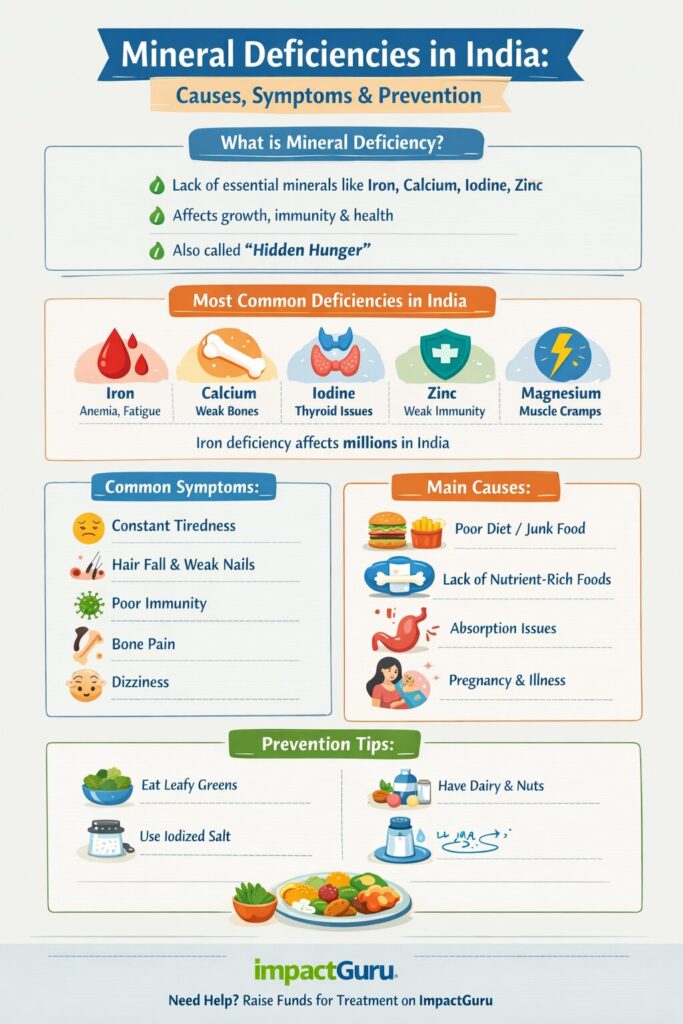
Mineral deficiencies occur when the body consistently absorbs less of an essential mineral than it needs for normal function. In India, both macrominerals like calcium and iron and trace minerals like iodine, zinc, and selenium are commonly deficient due to phytate-rich diets, mineral-depleted soil, and limited dietary diversity. Unlike vitamins, several minerals can cause toxicity if taken in excess, making diagnosis before supplementation essential.
Minerals are naturally occurring elements found in soil and water that enter the body through the food we eat, the animals that graze on mineral-rich land, and the water we drink. Unlike vitamins, minerals are inorganic; they cannot be synthesised by plants or animals and must be obtained entirely from the environment. When the body consistently absorbs less of a mineral than it needs to function, a deficiency develops.
Even in small amounts, minerals are essential to nearly every biological process. They:
- Build and maintain bone structure
- Regulate fluid and electrolyte balance
- Enable nerve signalling
- Support immune defence
- Drive metabolic reactions
- Regulate hormones, including insulin and thyroid hormones
How Are Minerals Classified
Minerals are divided into two broad categories based on how much the body requires:
Macrominerals (required in larger amounts — >100 mg/day):
- Calcium
- Magnesium
- Phosphorus
- Potassium
- Sodium
- Chloride
These support bone structure, fluid balance, and muscle and nerve function.
Trace Minerals (required in very small amounts):
- Iron
- Iodine
- Zinc
- Copper
- Selenium
- Manganese
- Chromium
- Molybdenum
- Fluoride
- Sulphur
Despite small quantities, deficiencies in these minerals cause some of the most serious health conditions in India, from iron-deficiency anaemia to iodine-related thyroid disorders.
What Makes Mineral Deficiency Different From Vitamin Deficiency
Unlike water-soluble vitamins that the body excretes when in excess, several minerals accumulate in the body and can become toxic if over-supplemented.
- Iron, selenium, potassium, and fluoride all have narrow safe ranges
- Both deficiency and excess can cause serious complications
This is why mineral supplementation should always be based on confirmed blood tests and medical guidance, not self-prescription.
Why Are Mineral Deficiencies So Common in India?
Mineral deficiencies are common in India due to phytate compounds in staple grains that block iron, zinc, and calcium absorption; mineral-depleted soil from intensive farming; geography-specific factors including iodine-poor soil in Himalayan regions and selenium-depleted soil in eastern India; excessive electrolyte loss in hot climates; and increased mineral demands during pregnancy and childhood that are rarely met by typical Indian diets.
India’s high burden of mineral deficiency is not simply a matter of poverty or food insecurity. It is driven by a specific combination of dietary, agricultural, and environmental factors that affect households across income levels, urban and rural, vegetarian and non-vegetarian alike.
1. The Phytate Factor — India’s Most Underappreciated Absorption Barrier
The most important driver of mineral deficiency in India is not intake, but absorption.
- Whole grains, lentils, and pulses contain phytates (phytic acid)
- Phytates bind to iron, zinc, calcium, and magnesium
- This prevents minerals from being absorbed into the bloodstream
This means even nutritionally adequate diets may deliver less usable minerals than expected.
Vegetarian diets are especially affected due to:
- Lower bioavailability of plant-based minerals
- Additional phytate interference
Traditional solutions (often overlooked today):
- Soaking
- Sprouting
- Fermenting (idli, dosa batter, sprouted moong)
These significantly improve mineral absorption.
2. Soil Nutrient Depletion
Decades of intensive farming have reduced the mineral content in Indian soil.
- Fertilisers restore nitrogen, phosphorus, and potassium
- But do not replenish trace minerals like selenium, zinc, iodine
Result:
Even nutritious foods may contain lower mineral density.
This is a structural issue that diet alone cannot fully correct.
3. India-Specific Environmental Factors
Certain mineral deficiencies are strongly linked to geography:
Iodine:
- Himalayan & sub-Himalayan regions have iodine-poor soil
- Endemic deficiency persists despite iodised salt
Selenium:
- Soil-dependent mineral
- Low levels in eastern & northeastern India
Fluoride:
- Dual problem in India
- Excess → fluorosis (Rajasthan, Gujarat, Telangana)
- Deficiency → dental caries in other regions
Hot Climate & Electrolyte Loss:
- Excess sweating → sodium, potassium, magnesium loss
- High risk for outdoor workers and labourers
4. Life-Stage Demands That Outpace Intake
Certain life stages dramatically increase mineral requirements:
- Pregnancy: Iron needs nearly double
- Foetal development: High calcium demand
- Childhood growth: Increased zinc requirement
However, diets often fail to meet these needs.
This explains why:
- Anaemia rates are highest among pregnant women and children (NFHS-5)
Common Mineral Deficiencies in India – All 16 Minerals
The most common mineral deficiencies in India are iron deficiency (affecting 67% of children and over 50% of women according to NFHS-5), calcium deficiency (average adult intake is approximately half the recommended amount), and iodine deficiency (200 million Indians remain at risk). Trace mineral deficiencies, including selenium, copper, and chromium, are underdiagnosed but clinically significant, particularly in regions with mineral-depleted soil and among populations with chronic health conditions
Quick Answer: The most common mineral deficiencies in India are iron deficiency (affecting 67% of children and over 50% of women according to NFHS-5), calcium deficiency (average adult intake is approximately half the recommended amount), and iodine deficiency (200 million Indians remain at risk). Trace mineral deficiencies, including selenium, copper, and chromium, are underdiagnosed but clinically significant, particularly in regions with mineral-depleted soil and among populations with chronic health conditions.
What Are the Common Mineral Deficiencies in India?
India’s mineral deficiency burden spans all three mineral categories: macrominerals, trace minerals, and electrolytes. While iron and calcium dominate public health conversations, deficiencies in iodine, zinc, selenium, and several trace minerals affect millions of Indians with little awareness or diagnosis.
The sections below cover all 16 essential minerals, grouped by category. Each entry includes:
- Primary function
- India-specific prevalence and risk factors
- Key deficiency signs
- Link to the detailed cluster guide
Major Mineral Deficiencies
As discussed earlier, major minerals are required in amounts greater than 100 mg per day. They:
- Form the structural backbone of bones and teeth
- Regulate fluid balance
- Support nerve and muscle function
Deficiencies in this group are common in India and often develop slowly over the years before symptoms become clinically apparent.
Calcium Deficiency in India
Calcium is the most abundant mineral in the human body; approximately 99% is stored in bones and teeth, providing structural strength. The remaining 1% circulates in the blood and supports:
- Muscle contraction
- Nerve signal transmission
- Blood clotting
- Hormone release
When blood calcium falls, the body draws from bone reserves, leading to long-term bone loss.
India-specific context:
Average intake is 400–500 mg/day, below ICMR recommendations (600 mg adults, 1,200 mg in pregnancy).
India-specific risk factors:
- Low dairy intake
- High phytate diets reduce absorption
- Widespread Vitamin D deficiency
- Limited intake of ragi and sesame seeds
Main deficiency signs:
- Muscle cramps
- Dental issues
- Brittle nails
- Osteoporosis, osteomalacia, fractures
- Rickets in children (with Vitamin D deficiency)
Who is most at risk in India?
- Adolescent girls
- Pregnant and breastfeeding women
- Elderly adults (especially postmenopausal women)
- Low-dairy intake populations
→ Read the complete guide: Calcium Deficiency in India — Symptoms, Causes & Treatment
Magnesium Deficiency in India
Magnesium is involved in 300+ enzymatic reactions, including:
- Energy production (ATP synthesis)
- Protein synthesis and DNA repair
- Nerve and muscle function
- Blood sugar regulation
It also regulates calcium and potassium balance.
India-specific risk factors:
- Refined grains lack magnesium-rich bran
- High phytate diets
- Diabetes (increased loss)
- Excess tea/coffee
- Long-term antacid use
Main deficiency signs:
- Muscle cramps and twitching
- Fatigue and poor sleep
- Irritability
- Irregular heartbeat
- Severe: tetany, arrhythmia
Who is most at risk in India:
- Diabetics
- Elderly
- Individuals on antacids
- People with digestive disorders
- Alcohol dependence
→ Read the complete guide: Magnesium Deficiency – Symptoms, Causes & Treatment
Phosphorus Deficiency in India
Phosphorus is the second most abundant mineral, essential for:
- Bone structure (with calcium)
- ATP (energy production)
- DNA and RNA structure
Dietary deficiency is rare, but secondary deficiency is clinically relevant.
India-specific risk factors:
- Severe malnutrition
- Long-term antacid use
- Chronic kidney disease
- Eating disorders
Main deficiency signs:
- Bone pain
- Muscle weakness
- Fatigue
- Cognitive issues
- Severe: respiratory weakness
Who is most at risk in India?
- Malnourished children
- CKD patients
- Long-term antacid users
- Post-surgery patients
→ Read the complete guide: Phosphorus Deficiency in India — Symptoms, Causes & Treatment
Potassium Deficiency (Hypokalemia)
Potassium is the body’s primary intracellular mineral, essential for:
- Nerve impulses
- Muscle contraction (including heart)
- Blood pressure regulation
Deficiency is usually due to loss, not low intake.
India-specific risk factors:
- Diarrhoeal illness
- Excessive sweating
- Diuretics
- Low fruit and vegetable intake
Main deficiency signs:
- Muscle weakness
- Fatigue
- Constipation
- Irregular heartbeat
- Severe: paralysis, arrhythmia
Who is most at risk in India?
- Children with diarrhoea
- Outdoor workers
- Patients on diuretics
- Individuals with prolonged vomiting
→ Read the complete guide: Potassium Deficiency — Symptoms, Causes & Treatment
Trace Mineral Deficiencies
Trace minerals are required in very small amounts, but their impact is significant. Many of India’s most serious nutritional conditions stem from deficiencies in this category.
Iron Deficiency in India
Iron deficiency is the most common nutritional deficiency in India.
Function:
- Haemoglobin production
- Oxygen transport
- Cognitive development
- Immune function
India-specific context:
- 67% of children and 57% of women are anaemic (NFHS-5)
India-specific risk factors:
- Vegetarian diets (non-haem iron)
- Phytate-rich foods
- Tea consumption with meals
- Parasitic infections
- Pregnancy and growth demands
Main deficiency signs:
- Fatigue
- Pale skin
- Breathlessness
- Headaches
- Poor concentration
- Delayed child development
Who is most at risk in India:
- Women of reproductive age
- Pregnant women
- Children
- Adolescent girls
- Vegetarians
→ Read the complete guide: Iron Deficiency in India — Anaemia, Symptoms, Tests & Treatment
Iodine Deficiency in India
Iodine is essential for thyroid hormone production (T3, T4).
India-specific context:
- ~200 million people at risk
- High prevalence in the Himalayan regions
India-specific risk factors:
- Iodine-poor soil
- Non-iodized salt use
- Cooking practices reducing iodine
- Pregnancy
Main deficiency signs:
- Goitre
- Weight gain
- Fatigue
- Cold intolerance
- Poor concentration
- Developmental delay in children
Who is most at risk in India:
- Himalayan populations
- Pregnant women
- Children
- Non-iodized salt users
→ Read the complete guide: Iodine Deficiency in India — Goitre, Hypothyroidism & Prevention
Zinc Deficiency in India
Zinc is critical for:
- Immunity
- Growth
- Wound healing
- DNA synthesis
India-specific risk factors:
- Vegetarian diets
- High phytate intake
- Diarrhoeal disease
- Malnutrition
Main deficiency signs:
- Frequent infections
- Hair loss
- Poor wound healing
- Loss of taste
- Growth stunting in children
Who is most at risk in India:
- Children under five
- Pregnant women
- Vegetarians
- Digestive disorder patients
→ Read the complete guide: Magnesium & Zinc: Rich Foods In India
Selenium Deficiency in India
Selenium supports:
- Antioxidant defence
- Thyroid hormone activation
India-specific context:
- Soil-dependent deficiency (eastern India is most affected)
India-specific risk factors:
- Selenium-poor soil
- Low seafood intake
- Coexisting iodine deficiency
Main deficiency signs:
- Fatigue
- Hair thinning
- Weak immunity
- Thyroid dysfunction
Who is most at risk in India:
- Residents of low-selenium regions
- Thyroid patients
- Pregnant women
→ Read the complete guide: Selenium Deficiency in India — Thyroid Function & Prevention
Copper Deficiency in India
Copper supports:
- Iron metabolism
- Nerve health
- Immune function
India-specific risk factors:
- Excess zinc supplementation
- Malnutrition
- Prematurity
Main deficiency signs:
- Anaemia (non-responsive to iron)
- Fatigue
- Neuropathy
- Poor immunity
Who is most at risk in India:
- Premature infants
- High zinc supplement users
- Malabsorption patients
→ Read the complete guide: Copper Deficiency in India — Symptoms, Causes & Treatment
Manganese Deficiency in India
Manganese supports:
- Bone formation
- Antioxidant function
- Metabolism
India-specific risk factors:
- Severe malnutrition
- Malabsorption
- Long-term IV nutrition
Main deficiency signs:
- Bone issues
- Growth problems
- Metabolic issues
Who is most at risk in India:
- Malnourished children
- Clinical patients
→ Read the complete guide: Manganese Deficiency in India — Symptoms, Causes & Treatment
Chromium Deficiency in India
Chromium enhances insulin function.
India-specific risk factors:
- Refined carbohydrate diets
- Diabetes
- Low whole food intake
Main deficiency signs:
- Insulin resistance
- High blood sugar
- Increased appetite
Who is most at risk in India:
- Diabetics
- Urban populations
→ Read the complete guide: Chromium Deficiency in India — Blood Sugar & Metabolic Health
Molybdenum Deficiency in India
Molybdenum supports:
- Enzyme activation
- Detox pathways
Main deficiency signs:
- Extremely rare
- Neurological symptoms (in severe cases)
Who is most at risk in India?
- Long-term IV nutrition patients
→ Read the complete guide: Molybdenum Deficiency — Role, Symptoms & Clinical Significance
Fluoride Deficiency in India
Fluoride supports:
- Tooth enamel strength
- Dental health
India-specific context:
- Dual burden: deficiency + fluorosis
Main deficiency signs:
- Dental caries in children
Who is most at risk in India?
- Low-fluoride regions
→ Read the complete guide: Fluoride Deficiency in India — Dental Health, Fluorosis & Prevention
Sulphur Deficiency in India
Sulphur supports:
- Protein structure
- Hair, skin, nails
- Antioxidant production
Main deficiency signs:
- Hair thinning
- Poor skin health
- Slow healing
Who is most at risk in India?
- Malnourished children
- Low-protein-intake populations
→ Read the complete guide: Sulphur Deficiency in Humans — Role, Symptoms & Dietary Sources
Electrolyte and Mineral Balance Disorders
Electrolytes regulate:
- Fluid balance
- Nerve signals
- Muscle contractions
Unlike other deficiencies, these can become critical within hours.
Sodium Deficiency (Hyponatremia)
Main causes:
- Vomiting, diarrhoea
- Excess sweating
- Diuretics
- Chronic diseases
Main deficiency signs:
- Confusion
- Headache
- Seizures (severe cases)
→ Read the complete guide: Hyponatremia in India — Low Sodium, Symptoms & Emergency Treatment
Chloride Deficiency (Hypochloremia)
Main causes:
- Vomiting
- Diuretics
- Fluid imbalance
Main deficiency signs:
- Weakness
- Breathing issues
- Metabolic imbalance
→ Read the complete guide: Chloride Deficiency — Symptoms, Causes & Treatment
Symptoms of Mineral Deficiency in Adults and Children.
Symptoms of mineral deficiency in adults and children vary by mineral but commonly include persistent fatigue, muscle cramps, bone pain, frequent infections, hair loss, poor concentration, and slow wound healing. In children, deficiencies additionally cause growth stunting, delayed development, and reduced cognitive performance. Because many mineral deficiency symptoms overlap, a confirmed blood test is the only reliable way to identify which specific mineral is deficient.
Understanding Mineral Deficiency Symptoms in India
Mineral deficiency symptoms are among the most misread signals in Indian healthcare. Fatigue gets attributed to overwork. Muscle cramps are dismissed as dehydration. Hair loss is blamed on stress. Frequent infections are treated with antibiotics rather than investigated for an underlying nutritional cause.
This pattern of misattribution is why the average time between the onset of mineral deficiency symptoms and confirmed diagnosis in India is measured in months, sometimes years, by which point the deficiency has often progressed to a more serious stage.
Understanding symptoms in two ways helps close this gap:
- Recognising the generic early warning signs that suggest some mineral imbalance is present
- Knowing the specific symptom profile of each mineral to guide accurate testing
Early and Commonly Ignored Mineral Deficiency Symptoms
These are the symptoms that appear earliest, often when the deficiency is still mild and fully correctable with dietary changes or short-course supplementation. They are also the symptoms most frequently dismissed in routine consultations.
- Persistent fatigue and low energy: The most universal early sign of mineral deficiency. Iron deficiency reduces oxygen delivery to tissues. Magnesium deficiency impairs ATP production. Potassium imbalance weakens muscle efficiency. Any of these, or a combination, can produce fatigue that does not improve with rest.
- Muscle cramps, Twitching, or Weakness: Spontaneous muscle cramps, particularly in the legs at night, are a classic early sign of magnesium, calcium, or potassium deficiency. When any of these is insufficient, muscles fire unpredictably or fail to relax fully.
- Frequent Infections and Slow Recovery: Repeated infections often reflect zinc or selenium deficiency. Iron deficiency also impairs immune response due to reduced lymphocyte production.
- Hair Thinning and Brittle Nails: Iron deficiency is the most common mineral cause of hair loss in Indian women. Zinc and selenium deficiencies also contribute, while sulphur inadequacy weakens keratin structure.
- Poor Concentration and Brain Fog: Iron, iodine, and magnesium deficiencies all impact cognitive function, neurotransmitter activity, and brain metabolism.
- Slow Wound Healing: Often linked to zinc deficiency, with copper playing a supporting role in collagen formation.
- Bone Pain and Dental Problems: Indicates calcium, phosphorus, or Vitamin D deficiency. In children, this may present as rickets.
- Irregular Heartbeat and Palpitations: Associated with magnesium, potassium, or calcium deficiency. Severe cases can become medical emergencies.
Mineral-Specific Symptoms to Watch For
Major Mineral Deficiency Symptoms
| Mineral | Key Deficiency Symptoms | Severe / Untreated Outcome | Who Is Most at Risk in India | Learn More |
| Calcium | Muscle cramps, dental decay, brittle nails | Osteoporosis, fractures | Adolescent girls, pregnant women, and elderly | → Calcium deficiency |
| Magnesium | Muscle twitching, poor sleep, fatigue | Cardiac arrhythmia | Diabetics, the elderly | → Magnesium deficiency |
| Phosphorus | Bone pain, weakness, fatigue | Respiratory failure | Malnutrition, kidney disease | → Phosphorus deficiency |
| Potassium | Weakness, cramps, palpitations | Cardiac arrhythmia | Diarrhoea, diuretics | → Potassium deficiency |
| Sodium | Nausea, confusion, fatigue | Seizures, coma | Hospitalised patients | → Hyponatremia |
| Chloride | Muscle cramps, breathing difficulty | Metabolic alkalosis | Vomiting, diuretics | → Chloride deficiency |
Trace Mineral Deficiency Symptoms
| Mineral | Key Deficiency Symptoms | Severe / Untreated Outcome | Who Is Most at Risk in India | Learn More |
| Iron | Fatigue, pale skin, breathlessness | Severe anaemia | Women, children | → Iron deficiency in India |
| Iodine | Goitre, weight gain, fatigue | Hypothyroidism, cretinism | Himalayan regions | → Iodine deficiency |
| Zinc | Infections, hair loss, poor healing | Growth stunting | Children, vegetarians | → Zinc deficiency |
| Selenium | Fatigue, thyroid issues | Cardiomyopathy | Eastern India | → Selenium deficiency |
| Copper | Anaemia, neuropathy | Myelopathy | Zinc overuse | → Copper deficiency |
| Manganese | Joint pain, poor growth | Skeletal issues | Malnutrition | → Manganese deficiency |
| Chromium | Poor glucose control | Diabetes worsening | Diabetics | → Chromium deficiency |
| Molybdenum | Rare symptoms | Neurological issues | TPN patients | → Molybdenum deficiency |
| Fluoride | Dental cavities | Severe decay | Low-fluoride regions | → Fluoride deficiency |
| Sulphur | Hair thinning, poor skin | Malnutrition | Elderly, children | → Sulphur deficiency |
Symptoms of Severe Mineral Deficiency in Adults and Children
When untreated, deficiencies progress into serious conditions affecting multiple organ systems.
Stages of Progression
- Stage 1 — Depletion: No symptoms, declining stores
- Stage 2 — Insufficiency: Fatigue, poor immunity
- Stage 3 — Clinical deficiency: Disease begins (anaemia, bone loss)
- Stage 4 — Severe deficiency: Organ damage, hospitalisation
Severe Mineral Deficiency Conditions in India
| Condition | Caused By | Clinical Features | Most At Risk |
| Severe anaemia | Iron | Hb <7 g/dL, heart failure risk | Women, children |
| Osteoporosis fracture | Calcium | Fragility fractures | Elderly |
| Goitre/hypothyroidism | Iodine | Neck swelling | Himalayan belt |
| Cretinism | Iodine (pregnancy) | Intellectual disability | Foetus |
| Growth stunting | Zinc | Low height, infections | Children |
| Keshan disease | Selenium | Heart failure | Eastern India |
| Hyponatremia | Sodium | Brain swelling | Hospitalised |
| Cardiac arrhythmia | Potassium | Irregular heartbeat | Diuretics |
| Tetany | Calcium/Magnesium | Muscle spasms | Post-op patients |
| Skeletal fluorosis | Fluoride excess | Joint deformity | High-fluoride regions |
How Symptoms Differ Between Adults and Children
In adults, symptoms affect energy, bones, and metabolism gradually and are usually reversible.
In children, deficiencies impact developmental windows, often causing irreversible damage:
- Iron deficiency: Impairs brain development and IQ
- Iodine deficiency: Causes irreversible intellectual disability
- Zinc deficiency: Leads to stunting and immune failure
- Calcium & Vitamin D deficiency: Reduces lifelong bone strength
Causes of Mineral Deficiency in India
Quick Answer: Mineral deficiency among Indians is caused by a combination of phytate-rich staple diets that block iron, zinc, and calcium absorption; mineral-depleted agricultural soil reducing nutrient content of crops; limited dietary diversity with over-reliance on cereals; increased mineral demands during pregnancy and childhood that dietary intake fails to meet; medication-induced mineral loss from diuretics, antacids, and metformin; and medical conditions including digestive disorders and chronic kidney disease that impair absorption or increase excretion.
Why Mineral Deficiencies Rarely Have a Single Cause
Mineral deficiencies in India rarely have a single cause. In most cases, multiple factors operate simultaneously: a vegetarian diet low in bioavailable minerals, cooked in phytate-rich grains, grown in mineral-depleted soil, consumed by a pregnant woman whose requirements have doubled, and together they produce a deficiency that no single dietary change can fully address.
Understanding the full picture of causes is essential for targeted prevention and treatment.
Major Causes of Mineral Deficiency in India
Cause 1 — Dietary Patterns Low in Mineral Diversity
The foundation of most Indian diets is cereal-based, with white rice in southern and eastern India, wheat in northern and western India, and maize in tribal and hilly regions. These staples provide calories efficiently but are poor sources of several critical minerals.
They contain very little calcium, almost no iodine, limited zinc, negligible selenium, and modest iron, and what iron and zinc they do contain are largely unavailable due to phytate binding.
The minerals that are richest in Indian diets, cereals and legumes, are precisely the minerals most affected by phytate inhibition. The minerals that are absorbed most efficiently, haem iron from meat, zinc from shellfish, calcium from dairy, iodine from seafood, are the minerals least represented in the diets of the majority of the Indian population.
Specific dietary gaps by mineral:
- Iron: Plant-based non-haem iron from spinach, lentils, and jaggery is absorbed at 2–15% efficiency. The same amount of haem iron from meat is absorbed at 15–35%. A vegetarian consuming the same amount of iron-containing food as a non-vegetarian absorbs a fraction of what they need.
- Calcium: Average Indian adult calcium intake is approximately 400–500mg per day, against an ICMR recommendation of 600mg for adults and 1,200mg for pregnant women. Low dairy consumption, due to cost, lactose intolerance, or preference, is the primary driver.
- Iodine: Found in meaningful amounts in only a narrow range of foods, primarily seafood, dairy, and iodized salt. Populations using non-iodized salt are at systematic risk.
- Zinc: Shellfish (especially oysters) are the richest source globally, but are not part of mainstream Indian diets. Plant zinc has low bioavailability and is further reduced by phytates.
- Selenium: Depends on soil content. In selenium-depleted regions, diet alone cannot compensate.
- Magnesium: Polished rice and refined wheat have had magnesium-rich bran removed, reducing intake across urban populations.
Cause 2 — The Phytate Absorption Barrier
This is the single most impactful factor driving mineral deficiency in people who appear to eat adequate diets.
Phytic acid is naturally present in whole grains, legumes, pulses, and seeds. In the digestive tract, it binds tightly to minerals like iron, zinc, calcium, magnesium, and manganese, forming compounds that cannot be absorbed.
A meal may look nutritionally adequate but deliver far less usable minerals.
Impact example:
- Iron absorption from a meal can be reduced by 50–65% due to phytates
- Tea can reduce absorption by an additional ~60%
Practical Phytate Reduction Strategies
- Soaking: Reduces phytate content by 30–60%
- Sprouting: Reduces phytate by 50–75%
- Fermentation (idli, dosa, dhokla): Can reduce phytate by up to 90%
- Adding Vitamin C: Improves non-haem iron absorption significantly
The shift away from these traditional methods has increased mineral deficiency risk.
Cause 3 — Soil Nutrient Depletion
Indian soil has undergone decades of intensive farming with NPK fertilisers that do not replenish trace minerals.
As a result:
- Crops contain lower levels of zinc, selenium, iodine, copper, and manganese
- Even a “healthy diet” may not provide sufficient minerals
ICAR data:
- ~48% of Indian soil is zinc-deficient
- Other deficiencies include boron, sulphur, iron, and manganese
This makes blood testing more reliable than diet estimation.
Cause 4 — Medication-Induced Mineral Depletion
Several widely used medications reduce mineral levels through physiological mechanisms.
| Medication | Mineral Depleted | Mechanism | Prevalence in India |
| Metformin | B12 (primary), Magnesium | Impairs absorption, increases loss | 101M diabetics |
| Loop diuretics | Potassium, magnesium, calcium, sodium, zinc | Increased excretion | Widely used |
| Thiazides | Potassium, magnesium, zinc | Increased excretion | Common |
| PPIs (antacids) | Magnesium, calcium, iron, zinc | Reduced absorption | Very common |
| Oral contraceptives | Zinc, selenium, magnesium | Binding protein changes | Widely used |
| Anticonvulsants | Calcium, phosphorus, Vitamin D | Alters metabolism | Used in epilepsy |
| Corticosteroids | Calcium, potassium, zinc | Reduced absorption, increased loss | Common |
| Antibiotics (long-term) | Multiple minerals | Microbiome disruption | Overused |
Cause 5 — Medical Conditions That Impair Absorption or Increase Loss
Malabsorption Disorders
- Celiac disease: Damages intestinal lining → iron, calcium, zinc deficiency
- IBD: Causes both loss and poor absorption
- Tropical sprue: Impairs multiple nutrient absorption
Conditions Increasing Mineral Loss
- Chronic kidney disease (CKD): Affects 17.2% of Indian adults
- Type 2 diabetes: Increases loss of zinc, magnesium, and chromium
- Hyperparathyroidism: It causes calcium loss from bones
Conditions Increasing Mineral Demand
- Pregnancy & breastfeeding:
- Iron nearly doubles
- Iodine increases by ~50%
- Childhood growth phases: Higher mineral needs per body weight
- Post-surgery recovery: Increased demand for healing
Cause 6 — Socioeconomic and Systemic Factors
- Food insecurity: Mineral-rich foods are more expensive
- Lack of screening: No routine mineral testing system
- Low awareness: Most people only recognise anaemia, not other deficiencies
How Are Mineral Deficiencies Diagnosed in India? Tests, Labs & Costs
Quick Answer: Common mineral deficiency tests in India include serum ferritin (₹500–₹1,200), calcium (₹200–₹600), magnesium (₹300–₹800), zinc (₹600–₹1,500), thyroid profile (₹400–₹1,200), and electrolyte panels (₹300–₹800). Comprehensive panels cost ₹2,500–₹5,000.
Symptoms overlap extensively, including fatigue, hair loss, and infections, making testing the only reliable way to identify the exact deficiency.
Common Mineral Deficiency Blood Tests in India
| Test | What It Detects | When Recommended | Cost |
| Serum Ferritin | Iron stores | Fatigue, hair loss | ₹400–₹900 |
| Iron Studies | Full iron profile | Anaemia | ₹500–₹1,200 |
| CBC | General anaemia | Fatigue | ₹250–₹600 |
| Serum Calcium | Calcium levels | Bone pain, cramps | ₹200–₹600 |
| Ionised Calcium | Active calcium | Severe symptoms | ₹400–₹900 |
| Magnesium | Magnesium levels | Sleep, cramps | ₹300–₹800 |
| Phosphorus | Bone metabolism | Weakness | ₹200–₹500 |
| Potassium | Electrolyte balance | Palpitations | ₹150–₹400 |
| Electrolyte Panel | Na, K, Cl | Acute symptoms | ₹300–₹800 |
| Zinc | Immune function | Infections | ₹600–₹1,500 |
| Thyroid Profile | Iodine-related | Weight, fatigue | ₹400–₹1,200 |
| Urinary Iodine | Iodine status | Pregnancy | ₹800–₹1,800 |
| Selenium | Antioxidant status | Thyroid | ₹1,200–₹2,500 |
| Copper | Iron metabolism | Anaemia | ₹800–₹1,800 |
| Ceruloplasmin | Copper transport | Neuropathy | ₹900–₹2,000 |
| Chromium | Glucose control | Diabetes | ₹1,500–₹3,000 |
| Manganese | Bone/metabolic | Rare cases | ₹1,200–₹2,500 |
| Full Panel | Multiple minerals | General screening | ₹2,500–₹5,000 |
| DEXA Scan | Bone density | Osteoporosis | ₹1,500–₹3,500 |
The cost of not testing is consistently higher than testing.
For families facing these costs, ImpactGuru’s medical crowdfunding platform helps raise funds for treatment through online donations.
Mineral Deficiency Treatment in India: Supplements, Injections & Diet
Mineral deficiency treatment in India depends on severity and the specific mineral involved. Mild to moderate deficiencies are treated with oral supplements costing ₹50–₹800 per month, depending on the mineral. Severe deficiencies, particularly iron, calcium, and magnesium, may require injectable or intravenous therapy. Electrolyte emergencies (severe hyponatremia, hypokalemia) require immediate hospitalisation. Most mineral deficiencies are fully reversible when caught and treated early.
deficiency treatment in India is not interchangeable across minerals. The correct approach depends on:
- Which mineral is deficient
- Severity of the deficiency
- Whether absorption is impaired
- Presence of other medical conditions
Taking the wrong supplement or incorrect dosage can cause toxicity or worsen another deficiency. Confirmed blood testing is the starting point of safe treatment.
Oral Supplements: First-Line Treatment for Mild to Moderate Deficiency
For most deficiencies identified early, oral supplementation along with dietary correction is the standard first-line treatment in India.
Most supplements are available over the counter, but therapeutic doses must be taken under medical guidance.
Mineral Treatment Options and Costs in India
| Mineral | First-Line Treatment | Approx. Monthly Cost | Key Clinical Notes |
| Iron | Ferrous sulphate / ferrous ascorbate oral | ₹50 – ₹200 | Take on an empty stomach with Vitamin C; avoid tea/coffee within 1 hour |
| Calcium | Calcium carbonate or calcium citrate | ₹100 – ₹400 | Carbonate needs stomach acid — take with food; citrate can be taken anytime |
| Iodine | Iodized salt; potassium iodide tablets | ₹10 – ₹300 | Severe cases may require surgery or radioiodine |
| Zinc | Zinc sulphate or zinc gluconate | ₹100 – ₹350 | Excess zinc depletes copper |
| Magnesium | Magnesium glycinate or citrate | ₹150 – ₹500 | Glycinate preferred — better absorbed |
| Potassium | Potassium chloride (prescription only) | ₹80 – ₹300 | Never self-supplement — risk of fatal arrhythmia |
| Phosphorus | Phosphate salts (prescription) | ₹200 – ₹600 | Usually, treat the underlying cause |
| Selenium | Selenomethionine/sodium selenite | ₹300 – ₹800 | Narrow safety range |
| Copper | Copper gluconate/sulphate | ₹200 – ₹600 | Check zinc intake first |
| Manganese | Multimineral supplement | ₹150 – ₹400 | Rarely needed alone |
| Chromium | Chromium picolinate | ₹200 – ₹500 | Only trivalent chromium is safe |
| Molybdenum | Multimineral supplement | ₹150 – ₹400 | Rare deficiency |
| Fluoride | Fluoride supplements | ₹100 – ₹300 | Only in low-fluoride regions |
| Sodium | ORS | ₹20 – ₹100 | Severe cases need hospital care |
| Electrolytes | ORS | ₹20 – ₹100 | First-line for diarrhoea-related loss |
| Sulphur | Protein-rich diet | ₹200 – ₹600 | Treat it as a protein deficiency |
Safety Note:
Potassium, selenium, iron, and fluoride have narrow safety ranges. Sodium correction done too quickly can cause permanent brain damage. These require medical supervision.
Injectable and Intravenous Treatment: When Oral Supplements Are Not Enough
Used in:
- Severe deficiencies
- Poor absorption cases
- Urgent correction scenarios
Common IV Treatments in India
Intravenous Iron Infusion
- Ferric carboxymaltose: ₹3,500–₹8,000 (single dose)
- Iron sucrose: ₹500–₹1,500 per session (multiple sessions)
Intravenous Magnesium
- Used in severe deficiency and eclampsia
- Available in all government hospitals
Intravenous Calcium
- Used for tetany, seizures, and severe hypocalcaemia
- Emergency treatment
Electrolyte Correction (Sodium, Potassium)
- Hospital-managed IV therapy only
- Requires controlled correction rates
Diet as Long-Term Prevention
Supplements correct a deficiency. Diet prevents recurrence.
Key principles in the Indian context:
- Reduce phytates (soaking, sprouting, fermenting)
- Pair iron with Vitamin C
- Avoid tea with meals
- Separate calcium and iron intake
Effects of Mineral Deficiency on Health
Anaemia and Reduced Oxygen Delivery
Iron deficiency reduces oxygen transport, increasing cardiac workload.
- Reduces productivity in adults
- Impairs brain development in children
- Increases pregnancy risks
Bone and Joint Deterioration
Calcium, phosphorus, and magnesium deficiency lead to bone loss.
- ~46 million Indians affected
- Hip fracture mortality: 20–30%
Thyroid Dysfunction (Iodine Deficiency)
- Affects ~200 million Indians
- Causes slowed metabolism, weight gain, and cognitive decline
- Severe cases lead to coma
Immune Dysfunction (Zinc and Selenium)
- Increased infection risk
- Higher child mortality from diarrhoea and pneumonia
- Reduced antioxidant protection
Nerve and Muscle Dysfunction (Electrolytes)
- Affects nerve signalling and muscle contraction
- Can lead to:
- Cramps
- Arrhythmia
- Seizures
- Paralysis
Developmental Damage in Children
- Iron deficiency → irreversible brain impact
- Iodine deficiency → intellectual disability
- Zinc deficiency → stunting
These effects are permanent if not corrected early.
How to Prevent Mineral Deficiency in India
Mineral deficiency in India is best prevented through dietary diversity, including mineral-rich foods like leafy greens, dairy, nuts, seeds, legumes, and, where possible, animal sources, combined with traditional food preparation methods that reduce phytate binding, such as soaking, sprouting, and fermenting grains and legumes. Fortified foods, including iodized salt and iron-fortified cereals, address specific high-prevalence gaps. Doctor-recommended supplements are indicated for high-risk groups, including pregnant women, young children, vegetarians, and individuals with chronic illness.
Prevention of mineral deficiency in India requires more than eating “healthy” in a general sense. Because of the phytate absorption barrier, mineral-depleted soil, and the specific dietary gaps of Indian eating patterns, prevention must be intentional, targeting the right food sources, preparing them in absorption-maximising ways, and supplementing where diet genuinely cannot meet requirements.
Mineral-Rich Foods in India – Vegetarian and Non-Vegetarian Sources
| Mineral | Best Vegetarian Sources | Best Non-Vegetarian Sources | Key Absorption Tip |
| Iron | Spinach, rajma, lentils, jaggery, horse gram, ragi | Liver, red meat, chicken | Pair with Vitamin C (lemon, amla); avoid tea within 1 hour |
| Calcium | Milk, curd, paneer, ragi, sesame seeds (til), amaranth | Sardines with bones, salmon | Take with Vitamin D; avoid excess oxalate (spinach) with calcium supplements |
| Iodine | Iodized salt, seaweed (limited availability) | Seafood, saltwater fish, dairy | Use iodized salt consistently; avoid prolonged boiling |
| Zinc | Pumpkin seeds, cashews, chickpeas, hemp seeds | Oysters, beef, chicken, eggs | Soak or sprout legumes before cooking |
| Magnesium | Dark leafy greens, almonds, dark chocolate, banana, and whole grains | Fatty fish, chicken | Choose whole grains over refined ones |
| Phosphorus | Dairy, lentils, pumpkin seeds, whole grains | Meat, fish, eggs, poultry | Deficiency usually due to illness, not diet |
| Potassium | Banana, sweet potato, coconut water, tomato, leafy greens | Fish, poultry | Cooking does not significantly reduce potassium |
| Selenium | Brazil nuts (1–2 daily), sunflower seeds, whole grains | Tuna, sardines, eggs, chicken | 1–2 Brazil nuts meet daily requirement |
| Copper | Cashews, sesame seeds, dark chocolate, mushrooms | Liver, oysters, crab | Monitor zinc intake — excess reduces copper |
| Manganese | Brown rice, oats, chickpeas, pineapple, greens | Mussels, clams | Widely available in plant foods |
| Chromium | Whole wheat, broccoli, beans, onion, garlic | Beef, turkey, chicken | Avoid refined carbs |
| Molybdenum | Lentils, peas, leafy vegetables, whole grains | Liver, kidney | Deficiency extremely rare |
| Fluoride | Fluoridated water, tea | Seafood, fish with bones | Depends on the water supply |
| Sodium | Table salt, pickles, papad | All animal foods | Usually consumed in excess |
| Chloride | Table salt, olives, seaweed | Meat, fish | Follows sodium intake |
| Sulphur | Lentils, onions, garlic, and cruciferous vegetables | Meat, poultry, fish, eggs | Linked to protein intake |
When Do Mineral Deficiencies Lead to Serious Health Complications?
Most deficiencies are easily treatable early. However, untreated deficiencies can progress into serious conditions requiring hospitalisation and high-cost care:
- Severe iron-deficiency anaemia
₹15,000–₹50,000 vs ₹50–₹200/month if treated early - Osteoporotic fractures
₹1,50,000–₹5,00,000 with long recovery - Surgical goitre
₹50,000–₹2,00,000 + lifelong medication - Hyponatremic encephalopathy
ICU care costing ₹1,00,000–₹3,00,000 - Cardiac arrhythmia (electrolyte imbalance)
₹50,000–₹2,00,000 - Cretinism (iodine deficiency)
Lifelong, irreversible impact - Keshan disease (selenium deficiency)
Chronic heart disease management
In India’s out-of-pocket healthcare system, these costs fall directly on families and can become financially overwhelming.
For such cases, ImpactGuru’s medical crowdfunding platform has helped thousands of families raise funds for treatment, including surgeries, hospitalization, and long-term care. Fundraisers can be created quickly and shared across social media.

Conclusion
Mineral deficiency symptoms often start subtly, such as fatigue, muscle cramps, hair thinning, poor concentration, or frequent infections, but if ignored, they can progress into serious conditions such as anaemia, bone loss, thyroid dysfunction, and life-threatening electrolyte imbalances.
The good news is that all major mineral deficiencies covered in this guide are preventable and, in most cases, reversible when detected early. A simple blood test, targeted dietary changes, and timely medical treatment are often enough to correct deficiencies before they develop into long-term health complications.
For a deeper understanding of any specific mineral, explore our detailed guides below:
→ Iron Deficiency in India | Iodine Deficiency in India | Calcium Deficiency in India | Magnesium Deficiency in India | Potassium Deficiency in India | Phosphorus Deficiency in India | Selenium Deficiency in India | Copper Deficiency in India | Manganese Deficiency in India | Chromium Deficiency in India | Molybdenum Deficiency in India | Fluoride Deficiency in India | Sulphur Deficiency in India | Hyponatremia in India | Chloride Deficiency in India
Also looking for vitamin deficiencies? See our companion guide → Vitamin Deficiencies in India: Complete Guide.
Here is a full → Guide to Nutrient Deficiency in India covering all micronutrients in one place.
When mineral deficiencies progress into serious conditions, such as fractures from calcium deficiency, severe anaemia requiring transfusion, thyroid disorders from iodine deficiency, or cardiac complications from electrolyte imbalance, treatment costs can rise quickly. In such cases, ImpactGuru’s medical crowdfunding platform has helped thousands of families in India raise donations online and manage medical expenses without immediate financial strain.
FAQs
Common mineral deficiencies in India include iron, calcium, iodine, zinc, and magnesium deficiencies. These are widespread due to poor diet and nutritional gaps, especially among children and women.
Symptoms include fatigue, weak immunity, hair loss, muscle cramps, bone pain, and poor concentration. In severe cases, deficiencies can lead to anemia or thyroid issues.
Mineral deficiencies are caused by poor dietary intake, digestive disorders, pregnancy, chronic illnesses, and lack of nutrient-rich foods in daily meals.
Treatment includes improving diet with mineral-rich foods, taking supplements as prescribed by a doctor, and treating underlying health conditions affecting absorption.
They can be prevented by eating a balanced diet, including fruits, vegetables, whole grains, and dairy, along with regular health check-ups and proper supplementation if needed.