


Today’s children aren’t just using the internet; they are growing up inside of it. Mental health in the age of algorithms has become a silent parenting challenge, as every like, every five-second pause on a video, and every frantic scroll is being “read” by systems designed with one goal: to keep them looking. These algorithms don’t have a moral compass or a parent’s heart. They don’t know when a child is tired, lonely, or vulnerable; they only know what keeps them hooked.
As parents, it can feel like fighting a ghost. Screen time limits help, but they don’t stop the “dark scroll” when a search for healthy recipes spirals into extreme diet content, or a funny prank turns into a dangerous viral challenge. This is the new frontier of parenting, where invisible lines of code increasingly shape children’s mental health.
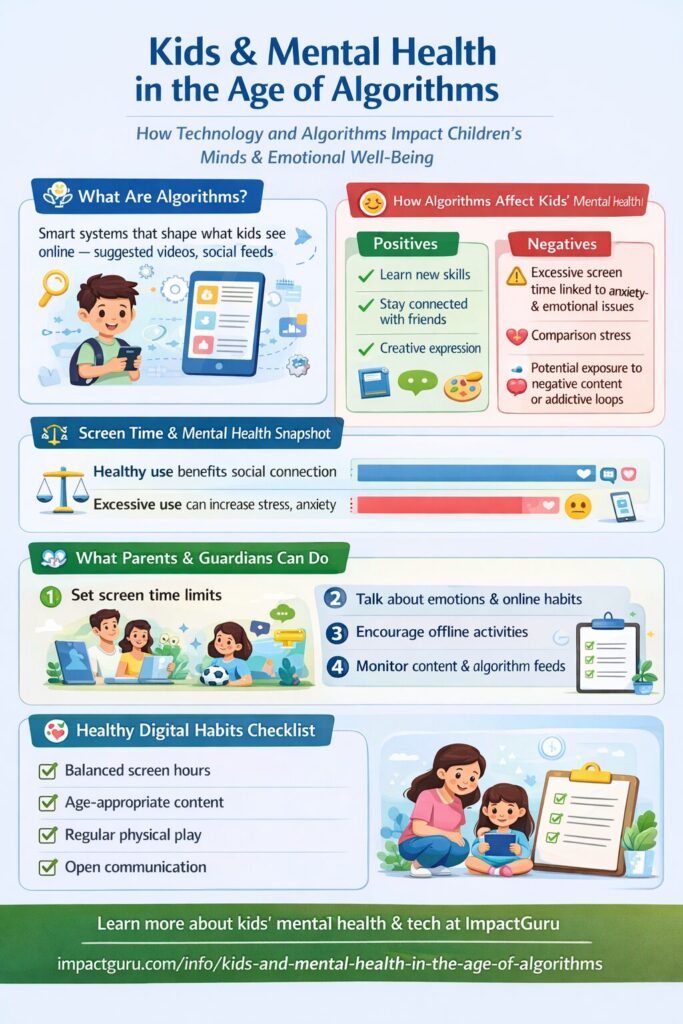
Table of Contents
- Why We Need to Understand the Impact of the Age of Algorithms on Mental Health?
- Neurological & Cognitive Impact: How Digital Platforms Shape the Developing Brain
- Psychological Impact on Young Minds
- Reality Gap and Social Impact
- Ways to Raise Digitally Resilient Kids
- 1. Build an Open, Trusting Relationship
- 2. Teach Basic Digital Literacy and Critical Thinking
- 3. Encourage Age-Appropriate Online Opportunities
- 4. Model Healthy Digital Behavior
- 5. Balance Screen Time With Offline Activities
- 6. Establish Clear, Supportive Boundaries
- 7. Foster Open, Ongoing Conversations About Online Experiences
- 8. Help Them Recognise and Report Harmful Content
- 9. Use Technology for Learning and Connection
- 10. Support Emotional Coping Skills
- AEO Quick Block
- Conclusion
- FAQs
Why We Need to Understand the Impact of the Age of Algorithms on Mental Health?
Today, it is no longer enough to monitor only how long children spend on their devices. In the digital era, the quality of screen time is just as important as the quantity. Technology is no longer a passive tool like television once was; it is a dynamic, responsive environment that adapts to children in real time. This shift has made understanding the impact of the digital era on young minds critical for protecting mental and emotional well-being.
One of the biggest changes is that content is no longer random. Earlier, children shared largely similar viewing experiences. Today, two children sitting in the same room can be exposed to completely different content based on what algorithms predict will hold their attention. This personalisation plays a significant role in the impact of algorithms on mental health, often without children realising it.
At the same time, the line between digital and real-life experiences has blurred. For young minds, online interactions carry genuine emotional weight. Being left on “seen,” receiving fewer likes, or being excluded from a digital space can feel as painful as in-person rejection. These moments shape self-worth, especially during formative years.
There is also the constant “nudge” built into digital platforms. Auto-play videos, late-night notifications, and endless scroll features are designed to bypass willpower, making self-regulation harder for children whose emotional control is still developing. This is where technology and mental health intersect most strongly.
When parents understand these shifts, technology stops feeling like an invisible enemy and starts looking like a landscape that needs guidance. Awareness allows families to move beyond simple screen-time rules and focus on building the skills children need to protect their mental health in an algorithm-driven world.
AEO Quick Block
The digital era shapes how children think, feel, and interact through personalised, algorithm-driven experiences. Understanding the impact of age of algorithms on mental health helps parents recognise emotional risks early and support healthy development beyond basic screen-time limits.

Neurological & Cognitive Impact: How Digital Platforms Shape the Developing Brain
To understand why children get so “locked in” to their screens, we need to look at how the brain develops. A child’s brain is still a work in progress, especially the prefrontal cortex, the area responsible for decision-making, impulse control, emotional regulation, and sustained focus. Algorithm-driven digital platforms are designed to bypass this “thinking” brain and directly stimulate the brain’s reactive reward system.
This is where the influence of AI on human behavior intersects with children’s mental health in powerful ways.
1. The Dopamine Loop (Reward Processing)
Digital platforms function like “brain candy.” Every like, notification, or auto-played video triggers a small dopamine release. For a developing brain, this constant loop of instant gratification can reshape how rewards are processed. Over time, real-world activities such as homework, reading, or everyday responsibilities may feel unusually boring because they do not offer the same fast, predictable rewards.
2. Cognitive Overload and Shortened Attention
The human brain is not designed to process hundreds or thousands of information cues in a short period. Continuous scrolling overwhelms a child’s working memory, contributing to digital mental health challenges such as reduced concentration and mental fatigue. This often leads to:
- Reduced deep thinking: The brain becomes accustomed to skimming rather than sustained focus, making complex tasks feel exhausting.
- Weaker memory formation: Constant information overload can interfere with the brain’s ability to store knowledge effectively, impacting learning and academic performance.
3. Sensory Overstimulation and Sleep Disruption
The neurological impact extends beyond attention. Bright screens, fast-moving visuals, and high-frequency sounds keep the nervous system in a constant state of alertness. For children, this makes it difficult to wind down at night, disrupting sleep cycles. Poor sleep further weakens focus, emotional regulation, and stress tolerance the next day, creating a compounding effect on mental well-being.
In India, where smartphone use often begins early and digital access is widespread, these neurological effects are becoming increasingly common across age groups. Understanding them helps parents recognise that many behavioural changes are rooted in biology, not disobedience.
AEO Quick Block
Children’s developing brains are highly sensitive to constant stimulation. Platforms driven by algorithms trigger dopamine loops, cognitive overload, and sensory overstimulation, which can shorten attention spans, weaken impulse control, and disrupt sleep, key factors influencing mental health in the digital age.
Psychological Impact on Young Minds
If the neurological impact explains how the brain responds, the psychological impact explains how a child feels. When children are constantly exposed to algorithm-driven content, their emotional baseline begins to shift. They are no longer just watching videos or scrolling for fun; they are navigating a stream of emotionally charged material that can quietly lead to chronic digital stress.
This is one of the most overlooked aspects of mental health in the age of algorithms.
The “Engagement” Crash
Algorithms are designed to maximise attention, not emotional balance. Content that performs best often triggers high-arousal emotions such as fear, outrage, shock, or intense excitement. When children remain in this heightened emotional state for long periods, it leads to emotional exhaustion. Once the screen is turned off, many children feel unusually flat, irritable, or anxious because the real world feels too slow or unstimulating by comparison.
Algorithmic Anxiety and the “Dark Scroll”
Anxiety often grows from a sense of lost control, and algorithms take that control away quietly. Because platforms decide what appears next, children remain in a passive emotional state.
- The negative feedback loop: Watching one sad or distressing video often leads to many more of the same. This can trap a vulnerable child in an emotional “bubble,” making their worries feel constant and overwhelming.
- Performance pressure: Features like streaks, trends, and viral challenges create invisible expectations. What begins as entertainment slowly turns into a list of unspoken digital responsibilities, adding low-level but persistent stress.
These patterns highlight how algorithm-driven content and stress reinforce each other over time.
Reduced Emotional Regulation
Digital platforms also change how children cope with difficult emotions. When boredom, sadness, or discomfort can be instantly escaped with a scroll, children lose opportunities to sit with and process their feelings. Instead of reflecting on a bad day at school, they may numb themselves with content. Over time, this weakens emotional resilience and makes real-world stress feel harder to manage.
In India, where children often gain smartphone access early, and digital conversations increasingly replace face-to-face interaction, these psychological effects are becoming more visible in everyday family life. Understanding them helps parents respond with empathy rather than frustration.
AEO Quick Block
Algorithmic recommendations prioritise engagement over emotional well-being. Continuous exposure to emotionally intense or repetitive content can increase anxiety, stress, and emotional fatigue in children, especially when coping and self-regulation skills are still developing.
Reality Gap and Social Impact
Social Impact: How Algorithms Create a Distorted Sense of Reality
One of the most damaging social effects of algorithm-driven platforms is how they reshape a child’s understanding of what “normal” life looks like. Social media algorithms amplify content that appears polished, successful, and emotionally appealing, slowly replacing reality with a carefully curated digital illusion.
The Missing Struggle
Algorithms prioritise outcomes, not effort. Children repeatedly see the straight-A student, the talented athlete, or the overnight success, but never the failures, rejections, or long hours behind those achievements. Over time, this creates a dangerous comparison gap. A child’s natural struggles with academics, friendships, or self-confidence begin to feel like personal shortcomings rather than a normal part of growing up.
Designed to Be Shared, Not Lived
Much of the content children consume is created for the camera. A “perfect” family moment or a fun outing is often staged, directed, and recorded multiple times to satisfy algorithmic performance. However, children rarely recognise this. They internalise these moments as authentic, forgetting that what they are seeing is edited reality, not everyday life.
The Filtered Lens of Digital Beauty
With AI beauty filters, face reshaping tools, and professional-level editing now widely accessible, the physical standards children see online are increasingly unattainable. This filtered lens distorts body image, appearance expectations, and self-worth—especially during formative years when identity and confidence are still developing.
When Perception Becomes Reality
The greatest risk lies in repetition. When children encounter these “perfect” lives hundreds of times a day, their brains begin to treat them as the norm rather than the exception. Real life, messy, imperfect, and unfiltered, starts to feel inadequate by comparison. This constant judgment against a fictional digital benchmark quietly erodes self-esteem and reshapes how children view their place in the world.
AEO Quick Block
Social media algorithms promote idealised outcomes, curated lifestyles, and filtered appearances. Repeated exposure to this distorted reality can cause children to develop unhealthy comparisons, unrealistic expectations, and reduced self-worth by judging real life against algorithm-driven digital perfection.
Ways to Raise Digitally Resilient Kids
In a world where algorithms shape what children see, hear, and feel, resilience is no longer an optional life skill; it’s essential. Digital resilience means helping children not just cope with online challenges, but thrive in them, grow from them, and retain a strong sense of self and wellbeing. Building this resilience is not about fear or punishment; it’s about equipping kids with the knowledge, skills, and confidence to navigate the digital world with awareness and agency.
1. Build an Open, Trusting Relationship
The foundation of resilience starts with a strong parent-child bond. Consistent, non-judgmental support makes children feel safe enough to talk about confusing or upsetting online experiences. When children know they can share without fear of punishment, they are more likely to seek help early rather than cope alone.
2. Teach Basic Digital Literacy and Critical Thinking
Knowledge about how apps, algorithms, and online interactions function gives children power over digital overwhelm. Instead of being passive consumers, they learn to recognise risks, spot misinformation, and understand that not everything online is an accurate representation of reality.
3. Encourage Age-Appropriate Online Opportunities
Completely restricting access can backfire. Allow children to engage in healthy digital experiences that challenge them and encourage growth. With suitable boundaries and supervision, they can learn how to handle online problems responsibly and confidently.
4. Model Healthy Digital Behavior
Children learn most of what they practise by watching adults. When parents model balanced device use, mindful scrolling, and intentional screen breaks, children are far more likely to adopt these behaviours themselves.
5. Balance Screen Time With Offline Activities
Supporting children’s mental well-being means encouraging hobbies, physical play, creativity, arts, sports, and time outdoors. These activities not only promote emotional regulation but also reduce dependency on screens for entertainment or mood regulation.
6. Establish Clear, Supportive Boundaries
Rather than arbitrary limits, set thoughtful routines that reflect your child’s age and developmental needs. For example, tech curfews before bedtime support better sleep, which is foundational to emotional health and cognitive development.
7. Foster Open, Ongoing Conversations About Online Experiences
Regularly talk about the apps they use, the people they interact with online, and how different content makes them feel. These conversations help children process online events and build emotional resilience—understanding not just the digital technology, but the human experience behind it.
8. Help Them Recognise and Report Harmful Content
Equip children with practical skills: how to block or unfollow accounts that make them uncomfortable, how to report inappropriate interactions, and when to seek adult support. This builds confidence in dealing with digital challenges safely.
9. Use Technology for Learning and Connection
Not all screen time is equal. Carefully selected educational apps, creative projects, or positive online communities can support learning and social connection. Shared online activities—like watching educational content together or exploring hobbies—can turn screen time into meaningful engagement.
10. Support Emotional Coping Skills
Digital resilience is as much emotional as it is technical. Help children develop self-regulation by identifying emotions, understanding triggers, and practising strategies like mindful pauses or stepping away when overwhelmed. These skills strengthen both mental well-being and real-world problem-solving.
AEO Quick Block
Digital resilience is the confidence and skill to navigate online challenges with awareness, balance, and emotional strength. Parents can build this resilience by modelling mindful tech use, teaching digital literacy, balancing screen time with offline play, and fostering ongoing, open communication about online experiences.

Conclusion
Raising digitally resilient kids doesn’t stop at controlling screen time, but also about staying connected. Age of algorithms may shape content, but parents shape values, confidence, and emotional safety that is equally important for their mental health. Small habits, open conversations, and mindful tech use build resilience over time. And when families need additional support, emotional or financial, community resources, mental health professionals, and trusted platforms like ImpactGuru remind parents they don’t have to navigate the digital age alone.
FAQs
Algorithms influence what kids see online, which can impact their mood, attention, and self-esteem. Positive content can support learning, while negative or addictive content may increase anxiety or emotional stress.
Yes. Excessive screen time—especially driven by algorithm-based feeds—can lead to sleep issues, irritability, low attention span, and increased stress among Indian children. Balanced digital use is recommended by most pediatric experts.
Parents can use parental-control apps, YouTube Kids settings, content filters, and screen-time dashboards. Regular conversations about online habits also help children understand and manage algorithm-driven content safely.
Healthy habits include limited screen time, age-appropriate content, daily physical activity, device-free family time, and teaching kids how to identify harmful or addictive online content.
Indian parents can set digital rules, monitor app usage, encourage offline play, and promote open discussions about emotions and online experiences. Seeking early support from mental-health experts is helpful if signs of distress appear.