

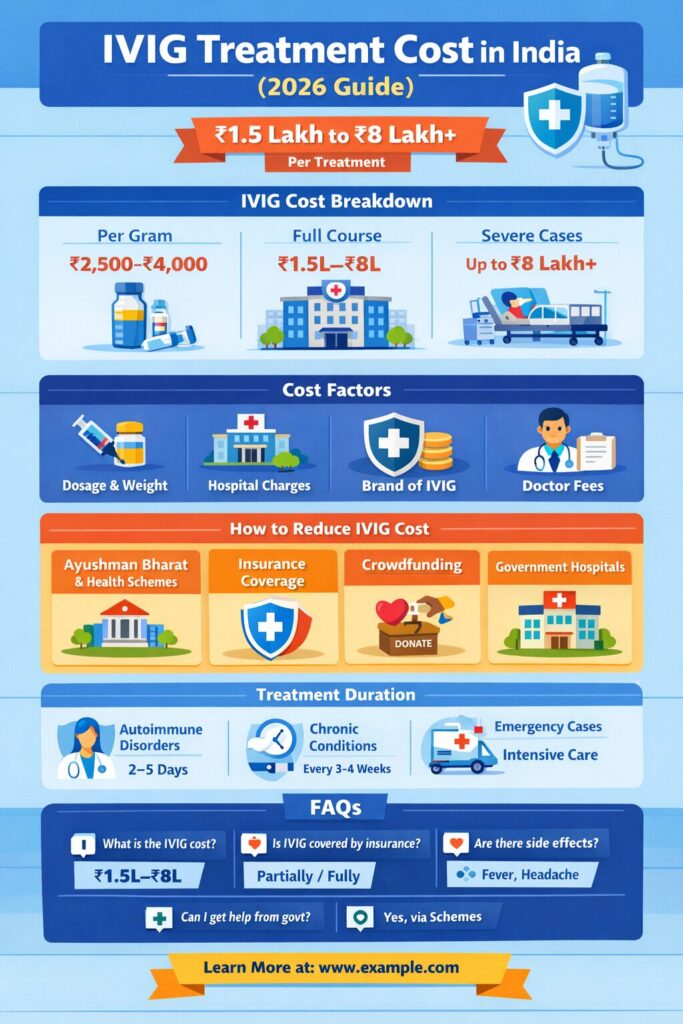
IVIG treatment cost in India typically ranges between ₹2,500 to ₹4,000 per gram, depending on the brand, dosage, and hospital. A full course may cost ₹1.5 lakh to ₹8 lakh or more, especially for conditions like Guillain-Barré Syndrome or autoimmune disorders. Understanding cost factors, insurance coverage, and financial aid options can significantly reduce your treatment burden.

Read More: Impactguru hospital finder tool India
Table of Contents
- What is IVIG Treatment?
- IVIG Treatment Cost in India (2026 Updated)
- Factors Affecting The IVIG Treatment Cost In India
- About IVIG Treatment
- What Are The Alternatives To IVIG?
- Benefits Of IVIG Treatment
- Duration Of IVIG Treatment
- How Long Does It Take To See The Results Of IVIG Treatment?
- What Are The Potential Side Effects Of IVIG Treatment?
- Conclusion
- FAQs
What is IVIG Treatment?
Intravenous Immunoglobulin (IVIG) is a therapy made from pooled antibodies (IgG) derived from healthy donors. It helps:
- Boost weak immune systems
- Treat autoimmune disorders
- Reduce inflammation
- Manage neurological conditions
It is commonly used for:
- Guillain-Barré Syndrome (GBS)
- Myasthenia Gravis
- Lupus (SLE)
- Primary Immunodeficiency Diseases
IVIG Treatment Cost in India (2026 Updated)
Average Cost Breakdown
| Component | Cost |
|---|---|
| Per 100 ml bottle (5g) | ₹12,000 – ₹15,000 |
| Cost per gram | ₹2,500 – ₹4,000 |
| Typical treatment (60kg adult) | ₹1.5 lakh – ₹6 lakh+ |
| Severe cases (multiple doses) | Up to ₹8 lakh+ |
Example: A GBS patient required 50 injections costing ~₹8 lakh
Factors Affecting The IVIG Treatment Cost In India
The cost of IVIG treatment in India and other countries can vary due to various factors. Here’s a detailed breakdown of the factors affecting IVIG treatment cost in India:
1. Dosage and Frequency: The dosage of IVIG required for a patient depends on their condition, body weight, and the frequency of treatment. Higher dosages or more frequent treatments can significantly increase the overall cost.
2. Patient’s Medical Condition: The underlying medical condition for which IVIG is prescribed can impact the treatment cost. Conditions requiring higher doses or extended treatment periods can lead to higher prices.
3. Brand and Manufacturer: Different pharmaceutical companies produce IVIG products with varying levels of purity, efficacy, and safety. Branded products from well-established manufacturers are generally more expensive than generic alternatives.
4. Pricing Policies: The pricing strategies adopted by pharmaceutical companies can affect the cost of IVIG. Some companies might price their products higher due to research and development costs, marketing expenses, and proprietary manufacturing processes.
5. Import vs. Domestic Production: If IVIG products are imported, they might be subject to import duties, taxes, and shipping costs, increasing the treatment cost. On the other hand, locally manufactured IVIG products might be more affordable due to reduced logistical expenses.
6. Hospital or Clinic Charges: The facility where IVIG treatment is administered can influence the overall cost. Larger and more specialized hospitals or clinics might have higher treatment charges than smaller or less specialized healthcare facilities.
7. Diagnostic Tests and Monitoring: Patients often require diagnostic tests and monitoring to determine the appropriate dosage and assess treatment efficacy before initiating IVIG treatment. These additional tests can contribute to the overall treatment cost.
8. Hospitalization: In some cases, patients might require hospitalization during IVIG treatment, especially if they are experiencing severe side effects or complications. Hospitalization costs, including room charges, nursing care, and medical supplies, can substantially add to the treatment expenses.
9. Doctor’s Fees: Fees charged by the treating physician or specialist administering the IVIG treatment can vary based on their experience, reputation, and healthcare facility’s location.
10. Insurance Coverage: The extent of insurance coverage a patient has can significantly impact the out-of-pocket expenses for IVIG treatment. Some health insurance plans cover IVIG treatment partially or in full, reducing the financial burden on the patient.
11. Geographical Location: The cost of living & healthcare services can vary significantly across different regions in the country. Urban areas and metropolitan cities might have higher treatment costs compared to rural or less densely populated areas.
12. Market Competition: Competition within the healthcare industry and the availability of multiple providers offering IVIG treatment can lead to varying prices as providers may adjust their costs to remain competitive.
13. Economic Factors: Economic conditions, inflation rates, and currency exchange rates can indirectly influence the cost of medical treatments, including IVIG.
14. Supply and Demand Dynamics: Shortages or surpluses of IVIG products can lead to price variations due to supply & demand dynamics.
Given the complex interplay of these factors, it’s crucial for patients and their families to thoroughly discuss the cost of IVIG treatment with their healthcare provider and insurance company, if applicable. They should also explore options for financial assistance or alternative therapies if the price is a significant concern.

About IVIG Treatment
If you have a condition that affects your immune system, such as an immunodeficiency, an autoimmune disease, or an inflammatory disease, you may have heard of a treatment called intravenous immunoglobulin, or IVIG. This is a therapy that can boost your antibody levels and help protect you from infections and inflammation.
What is IVIG?
IVIG is a treatment that contains antibodies, proteins your immune system makes to fight off infections. Antibodies are part of the plasma, the liquid part of the blood. IVIG is made from the plasma of thousands of healthy donors who have been screened for any blood-borne diseases. The plasma is purified and concentrated on creating IVIG, which is then given to you through a vein in your arm.
Why do you need IVIG?
You may need IVIG if you have a condition that lowers your antibody levels or makes your immune system attack your cells. Some of these conditions include:
– Immune deficiencies: These disorders prevent your immune system from making enough antibodies or functioning properly. Examples are primary immunodeficiency disease (PIDD), common variable immunodeficiency (CVID), and selective IgA deficiency.
– Autoimmune diseases: These disorders mistakenly cause your immune system to attack your tissues or organs. Examples are lupus, Sjögren’s syndrome, idiopathic thrombocytopenia purpura (ITP), and myositis.
– Inflammatory diseases: These disorders cause inflammation in various body parts. Examples are Kawasaki disease, vasculitis, and juvenile idiopathic arthritis.
IVIG can help replace the missing antibodies or block the harmful ones in these conditions. It can also reduce inflammation and prevent complications such as infections, bleeding, organ damage, or death.
What Are The Alternatives To IVIG?
IVIG is not the only treatment option for immune-related conditions. Depending on your condition and severity, you may also benefit from other therapies such as:
– Immunomodulators: These are drugs that modify your immune system’s activity. Examples are corticosteroids, azathioprine, cyclosporine, methotrexate, and rituximab.
– Biologics: These drugs target specific molecules involved in inflammation or autoimmunity. Examples are infliximab, adalimumab, etanercept, abatacept, tocilizumab, and belimumab.
– Vaccines: These are injections that stimulate your immune system to produce antibodies against certain infections. Examples are influenza, pneumococcal, meningococcal, and hepatitis vaccines.
– Antibiotics: These drugs kill or stop the growth of bacteria that cause infections. Examples are penicillin, amoxicillin, ciprofloxacin, and azithromycin.
– Plasma exchange: This is a procedure that removes your plasma and replaces it with fresh plasma or a plasma substitute. It can help remove harmful antibodies or toxins from your blood. It is usually reserved for severe or life-threatening cases.
You should discuss the pros and cons of each treatment option with your doctor and select the one that suits your needs & preferences.
Benefits Of IVIG Treatment
Here’s a detailed overview of the benefits of IVIG treatment:
1. Boosting Immune Function: IVIG contains a mixture of immunoglobulins, including IgG (immunoglobulin G), antibodies that are crucial to the body’s immune response. IVIG therapy can help boost the immune system’s ability to fight infections and diseases, especially in individuals with weakened immune systems or immunodeficiencies.
2. Treating Immunodeficiency Disorders: IVIG therapy is commonly used to treat primary immunodeficiency disorders (PIDDs), a group of genetic disorders characterized by a weakened immune system. People with PIDDs have difficulty producing enough antibodies to protect against infections. IVIG infusions can provide a steady supply of antibodies to help prevent recurrent infections & enrich the overall quality of life for individuals with these medical disorders.
3. Autoimmune Disorders: IVIG therapy is also used to treat autoimmune disorders. These are conditions where the immune system attacks the body’s tissues. IVIG can help regulate the immune response, reduce inflammation, and suppress the abnormal immune activity seen in disorders like immune thrombocytopenic purpura (ITP), Guillain-Barré syndrome (GBS), myasthenia gravis, and systemic lupus erythematosus (SLE).
4. Neurological Conditions: IVIG has shown efficacy in treating certain neurological disorders, such as GBS and chronic inflammatory demyelinating polyneuropathy (CIDP). These conditions involve damage to the peripheral nervous system, and IVIG can help modulate the immune response and promote nerve repair.
5. Kawasaki Disease: IVIG treatment is a standard therapy for Kawasaki disease, a rare but severe illness that affects young children. It helps restrict the risk of coronary artery damage and other complications associated with this condition.
6. Transplant Rejection Prevention: IVIG therapy can be used in solid organ & bone marrow transplantation to reduce the risk of graft rejection and graft-versus-host disease (GVHD). The immunomodulatory effects of IVIG can help balance the immune response & promote tolerance of the transplanted tissue.
7. Chronic Inflammatory Conditions: IVIG has been explored as a treatment option for various chronic inflammatory conditions, including certain types of vasculitis and rheumatoid arthritis. It can help manage inflammation and reduce disease activity.
8. Treatment of Hematologic Disorders: IVIG therapy can manage certain hematologic disorders, such as idiopathic thrombocytopenic purpura (ITP) and hemolytic anemia. It helps increase platelet counts and red blood cell survival by reducing immune-mediated destruction.
9. Modulating Immune Responses: IVIG has immunomodulatory effects that can help balance the immune system. It can suppress excessive immune responses, making it useful when immune reactions are overactive or dysregulated.
10. Supporting Pregnancy: IVIG therapy can be used in pregnant women with certain autoimmune disorders, such as antiphospholipid syndrome, to help prevent miscarriages and improve the chances of successful pregnancy outcomes.
11. Reducing Infection Risks in Certain Patients: IVIG therapy can provide passive immunity and protection against specific infections for individuals with compromised immune systems due to conditions like leukemia or HIV/AIDS.
It’s important to note that while IVIG treatment offers various benefits, it’s not without potential risks and side effects. These can include allergic reactions, fever, headache, low blood pressure, and in rare cases, more severe adverse events. Before undergoing IVIG treatment, patients should thoroughly discuss with their medical provider to weigh the potential benefits against the risks & determine the most appropriate treatment approach for their specific medical condition.
The duration of IVIG treatment depends on several factors, such as the condition being treated, the dose and frequency of IVIG, the response and side effects of the patient, and the availability and cost of IVIG.
Duration Of IVIG Treatment
– Replacement therapy: The usual dose is 300 to 600 mg/kg, which is given every 3 to 4 weeks. The duration may be lifelong or until the underlying condition improves or resolves.
– Hyperimmune therapy: The dose varies depending on the type of infection and the patient’s weight. The duration is usually one dose given as soon as possible after exposure.
– Inflammatory and autoimmune conditions: The dose ranges from 1 to 2 g/kg over 2 to 5 days. Depending on the disease activity and response, the duration may be a single course or repeated courses every few weeks or months.
How Long Does It Take To See The Results Of IVIG Treatment?
The results of IVIG treatment may vary depending on your condition, your dose, and your individual response. Some people may see improvement within days or weeks after the first infusion, while others may take longer or need multiple infusions to see the benefits.
Some factors that may affect how long it takes to see the results of IVIG treatment are:
– The severity of your condition
– The type and amount of antibodies in your blood
– The type and amount of antibodies in the IVIG
– The rate and frequency of the infusion
– Your weight and body size
– Your hydration status
– Your kidney function
– Your other medications and treatments
It is essential to keep track of your symptoms and any changes in your condition before and after each infusion. You should also follow up with your doctor regularly to monitor your response and adjust your treatment plan as needed.
What Are The Potential Side Effects Of IVIG Treatment?
While IVIG can be effective, like any medical intervention, it may have potential side effects. These side effects can vary in terms of severity and occurrence, and not everyone will experience them. Some possible side effects of IVIG treatment include:
1. Mild to Moderate Side Effects:
– Headache
– Nausea
– Fatigue
– Chills
– Fever
– Muscle or joint pain
– Dizziness
2. Allergic Reactions:
– Skin reactions such as hives or rash
– Itching
– Swelling of the face, lips, or tongue
– Difficulty breathing
– Rapid heart rate
– Low blood pressure
3. Blood-related Side Effects:
– Blood clotting issues
– Changes in blood pressure
– Hemolysis (destruction of red blood cells)
– Anemia (low red blood cell count)
4. Renal (Kidney) Effects:
– Acute kidney injury
– Decreased urine output
5. Neurological Side Effects:
– Headaches (can also be classified as mild/moderate)
– Seizures (rare)
– Aseptic meningitis (inflammation of the meninges covering the brain and spinal cord, rare)
6. Cardiovascular Effects:
– Increased heart rate
– Changes in blood pressure
It’s important to note that severe side effects are relatively rare, and IVIG treatments are usually conducted under medical supervision to monitor and manage any potential adverse reactions. The risk of side effects depends on certain factors like the specific medical condition being treated, the dosage of IVIG, the patient’s overall health, and their medical history. Healthcare providers will carefully assess the potential benefits of IVIG treatment against the potential risks before recommending it to a patient.
If you’re considering IVIG treatment or have concerns about potential side effects, it’s essential to discuss these with your healthcare provider. They can offer personalized information based on your medical history & situation.
Do good effortlessly.
Refer friends using this link and support fundraisers.
Every share expands the circle of hope.
Conclusion
IVIG treatment in India is life-saving but expensive, with costs ranging from ₹1.5 lakh to ₹8 lakh or more depending on dosage and condition. However, with the right mix of insurance, government schemes, and financial planning, patients can significantly reduce their burden.
FAQs
It ranges from ₹1.5 lakh to ₹8 lakh depending on dosage and condition.
It is derived from human plasma and requires complex processing and screening.
Yes, partially or fully depending on your policy.
Usually 0.4–2 g/kg, repeated based on condition.
Yes, often at subsidized or free cost under schemes.