


Table of Contents
- Quick Summary
- Introduction
- Why Iodine Is Essential for the Body?
- What Are the Main Causes of Iodine Deficiency in India?
- Iodine Deficiency Symptoms in Adults and Children
- Iodine Deficiency Disorders: Health Risks of Not Consuming Iodised Salt in India
- How to Diagnose Iodine Deficiency at Home and in Hospitals
- Foods Rich in Iodine to Prevent Deficiency Naturally
- Best Treatments and Supplements for Iodine Deficiency
- Public Health Measures in India
- Clinical Care and Access to Treatment
- Conclusion
- FAQs
Quick Summary
- Iodine deficiency in India remains a significant public health concern despite national salt iodisation programs.
- Insufficient iodine intake affects thyroid function and can lead to developmental delays, goitre, and cognitive impairment.
- Iodine deficiency disorders range from mild thyroid enlargement to severe complications such as hypothyroidism and impaired brain development in children.
- Early diagnosis, adequate consumption of iodised salt in India, and proper medical management are essential to prevent long-term health risks.
Introduction
Iodine Deficiency in India continues to impact both rural and urban populations, particularly in regions where soil iodine content is low. Iodine is a trace mineral required for the production of thyroid hormones, which regulate metabolism, growth, and brain development.
Without sufficient iodine intake, the thyroid gland cannot produce adequate hormones, leading to a group of conditions collectively known as iodine deficiency disorders (IDD).
Despite awareness campaigns promoting iodized salt in India, gaps in access, storage practices, and dietary diversity still contribute to deficiency.
Why Iodine Is Essential for the Body?
Iodine is essential for the production of thyroid hormones, thyroxine (T4) and triiodothyronine (T3).
These hormones regulate metabolism, growth, and overall energy balance in the body.
These hormones regulate:
- Metabolic rate
- Energy production
- Brain development in children
- Growth and physical development
- Body temperature regulation
Inadequate iodine intake disrupts hormone production, leading to systemic health effects.
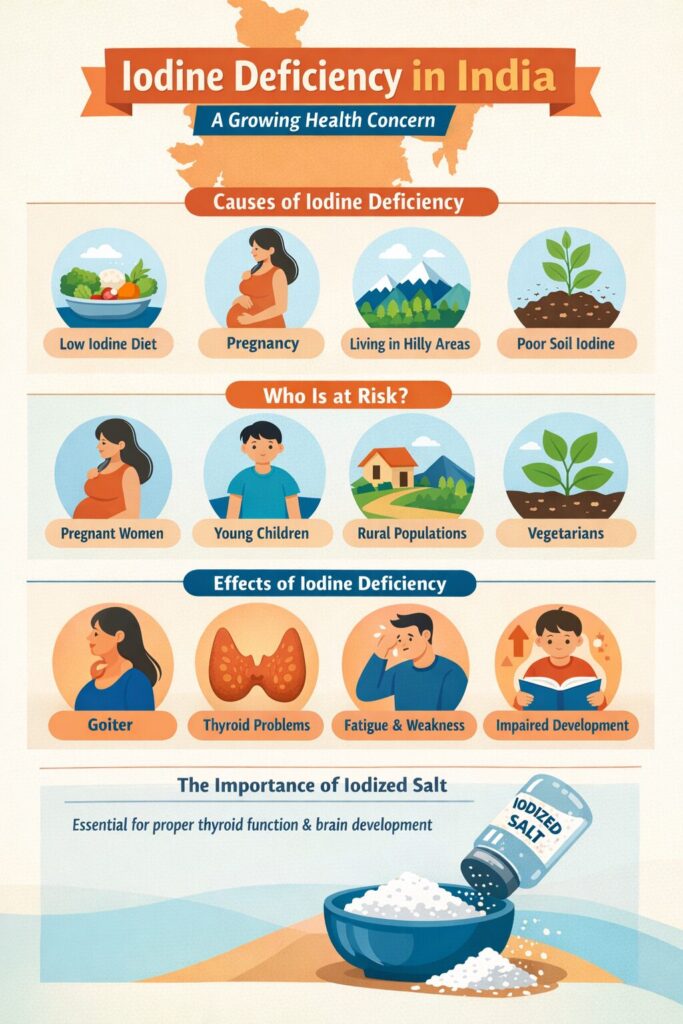
What Are the Main Causes of Iodine Deficiency in India?
Several factors contribute to iodine deficiency in India:
1. Low Iodine in Soil
In some regions, the soil naturally contains very little iodine. Crops grown in such soil also have low iodine levels, which reduces dietary intake.
2. Non-Consumption of Iodised Salt
Not using adequately iodised salt is a major cause of deficiency. Even when iodised salt is purchased, improper storage (exposure to moisture, heat, or open air) can reduce its iodine content.
3. Dietary Patterns
Diets low in iodine-rich foods such as seafood, dairy products, and eggs increase the risk of deficiency.
4. Increased Physiological Demand
During pregnancy and childhood growth, the body requires more iodine. If intake does not increase accordingly, a deficiency may develop.
Read More : Complete Guide to Vitamin Deficiencies in India
Iodine Deficiency Symptoms in Adults and Children
Iodine deficiency symptoms vary depending on severity and age.
In Adults
- Goitre (enlarged thyroid gland causing neck swelling)
- Fatigue
- Weight gain
- Cold intolerance
- Dry skin
- Slowed heart rate
In Children
- Delayed growth
- Learning difficulties
- Developmental delays
- In severe cases, intellectual disability
During pregnancy, a deficiency can impair fetal brain development.
Iodine Deficiency Disorders: Health Risks of Not Consuming Iodised Salt in India
Iodine deficiency disorders include:
- Goitre
- Hypothyroidism
- Impaired cognitive development
- Increased risk of miscarriage
- Reduced IQ levels in children
One of the most preventable causes of intellectual disability worldwide is maternal iodine deficiency.
Failure to consume iodised salt in India remains a preventable public health risk.
How to Diagnose Iodine Deficiency at Home and in Hospitals
At Home
Iodine deficiency cannot be accurately diagnosed at home without testing. However, visible neck swelling (possible goitre) or persistent hypothyroid symptoms may raise suspicion.
Salt testing kits are sometimes used to check iodine content in household salt.
In Hospitals
Iodine deficiency diagnosis typically involves:
- Thyroid function tests (TSH, T3, T4)
- Urinary iodine concentration testing
- Clinical examination of thyroid enlargement
- Ultrasound in some cases
Accurate laboratory assessment is essential for confirmation.

Foods Rich in Iodine to Prevent Deficiency Naturally
Dietary intake remains the most effective preventive strategy.
Natural Food Sources
- Iodized salt
- Seafood (fish, prawns)
- Seaweed
- Dairy products
- Eggs
Regular consumption of adequately iodised salt in India remains the cornerstone of prevention.
Best Treatments and Supplements for Iodine Deficiency
Iodine deficiency treatment depends on severity.
Mild Deficiency
- Consistent use of iodised salt
- Dietary modifications
Moderate to Severe Deficiency
- Iodine supplementation
- Thyroid hormone replacement therapy (if hypothyroidism develops)
Supplementation should only be initiated under medical supervision, as excessive iodine intake may also cause thyroid dysfunction.
Public Health Measures in India
India has implemented the Universal Salt Iodisation (USI) Programme to eliminate Iodine Deficiency Disorders (IDD) nationwide. This public health strategy ensures that commonly consumed edible salt contains adequate iodine to prevent thyroid dysfunction, cognitive impairment, and developmental delays.
- Mandatory iodisation of packaged edible salt
- Regular quality monitoring at production and retail levels
- Public awareness campaigns promoting the use of iodised salt
- Surveillance programs to track iodine status in vulnerable populations
Sustained regulation, monitoring, and community education remain essential to maintain progress and prevent recurrence of iodine deficiency in India.
Clinical Care and Access to Treatment
In moderate to severe cases, iodine deficiency may progress to complications such as goitre, hypothyroidism, or developmental disorders requiring long-term medical management. Treatment may involve thyroid hormone replacement, laboratory monitoring, and periodic specialist consultations.
- Clinical management may include:
- Thyroid function testing (TSH, T3, T4 levels)
- Iodine supplementation was indicated
- Levothyroxine therapy in confirmed hypothyroidism
- Ongoing follow-up to monitor hormone stability
In cases where prolonged treatment or hospitalisation increases financial burden, timely access to care becomes crucial. Within the broader healthcare ecosystem, platforms such as ImpactGuru assist families in navigating medical expenses and ensuring continuity of treatment. Early diagnosis and structured management remain critical to preventing irreversible complications.

Conclusion
Iodine Deficiency in India remains preventable yet continues to affect vulnerable populations. Adequate iodine intake is essential for thyroid health, metabolic stability, and cognitive development.
Consistent consumption of iodised salt, early recognition of iodine deficiency symptoms, and timely medical diagnosis can significantly reduce long-term health risks.
Strengthening public health awareness and ensuring access to care are essential steps toward eliminating iodine deficiency disorders in India.
FAQs
It’s a lack of enough iodine in the diet, affecting thyroid function and health.
Iodine is essential for making thyroid hormones that regulate growth and metabolism.
Pregnant women, children, and people in inland or low-iodine soil regions are more vulnerable.
Symptoms include fatigue, goitre (enlarged thyroid), weight gain, and developmental delays in children.
Use iodised salt, consume seafood, dairy, and iodine-rich foods regularly.
Sources
World Health Organization (WHO) – Iodine Deficiency
UNICEF – Iodine Deficiency Disorders (IDD)
National Institutes of Health (NIH) – Iodine Fact Sheet
National Health Portal of India – Iodine Deficiency Disorders