


Table of Contents
- QUICK SUMMARY
- Introduction
- What Is Hypertension and What Does “Normal” Blood Pressure Mean?
- Why Do People in Their 20s Get High Blood Pressure? (Causes of Hypertension in Youth)
- Early Hypertension Symptoms in Young Adults: What to Watch For
- What Happens If Hypertension Is Untreated at a Young Age?
- How to Manage High Blood Pressure in Your 20s Naturally
- Hypertension Treatment Cost for Young Adults in India
- How to Afford Long-Term Hypertension Treatment in India
- How Is Hypertension Diagnosed? What Tests Will Your Doctor Order?
- When Is Medication Needed? Understanding Hypertension Treatment Options
- Living with Hypertension in Your 20s: A Practical Day-to-Day Guide
- Conclusion
- FAQs
QUICK SUMMARY
- Hypertension in your 20s is no longer rare; over 11% of Indians aged 18–40 now live with some form of high blood pressure, driven by stress, poor diet, and sedentary lifestyles.
- Early hypertension symptoms are often absent, making it a “silent killer” that causes damage long before you feel anything.
- Untreated high blood pressure in young adults significantly raises the lifetime risk of heart attack, stroke, and kidney disease.
- Hypertension treatment costs in India range from as low as ₹500–₹800/month at government facilities to ₹3,000–₹8,000/month or more in the private sector, depending on medication and monitoring needs.
- If the financial burden becomes overwhelming, platforms like ImpactGuru offer easy crowdfunding options, making medical fundraising accessible to young patients and their families across India.
Introduction
High blood pressure was once considered something your parents or grandparents worried about. Not anymore. Across India’s cities and towns, doctors are increasingly diagnosing hypertension in patients who are barely out of college, people in their 20s who appear healthy, active, and otherwise fine.
A recent study found that over 11% of young Indians in the age group of 18 to 40 years have some form of hypertension. That is not a small number. It represents millions of young people entering their most productive years already carrying a condition that can damage the heart, kidneys, and brain if left unmanaged.
This is no longer a condition of old age. It is a condition of modern life, and young adults are increasingly at the centre of it.
This guide explains everything you need to know: why hypertension is rising among young Indians, what the early warning signs look like, what untreated high blood pressure can do to a young body, what treatment realistically costs in India, and, crucially, how to afford that care when money is tight.
What Is Hypertension and What Does “Normal” Blood Pressure Mean?
Quick Answer: Hypertension is diagnosed when blood pressure consistently reads at or above 130/80 mmHg. Blood pressure has two numbers: the top (systolic) measures pressure when your heart beats; the bottom (diastolic) measures pressure between beats. Anything above 140/90 mmHg is classified as Stage 2 hypertension and requires medical attention.
Blood pressure is expressed as two numbers, for example, 120/80 mmHg. The top number (systolic pressure) reflects the force your heart exerts with each beat. The bottom number (diastolic pressure) reflects the pressure in your arteries between beats.
Hypertension is diagnosed when blood pressure consistently measures at or above 130/80 mmHg.
Here is a simple reference:
| Blood Pressure Range | Category |
| Below 120/80 mmHg | Normal |
| 120–129 / below 80 mmHg | Elevated |
| 130–139 / 80–89 mmHg | Stage 1 Hypertension |
| 140/90 mmHg or higher | Stage 2 Hypertension |
| 180/120 mmHg or higher | Hypertensive Crisis |
If you are in your 20s and your readings are consistently above 130/80, that is reason enough to speak to a doctor, regardless of how well you feel.
Why Do People in Their 20s Get High Blood Pressure? (Causes of Hypertension in Youth)
Quick Answer: Young adults develop high blood pressure due to a combination of lifestyle factors, chronic stress, unhealthy diets high in salt and processed food, physical inactivity, obesity, and excess alcohol or tobacco use — alongside genetic predisposition. In India, rapid urbanisation has significantly accelerated these risk factors among the youth population.
This is one of the most common questions doctors hear from young patients: Why me? I am only 25.
The answer lies in the collision of biology, behaviour, and environment.
- Unhealthy Diet and Excess Salt: Young adults today consume more fast food and packaged meals than ever before. These are high in salt, sugar, unhealthy fats, and preservatives. Excessive sodium intake increases fluid retention, which raises blood pressure.
India’s urban food culture, driven by high-sodium snacks and restaurant meals, makes dietary triggers easy to overlook for young adults who are not actively monitoring their intake. - Chronic Stress: Chronic stress increases cortisol levels, narrowing blood vessels and elevating blood pressure. For India’s young workforce navigating demanding jobs, long commutes, social media pressure, academic stress, and financial anxiety, stress has become a constant rather than an occasional event.
- Sedentary Lifestyle: Sedentary routines contribute to weight gain and reduced vascular flexibility. The average young Indian professional spends long hours seated, and without regular physical activity, the heart becomes less efficient, and blood pressure gradually rises.
- Obesity and Excess Weight: Obesity and excess weight are strongly linked to hypertension in young adults, with blood pressure levels directly correlated with BMI. Excess body weight forces the heart to pump harder, increasing overall pressure in the circulatory system.
- Tobacco, Smoking, and Alcohol: Alcohol and tobacco use are linked to increased heart rate and blood vessel constriction. Nicotine causes immediate spikes in blood pressure, while long-term use damages the inner lining of arteries and increases cardiovascular risk.
- Family History and Genetics: If one or both parents have hypertension, the risk is significantly higher. While genetics cannot be changed, early monitoring and lifestyle management can reduce the long-term impact.
- Sleep Deprivation: Sleeping less than 7 hours regularly is a recognised risk factor for hypertension. Irregular sleep patterns and chronic sleep debt contribute to rising blood pressure among young adults.
Early Hypertension Symptoms in Young Adults: What to Watch For
Quick Answer: Most people with hypertension feel nothing at all, which is what makes it dangerous. When symptoms do occur in severe cases, they can include persistent morning headaches, unexplained dizziness, nosebleeds, blurred vision, or shortness of breath. The only reliable way to detect hypertension is to measure your blood pressure.
High blood pressure is often called a “silent killer” because it typically causes no noticeable symptoms in its early stages, even as it gradually damages blood vessels and vital organs.
When symptoms do appear, they usually indicate that blood pressure is already elevated. These may include:
- Persistent morning headaches (especially at the back of the head)
- Dizziness or lightheadedness
- Unexplained nosebleeds
- Blurred or double vision
- Shortness of breath with minimal exertion
- Chest discomfort or irregular heartbeat
The practical takeaway: Do not wait for symptoms. If you are in your 20s and have even one risk factor, family history, obesity, high stress, or a sedentary lifestyle, get your blood pressure checked at least once a year. It is a simple test that can help prevent long-term complications.
What Happens If Hypertension Is Untreated at a Young Age?
Quick Answer: Untreated hypertension in your 20s does not just affect you now; it leads to long-term damage to the heart, brain, and kidneys. Young adults with uncontrolled blood pressure face significantly higher risks of cardiovascular disease and early mortality compared to those treated early.
The long-term consequences of untreated hypertension are serious, and the earlier it begins, the more time the damage has to accumulate. Early-onset hypertension is associated with more than double the risk of cardiovascular disease and mortality.
Here is what unmanaged high blood pressure can do over time:
- Heart damage: The heart works harder against elevated pressure, leading to thickening and eventual weakening of the heart muscle, increasing the risk of heart failure.
- Stroke: Reduced blood flow and damaged blood vessels increase the risk of stroke.
- Kidney failure: Sustained pressure damages kidney blood vessels, reducing filtration capacity and leading to chronic kidney disease.
- Vision loss: Damage to retinal blood vessels can cause hypertensive retinopathy and progressive vision impairment.
- Accelerated ageing of arteries: Prolonged high blood pressure causes arterial stiffening and increases overall cardiovascular strain.
The key message: the damage caused by hypertension in your 20s builds silently over time. By the time it presents as a heart attack, stroke, or kidney disease, much of it may already be irreversible.
How to Manage High Blood Pressure in Your 20s Naturally
Quick Answer: Early-stage or mild hypertension in young adults can often be managed, and in some cases reversed, through sustained lifestyle changes. These include adopting a low-sodium diet, regular aerobic exercise, weight management, stress reduction, quitting tobacco, and limiting alcohol. These steps are backed by strong clinical evidence and recommended by the American Heart Association.
Is Hypertension Reversible in Young Adults?
For many young people with Stage 1 hypertension, the answer is yes, especially when intervention begins early and is sustained.
Here is what the evidence shows:
The DASH Diet: The Dietary Approaches to Stop Hypertension (DASH) diet, rich in fruits, vegetables, whole grains, and low-fat dairy, has been shown to lower systolic blood pressure by 8–14 mm Hg, a reduction comparable to some medications.
The American College of Cardiology, American Heart Association, and other global bodies recommend this approach.
The 2025 AHA/ACC guidelines specifically support the DASH eating plan for individuals with elevated blood pressure or hypertension.
In practical Indian terms, this means reducing salt in cooking, increasing intake of dal, vegetables, fruits, and whole grains like ragi and bajra, and cutting back on fried and packaged foods.
- Regular Exercise: Aerobic activity can reduce systolic blood pressure by 4–9 mm Hg. Around 150 minutes per week, brisk walking, cycling, swimming, or yoga, is enough to see measurable improvements.
- Weight Loss: Even a 5–10% reduction in body weight can significantly lower blood pressure. On average, every kilogram lost may reduce BP by ~1 mmHg.
- Stress Management: Meditation, yoga, and breathing exercises help reduce stress-driven blood pressure spikes and are especially relevant in high-stress urban lifestyles.
- Sodium Reduction: Cutting down on salt, pickles, papads, packaged snacks, and restaurant food is one of the fastest ways to improve blood pressure.
- Quit Tobacco, Limit Alcohol: Both directly raise blood pressure and damage blood vessels. Quitting smoking is one of the most impactful long-term interventions.
Important Note: Lifestyle changes are highly effective in early hypertension. However, if blood pressure remains above 140/90 mmHg or other risk factors are present, medication may be required. Always follow medical advice and avoid self-medication.
Medical Disclaimer: This article is for informational and educational purposes only and does not constitute medical advice, diagnosis, or treatment. Please consult a qualified healthcare professional before making any health or medication decisions.
Hypertension Treatment Cost for Young Adults in India
One of the most underappreciated challenges of hypertension in your 20s is not the diagnosis itself, but the reality that it requires long-term, consistent management. For young adults just starting their careers, treatment costs can become a barrier to adherence.
What Does Hypertension Treatment Cost in India?
When prescribed as generics, antihypertensive medications can cost as little as $6–10 per year (approximately ₹500–₹850), up to 80% lower than branded drugs purchased at private pharmacies.
In contrast, annual medication costs in the private sector range from $33–68 (approximately ₹2,800–₹5,700), depending on the drug combination.
Here is a realistic annual cost breakdown for hypertension management in India:
| Cost Component | Government/Generic | Private Sector |
| Antihypertensive medications (annual) | ₹500–₹1,000 | ₹3,000–₹7,000+ |
| Doctor consultations (4–6/year) | ₹0–₹500 | ₹3,000–₹10,000 |
| Blood pressure monitoring device | ₹1,500–₹3,500 (one-time) | ₹1,500–₹3,500 |
| Blood tests (annual) | ₹500–₹1,000 | ₹2,000–₹5,000 |
| Estimated annual total | ₹2,500–₹6,000 | ₹8,000–₹25,000+ |
For uncomplicated Stage 1 hypertension managed through public facilities and schemes like Pradhan Mantri Jan Aushadhi Pariyojana, treatment can be highly affordable.
Costs rise significantly when:
- Hypertension leads to complications (heart, kidney, or eye damage)
- Multiple medications are required (resistant hypertension)
- Advanced diagnostics are needed (echocardiogram, renal ultrasound, hormone tests)
- Patients rely primarily on private healthcare
In cities like Mumbai, Delhi, or Bengaluru, specialist consultations typically cost ₹800–₹2,000. An echocardiogram may cost ₹3,000–₹6,000, while a 24-hour ambulatory blood pressure test can cost ₹1,500–₹2,500.
For many young adults without comprehensive health insurance, these cumulative expenses can become a significant barrier to consistent treatment.
How to Afford Long-Term Hypertension Treatment in India
If treatment costs feel out of reach, you are not alone, and there are practical options available.
1. Use Government Facilities and Jan-Aushadhi Pharmacies
India’s public health system and the Pradhan Mantri Jan Aushadhi Pariyojana provide significantly subsidised or free hypertension medications.
Jan-Aushadhi stores across India offer generic versions of common antihypertensive drugs at 50–80% lower prices than branded medicines. Initiatives like the India Hypertension Control Initiative are further improving access through better drug availability, trained providers, and patient monitoring.
2. Get Health Insurance That Covers Chronic Conditions
Many young adults delay buying health insurance, but for someone diagnosed with hypertension in their 20s, early coverage is critical.
Look for plans that include OPD consultations, diagnostic tests, and chronic disease management — this can significantly reduce long-term out-of-pocket expenses.
3. Explore Medical Crowdfunding for Larger Expenses
When hypertension leads to complications such as stroke, cardiac procedures, or kidney care, costs can quickly escalate into lakhs, often beyond what insurance covers.
This is where medical fundraising has become an important support system. Platforms like ImpactGuru allow patients and families to raise funds online for treatment expenses.
With ImpactGuru, you can start a fundraiser quickly and reach out to your network, friends, family, and even well-wishers to support urgent medical needs. For young adults without strong financial backing, crowdfunding can help bridge critical gaps in treatment affordability.
4. Negotiate Hospital Bills and Ask About Payment Plans
Many hospitals in India have financial counsellors or social workers who can assist with payment plans, in-house support funds, or NGO connections. Asking about available options can significantly reduce the immediate financial burden.
5. Check Employer Benefits and CGHS/ESIC Eligibility
If you are employed, your company’s group health insurance may cover hypertension-related hospitalisations.
You may also be eligible for government-backed schemes like the Central Government Health Scheme (CGHS) or the Employees’ State Insurance Corporation (ESIC), which provide subsidised care and medications.
If your doctor suspects hypertension after repeated high readings, they may recommend tests to confirm the diagnosis, identify the cause, and check for early organ damage. This is especially important in young adults, where secondary hypertension is more common.
How Is Hypertension Diagnosed? What Tests Will Your Doctor Order?
Common diagnostic tests include:
- Complete blood count and metabolic panel: to check for anaemia, kidney function, and electrolyte balance
- Lipid profile: to assess cardiovascular risk
- Fasting blood glucose / HbA1c: to screen for diabetes
- Kidney function tests (serum creatinine, eGFR): to detect early kidney damage
- Urine analysis: to check for protein (a sign of kidney involvement)
- Thyroid function tests: as thyroid disorders can raise blood pressure
- Electrocardiogram (ECG): to detect heart rhythm or structural changes
- Echocardiogram: to assess heart function and muscle thickness
- Renal ultrasound: if kidney-related causes are suspected
- 24-hour urine cortisol/catecholamines: for rare hormonal causes
Most of these tests are available at government hospitals at low or no cost. Private lab workups typically range from ₹2,000 to ₹8,000.
When Is Medication Needed? Understanding Hypertension Treatment Options
Not all young adults with hypertension need medication immediately. For Stage 1 hypertension (130–139/80–89 mmHg) without additional risk factors, doctors usually recommend a 3–6 month trial of lifestyle changes.
Medication is typically started if:
- Blood pressure is 140/90 mmHg or higher
- Lifestyle changes are insufficient after 3–6 months
- There is evidence of organ damage (heart, kidney, eyes)
- The patient has diabetes or existing cardiovascular disease
Common antihypertensive medications in India include:
- Amlodipine (Calcium Channel Blocker)
- Telmisartan / Losartan (ARBs)
- Enalapril / Ramipril (ACE Inhibitors)
- Chlorthalidone / Hydrochlorothiazide (Diuretics)
- Metoprolol / Atenolol (Beta Blockers)
Treatment usually begins with low doses and is adjusted over time. The goal is to maintain blood pressure below 130/80 mmHg consistently.
Important: If prescribed medication, take it regularly. Skipping doses or stopping because you feel fine can lead to serious complications.
Living with Hypertension in Your 20s: A Practical Day-to-Day Guide
Managing high blood pressure in your 20s is about consistency, not perfection. Small daily habits can make a significant difference:
- Monitor your BP regularly: Use a home device (₹1,500–₹3,000) and track readings consistently
- Reduce sodium intake: Aim for under 5 grams of salt per day; limit packaged and processed foods
- Stay active: 30 minutes of brisk activity, five days a week, is enough to see benefits
- Prioritise sleep: Aim for 7–8 hours; poor sleep keeps blood pressure elevated
- Manage stress: Incorporate simple practices like pranayama, breaks from screens, or relaxation time
- Limit alcohol and avoid smoking: Both directly raise blood pressure
- Follow up with your doctor: Regular check-ins (every 3–6 months) help keep your condition under control
Conclusion
Hypertension in your 20s is more common than most young Indians realise, and it demands to be taken seriously. Over 230 million Indians suffer from high blood pressure, of which over 11% are between the ages of 15 and 49 years. A significant share of cases now occurs in younger age groups, driven by stress, lifestyle changes, and urban living.
The good news is that early-stage hypertension is highly manageable and, in many cases, reversible with consistent lifestyle changes. The challenge is that most young adults remain undiagnosed because the condition rarely shows symptoms.
Get your blood pressure checked. Know your numbers. Take preventive steps early. And if treatment costs become a barrier, options like medical crowdfunding platforms such as ImpactGuru can help bridge the financial gap.
Your 20s are not too early to take your health seriously; they are the right time.
FAQs
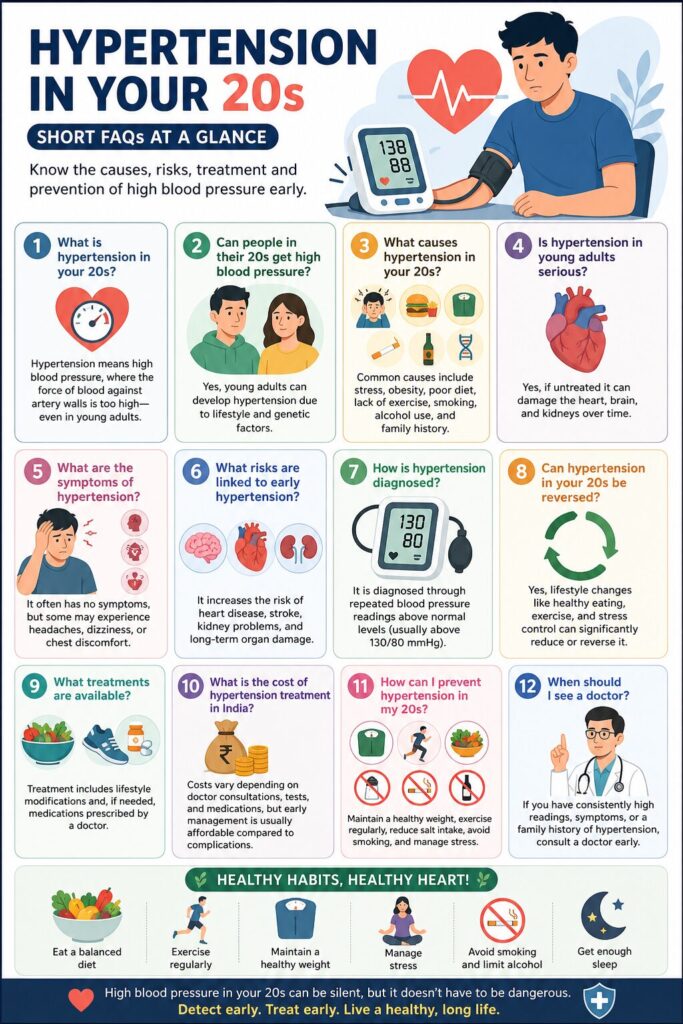
Hypertension means high blood pressure, where the force of blood against artery walls is too high—even in young adults.
Yes, around young adults can develop hypertension due to lifestyle and genetic factors.
Common causes include stress, obesity, poor diet, lack of exercise, smoking, alcohol use, and family history.
Yes, if untreated it can damage the heart, brain, and kidneys over time.
It often has no symptoms, but some may experience headaches, dizziness, or chest discomfort.
Yes, lifestyle changes like healthy eating, exercise, and stress control can significantly reduce or reverse it.