


Table of Contents
- Quick Summary
- Introduction
- What Are Swollen Lymph Nodes in the Neck?
- What Causes Lymph Nodes to Swell in the Neck?
- How to Reduce Swollen Lymph Nodes in the Neck Naturally
- Swollen Lymph Nodes in Neck Treatment: Medical Options
- How Long Do Swollen Lymph Nodes Last?
- Is a Swollen Lymph Node in the Neck Serious? When to Worry
- Neck Lump Causes and Treatment: Is Every Neck Lump a Lymph Node?
- Cost of Swollen Neck Lymph Nodes Treatment in India
- Conclusion
- FAQS
Quick Summary
- Knowing how to reduce swollen lymph nodes in the neck depends on identifying the root cause. Most cases are viral and resolve on their own within 2–3 weeks.
- Common causes include throat infections, dental issues, flu, and, in rarer cases, lymphoma or tuberculosis.
- Home remedies like warm compresses, rest, and hydration can ease mild swelling effectively.
- Medical treatment ranges from antibiotics to surgery, depending on severity; costs in India vary significantly.
- If swelling persists beyond 3 weeks, grows rapidly, or comes with unexplained weight loss or night sweats, see a doctor immediately
Introduction
A lump in the neck can stop you in your tracks. Whether you noticed it while washing your face, felt it during a workout, or your child pointed it out, that small, tender swelling under the jaw or along the side of the neck is hard to ignore.
Thankfully, in most cases, a swollen lymph node in the neck is your immune system doing exactly what it was designed to do: fighting off an infection. The bad news? “Most cases” isn’t all cases, and knowing the difference matters.
This guide is built for anyone trying to understand how to reduce swollen lymph nodes in the neck, whether you’re dealing with a mild viral infection, recovering from a throat infection, or navigating something more serious that requires medical attention. We cover the causes, the home remedies that actually work, the medical treatments available in India, the red-flag symptoms, and, critically, what to do if treatment costs become a barrier.
Because in India, where TB-related lymph node swelling is common, and lymphoma diagnoses can come with six-figure treatment bills, the conversation around swollen lymph nodes can’t stop at “drink warm water and rest.” It needs to go further.
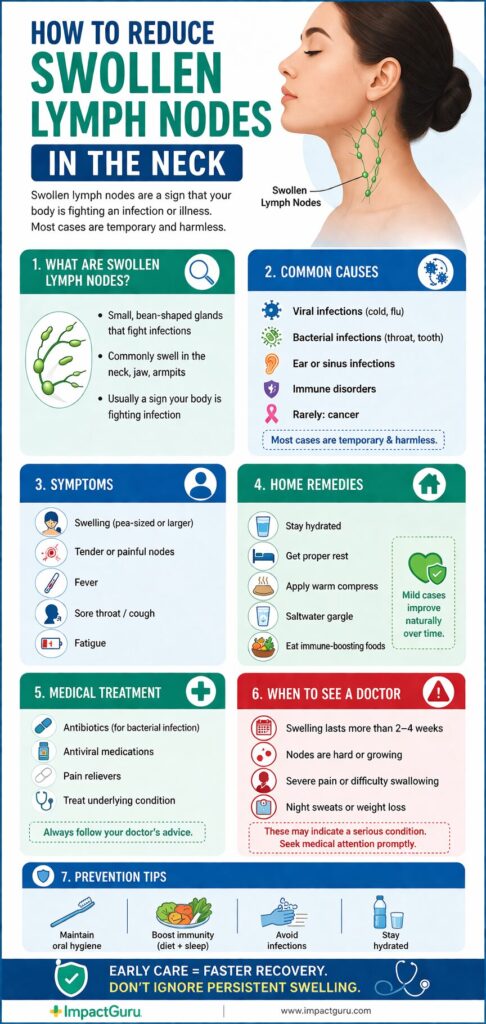
What Are Swollen Lymph Nodes in the Neck?
Quick Answer: Swollen lymph nodes in the neck (lymphadenopathy) are enlarged glands that signal your immune system is fighting an infection or inflammation. They are usually pea-sized and tender. Most cases are harmless and temporary, but persistent or painless swelling may need medical evaluation.
Lymph nodes are small, bean-shaped glands found throughout your body, with clusters located in the neck, armpits, and groin. They act as filters, trapping bacteria, viruses, and abnormal cells, and are a core part of your immune defence system.
When your body fights an infection, lymph nodes fill with immune cells and can swell to the size of a marble or larger. In the neck, this swelling is especially noticeable and can feel alarming, but in the vast majority of cases, it’s a sign your immune system is doing exactly what it’s supposed to do.
What Causes Lymph Nodes to Swell in the Neck?
Quick Answer: The most common causes of swollen lymph nodes in the neck are upper respiratory infections, throat infections, ear infections, and dental abscesses. Less commonly, swelling may be due to autoimmune diseases, certain medications, or cancers like lymphoma.
Understanding the cause is the first step to the right treatment. Here’s a breakdown:
Common (Benign) Causes:
- Viral infections: cold, flu, COVID-19, mononucleosis (mono)
- Bacterial infections: strep throat, tonsillitis, dental abscess, skin infections
- Ear and sinus infections
- Scalp infections or dandruff-related inflammation
Less Common (Requiring Medical Attention):
- Tuberculosis (TB): highly relevant in India, where cervical TB lymphadenopathy is among the most common forms of extra-pulmonary TB
- HIV/AIDS
- Autoimmune conditions: lupus, rheumatoid arthritis
- Thyroid disorders
Serious (Rare but Important):
- Lymphoma (Hodgkin’s or Non-Hodgkin’s): typically presents as painless, rubbery, and persistently swollen nodes
- Metastatic cancer: cancer spreading from the head, neck, or throat region
- Leukaemia
In India, TB-related lymphadenopathy and fungal infections are significantly more prevalent than in Western countries. If you’ve had prolonged swelling with fever, night sweats, and weight loss, always rule out TB with your physician.
How to Reduce Swollen Lymph Nodes in the Neck Naturally
Quick Answer: For infection-related swelling, natural remedies like warm compresses, rest, adequate hydration, and anti-inflammatory foods can significantly reduce discomfort and support faster recovery. These work best for mild viral infections and should not replace medical treatment for persistent or severe cases.
If a viral infection is the underlying cause, your body will clear it on its own. Here’s how to support that process:
1. Warm Compress: Apply a warm (not hot) cloth to the swollen area for 10–15 minutes, 3–4 times a day. This increases blood circulation and helps reduce swelling and discomfort.
2. Rest and Sleep: Your immune system does its most powerful repair work during sleep. Aim for 7–9 hours and avoid physical exertion while symptomatic.
3. Hydration: Drinking 8–10 glasses of water daily helps flush out toxins and supports lymphatic drainage.
4. Saltwater Gargle: If the swelling is linked to a throat or dental infection, gargling with warm salt water 2–3 times a day reduces bacterial load and inflammation.
5. Anti-Inflammatory Foods: Turmeric (curcumin), ginger, garlic, and green tea have well-documented anti-inflammatory properties. Incorporate these naturally into your diet.
6. Gentle Neck Massage: Avoid massage if the area is very painful, red, or suspected to be infected, as this may worsen inflammation or spread infection.
7. Avoid Alcohol and Smoking: Both suppress immune function and slow recovery.
These remedies are appropriate for mild swelling caused by common infections. Do NOT rely solely on home remedies if swelling persists beyond 2–3 weeks, is painless, is hard to the touch, or is accompanied by other symptoms.
Swollen Lymph Nodes in Neck Treatment: Medical Options
Quick Answer: Medical treatment for swollen lymph nodes depends on the cause. Bacterial infections are treated with antibiotics; viral infections require supportive care; TB requires a full anti-TB drug regimen; and malignant causes require oncology evaluation, which may include chemotherapy, radiation, or surgery.
- Antibiotics: Prescribed for bacterial causes like strep throat or dental abscesses. A typical course is 5–10 days. Never self-medicate with antibiotics.
- Antiviral or Antifungal Medications: Most viral infections, including those caused by Epstein-Barr virus (EBV), are managed with supportive care such as rest, hydration, and symptom relief rather than antiviral medications.
- Anti-TB Treatment: For TB lymphadenopathy, one of the most common causes in India, DOTS (Directly Observed Treatment, Short-course) therapy is prescribed for 6–9 months and is available free through government hospitals under India’s Revised National Tuberculosis Control Programme (RNTCP).
- Corticosteroids: Used in autoimmune-related cases to reduce immune overactivity and swelling.
- Surgical Drainage: If a lymph node has developed into an abscess (pus-filled), minor surgery to drain it may be required.
- Biopsy and Oncology Referral: If malignancy is suspected, a fine needle aspiration cytology (FNAC) or excisional biopsy is performed. Based on results, the treatment pathway may involve:
- Chemotherapy
- Radiation therapy
- Targeted therapy or immunotherapy
- Surgical removal of affected nodes
How Long Do Swollen Lymph Nodes Last?
Quick Answer: Swollen lymph nodes caused by a common cold or minor infection typically subside within 2–3 weeks. Neck lymph nodes swollen due to bacterial infection may reduce after completing antibiotics. Nodes that remain swollen beyond 4–6 weeks without a clear cause warrant urgent medical evaluation.
| Cause | Typical Duration |
| Common cold / flu | 1–2 weeks |
| Bacterial throat infection | 1–2 weeks (with antibiotics) |
| Mononucleosis (mono) | 3–6 weeks |
| TB lymphadenopathy | Months (with treatment) |
| Lymphoma/cancer | Does not resolve without treatment |
Is a Swollen Lymph Node in the Neck Serious? When to Worry
Quick Answer: A swollen lymph node is usually not serious. However, you should see a doctor urgently if the node is painless, hard, fixed (doesn’t move when pressed), larger than 1.5 cm, or if you have accompanying symptoms like unexplained weight loss, drenching night sweats, persistent fever, or difficulty swallowing.
See a doctor immediately if:
- The swelling has lasted more than 3–4 weeks without an obvious cause
- The node is painless (painful nodes usually mean infection; painless nodes can sometimes indicate lymphoma)
- The node is firm or rubbery and does not move
- You have multiple swollen nodes in different parts of the body
- You experience unexplained weight loss of more than 5 kg in a few months
- You have drenching night sweats
- You have difficulty swallowing or breathing
- The node grows rapidly over the days
These red flag symptoms, particularly the combination of painless swelling + night sweats + weight loss, are associated with lymphoma and require urgent haematology or oncology evaluation.
Neck Lump Causes and Treatment: Is Every Neck Lump a Lymph Node?
Not every lump in the neck is a lymph node. Other causes of neck lumps include:
- Thyroid nodules: felt in the front-centre of the neck, may cause difficulty swallowing
- Salivary gland swelling: located near the jaw, often due to infection or stones
- Lipoma: soft, movable fatty lump under the skin, usually harmless
- Cysts: sebaceous cysts or branchial cleft cysts (common in younger patients)
- Abscess: tender, fluctuant lump with surrounding redness
A proper clinical examination, ultrasound, and, if needed, FNAC will help distinguish between these causes. Never ignore a neck lump that has been present for more than 3 weeks.
Cost of Swollen Neck Lymph Nodes Treatment in India
Quick Answer: The cost of diagnosing and treating swollen lymph nodes in India ranges from a few hundred rupees (for basic blood tests and antibiotics) to several lakhs (for lymphoma treatment involving chemotherapy or radiation). The wide range depends heavily on whether the cause is benign or malignant.
Here’s a realistic cost breakdown:
| Treatment / Procedure | Approximate Cost in India |
| Consultation (General Physician) | ₹300 – ₹800 |
| Blood tests (CBC, ESR, CRP) | ₹500 – ₹1,500 |
| Neck ultrasound | ₹800 – ₹2,500 |
| FNAC (Fine Needle Aspiration) | ₹1,500 – ₹5,000 |
| Anti-TB medications (govt.) | Free (RNTCP) |
| Anti-TB medications (private) | ₹2,000 – ₹8,000/month |
| Lymph node excision surgery | ₹20,000 – ₹80,000 |
| Chemotherapy (per cycle, lymphoma) | ₹30,000 – ₹1,50,000+ |
| Radiation therapy (full course) | ₹2,00,000 – ₹5,00,000+ |
Costs vary significantly between government hospitals, tier-2 city hospitals, and private hospitals in metros like Mumbai, Delhi, Bengaluru, and Chennai. Government facilities subsidise or waive many of these costs for eligible patients.
How to Afford Treatment for Lymph Node Swelling in India
When a benign swelling turns out
How to Afford Treatment for Lymph Node Swelling in India
When a benign swelling turns out to be lymphoma or requires prolonged treatment, the financial burden can be overwhelming for most Indian families. Chemotherapy cycles, radiation, and hospital stays can push total costs into several lakhs, and not everyone has health insurance or adequate coverage.
This is where medical crowdfunding has become a vital tool for thousands of Indian families. Platforms like ImpactGuru, one of India’s leading medical crowdfunding platforms, allow patients and families to raise funds online from friends, family, colleagues, and even strangers who want to help.
Why families turn to ImpactGuru for cancer and lymphoma treatment:
- You can create a fundraiser in minutes, share it on WhatsApp and social media, and start receiving donations immediately
- ImpactGuru has helped raise funds for thousands of cancer patients, including those with lymphoma, leukaemia, and other blood cancers.
- The platform offers verified fundraisers, which helps build donor trust
- Funds can be withdrawn as they are collected, so there’s no waiting for a lump sum before beginning treatment
If you or someone you know is facing a lymph node-related diagnosis that requires expensive treatment, exploring online crowdfunding alongside government schemes (like PM-JAY/Ayushman Bharat) and NGO support is a practical and increasingly common approach to managing financial help for medical treatment in India.
Read More : How Can I Raise Money Online for Cancer Treatment in India?
Conclusion
Swollen lymph nodes in the neck are usually harmless, but not always. If swelling persists beyond three weeks, is painless, or comes with weight loss and night sweats, see a doctor immediately. Early diagnosis changes outcomes.
Knowing how to reduce swollen lymph nodes in the neck is step one. Step two is making sure cost never becomes a barrier to treatment. Government schemes like Ayushman Bharat help eligible patients, and medical crowdfunding platforms like ImpactGuru have helped thousands of Indian families fund cancer and lymphoma care quickly.
Your health comes first. Get it checked.
FAQS
Swollen lymph nodes are usually caused by infections such as colds, flu, throat infections, or sinusitis. They can also occur due to bacterial infections, dental issues, or, in rare cases, more serious conditions like autoimmune diseases or cancer.
Most swollen lymph nodes go down within 1–2 weeks as the underlying infection heals. If they persist beyond this or continue to grow, medical evaluation is recommended.
Some effective ways include:
Applying a warm compress
Staying hydrated
Taking adequate rest
Using over-the-counter pain relievers (if needed)
These methods help reduce inflammation and support recovery.
Gentle massage may improve lymph flow, but excessive or forceful massage should be avoided, as it can worsen inflammation or spread infection.
Yes, they can be tender or painful, especially when caused by infections. Pain usually reduces as the infection heals.
Stress itself doesn’t directly cause swelling, but it can weaken the immune system, making infections (and lymph node swelling) more likely or prolonged.