

Table of Contents
Quick Summary
- How to boost serotonin naturally depends on daily habits like sunlight, movement, balanced nutrition, and consistent routines rather than quick fixes.
- Low serotonin often develops gradually, affecting mood, energy, sleep, focus, and emotional resilience.
- Lifestyle factors such as chronic stress, poor diet, lack of sunlight, inactivity, and gut imbalance can reduce serotonin levels over time.
- When mental health concerns require medical care, options like online crowdfunding platforms in India allow families to fundraise online and raise donations online through trusted, community-supported solutions.
Introduction
If you have been feeling a little off lately, low on energy, unmotivated, or emotionally flat, you might have already come across serotonin in your search for answers. Many people look up how to boost serotonin naturally when they constantly feel tired and moody for no particular reason. But in reality, serotonin influences far more than just your mood; it plays a key role in sleep, appetite, motivation, and emotional resilience.
This blog talks about what actually affects serotonin in everyday life, why levels can drop, and how that shows up in your mood and motivation. Most importantly, it breaks down natural ways to increase serotonin levels without medication.
What Is Serotonin and Why Is It Important?
Serotonin is a neurotransmitter, a chemical messenger that allows your brain and body to communicate. You don’t need to be a scientist to understand its impact: serotonin is the “stabilizer” that dictates how steady your mood feels, how deeply you sleep, and how you handle daily stress.
Interestingly, while it works in the brain, about 95% of your serotonin is produced in your gut. This makes the “gut-brain connection” a vital piece of the puzzle for anyone looking to improve their mental health naturally.
Quick Answer: Serotonin is a neurotransmitter that helps regulate mood, sleep, appetite, and emotional balance, playing a key role in overall mental well-being.
The Role of Serotonin in Your Daily Life
Serotonin doesn’t just affect one area; it influences the core functions that shape your entire day:
- Mood Regulation: It creates a “buffer” against negative emotions, fostering feelings of calm and emotional stability.
- Sleep Quality: It is the building block for melatonin, the hormone responsible for your sleep-wake cycles.
- Appetite and Digestion: It manages hunger cues and ensures your digestive system runs smoothly.
- Focus and Resilience: It supports the mental clarity and confidence needed to handle work and social pressures.
How to Know If Your Serotonin Levels Are Low?
Low serotonin doesn’t always appear suddenly. It often builds gradually and may show up as:
- Emotional Flatness: A persistent low mood or a feeling that you’ve lost your “spark.”
- Low Energy: Chronic fatigue that doesn’t seem to improve with rest.
- Anxiety & Irritability: Feeling restless, on edge, or easily frustrated.
- Brain Fog: Difficulty focusing or a lack of mental sharpness.
- Disrupted Sleep: Trouble falling asleep or waking up feeling unrefreshed.
- Sugar Cravings: An intense urge for refined carbohydrates or sweets (as the body tries to quickly trigger a temporary serotonin spike).
What Causes Low Serotonin Levels?
Serotonin can dip for several common reasons:
- Chronic Stress: High cortisol levels can reduce serotonin production.
- Lack of Sunlight: Less morning light disrupts serotonin cycles.
- Poor Diet: Low tryptophan, B6, magnesium, or healthy carbs can limit production.
- Irregular Sleep: Disrupted sleep affects serotonin and melatonin pathways.
- Sedentary Lifestyle: Inactivity slows mood-boosting chemical release.
- Gut Imbalance: Poor gut health can lower serotonin synthesis.
Recognizing these signs and understanding their causes is important. This is because serotonin and mental health are deeply connected. Once you know what’s affecting your levels, focusing on your habits to improve them becomes easier.
Quick Answer: Chronic stress, lack of sunlight, poor diet, irregular sleep, inactivity, and gut health issues can cause serotonin levels.

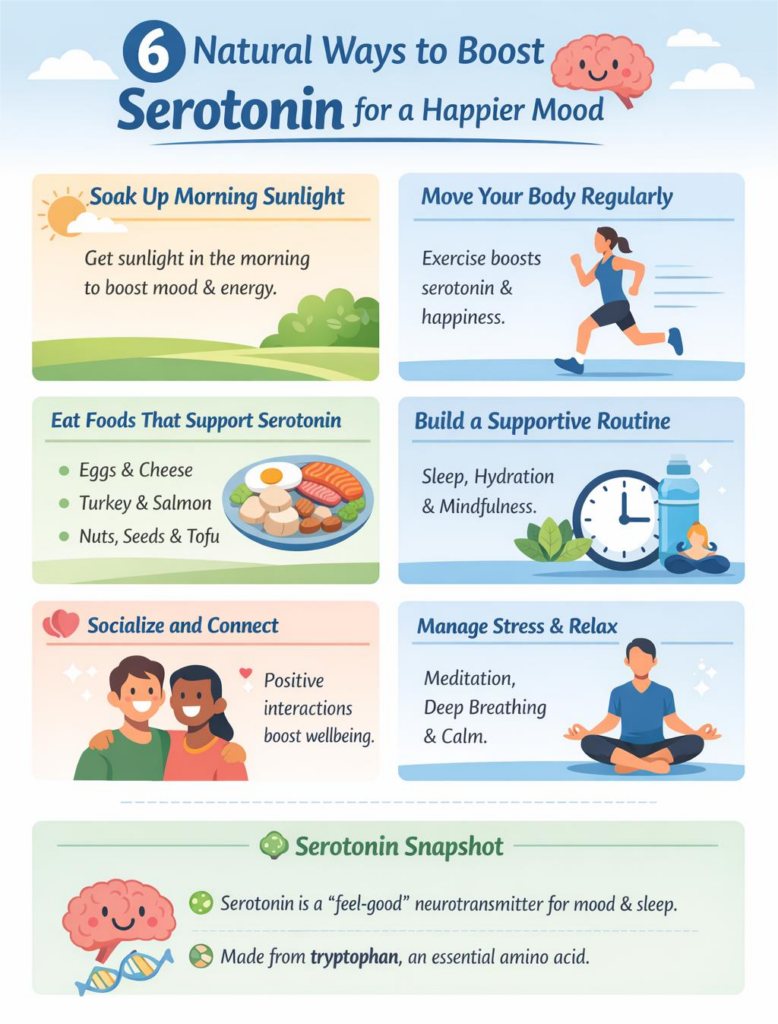
6 Natural Ways to Boost Serotonin Levels
If serotonin levels dip due to stress, lack of sunlight, or disrupted routines, many people start searching for natural ways to boost serotonin levels. The good news is that you don’t need medication to support your mood and energy. These six simple, science-backed habits can help increase serotonin naturally and improve emotional balance over time.
1. Soak Up Sunlight (Especially in the Morning)
Natural light exposure is one of the most effective ways to increase serotonin levels naturally. Morning sunlight helps regulate your internal clock and gives your brain a clear signal to support serotonin production, often leading to a noticeable mood lift.
- The Habit: Aim for 10–30 minutes of morning sunlight. A short walk, sitting on a balcony, or having your tea near a window can help reset your system for the day.
2. Move Your Body Regularly
Physical activity is a reliable and well-studied natural way to boost serotonin. Exercise stimulates the release of mood-regulating chemicals that support both emotional stability and stress management.
- The Habit: Try 20–30 minutes of movement such as walking, jogging, cycling, yoga, or dancing. Consistency matters more than intensity when your goal is to boost serotonin naturally.
3. Eat Foods That Support Serotonin Production
You can’t consume serotonin directly, but you can support its production through tryptophan-rich foods. Tryptophan is an amino acid your body uses to make serotonin, and pairing it with healthy carbohydrates improves absorption.
- The Habit: Include foods like eggs, dairy, nuts, seeds, poultry, and bananas, along with whole grains such as oats or brown rice, to help increase serotonin levels naturally.
4. Build a Supportive Daily Routine
Irregular sleep schedules, skipped meals, and unpredictable days can interfere with serotonin balance. A steady routine helps reduce stress on your nervous system, making it easier for serotonin pathways to function smoothly.
- The Habit: Focus on three anchors, consistent sleep and wake times, regular meals, and a simple daily structure, to support emotional stability.
5. Manage Stress and Practice Relaxation
Chronic stress can block your brain’s ability to regulate mood effectively. Relaxation practices calm the nervous system, allowing serotonin to work as intended.
- The Habit: Spend a few minutes each day on meditation, deep breathing, journaling, or mindfulness to support serotonin and mental well-being naturally.
6. Strengthen Social and Emotional Connections
Serotonin is closely linked to feelings of belonging and emotional safety. Positive social interactions play a key role in maintaining healthy serotonin levels and emotional resilience.
- The Habit: Stay socially connected through small but meaningful interactions, such as a phone call, shared meal, or quality time with loved ones, to help boost serotonin naturally.
Quick Answer: You can boost serotonin naturally through sunlight exposure, regular exercise, balanced nutrition, stress management, quality sleep, and social connection.
Serotonin-Boosting Foods to Add to Your Diet (What to Eat & How)
You can’t eat serotonin directly, but you can eat the nutrients your body uses to produce it. The most important of these is tryptophan. It is an essential amino acid that plays a key role in helping increase serotonin levels naturally.
Because the body can’t make tryptophan on its own, what and how you eat matters.
1. Tryptophan-Rich Foods
These foods provide the raw materials your body needs for serotonin production:
Plant-based options
- Tofu, tempeh, edamame
- Lentils, chickpeas, black beans
- Pumpkin seeds, walnuts, chia seeds
- Greek yogurt or soy yogurt
Animal-based options
- Eggs (especially the yolk)
- Salmon
- Turkey and poultry
- Cheeses such as Parmesan or cheddar
Including a variety of these foods supports steady mood and energy throughout the day.
2. How to Maximize Serotonin Absorption?
Eating tryptophan-rich foods alone isn’t always enough. The way you combine foods affects how efficiently tryptophan reaches the brain.
The simple rule:
Pair protein with complex carbohydrates.
Carbohydrates help clear competing amino acids from the bloodstream, allowing tryptophan to enter the brain more easily and support serotonin production.
Easy combinations
- Lentils + brown rice
- Tofu + quinoa
- Eggs + whole-grain toast
- Salmon + sweet potatoes
This small habit can significantly improve how your body responds to natural serotonin boosters.
3. Nutrients That Help Convert Tryptophan into Serotonin
Tryptophan needs support to do its job. These nutrients act as essential co-factors:
- Vitamin B6: Required to convert tryptophan into serotonin
- Found in bananas, chickpeas, oats
- Found in bananas, chickpeas, oats
- Magnesium: Helps calm the nervous system and reduce stress-related serotonin depletion
- Found in spinach, kale, and pumpkin seeds
Together, these nutrients support daily habits for mental wellness and emotional balance.
4. Support Your Gut for Better Serotonin Production
About 90–95% of serotonin is produced in the gut. It explains why gut health and mental health are closely connected.
To support a healthy gut:
- Include fermented foods like Greek yogurt, kefir, kimchi, or sauerkraut
- Eat enough fiber from whole grains, fruits, vegetables, and legumes
A healthier gut environment supports the production of serotonin precursors and improves overall mood stability.
Quick Answer: Foods rich in tryptophan, combined with complex carbohydrates and supported by nutrients like vitamin B6 and magnesium, help increase serotonin production.

Conclusion
Boosting serotonin naturally is less about quick fixes and more about small, consistent lifestyle changes. Simple habits like getting sunlight, moving your body, eating balanced meals, maintaining routines, and staying socially connected can go a long way in supporting mood, motivation, and emotional balance over time. However, if low mood or mental health challenges persist, professional support is important. In such cases, access to care shouldn’t feel out of reach. Today, many families in India fundraise online through trusted online crowdfunding platforms like ImpactGuru, using online crowdfunding and community support to raise donations online and focus on recovery without added financial stress.
FAQs
Serotonin is a neurotransmitter often called the “feel-good” chemical because it helps regulate mood, sleep, appetite, digestion, and emotional balance. Maintaining healthy serotonin levels supports overall mental well-being and daily functioning.
Yes — lifestyle factors like regular exercise, sunlight exposure, balanced sleep, and a healthy diet rich in tryptophan can help the body produce more serotonin naturally.
Your body uses tryptophan, an amino acid found in foods like eggs, turkey, salmon, tofu, cheese, nuts, and seeds to make serotonin. Pairing these with carbohydrates may further support serotonin production.
About 10–15 minutes of daily sunlight, especially in the morning, can help stimulate serotonin production in the brain. If natural sunlight is limited due to climate or season, light therapy may be a helpful alternative.
Absolutely — regular aerobic activity increases the release of tryptophan into the bloodstream, helping serotonin synthesis, while consistent sleep routines support healthy serotonin regulation and mood balance.