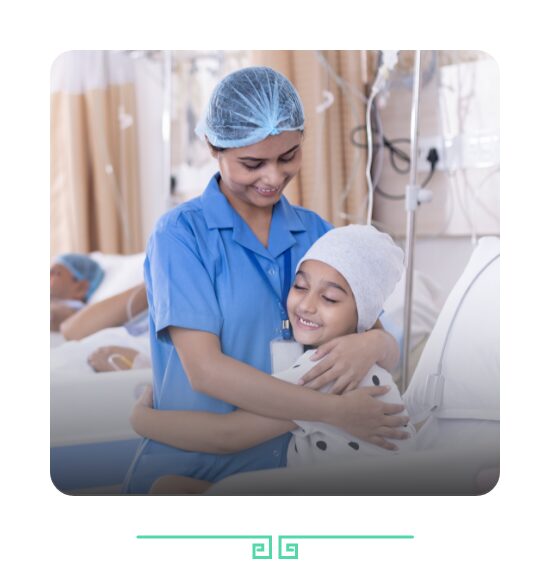

In most digital products, bad UX means a frustrated user who closes the app and tries again later. In medical crowdfunding, bad UX can mean a family in crisis fails to create a fundraiser in time, or a donor gives up before completing a transaction. The stakes of good design are rarely higher than in healthtech, especially when it comes to healthtech UX design in India, where accessibility and urgency often intersect.
Table of Contents
Design for the Hardest User, Not the Easiest
When Piyush Jain, Khushboo Jain, and I were designing ImpactGuru’s user experience, we made a foundational decision that has shaped every subsequent design choice: we would design for our hardest user, not our easiest.
Our easiest user is an English-speaking, smartphone-native, urban professional in their 30s with high-speed internet access and comfort with digital transactions. This user can figure out almost any interface with minimal friction. They are also the user that most Indian digital products are designed for by default.
Our hardest user is a person who has never made an online transaction, is using a low-end Android phone on a 2G connection, is in a state of extreme emotional distress, has limited English proficiency, and needs to create a fundraiser right now because the hospital has given a deadline.
Every design decision we make asks: can our hardest user complete this task? If yes, our easiest user will find it trivial. If no, we have failed the people who need us most.
The Five UX Principles That Guide ImpactGuru’s Design
Principle 1: Reduce to the Essential
Every time we add a feature to ImpactGuru, we ask: is this essential, or is it merely useful? There is a significant difference. Essential features are those without which the core task — creating a fundraiser, donating to a campaign, sharing an update — cannot be completed effectively. Merely useful features add capability but also complexity.
Medical crowdfunding is not the context for maximum feature density. It is the context for maximum essential simplicity. A person in a hospital corridor should be able to create a compelling fundraiser in under ten minutes on a mobile phone. That constraint drives aggressive prioritisation.
Principle 2: Design for Interrupted Sessions
A user creating a fundraiser in a hospital is not working in a quiet, uninterrupted environment. They are pausing for doctors, for family conversations, for emotional moments. Our fundraiser creation flow saves progress automatically at every step — so a session interrupted by a doctor walking in can be resumed hours later without loss of work.
This sounds obvious. It is surprisingly rare in digital product design, where the assumption of an uninterrupted linear user journey is deeply embedded. Designing for interruption is a form of empathy.
Principle 3: Make the Cost of Errors Zero
In a state of emotional distress, people make mistakes. They enter the wrong amount. They upload the wrong document. They accidentally close the browser. In most digital contexts, these errors are minor annoyances. In our context, they can cause significant distress to someone who is already at their limit.
Our design philosophy makes errors recoverable at every point. No irreversible actions without explicit confirmation. Undo functionality wherever possible. Auto-saved drafts for every form. Clear, non-judgmental error messages that explain exactly what went wrong and exactly how to fix it.
Principle 4: Trust Signals Must Be Visible at Every Decision Point
Donors in India are appropriately cautious about giving money online, especially to strangers. Every point in the donation flow where a donor might hesitate — the payment page, the document verification badge, the fund utilisation tracker — is a design opportunity to reinforce trust.
We display verification status prominently. We show the number of donors and the total raised in real time. We make our refund policy visible before donation, not after. We show the ImpactGuru trust badge with context explaining what it means. Every trust signal is in the right place at the right moment.
Principle 5: Language Is Not an Afterthought
India has 22 officially recognised languages and hundreds of dialects. A digital platform designed exclusively in English excludes vast portions of the population that could both benefit from and contribute to medical crowdfunding.
ImpactGuru has been building multilingual support into our platform systematically. Campaign pages can be created in multiple Indian languages. The donation flow has been localised for Hindi, Tamil, Telugu, Bengali, Marathi, Kannada, and Gujarati. Our AI-powered campaign writing assistant can generate story drafts in the user’s preferred language.
This is not complete. It is not as extensive as it needs to be. But it is a genuine, ongoing commitment that reflects our belief that language accessibility is a justice issue, not just a growth metric.
The Research Behind the Design
Our design decisions are not made on intuition alone. We invest significantly in user research — particularly with users in underserved communities who represent our hardest-user profile.
We conduct regular usability testing sessions with first-time smartphone users in tier-2 and tier-3 cities. We have partnered with hospitals in smaller cities to observe how patients and families actually interact with our platform in real medical settings. We analyse session recordings, drop-off rates at each step of our flows, and support tickets to identify where our design is failing people.
One insight from this research has been particularly impactful: the campaign story writing step is where we lose the most users. Facing a blank text box and being asked to tell their story is overwhelming for many users — especially those who are not natural writers and who are emotionally depleted.
Our response to this was to build an AI-assisted story writing tool that asks users a series of simple questions — Who is the patient? What was their life like before? What happened? What treatment is needed? — and generates a draft story that the user can edit. This single feature significantly improved campaign completion rates.
Designing for Accessibility Beyond Language
Language is not the only dimension of accessibility that matters for ImpactGuru’s user base. We also design for:
• Low-bandwidth environments: lazy loading, compressed images, progressive web app technology that allows the platform to function on poor connections
• Older devices: our minimum device requirement is intentionally kept low — we support Android versions and device categories that many apps have deprecated
• Visual accessibility: sufficient contrast ratios, scalable text, and screen reader compatibility for visually impaired users
• Cognitive accessibility: clear, simple language in all UI copy, with specific attention to reducing cognitive load for users in states of emotional distress
The Measurement Framework for UX Quality
We measure UX quality through a combination of quantitative and qualitative metrics:
• Campaign completion rate: percentage of users who start the creation flow and successfully launch a campaign
• Donation conversion rate: percentage of campaign visitors who complete a donation
• Task completion time: average time to complete key tasks like campaign creation and donation
• Support ticket rate: percentage of sessions that result in a support request, which serves as a proxy for design failures
• Net Promoter Score: willingness of both campaigners and donors to recommend ImpactGuru to others
When any of these metrics deteriorates, we treat it as a design failure and investigate immediately. The quality of our UX is not a soft concern — it directly determines how many patients get the funds they need.

ImpactGuru is designed to work for every Indian, in any condition, on any device. Because medical emergencies do not happen on perfect days with perfect internet connections. Visit www.impactguru.com
About the Author
Vikas Kaul
Co-Founder & CTO, ImpactGuru — India’s Leading Medical Crowdfunding Platform