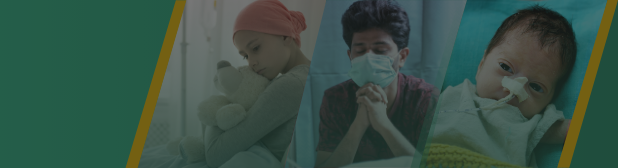

India’s corporate sector spends over Rs. 25,000 crore annually on CSR. In a country like India, where healthcare financing remains a critical gap, even a small portion of this, directed strategically, could transform outcomes for millions of patients. This is not idealism. This is arithmetic.
Table of Contents
The Untapped Resource in India’s Healthcare Crisis
India has two parallel realities in healthcare. On one side: millions of patients who cannot afford the treatment they need. On the other: a corporate sector with a legal mandate and a moral obligation to invest in social good, sitting on substantial undeployed CSR funds every year.
At ImpactGuru, we sit at the intersection of these two realities. We see patients who need funds. We see corporates that need credible, impactful, and transparent channels for their CSR spending. Connecting these two — efficiently, verifiably, and at scale- is one of the most important things we are building.
This blog is my blueprint for how the corporate sector can become a transformative force in healthcare financing in India and what both companies and patients need to make it work.
The Current State of Healthcare CSR in India
Under the Companies Act 2013, companies meeting specified financial thresholds are required to spend 2% of their average net profits on CSR activities. Healthcare is among the most commonly cited CSR categories, accounting for roughly 25–30% of total CSR spending in recent years.
But a significant portion of healthcare CSR spending goes to infrastructure, building hospital wings, funding medical equipment, and constructing rural health clinics. These are valuable investments. But they do not address the most acute and immediate need in healthcare financing in India: the family that is at a hospital right now, with a patient who needs surgery tomorrow, and Rs. 15 lakh they do not have.
This is where ImpactGuru’s corporate crowdfunding and medical fundraising partnerships come in. By connecting corporate CSR budgets directly to verified patient needs — in real time, with full transparency, we allow companies to deploy their healthcare CSR in a way that has immediate, verifiable, and human impact.
Three Models for Corporate Healthcare Giving Through ImpactGuru
Model 1: Employee Campaign Matching
Companies enable their employees to donate to ImpactGuru medical campaigns and match those donations — 1:1 or 2:1 — from the company’s CSR budget. This model is powerful for several reasons: it engages employees in giving, it amplifies individual contributions, and it allows the company to deploy CSR through verified channels with real-time reporting.
Several large Indian corporates have already implemented this model through ImpactGuru. Employee participation in giving programmes consistently increases when employer matching is available — sometimes by 3x or more.
Model 2: Dedicated Patient Support Funds
Companies establish a dedicated fund on ImpactGuru — branded or anonymous — for patients with specific medical conditions relevant to the company’s focus areas. A pharmaceutical company might fund cancer patients. A health insurance company might support rare disease patients. An FMCG company might focus on child health.
These funds are disbursed to verified patient campaigns on ImpactGuru in real time, with full documentation available to the company for CSR reporting. Patients benefit immediately. Companies receive auditable, impact-rich CSR documentation.
Model 3: Hospital Partnership Programmes
ImpactGuru partners with hospitals to identify patients who cannot afford treatment and proactively starts fundraisers on their behalf. Corporate partners fund these campaigns up to a specified amount per patient, with the hospital and ImpactGuru together providing verification and fund utilisation reporting.
This model is particularly powerful in oncology departments, transplant units, and paediatric ICUs — the areas of highest financial need and greatest fundraising urgency.
The Business Case for Corporate Healthcare Giving
Beyond the legal and moral obligations, there is a genuine business case for companies to invest in medical crowdfunding partnerships:
Employee retention and loyalty: Employees who work for companies with meaningful, employee-engaged CSR programmes report higher job satisfaction and are more likely to stay with the company. Medical giving programmes that employees can personally participate in generate particularly strong loyalty effects.
Brand trust: Consumers increasingly factor corporate social behaviour into their purchasing decisions. Companies with visible, verifiable healthcare giving programmes build brand trust with a customer base that cares about healthcare, which is to say, virtually everyone.
Vendor and partner relationships: CSR programmes that benefit the communities where a company’s vendors and partners operate create goodwill that translates into stronger business relationships.
Regulatory goodwill: Companies with strong CSR records in healthcare have historically received more favourable regulatory engagement from health ministries and state governments — a non-trivial benefit in an environment of increasing healthcare regulation.
What ImpactGuru Offers Corporate Partners
When a company partners with ImpactGuru for healthcare CSR, they receive:
• Access to a pipeline of verified, urgent patient needs across all major medical categories and Indian geographies
• Real-time fund deployment with immediate patient impact — no six-month project cycle
• Comprehensive CSR reporting documentation, including campaign verification records, fund utilisation reports, and patient outcome updates
• Co-branded campaign pages that allow the company to be visible to donors and patients as a healthcare champion
• Employee engagement tools, including company-specific matching dashboards and impact reporting
• Media and communication support for showcasing corporate healthcare impact
A Call to India’s Corporate Leaders
I want to address this section directly to the CEOs, CFOs, CHROs, and CSR heads reading this blog.
Your company has an opportunity right now to directly save lives. Not through a hospital building that will take three years to complete. Not through a rural health camp that will reach a few hundred people. Through a structured partnership with ImpactGuru that can, within weeks of implementation, begin directing your CSR funds to patients who need them urgently, verifiably, and immediately.
The patients are real. The need is documented. The platform is trusted and transparent. The only thing required is the decision to act.