


Table of Contents
- Quick Summary:
- Introduction
- What Is Chloride and Why Is It Essential?
- Chloride Deficiency Symptoms
- What Causes Chloride Deficiency in the Body?
- Foods Rich in Chloride to Prevent Deficiency
- How Electrolyte Imbalance, Like Chloride Deficiency, Affects Health
- Chloride Deficiency Diagnosis
- Chloride Deficiency Treatment
- Conclusion
- FAQs
- Sources:
Quick Summary:
- Chloride deficiency is a rare but clinically significant electrolyte imbalance that can disrupt fluid balance, digestion, and nerve function.
- Common chloride deficiency symptoms include weakness, dehydration, low blood pressure, muscle cramps, and breathing disturbances.
- Major chloride deficiency causes include excessive vomiting, dehydration, kidney disorders, and certain medications such as diuretics.
- Early chloride deficiency diagnosis and treatment through electrolyte testing, dietary correction, and medical management helps restore normal chloride levels and prevent complications.
Introduction
Chloride deficiency is an electrolyte imbalance that occurs when the body has abnormally low chloride levels in the blood. Chloride is one of the most important electrolytes responsible for maintaining fluid balance, blood pressure regulation, and proper nerve and muscle function.
Although chloride deficiency is less commonly discussed compared to other nutrient deficiencies, it can have serious effects on overall health if left untreated. In clinical practice, low chloride levels are often associated with dehydration, kidney disorders, digestive disturbances, or prolonged illness.
Understanding the causes, symptoms, diagnosis, and treatment of chloride deficiency is essential for early detection and effective management.
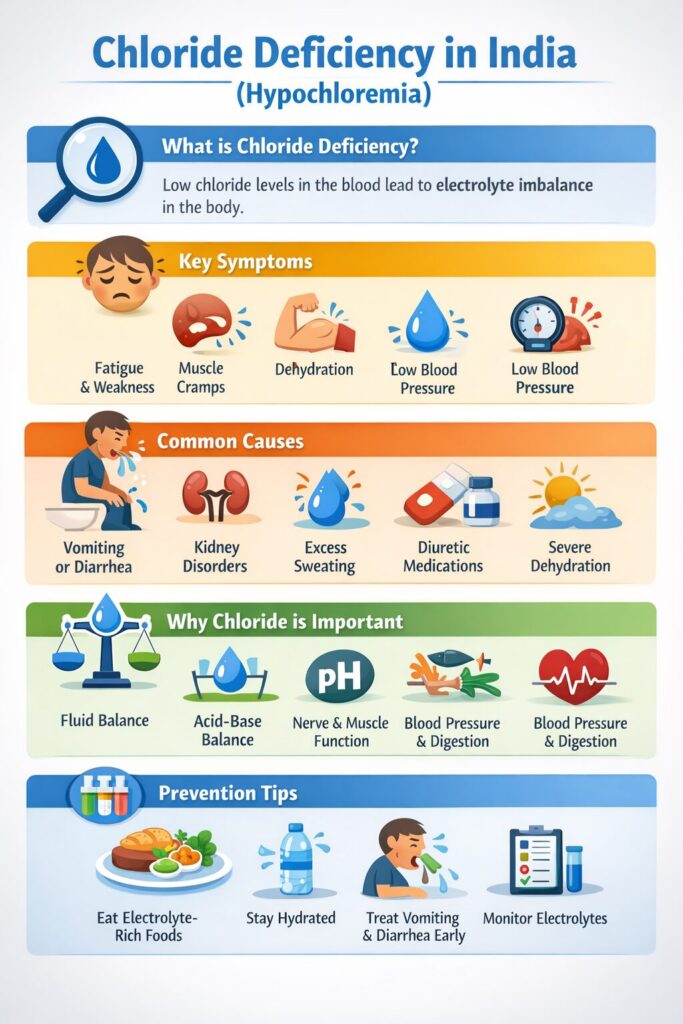
What Is Chloride and Why Is It Essential?
Chloride is a vital electrolyte that works alongside sodium and potassium to maintain fluid balance, acid–base balance, and normal nerve function in the body. It also plays a key role in producing hydrochloric acid in the stomach, which is necessary for proper digestion.
Adequate chloride levels are essential for maintaining stable blood pressure, supporting muscle contractions, and regulating hydration within cells.
Recommended Daily Intake
Most chloride intake comes from dietary salt (sodium chloride) and other foods.
General daily requirements include:
- Adults: ~2,300 mg per day
- Adolescents: ~2,300 mg per day
- Children: 1,500–2,300 mg depending on age
- Pregnant and breastfeeding women: Similar requirements with slightly increased needs
A balanced diet generally provides sufficient chloride for most individuals.
Chloride Deficiency Symptoms
Symptoms of low chloride levels in the blood often develop alongside other electrolyte imbalances.
Common chloride deficiency symptoms include:
- Persistent fatigue and weakness
- Dehydration and excessive thirst
- Muscle cramps or twitching
- Low blood pressure
- Difficulty breathing due to metabolic imbalance
- Confusion or dizziness in severe cases
In clinical settings, this deficiency may contribute to metabolic alkalosis, a condition where the body’s acid–base balance becomes excessively alkaline.
What Causes Chloride Deficiency in the Body?
Several medical and lifestyle factors can lead to this deficiency (hypochloremia).
1. Excessive Vomiting
Prolonged vomiting leads to significant loss of stomach acids that contain chloride, resulting in reduced chloride levels in the bloodstream.
2. Severe Dehydration
Dehydration caused by excessive sweating, diarrhoea, or inadequate fluid intake can disrupt electrolyte balance and lower chloride concentrations.
3. Diuretic Medications
Certain medications used to treat high blood pressure increase urine production, which may cause excessive loss of electrolytes, including chloride.
4. Kidney Disorders
Kidney diseases can interfere with the body’s ability to regulate electrolyte levels, sometimes resulting in a chloride imbalance.
5. Chronic Illness or Electrolyte Imbalance
Conditions affecting metabolism or prolonged illness may disturb normal electrolyte balance, contributing to chloride deficiency.

Foods Rich in Chloride to Prevent Deficiency
Most people obtain chloride naturally through everyday foods.
Common dietary sources include:
- Table salt (sodium chloride)
- Seaweed
- Tomatoes
- Celery
- Olives
- Rye and wheat-based foods
- Lettuce
- Processed foods containing salt
Maintaining a balanced diet with adequate electrolyte intake helps prevent this deficiency.
How Electrolyte Imbalance, Like Chloride Deficiency, Affects Health
Electrolytes such as chloride, sodium, potassium, and bicarbonate work together to regulate fluid balance, nerve signalling, and muscle contraction.
When chloride levels fall significantly, the body may experience:
- Disturbed acid–base balance
- Abnormal muscle and nerve function
- Impaired digestion
- Cardiovascular instability
Severe electrolyte imbalance may require prompt medical attention.
Chloride Deficiency Diagnosis
Diagnosis typically involves laboratory testing and clinical evaluation.
Common diagnostic methods include:
- Blood electrolyte test to measure chloride levels
- Arterial blood gas analysis to assess acid–base balance
- Kidney function tests
- Medical history review, including medications and symptoms
Early diagnosis allows healthcare providers to identify the underlying cause and begin appropriate treatment.
Chloride Deficiency Treatment
Treatment focuses on correcting the electrolyte imbalance and addressing the underlying cause.
Mild Deficiency
Mild chloride deficiency can often be corrected through improved hydration and dietary adjustments that include adequate salt and electrolyte intake.
Moderate Deficiency
Moderate deficiency may require oral electrolyte supplements or medical monitoring to restore normal chloride levels safely.
Severe Deficiency
Severe chloride imbalance may require intravenous electrolyte replacement in hospital settings, especially if associated with dehydration, kidney disorders, or metabolic disturbances.
Healthcare Access and Support
In cases where electrolyte imbalances occur due to severe illness requiring prolonged medical treatment or hospitalisation, healthcare costs may become significant.
Within India’s healthcare ecosystem, crowdfunding platforms such as ImpactGuru help families access medical care by enabling community-based financial support during critical treatment periods.

Conclusion
Chloride deficiency, although relatively uncommon, can significantly disrupt the body’s electrolyte balance and physiological stability. Symptoms such as weakness, dehydration, muscle cramps, and breathing disturbances may indicate low chloride levels in the blood.
Early recognition of chloride deficiency symptoms, timely diagnosis through blood tests, and appropriate treatment are essential to prevent complications. Maintaining proper hydration, balanced nutrition, and regular medical evaluation plays a key role in preventing electrolyte imbalances and ensuring overall health.
FAQs
Chloride deficiency, also called hypochloremia, occurs when chloride levels in the blood fall below the normal range, causing an electrolyte imbalance in the body.
Common symptoms include fatigue, muscle cramps, dehydration, nausea, and weakness.
It is often caused by excessive vomiting, diarrhea, dehydration, kidney problems, or certain medications like diuretics.
Chloride helps maintain fluid balance, acid-base balance (pH), and proper nerve and muscle function in the body.
Treatment usually involves addressing the underlying cause and restoring electrolytes through diet, salt intake, or IV fluids if needed.
Sources:
National Institutes of Health (NIH) – Electrolytes and Fluid Balance
MedlinePlus – Chloride Blood Test
Cleveland Clinic – Electrolyte Imbalance
World Health Organization – Nutrition and Micronutrient Deficiencies