
Table of Contents
Quick Summary
- Chief Minister Relief Fund (CMRF) is a state-run financial assistance scheme that helps BPL families, accident victims, and critically ill patients cover medical and disaster-related expenses.
- Each state runs its own CMRF portal (Maharashtra, Karnataka, Tamil Nadu, West Bengal, Telangana, Haryana, Kerala) with slightly different eligibility rules and processing timelines.
- Applicants typically need a BPL/income certificate, Aadhaar card, and a hospital estimate or discharge summary to apply.
- CMRF donations are tax-exempt under Section 80G, and relief amounts received are tax-free under Section 10(17A) of the Income Tax Act.
- Since CMRF sanctions can take weeks to process, many families pair it with medical crowdfunding on ImpactGuru to bridge urgent treatment costs.
Introduction
The Chief Minister Relief Fund (CMRF) is a state government initiative in India that provides emergency financial assistance to people affected by natural disasters, accidents, or critical illness. Every state runs its own CMRF, funded through public donations, corporate contributions, and government grants, and administered under the Chief Minister’s office with support from the Revenue Department.
For families struggling with the rising cost of treatment, from cancer therapy to organ transplants, CMRF is often the first line of government support. However, because approvals can take time, many patients also turn to medical crowdfunding to raise funds faster while their CMRF application is under review.

Read More: Impactguru hospital finder tool India
Who Administers The Chief Minister Relief Fund (CMRF)?
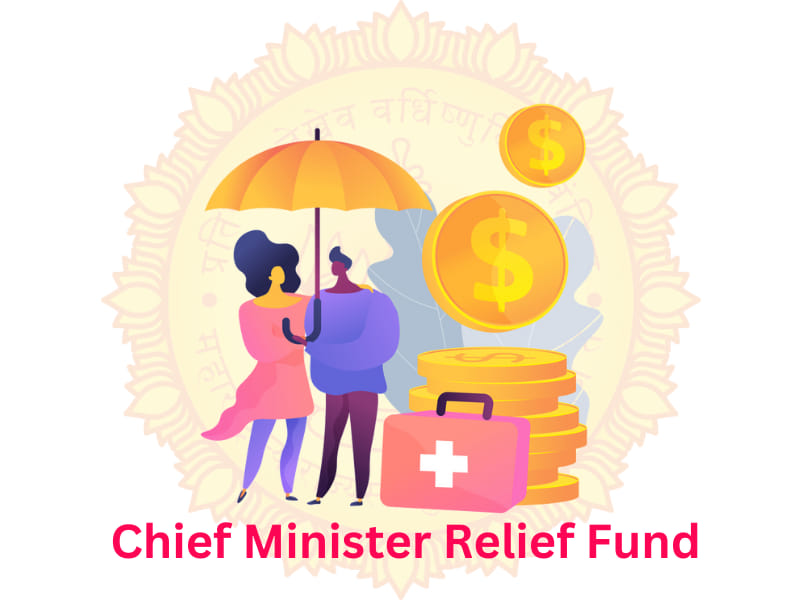
CMRF is technically owned by the Chief Minister, but day-to-day administration sits with the Revenue Department and a Principal Secretary/Finance Secretary, who manages it on an honorary basis. The Finance Secretary cannot independently withdraw or transfer funds; every disbursement requires a Government Order issued by the Revenue Secretary. This layered approval process ensures accountability but is also why CMRF applications can take anywhere from 15 to 90 days to process.
Who Can Get Help From CMRF?
Relief under CMRF is generally offered to:
- Families Below the Poverty Line (BPL) needing treatment for critical illness (cancer, cardiac surgery, kidney/liver transplant, accidents)
- Victims of natural disasters, floods, cyclones, droughts, earthquakes
- Next of kin of people who died in accidents, riots, or calamities (ex gratia assistance)
- Persons with disabilities or elderly individuals facing financial hardship
- Public institutions affected by natural calamities, at the Chief Minister’s discretion
Most states cap CMRF medical assistance between ₹25,000 and ₹5 lakh, depending on the diagnosis, hospital estimate, and family income. Some states allow additional funding on fresh application for ongoing serious illnesses, though a second claim for the same episode is usually not entertained.
Eligibility Criteria for CMRF
While rules vary slightly by state, the common eligibility framework includes:
- Applicant (or the patient’s family) must fall under BPL or have annual family income typically under ₹1–5 lakh (state-dependent)
- Must be a resident of the state where the application is filed (proof via Aadhaar/voter ID)
- Must not have already received compensation for the same case from insurance or another government scheme
- Medico-legal cases (MLC) and cases pending in court are generally not eligible
- Applications from legal heirs of a deceased patient are typically not accepted
Documents commonly required:
- BPL card or income certificate
- Aadhaar card
- Hospital treatment estimate, discharge summary, or final bills
- Active bank account linked to Aadhaar
- Ration card/EPIC as supporting income proof
How to Apply for CMRF
- Visit your state’s official CMRF portal (e.g., cmrf.maharashtra.gov.in, cmrf.karnataka.gov.in, cmrf.wb.gov.in)
- Register using mobile number + Aadhaar OTP
- Fill in patient details, diagnosis, hospital name, and treatment cost estimate
- Upload supporting documents (income proof, hospital bills/estimate, Aadhaar)
- Submit the application typically routes through your local MLA, District Collector, or Civil Surgeon for verification
- Track status online using your application/reference number
Applications can also be submitted offline through the District Revenue Office or with the help of a local MLA’s office.
States Where CMRF Is Widely Used
CMRF operates nationwide, but it’s especially active in states with large populations depending on government hospitals:
| State | Portal | Current Chief Minister (2026) |
| Maharashtra | cmrf.maharashtra.gov.in | Devendra Fadnavis |
| Karnataka | cmrf.karnataka.gov.in | D.K. Shivakumar |
| Tamil Nadu | cmrf.tn.gov.in | C. Joseph Vijay |
| West Bengal | cmrf.wb.gov.in | Suvendu Adhikari |
| Telangana | cmrf.telangana.gov.in | Revanth Reddy |
| Haryana | Saral portal / Revenue Dept. | Nayab Singh Saini |
| Kerala | CMDRF, kerala.gov.in | V.D. Satheesan |
Because state leadership and portal processes change periodically, always confirm current details on the official state CMRF website before applying.

CMRF Donations: How to Contribute and Tax Benefits
Donations to CMRF can be made online via net banking, UPI, debit/credit cards, or through cheques/demand drafts addressed to the state’s CM Relief Fund. Contributions from NRIs are accepted under exemptions provided by the Foreign Contribution (Regulation) Act, 2010.
All CMRF donations are tax-exempt under Section 80G of the Income Tax Act, 1961, and donors typically receive an official receipt with a CM Relief Fund PAN number for tax filing purposes.
Why Families Combine CMRF With Medical Crowdfunding
CMRF is a valuable safety net, but processing delays and funding caps mean it often isn’t enough to cover the full cost of treatments like chemotherapy, ICU care, or organ transplants. This is why a growing number of patients pair government relief with medical crowdfunding on ImpactGuru, sharing verified hospital documents and their story to raise funds quickly from donors in India and abroad, without taking on debt.
Families admitted to government, charitable, or private hospitals often start a fundraiser the same day treatment begins, so care isn’t delayed while a CMRF application is under review. You can also use ImpactGuru’s Disease Cost Calculator to estimate treatment expenses before deciding how much to raise.
Right to Information (RTI) and CMRF
Since CMRF is a government-administered fund, citizens can use the Right to Information Act, 2005 to request details on fund utilization, application status, or eligibility criteria from the relevant state Revenue Department. RTI requests must typically be answered within 30 days, giving applicants a formal route to seek clarity if their CMRF application is delayed or unclear.
Conclusion
The Chief Minister Relief Fund remains one of India’s most accessible government safety nets for families facing sudden medical or disaster-related expenses, but it works best as part of a broader financial plan, not a standalone solution. Application delays, income eligibility limits, and funding caps mean many patients still face a gap between what CMRF offers and what treatment actually costs.
That’s where ImpactGuru steps in. Whether you’re waiting on a CMRF sanction or need funds immediately for surgery, chemotherapy, or an accident, starting a fundraiser lets you reach donors across India and abroad within hours, not weeks. Start a fundraiser with ImpactGuru today and get the support your family needs when you need it most.
Impact starts with a simple referral.
Share ImpactGuru with anyone seeking financial help for treatment. Become a referral partner and contribute to meaningful change. Join the ImpactGuru Referral Program today!
FAQs
The Chief Minister Relief Fund (CMRF) is a government initiative in India that provides financial assistance to people affected by natural disasters, serious illnesses, or accidents. The main purpose of this fund is to support families in financial distress and help them recover from unexpected crises.
Eligibility for CMRF includes families below the poverty line (BPL), individuals suffering from critical illnesses, disabled persons, and victims of natural disasters or accidents. Applicants need to submit documents such as a BPL card, Aadhaar card, income certificate, and hospital bills or estimates.
You can apply online through your state government’s official website or offline at your district revenue department office. The application should include necessary documents like identity proof, BPL certificate, hospital estimate or bills, and a bank account number for direct transfer of funds.
Donations can be made online via bank transfer, debit/credit card, or cheque. All contributions to the CMRF are eligible for tax exemption under Section 80G of the Income Tax Act. Donors receive an official receipt and PAN number after payment confirmation.
The financial aid amount varies based on the applicant’s condition and the type of emergency. Families affected by disasters or individuals with severe medical needs can receive assistance ranging from a few thousand to several lakh rupees, directly credited to their bank account after approval.