
Table of Contents
- Quick Summary
- Introduction
- Why Are Government Hospitals Important in Bangalore’s Healthcare System?
- List Of Best Government Hospitals In Bangalore
- 1) Victoria Hospital
- 2) Bowring and Lady Curzon Hospital
- 3) Sri Jayadeva Institute of Cardiovascular Sciences and Research
- 4) Kidwai Memorial Institute of Oncology
- 5) Bangalore Medical College and Research Institute
- 6) SDS Tuberculosis Research Center & Rajiv Gandhi Institute of Chest Diseases
- 7) Karnataka Institute of Endocrinology and Research
- 8) NIMHANS (National Institute of Mental Health & Neurosciences)
- 9) Indira Gandhi Institute Of Child Health (IGICH)
- Which Government Hospital in Bangalore Is Best for Specific Treatment?
- How to Get Treatment at a Government Hospital in Bangalore?
- Are Government Hospitals in Bangalore Free or Low-Cost?
- What to Do If Medical Costs Still Feel Overwhelming?
- Conclusion
Quick Summary
- The best government hospitals in Bangalore span cardiac care, oncology, mental health, pediatrics, and more, many treating patients for free or at heavily subsidized rates.
- Sri Jayadeva Institute performed over 60,000 cath lab procedures in a single year, the highest volume in the country.
- Kidwai Memorial Institute of Oncology is expanding by 450 beds in 2026, alongside new peripheral cancer centres opening outside Bengaluru to ease patient load.
- Government hospitals in Bangalore serve as major teaching institutions, training the next generation of doctors while treating lakhs of patients annually.
- Karnataka’s Arogya Karnataka scheme extends free or subsidized treatment to eligible patients at these hospitals.
- Even with subsidized care, high-end treatments can strain finances, which is where fundraising platforms in India increasingly help families bridge the gap.
Introduction
Bangalore’s government hospitals don’t just treat the city, they treat the state. Sri Jayadeva Institute of Cardiovascular Sciences alone performed over 60,000 cath lab procedures in a single year, the highest volume recorded anywhere in the country. That scale is typical of the best government hospitals in Bangalore: institutions built to deliver specialist, often free, care to people who can’t afford private treatment. From cardiac surgery to cancer care, mental health to pediatrics, these hospitals combine decades of medical history with steadily modernizing infrastructure. This guide walks through the top government hospitals in Bangalore, what each specializes in, how treatment access works, and what to do if costs still become overwhelming.
Read More: Find Hospital Director/ Impactguru

Why Are Government Hospitals Important in Bangalore’s Healthcare System?
Government hospitals are the backbone of affordable healthcare in Bangalore, run by qualified doctors, nurses, and support staff who manage everything from routine checkups to complex emergencies. Beyond treatment, most of these institutions double as teaching hospitals, training the next generation of doctors and ensuring a steady pipeline of qualified medical professionals for the state.
What sets many of them apart is specialization: dedicated departments for cardiac conditions, cancer, mental health, and chronic diseases like diabetes and tuberculosis, often supported by national health programs offering free or low-cost treatment. Infrastructure has also improved steadily in recent years, with several hospitals adding modern diagnostic equipment, expanded bed capacity, and updated operating theatres, even as high patient volumes mean waiting times remain a real challenge.
List Of Best Government Hospitals In Bangalore
1) Victoria Hospital
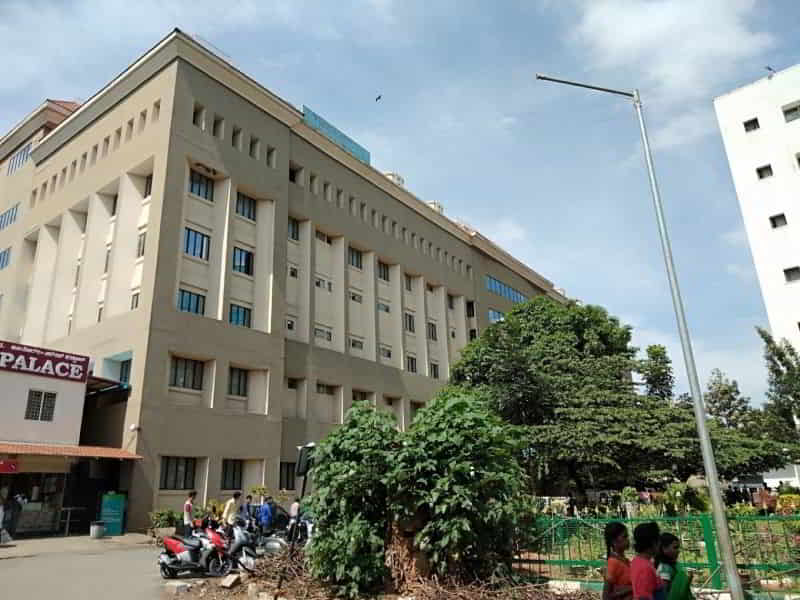
Established in 1900 and inaugurated by Lord Curzon, then Viceroy of India, Victoria Hospital has grown from an initial 140-bed facility into one of India’s largest hospitals, now accommodating over 1,000 patients.
Key highlights:
- Attached teaching hospital of Bangalore Medical College and Research Institute
- Super-specialty departments including Plastic Surgery, Gastroenterology, Neurology, Neurosurgery, Cardiology, and Urology
- Round-the-clock emergency department with a dedicated emergency operation theatre
- 24-hour licensed blood bank
- 20-bed ICU with trained critical care staff
2) Bowring and Lady Curzon Hospital
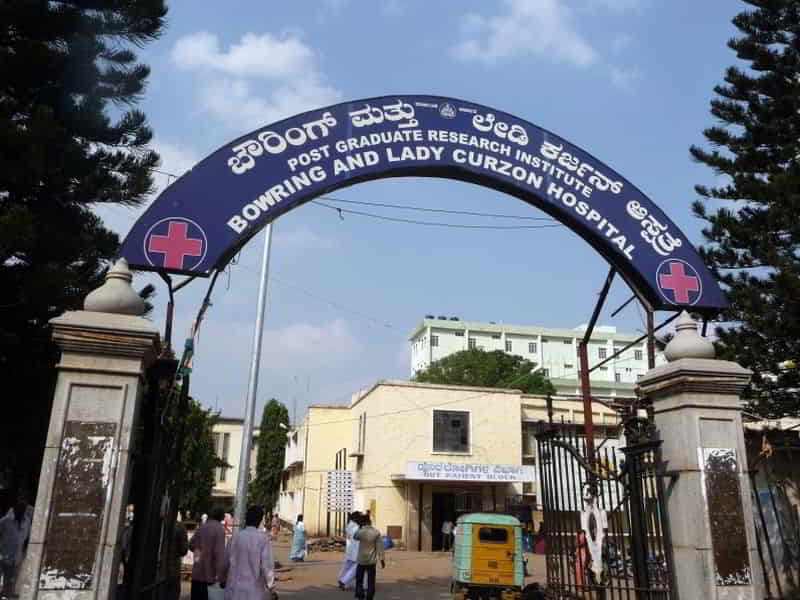
Dating back to 1868, this hospital was inaugurated by Lewin Bentham Bowring, then Commissioner of Mysore, and has since evolved into one of Bangalore’s premier multi-specialty government hospitals.
Key highlights:
- Long-standing teaching hospital affiliated with Bangalore Medical College
- Active research contributions during the COVID-19 pandemic
- Specialized departments in Cardiology, Obstetrics & Gynecology, Orthopedics, Oncology, and Pediatrics
3) Sri Jayadeva Institute of Cardiovascular Sciences and Research
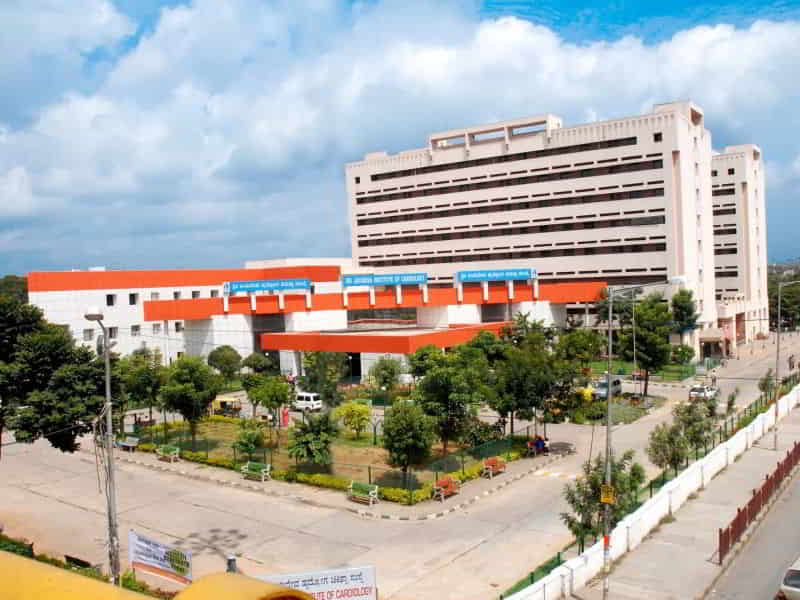
India’s largest dedicated cardiac care institute, Sri Jayadeva began as a 350-bed facility and has since scaled dramatically. As of 2025, its Bengaluru campus alone runs on roughly 1,150 beds, with total capacity across its Bengaluru, Mysuru, and Kalaburagi campuses now exceeding 1,600 beds, including a new 371-bed Kalaburagi facility that opened in December 2024 and a further Mysuru expansion announced in late 2025.
Key highlights:
- 60,295 cath lab procedures performed in a single year — the highest in the country
- 34,639 angiograms and 20,341 angioplasties with stenting, the highest national volume
- 4,733 cardiac surgeries including bypasses and valve replacements
- 402,323 echocardiograms performed, the highest recorded number worldwide
- First government heart institute in India to receive NABH accreditation, reaccredited in 2018 and 2021
- Thousands of free or subsidized angioplasties and open-heart surgeries for underprivileged patients
4) Kidwai Memorial Institute of Oncology
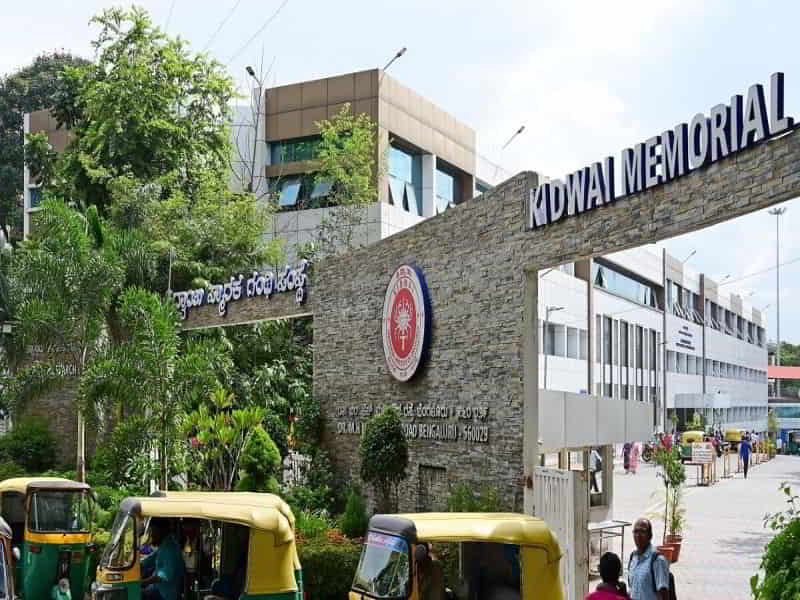
Established on June 26, 1973, and named after Rafi Ahmed Kidwai, this autonomous cancer institute was granted Regional Cancer Center status by the Government of India in 1980. As of late 2025, the Bengaluru campus runs on roughly 720 beds, with a 450-bed expansion underway to push total capacity to around 1,170–1,200 beds through 2026, alongside new peripheral cancer centres opening in Mysuru and other districts to ease the load on the main campus.
Key highlights:
- Recognized member of the Union for International Cancer Control and WHO
- Treats around 20,000–21,000 new cancer cases annually, with roughly 390,000 follow-up visits
- First government hospital in India to introduce the Da Vinci Xi robotic surgical system, crossing 1,000+ robotic surgeries by 2025
- Kidwai Cancer Drug Foundation offers anti-cancer drugs at 40–60% below market rates
- Multiple financial assistance schemes, including the Karnataka Chief Minister’s Medical Relief Fund
5) Bangalore Medical College and Research Institute

Founded in 1955 by the Mysore Education Society, BMCRI is now a government-run medical institution affiliated with Rajiv Gandhi University of Health Sciences.
Key highlights:
- Offers undergraduate, postgraduate, and super-specialty programs across disciplines like Plastic Surgery and Cardiology
- Fellowship programs in Vitreo-Retina, Surgical Gastroenterology, and Cosmetic Dermatology
- Attached hospitals include Victoria Hospital and Vani Vilas Women and Children’s Hospital
- Functions as a referral center for both urban and rural Karnataka
6) SDS Tuberculosis Research Center & Rajiv Gandhi Institute of Chest Diseases
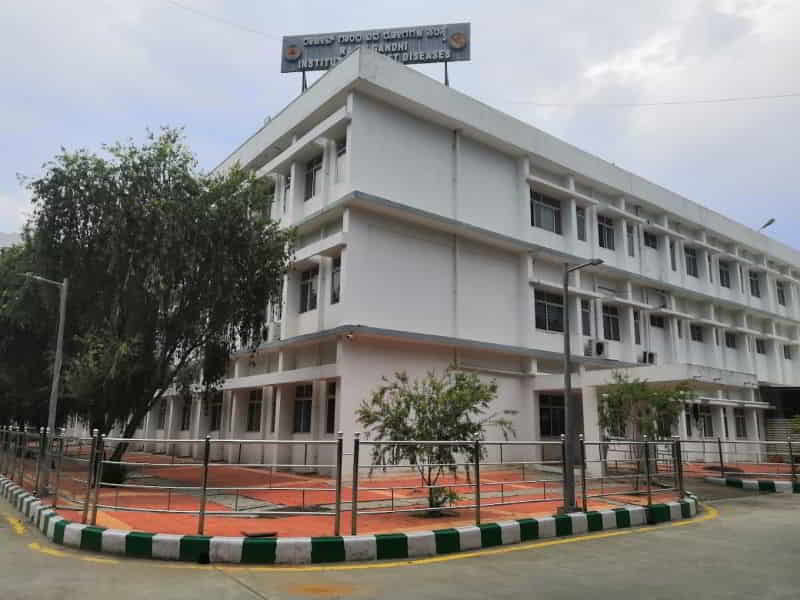
Founded in 1948 as the Shanthabai Devarao Shivaram Tuberculosis Sanatorium, this institute was later renamed in honor of former Prime Minister Rajiv Gandhi and granted autonomous status by the Karnataka government in 2009.
Key highlights:
- 470 beds spread across a 44-acre campus
- State referral center for pulmonary medicine and thoracic surgery, managing all thoracic emergencies
- Dedicated Departments of Pulmonary Medicine and Thoracic Surgery
- Serves patients from Karnataka, neighboring states, and beyond
7) Karnataka Institute of Endocrinology and Research
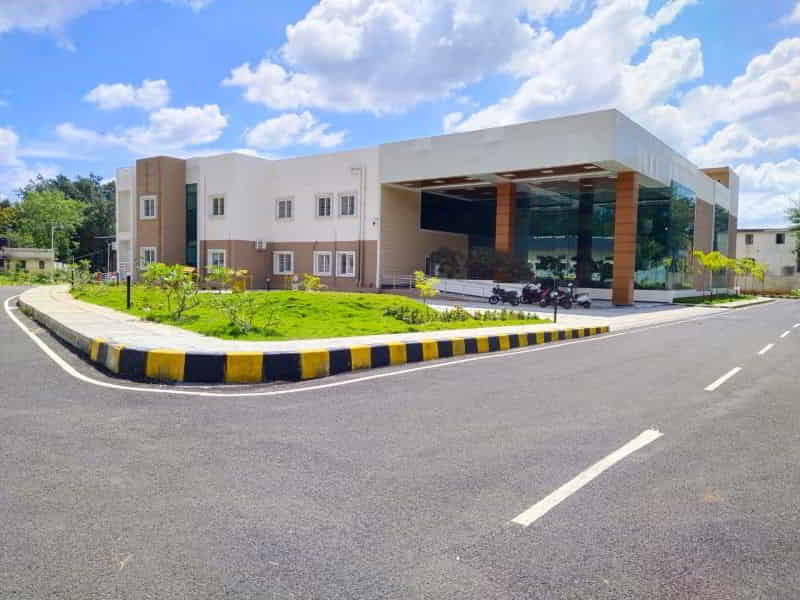
Established in 2007 as the Karnataka Institute of Diabetology, it was renamed in 2016 to reflect a broader focus on endocrine disorders.
Key highlights:
- Departments spanning Endocrinology, Podiatry, Vitreo Retina, and Nephrology
- Holistic diabetes care delivered to over 1.43 lakh individuals
- Diabetic foot registry established in 2016 to track and manage complications
- Amputation rate for diabetic foot conditions maintained between 8–10%, among the better outcomes nationally
8) NIMHANS (National Institute of Mental Health & Neurosciences)
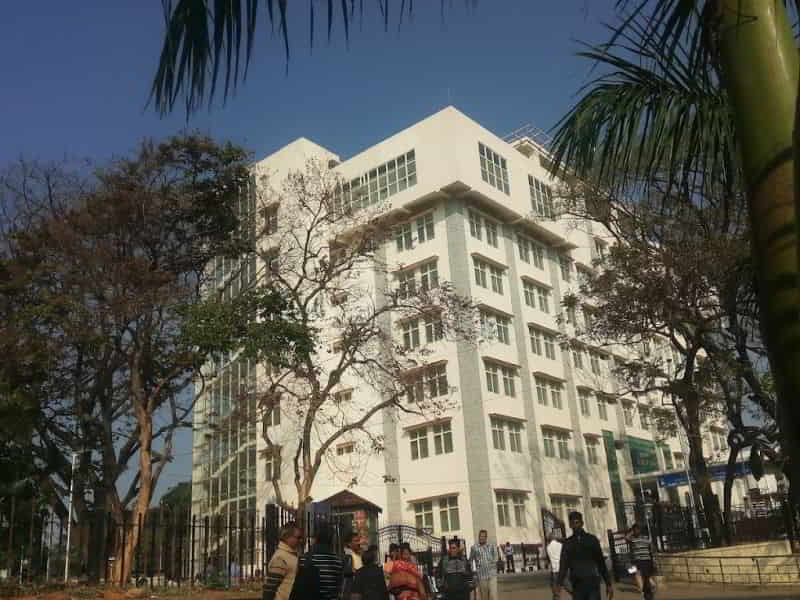
Tracing its roots to the Bangalore Lunatic Asylum, founded in 1847, NIMHANS was declared an Institute of National Importance in 2012 and remains India’s apex center for mental health and neuroscience.
Key highlights:
- Pioneered postgraduate training in psychiatry in India
- Multidisciplinary approach integrating mental health and neurosciences
- Model for community mental health programs replicated nationwide
- Continued advancements in neurosurgery and psychiatric care
9) Indira Gandhi Institute Of Child Health (IGICH)
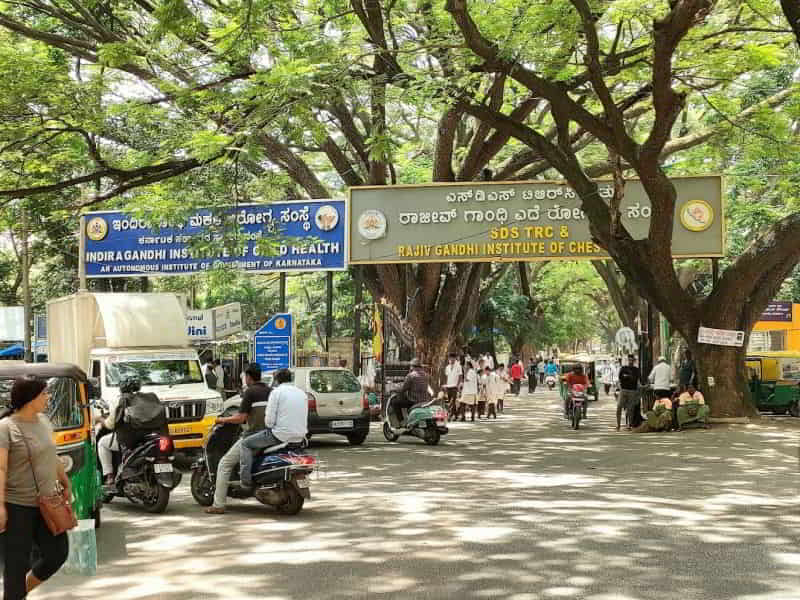
Established in 1985 and operational since 1991, IGICH was founded on Dr. D.G. Benakappa’s vision to address the shortage of pediatric care in Karnataka.
Key highlights:
- 475-bed hospital with dedicated Pediatric and Neonatal Intensive Care units
- Level 3B NICU accreditation from the National Neonatology Forum
- Postgraduate and super-specialty training, including Pediatric Surgery
- Fellowships in critical care, endocrinology, genetics, and neurology
Become a part of a larger mission.
Tap the link, share it, and invite more helpers.
Impact starts with tiny steps.
Which Government Hospital in Bangalore Is Best for Specific Treatment?
| Condition/Specialty | Recommended Hospital |
| Heart disease, cardiac surgery | Sri Jayadeva Institute of Cardiovascular Sciences |
| Cancer treatment | Kidwai Memorial Institute of Oncology |
| Mental health, neurology | NIMHANS |
| Tuberculosis, chest & lung disease | SDS Tuberculosis Research Center & RGICD |
| Diabetes, endocrine disorders | Karnataka Institute of Endocrinology and Research |
| Child health, neonatal care | Indira Gandhi Institute of Child Health |
| General medicine, multi-specialty & trauma | Victoria Hospital |
| Women’s health, orthopedics | Bowring and Lady Curzon Hospital |
| Medical education-linked specialty care | Bangalore Medical College and Research Institute |
How to Get Treatment at a Government Hospital in Bangalore?
- Registration: Most hospitals require OPD registration, either walk-in or via online appointment systems where available.
- Documents needed: A valid ID (Aadhaar card), any prior medical records, and, for scheme-based treatment, income certificates or scheme cards (e.g., Ayushman Bharat–Arogya Karnataka card).
- Referral for specialty care: Institutes like Kidwai or NIMHANS often require a referral from a primary hospital or general physician for specialized treatment.
- Emergency access: Government hospitals in Bangalore generally accept emergency cases without prior appointment, following a “treatment first” approach.
- Follow-up care: Most institutes maintain OPD follow-up systems for chronic conditions like cancer, cardiac disease, and diabetes.
Are Government Hospitals in Bangalore Free or Low-Cost?
Many services at these hospitals are free or heavily subsidized, particularly for patients below the poverty line or those covered under government health schemes like Ayushman Bharat–Arogya Karnataka. Institutes such as Sri Jayadeva and Kidwai run dedicated funds, including the Karnataka Chief Minister’s Medical Relief Fund and the Kidwai Cancer Drug Foundation, to subsidize surgeries, medication, and long-term treatment for economically disadvantaged patients.
That said, not every cost is covered. Diagnostics, certain medications, prosthetics, or extended hospital stays can still add up, especially for prolonged or high-end treatments like transplants and cancer therapy.
What to Do If Medical Costs Still Feel Overwhelming?
Even with access to the best government hospitals in Bangalore, some treatments, extended ICU stays, transplants, and advanced cancer therapy can still stretch a family’s finances beyond what subsidies cover. This is where more people are turning to online crowdfunding sites to bridge the gap.
Choosing to fundraise online through a best crowdfunding platform in India like ImpactGuru lets families reach friends, extended networks, and even strangers willing to contribute toward treatment costs. As fundraising platforms in India have matured, fundraising in India for medical emergencies has become faster and more accessible, often helping patients start treatment without delay while funds are raised in parallel.
Need help covering treatment costs? Start a fundraiser with ImpactGuru and raise funds at 0% platform cost.
Conclusion
The best government hospitals in Bangalore remain a lifeline for millions, offering specialized, often free, care across cardiology, oncology, mental health, and pediatrics, backed by decades of medical expertise. With 2026 bringing fresh bed expansions at institutes like Sri Jayadeva and Kidwai, access to quality care continues to grow. Still, some treatments carry costs subsidies can’t fully absorb. When that happens, online crowdfunding sites offer families a practical way to bridge the gap and get patients the care they need without delay.
Facing high medical costs? Start your fundraiser today with India’s trusted crowdfunding platform.
Victoria Hospital, Bowring and Lady Curzon Hospital, Sri Jayadeva Institute of Cardiovascular Sciences, Kidwai Memorial Institute of Oncology, and NIMHANS are among the most prominent, each specializing in different areas of care.
Many services are free or subsidized, especially under schemes like Ayushman Bharat–Arogya Karnataka, though some diagnostics, medications, or extended treatments may still involve out-of-pocket costs.
Kidwai Memorial Institute of Oncology is Karnataka’s primary Regional Cancer Centre, treating around 20,000–21,000 new cancer cases every year.
Sri Jayadeva Institute of Cardiovascular Sciences is dedicated exclusively to cardiac care and performs the highest volume of cath lab procedures in the country.
For specialized institutes like Kidwai or NIMHANS, a referral from a primary hospital is often required. Emergency cases are generally accepted without one.
Families increasingly turn to online crowdfunding platforms in India to raise additional funds for treatments, medications, or long-term care not fully covered by subsidies.