Is Covid - 19 Heading Towards The Endemic In India?
By: Shrishaila, Diamond
Published On: February 08, 2022
The Covid-19 pandemic is considered to be the largest health crisis of the century due to its disruptive effect on the medical infrastructure, the global economy and its radical imposition on the way humans live. According to the India Case Study by UNICEF and UNESCO, India is one of the top countries that suffered the worst in this pandemic.
To begin with, India crossed 5 lakh deaths in the duration of the pandemic starting in 2020 - while we were still figuring out a way to fight the virus, then proceeding to adjust and accommodate to the lockdown, followed by a second wave and now heading towards what many assume to be ‘the new normal.’
With the apparent Omicron variant looming over as a third wave and contrasting reports on the pandemic becoming endemic in India by March, we explore the plight of the sub-continent and the future of Covid-19 in India-
Why is our future amid Covid-19 uncertain?
India is slowly adjusting to digital as well blended models in the workspace, schools as well as in more entertainment-based and relaxed spaces such as theatres and malls. What lies ahead for us is, once again wrapped in a blanket of uncertainty.
Work, social, and educational set-ups have either completely or partially moved to the online space. From professionals, students, workers and service providers, new patterns have emerged as a result of consecutive lockdowns, on and off rise in Covid-19 cases and its variants. According to a survey conducted by EY, adults are still figuring out the advantages and disadvantages of the online world. With the uncertainty persisting, many are still cost-cutting, finding healthier habits to find a way to sustain themselves.
Going by the news reports around Covid-19, there is an array of information that sometimes contradicts others. For example, some reports suggest that India will be grappling with a severe third wave by March while some suggest that Covid-19 will be endemic by march. But before we explore the two contrasting reports, let’s learn what the World Health Organisation has to say about the ongoing situation.
WHO’s statement regarding the pandemic
On the tenth meeting of the International Health Regulations Emergency Committee regarding the coronavirus disease pandemic on January 19, 2022, several key notes were highlighted.
The Committee discussed issues including:

On therapies
WHO suggested that when treating patients who have tested positive for the virus only state recognised therapeutics, diagnostics, and vaccines for Covid-19 should be used. States Parties are advised to regularly adjust their response strategies by monitoring their epidemiological situation, assessing their vulnerabilities including their health system capacity.
On mass gatherings and unions
Take a risk-based approach to mass gathering events by evaluating and mitigating risks.
On vaccinations
WHO stressed on the importance of vaccinations for the populace. It reiterated, “Achieve 70% vaccinations of all countries’ populations by the start of July 2022 and integrate COVID-19 vaccination into routine health services.
On the concerning variants
Enhance surveillance of SARS-CoV-2 and continue to report to WHO to enable rapid identification, tracking, and evaluation of variants and continued monitoring of the pandemic’s evolution and its control. States Parties should strengthen systems to collect and publicly share indicators to monitor the burden of COVID-19, such as hospitalization rates, severe disease, and excess mortality.
On post-covid care
There is sufficient surge capacity for critical SARS-CoV-2 clinical care and post COVID-19 condition, and for the maintenance of essential health services, and should plan for the restoration of health services at all levels with sufficient funding, supplies, and human resources.
On prevention of further mutation
Conduct epidemiological investigations of SARS-CoV-2 transmission at the human-animal interface and targeted surveillance on potential animal hosts and reservoirs.
Is Covid-19 becoming endemic by March in India?
Most epidemiologists believe that the virus will become endemic in nature. This means that the virus will continue to live in pockets and in smaller groups of transmission. However, this does not entirely mean that everyone is free of the virus.
What is the difference between a pandemic and an endemic?
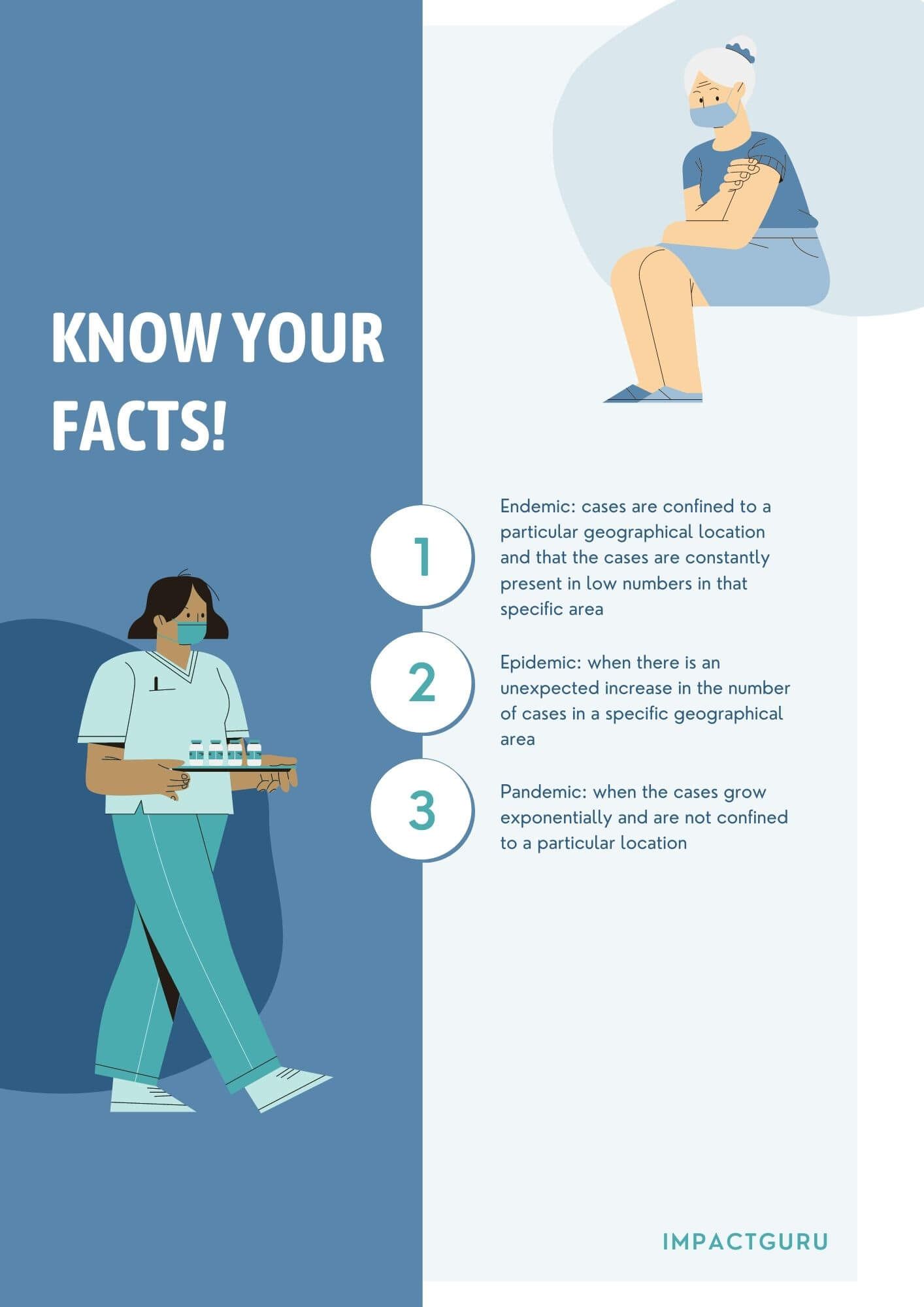
According to a report in India today, eradicating the virus completely is not possible anytime soon. However, vaccination, known treatments and learning to navigate amid an endemic is easier as compared to a pandemic. The cases continue to exist in lesser numbers or moderate levels. With complete Covid-19 eradication as a distant vision, we are still in the community transmission phase. This means Covid-19 becoming an endemic is at bay. However, with enough precautions and care, we may be closer to this dream now more than ever.
Also Read: The New Covid Variant ‘Omicron’: Everything You Should Know
Who is suffering the most?
According to a report by the chief communication officer of WHO, “The COVID-19 pandemic has led to a dramatic loss of human life worldwide and presents an unprecedented challenge to public health, food systems and the world of work. The economic and social disruption caused by the pandemic is devastating: tens of millions of people are at risk of falling into extreme poverty, while the number of undernourished people, currently estimated at nearly 690 million, could increase by up to 132 million by the end of the year.”

The ones that suffer the most are the workforce and our labour population. Nearly half of the world’s 3.3 billion workforce is at risk. The direct effect of a lockdown is on someone who is dependent on interacting with people and has physical means of livelihood, for example, migrated labourers, workers, factory workers. India already witnessed major distress during the first wave of the pandemic. The informal economy workers are at the brunt of this pandemic, as without work and source of income, there is no food or there is no nutrition of any sort for the labour population which is a matter of major concern.
Will the pandemic end?
According to a report in the New York Times by Michael Bang Petersen, countries with high and effective vaccination rates will have lesser challenges and 2022 might be the last year when there will be major waves that potentially take lives. However, this also comes with the argument that mass gatherings and the normal way of life will go back to how it was before. The end of the pandemic is as uncertain and ambiguous as the future variants that it might carry with it.
Also Read: Can Crowdfunding Help Make Healthcare More Accessible In India?
What do most people know?
The pandemic came and taught us new ways of living. As much as we hope for it to go away, there lies a looming warning of the future waves. People must understand that the best way to fight the virus is to not let it find a new host.
What does that mean?
In scientific terms, a virus would not survive without a host. In Covid-19’s case, another living body is required for the virus to survive. Which simply means we need to keep our masks up and maintain our social distance. These methods do work wonders in keeping the virus at bay. Even if you do come in contact with someone infected with the virus, get tested and make sure that you isolate yourself. In the image below are some tried and tested ways you can at an individual level fight the virus.
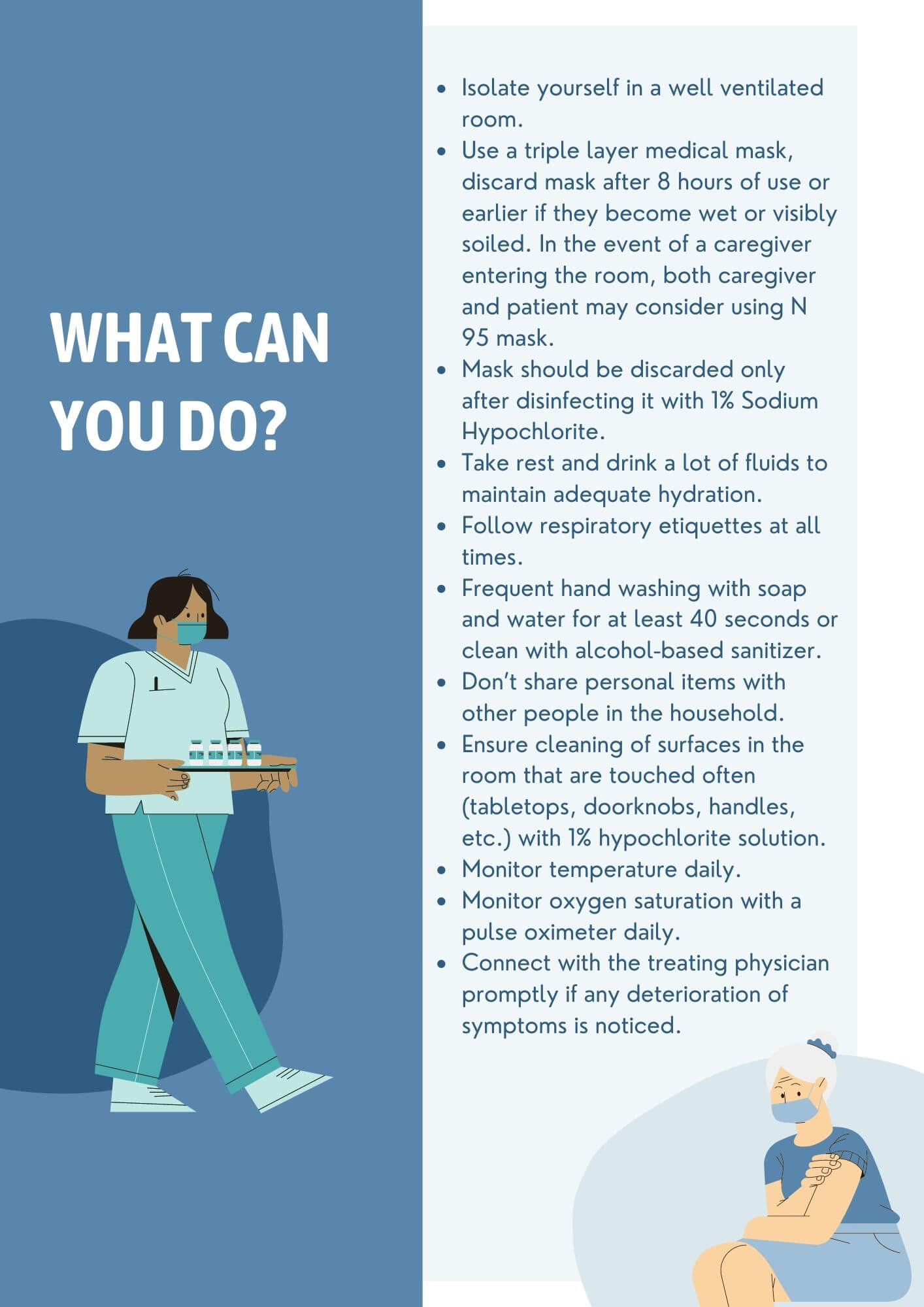
There will be times when one wouldn’t be prepared to face such a situation with respect to our finances. During such times, try crowdfunding for medical emergencies.
Find more insights from someone who has been there -
Doctor Turned Campaigner: What Is First Time Crowdfunding On ImpactGuru Like?


 Information
 Alert
Alert